TABERSTRAVELS IN THE LAND OF THE LONG WHITE CLOUD

NORTH ISLAND

(Click on images to enlarge.)

Having talked about going overseas for several years, and with covid interrupting any thoughts of doing that in a hurry, New Zealand as our nearest neighbour, but still overseas, was an obvious choice. Then when friends from Canada were going there and (in their words), we “couldn’t be so close without a catch up,” we decided that we could kill two birds , so to speak.

So, on arriving at Auckland and  acquiring our prebooked hire car, we set off and, thanks to Google maps, found our way to our apartment which we were to share for the first four nights with our Canadian friends. Their flight was due later in the day and they arrived in time for the dinner that Gary had prepared for the four of us on our first night together.

So for the next three days we did a few touristy things around Auckland .

First up,  the Auckland Sky Tower, the telecommunications and observation tower standing within the CBD, and at 328m (1076 feet) tall was the tallest free-standing tower in the southern hemisphere up till 2022. From the observation deck you get great 360° views over the city and out over the islands beyond the harbour. For daredevils, the tower also features the 192m (630foot) cable-guided Sky Jump or the walk around the exterior of the observation deck. Nope! Nope! Nope! Nope  Nope!

Waiheke island is a very popular destination for visitors to Auckland, so taking the passenger ferry across and then a hop-on-hop-off bus tour seemed a good option. The bus takes you all around the island with stops at most of the wineries it’s famous for. Somehow, we didn’t get to even ONE winery, but we DID get to The Heke brewery and whisky distillery, where we tasted a few of their local brews,  and the Allpress Olive Grove for tastings of their locally grown/produced olives and oils. From there we jumped on the next bus coming through and got back to the town centre, and as the bus is driving away, Gary realizes he’s left his phone in the seat pocket. Oh shit!!!! And it turns out it wasn’t one of the hop on-off buses either! In the end, after a couple of worrying hours, we headed back to the ferry terminal hoping someone may have handed it in, but no luck there. However, by  a huge stroke of luck, the first driver we’d had for the day (“If you give me a good rating on TripAdvisor, my name is Tony, if you rate me bad, my name is John!”) was there and about to head out again, and when I asked him if he’d heard anything or knew how we could check the bus, he offered to drive us back to the bus depot where he was sure the bus holding Gary’s phone prisoner would be by now. What a relief – the phone was still in the seat pocket where Gary had left it! So then the bus driver (what a great, helpful guy – definitely call him Tony!) radios  to the local bus service to come pick us up from there as he still has a tour run to do. So in the end, we not only got the phone back, but a free ride on the local bus taking us on a route the tour bus didn’t go! What a day!!

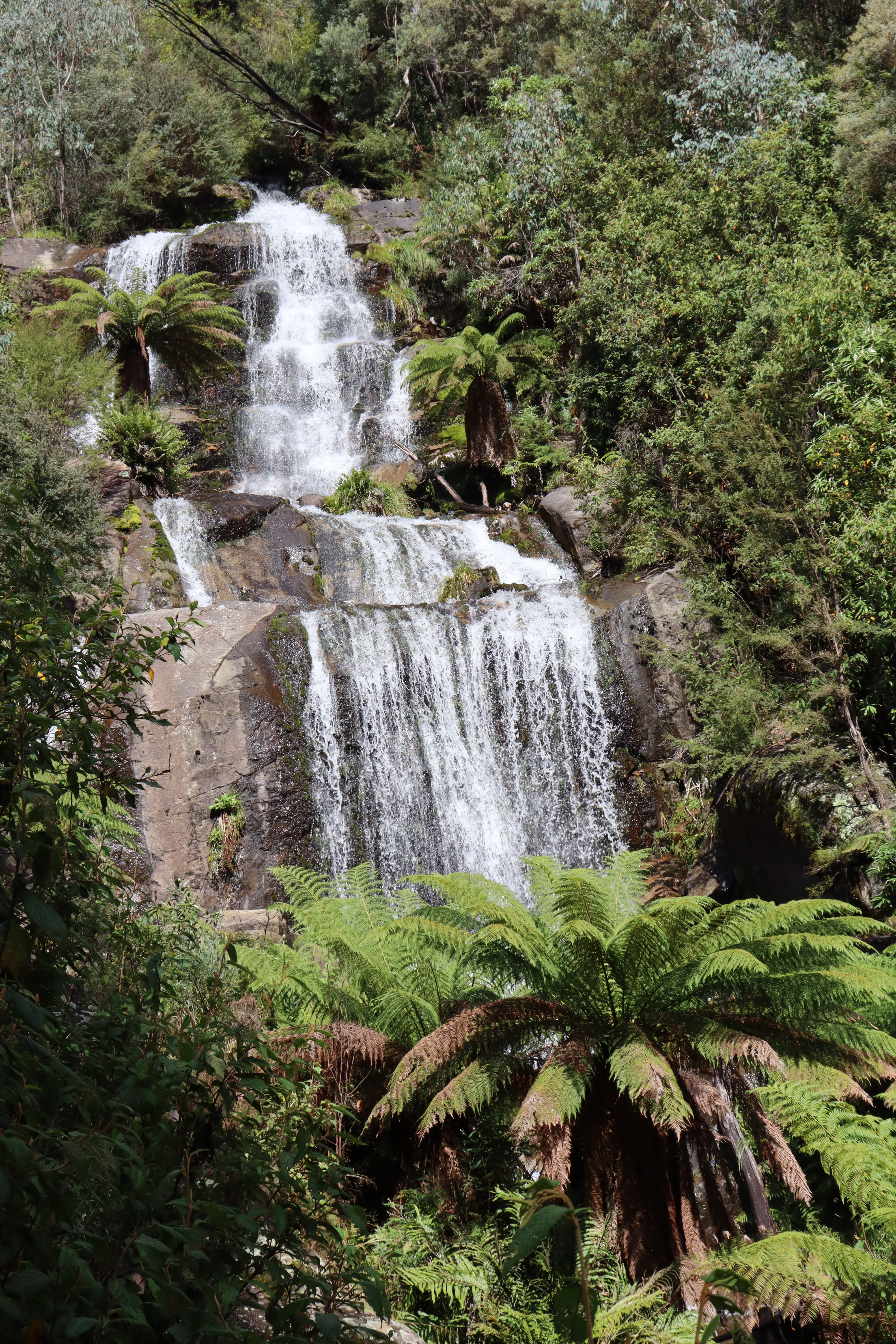
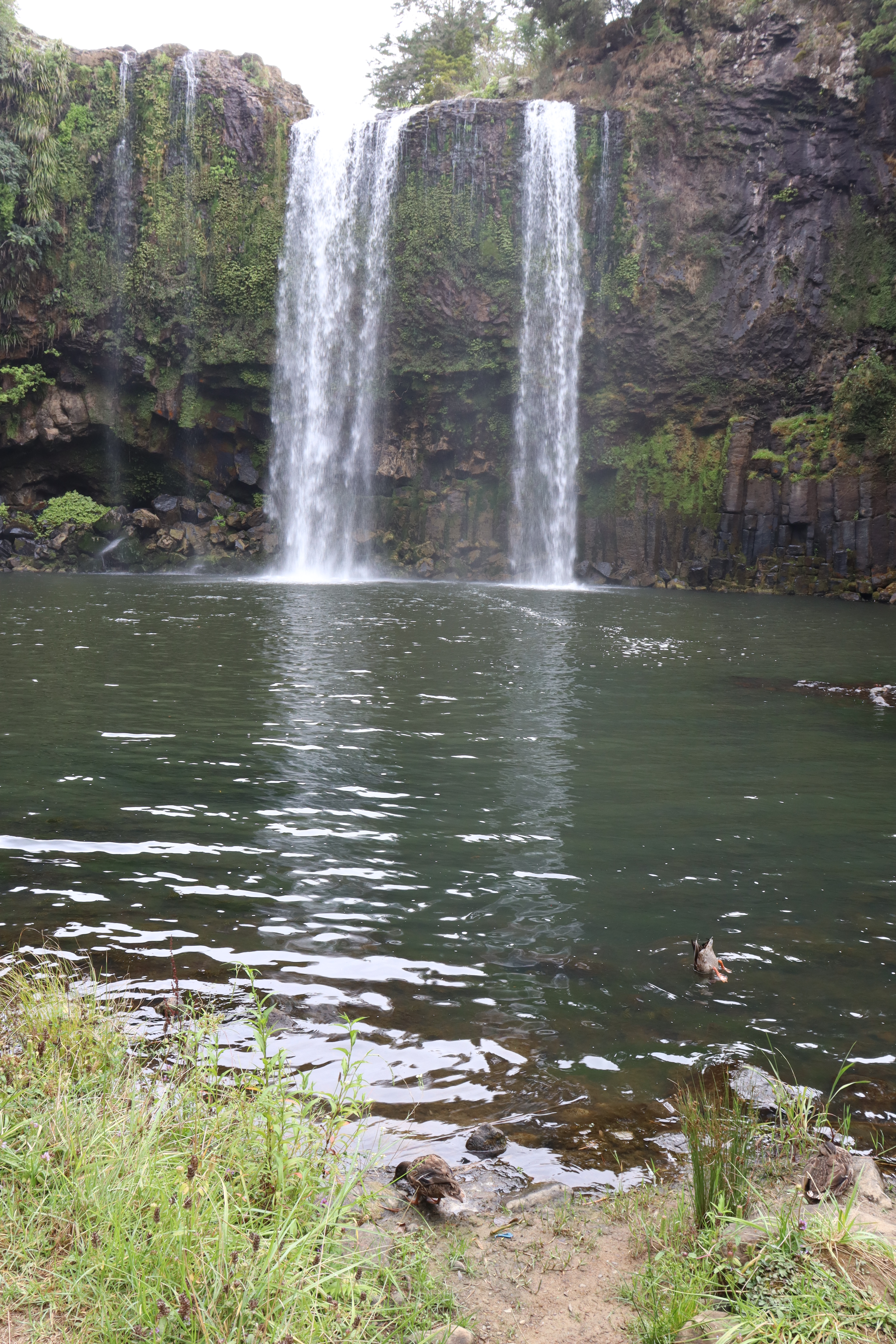
After parting with our Canadian friends, Gary and I started our NZ travels in earnest. Heading north out of Auckland, and after having to take a 10km detour, we got to Whangarei to visit the Whangarei Falls, a very picturesque 26m/85foot cascade with a pleasant walking trail looping from the top to the base. Well worth a look.

Russell, on the Bay of Islands, is a quaint little town and here we walked the trail up to Flagstaff Hill Lookout, where you get great views across the Bay of Islands. It was here that, following the signing of the Treaty of Waitangi across the bay, the flagpole was cut down four times by the local Māori chiefs, angry that, in flying the Union Jack , the British Colonialists were not honouring the terms of the Treaty.

Passing through Kerikeri, we paused for a quick look at the Historic Stone Store, the oldest original stone building in NZ,  and Rainbow Falls with its 40m twin falls drop – beautiful.
Cape Reinga, the northernmost point of the North Island, is dominated by the Cape Reinga Lighthouse which overlooks the famed “meeting of the waters” where the Tasman Sea and the Pacific Ocean meet in a clearly visible collision line. In the distance on a clear day you can see the Three Kings Islands which are actually wildlife sanctuaries and the species there are found nowhere else and are protected  by their isolation.

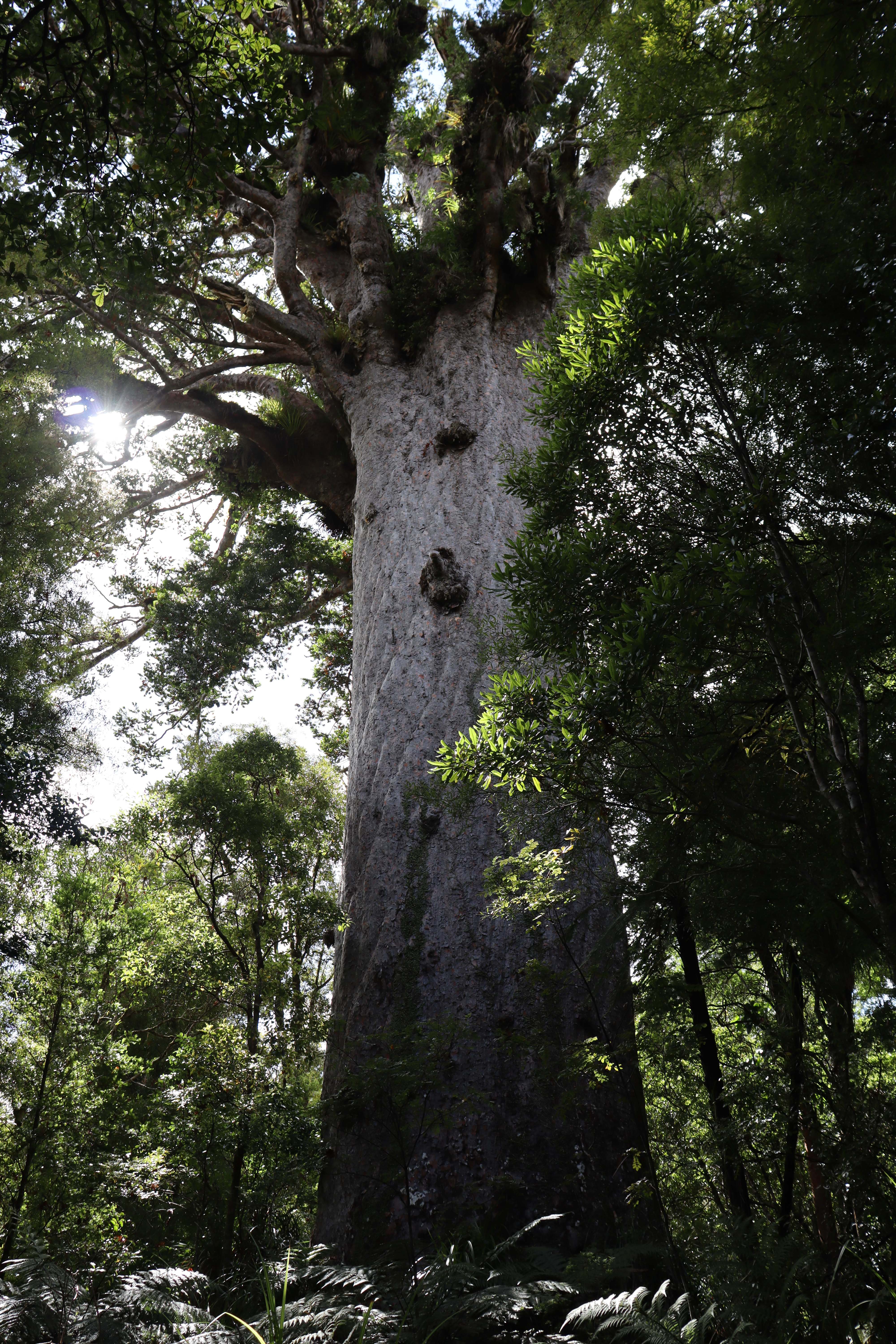
Taking the western branch of the Twin Coast Highway and heading south again, we passed through Waipua Kauri Forest, and paid a visit to “the Lord of the Kauri” – Tana Mahuta – a massive Kauri estimated to be around 2000 years old. At about 55m high with a girth of about 14m almost all the way up, it’s a monster!!

Waitomo Caves are famous for its glowworms, which are actually fly larvae that attach themselves to the roof of the cave and catch their food by suspending sticky lines that catch insects attracted to the light of the glowworm. This tour, taken in boats in the waters at the bottom of the cave, is so peaceful and calm as you are not allowed to make noise for fear of disturbing the worms which would put their lights out, and the spectacle of thousands of these tiny blue lights above you is just amazing. For obvious reasons no photography is allowed, but probably better to experience the real thing.

Just 30 or so kilometres beyond the Glow worm caves are the spectacular Marakopa Falls. Only a short walk from the carpark through native forest, these falls with their 35m drop were THUNDERING after the rain we’d had all day, and so were a most  impressive sight and worth the walk in the rain and the narrow winding road to get there. Having planned on also visiting the nearby Piri Piri Caves and the Mangapohue Natural Bridge out that way, we were somewhat disappointed to find them both closed, so we’ll have to put them on the list for next time we’re here!
Passing through New Plymouth, we headed out to Okato for a couple of nights hoping to see Mt Egmont/Taranaki, by all accounts a perfect cone shaped volcano, but with all the rain and clouds around, we couldn’t see any sign of a mountain, so I jokingly questioned whether it even exists, only to be told , “Oh yes, you can see it from MILES away on a clear day!”  On our first morning – no sign of the mountain – we took a drive AROUND the mountain to the eastern side, to check out Dawson Falls and Wilkies Pools. Now we knew there must be a mountain, as the road to the falls definitely had a fairly steep incline, and once we got to the carpark, we actually got our first – albeit shrouded in clouds – glimpse of the mighty Taranaki.

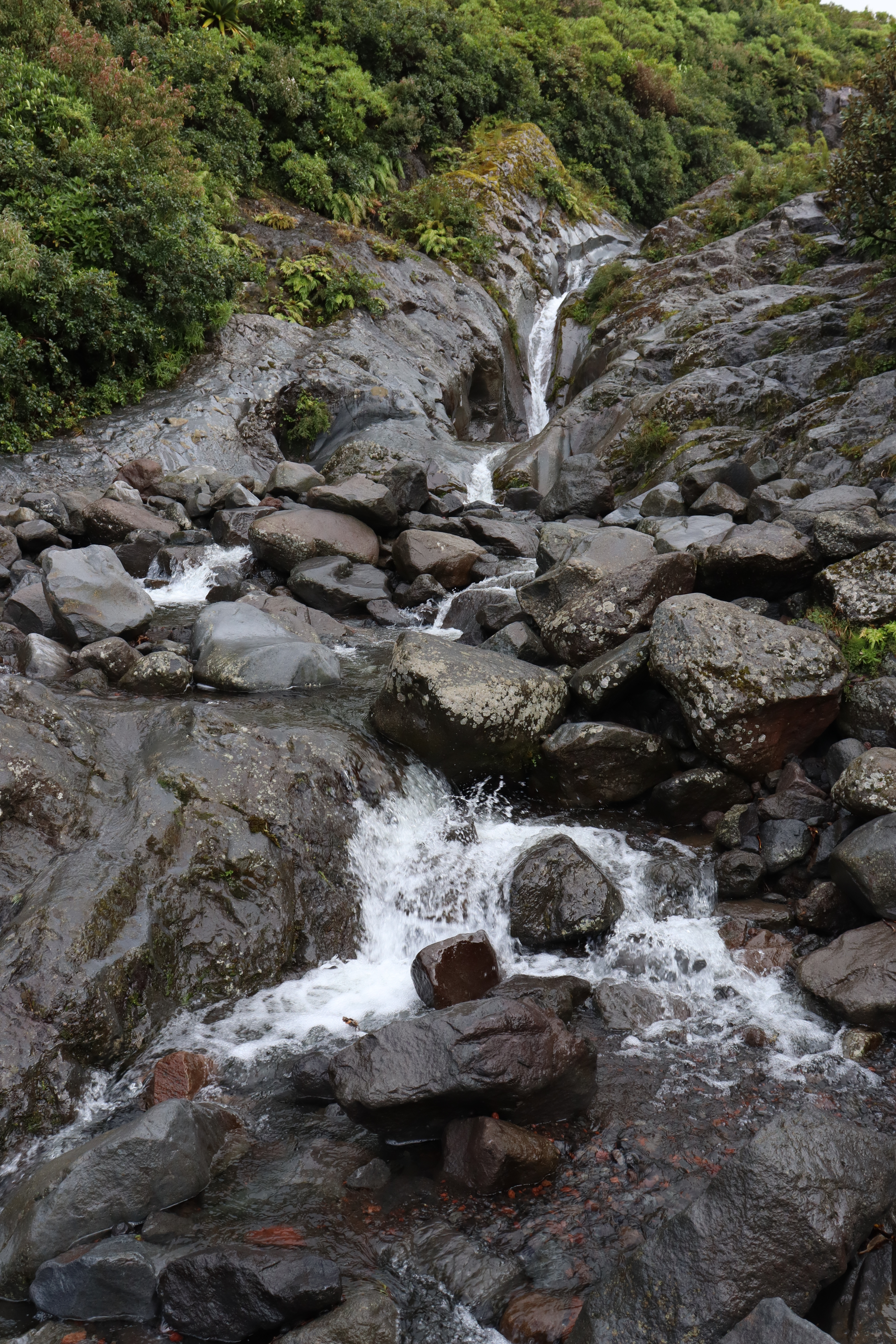
Dawson Falls can be viewed from one  viewpoint near the top or another at the base of this lovely 18 metre cascade. We chose to check out both and despite the misty spray that emanated from the falls, I felt the view from the bottom viewpoint was better as the top view was partially obscured by the surrounding rainforest. Either view was pretty special though!  Taking another wet and muddy trail though the forest – very much a rainforest  on this rainy day! – we found Wilkies Pools, a series of pools and cascades gouged out by the force of the water, rocks and gravel scouring out the 20000-year-old lava. Gorgeous!
Heading back to Okato we called in at both Cape Egmont Lighthouses – yes, there are two of them about 10 kilometres apart, both built around 1864. One appeared to be on private land and had no signposting other than that we could see it down “Cape Road” and the other was signposted as the “Historic Cape Egmont Light” with a museum which was closed. Of course!

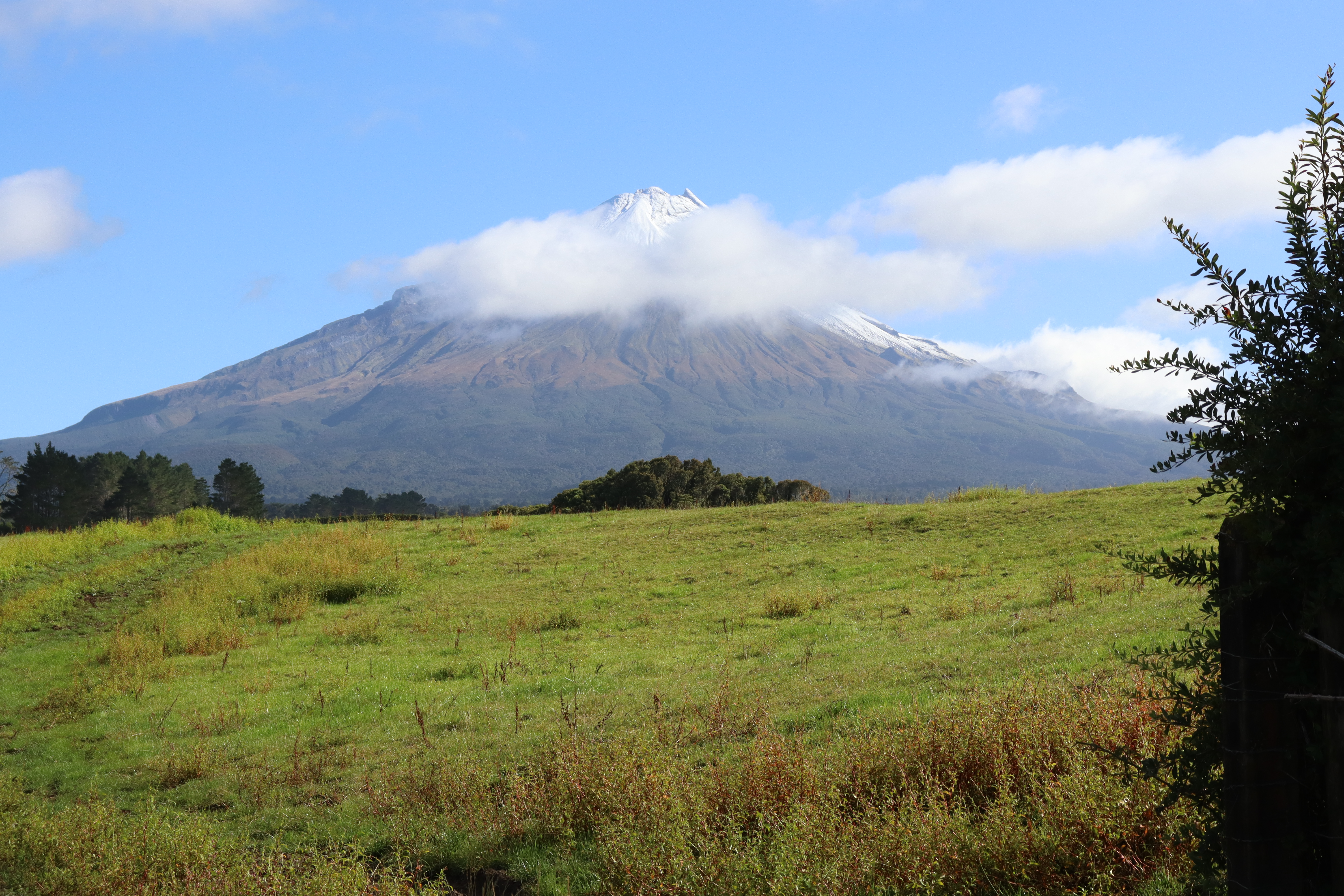
Leaving Okato on a pleasant sunny day gave us our long-awaited views of Taranaki/Mt Egmont in all her snow-capped glory – and proved to us that she actually does exist. Getting a good clear shot, however, wasn’t so easy as the clouds moved across her summit fairly quickly.

Taking the narrow and remote Forgotten World Highway took us through the Republic of Whangamomona, (try and say that three times with a mouthful of marbles!!) a small town that declared its “independence” from New Zealand in objection to the redistribution of local councils, and over the years its elected Presidents have included humans, a goat, a poodle and a turtle! Headquarters of the Republic warrant a visit as they are housed in the historic hotel which dates back to 1902 (current building1911) and is regarded as the most remote pub in the country. Needless to say, we paid the Headquarters a visit!

Further up the Forgotten World Highway, we were held up at roadworks that closed the road for several hours each day, but knowing it was  only an hour or so before the road was due to open, the Stop-and-Go lady advised us to go check out the falls that were about 16 km off on a side road. This was perfect as I’d already read about these falls and wanted to go see them, so off we went. At the end of the road, there’s a 1-kilometre walking track to the falls that crosses private farmland, weaving through a forest of tree-ferns and  alongside the creek that feeds the falls. But this pleasant meander in no way prepares you for the spectacle of the 74-metre drop of the Mt Damper Falls -it’s just WOW!

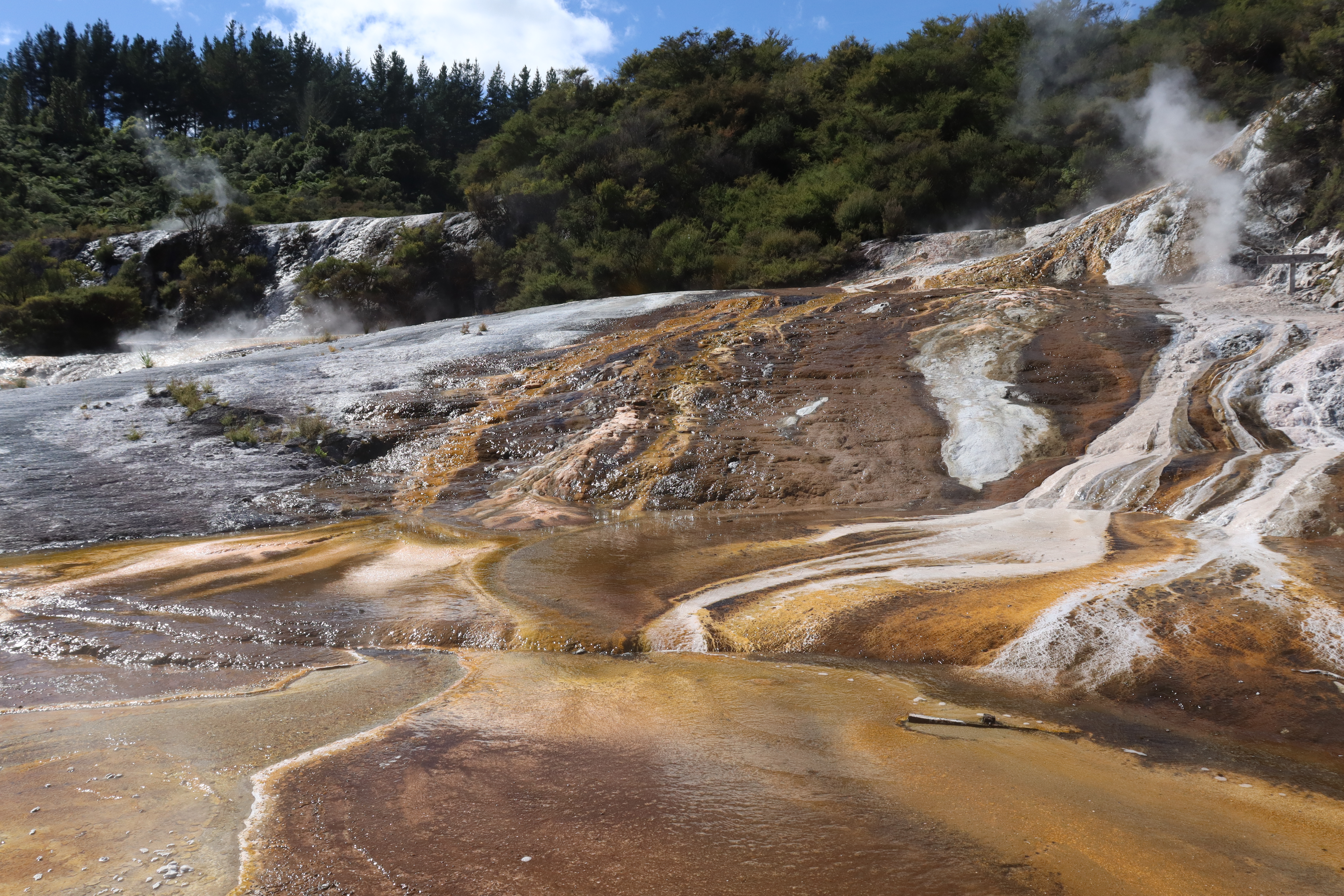
Cutting up northwards through Taupo, with a quick stop at the thunderous Huka Falls, we headed into geothermal country and spent several hours at Orakei Korako-The Hidden Valley, a wonderland of thermal features including geysers, fumaroles, thermal boiling pools and rock faces colored by heat tolerant organisms, silica terraces and boiling mud pools.  With the unmistakeable smell of sulphur in the air and clouds of steam hovering above the ground, this park is  smaller than, but equally as impressive as the more crowded parks of Rotorua.  Whist in Rotorua, we also checked out: Lake Rotorua with its very smelly but aptly named Sulphur Point;  the 5.5km walking trail around Blue Lake (which  actually turned out to be 6.9km!) with its viewpoints over Blue Lake and Green Lake -such imaginative names, but the lakes are very pretty;  and spent an afternoon exploring the Whakarewarewa Forest Park’s amazing plantation of California Redwoods and Douglas firs all dating back to 1901.

Heading out to the northern coastline along the Bay of Plenty, we passed through Whakatane to  come to our next stop: Tauranga or Mount Maunganui – depending which side of the  entrance to the bay you are on – where the town is dominated by the imposing Mount Maunganui, an extinct volcano at the end of the peninsula. Several walking tracks will take you around the base of the mountain or up to the summit for magnificent 360° views over the township, the bay and the islands nearby. All the summit walks are pretty steep, but somehow  I think we managed to find the steepest one!

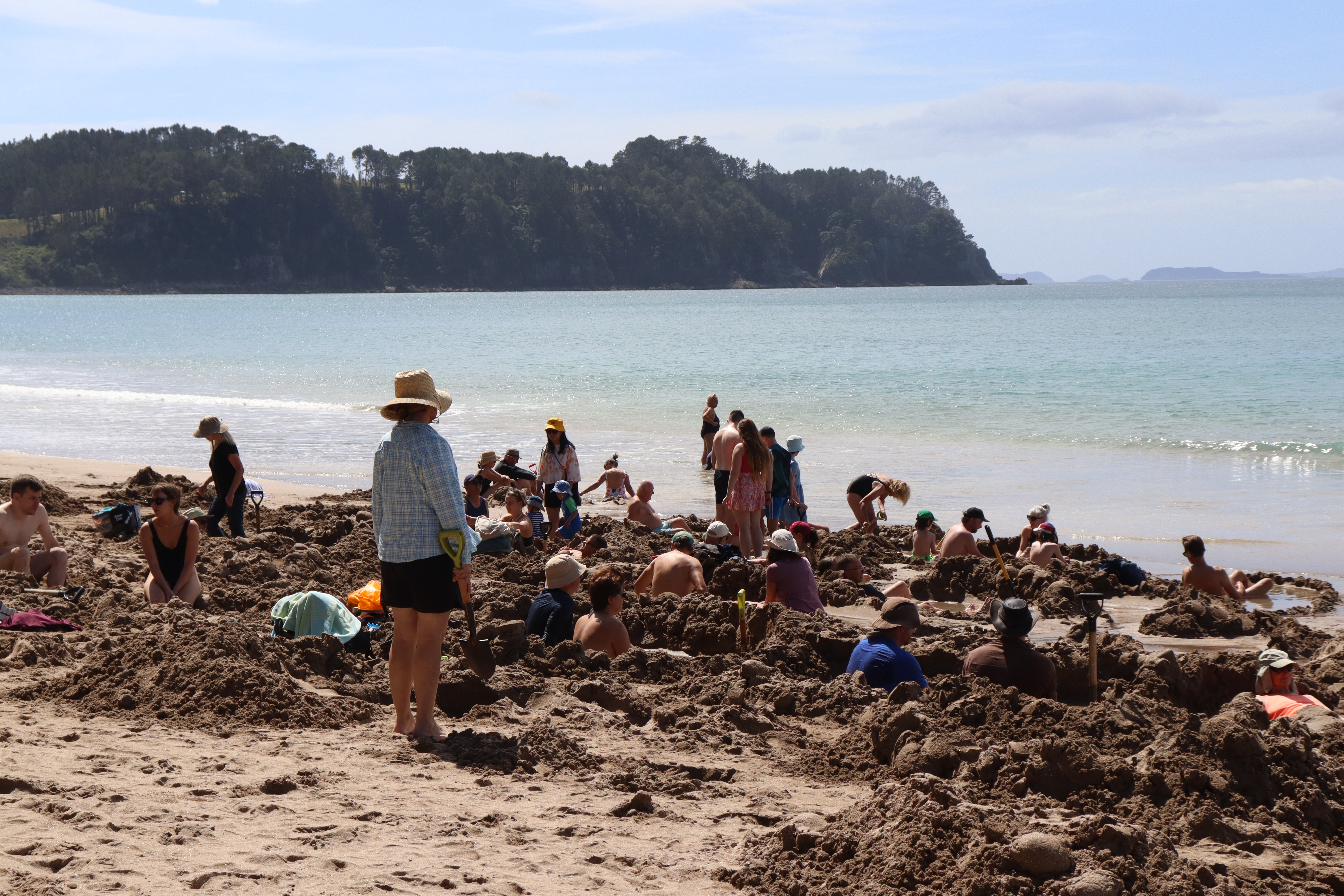
The Coromandel Peninsula is home to the Hot Water Beach at Whenuakite, which is certainly worth a visit, if not to experience the hot waters, at least to witness the crowds that arrive, armed with shovels and spades and proceed to dig holes on the beach to sit or  lie in the warm to hot water that rises from beneath the sand, depending on how deep they’ve dug. Hilarious!

The township of Coromandel on the western side of the Peninsula is a small town that caters well to  the tourist hordes that visit, with hiking trails, beaches, restaurants and tours. A highlight here is the Driving Creek Railway; a narrow-gauge railway built over a thirty-year period by its original owner and operator. Being the country’s first NZ-born potter, he initially built the railway to transport clay and pinewood from the hills above and down to  his studio and kiln. Over time he extended the tracks to enable replanting of native trees on the hillsides, and due to the steep inclines, he engineered several innovations including zig-zagging tracks,  tunnels, bridges, spiral sections and his famous double decker viaduct. The 90-minute tour takes you to the top of the hills to his “Eyefull Tower” Lookout, where you get amazing views over the Peninsula and the islands of the bays.
From Coromandel, it was a pleasant day’s drive around the coast and back to Auckland’s airport for our flight to Christchurch.

And so ended our three-week circuit of North Island.

Stay tuned for South Island adventures!

WTF or HA HA!!

  • Have you ever tried to cook  spaghetti and Bolognese sauce for four adults in one 14cm pot and two small frypans?? Somehow Gary managed it on our first night in Auckland!
  • Wakachangi beer – worth buying a box of it just to read the hilarious “history” of its origin.
  • Driving up Cape Reinga through lots of open farmland with sheep and cattle – then suddenly there’s an EMU -just one!
  • Taking the Hokianga Ferry across to Rawene, got chatting to a guy from Melbourne who was doing the Tour Aotearoa. That’s a bike ride from Cape Reinga to Bluff ie northern tip to southern tip and its over 3000km. If doing it by the rulebook you must  do it in no less than 10 days but no more than 30! WHAT? Madness!!
  • Another EMU….and a couple of ostriches….AND a hedgehog -never seen one of them before!
  • What is it with people??? At Orakei Korako Geothermal Park, when the sign says “Danger – Fragile Surface” and “Keep to the walkways,”  why does some stupid IDIOT woman think it’s ok to step out and jump onto the silica terraces. Secretly I was hoping the ground would crumble beneath her and she’d find out the hard way!!
  • Get to the motel in Mount Maunganui, ready for a nice cup of tea, but there’s no milk. When I asked the owner, “Is there any milk?’ his serious answer was, ‘No, the milkman never came!”  Never mind the fact that this motel is about half a block from a big supermarket!!
  • Heading to the Bakehouse for lunch, Google maps says its less busy than usual – yep, it sure was LESS busy – it was CLOSED!
  • We’ve decided that the biggest employer by far in New Zealand is the Roadworks Department-we’ve had to stop so many times EVERY day for 10, 15, or even up to 20minutes for roadworks! And that was just on the North Island!!
Tabers Travels Go West

Click on images to enlarge.

Western Australia.

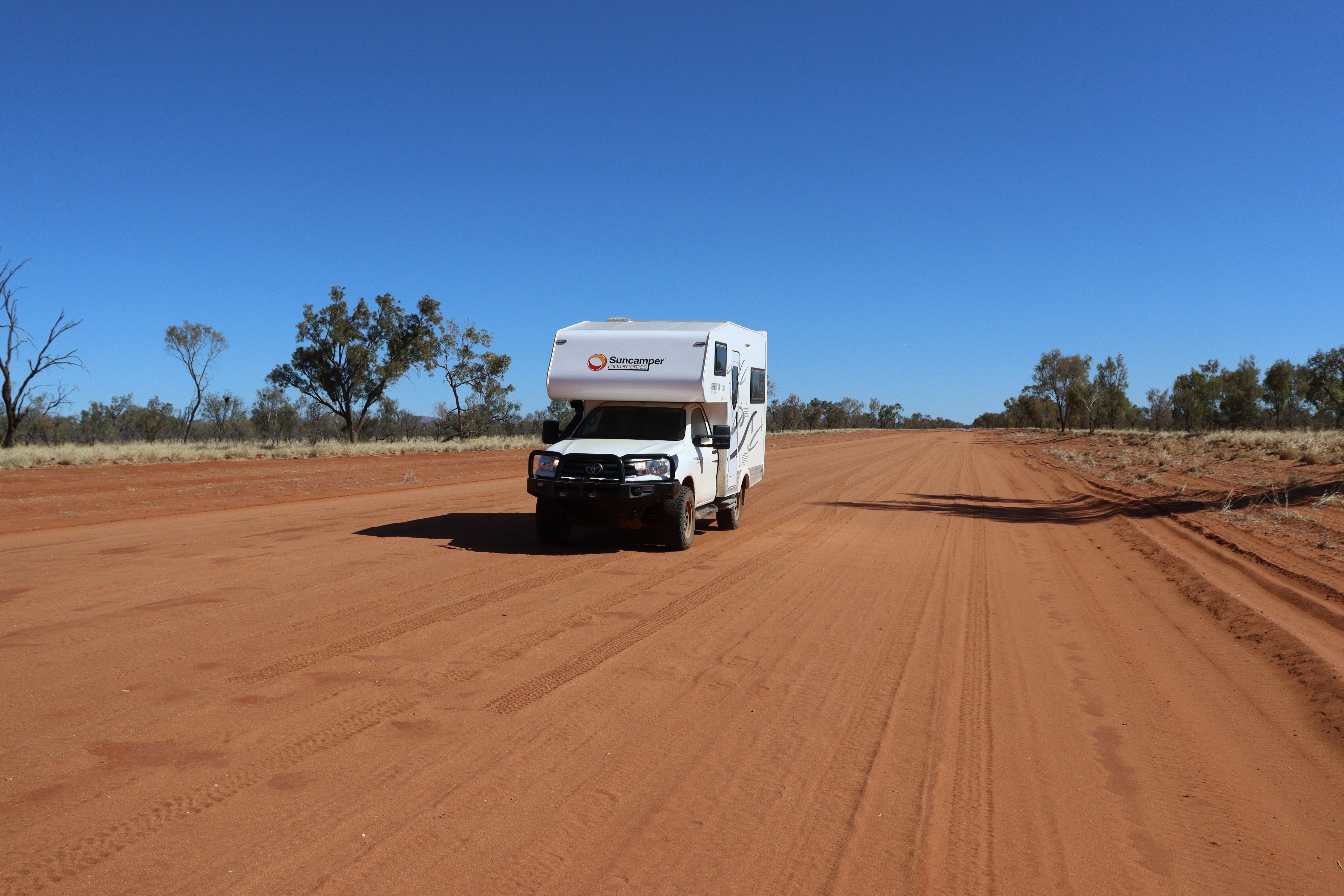
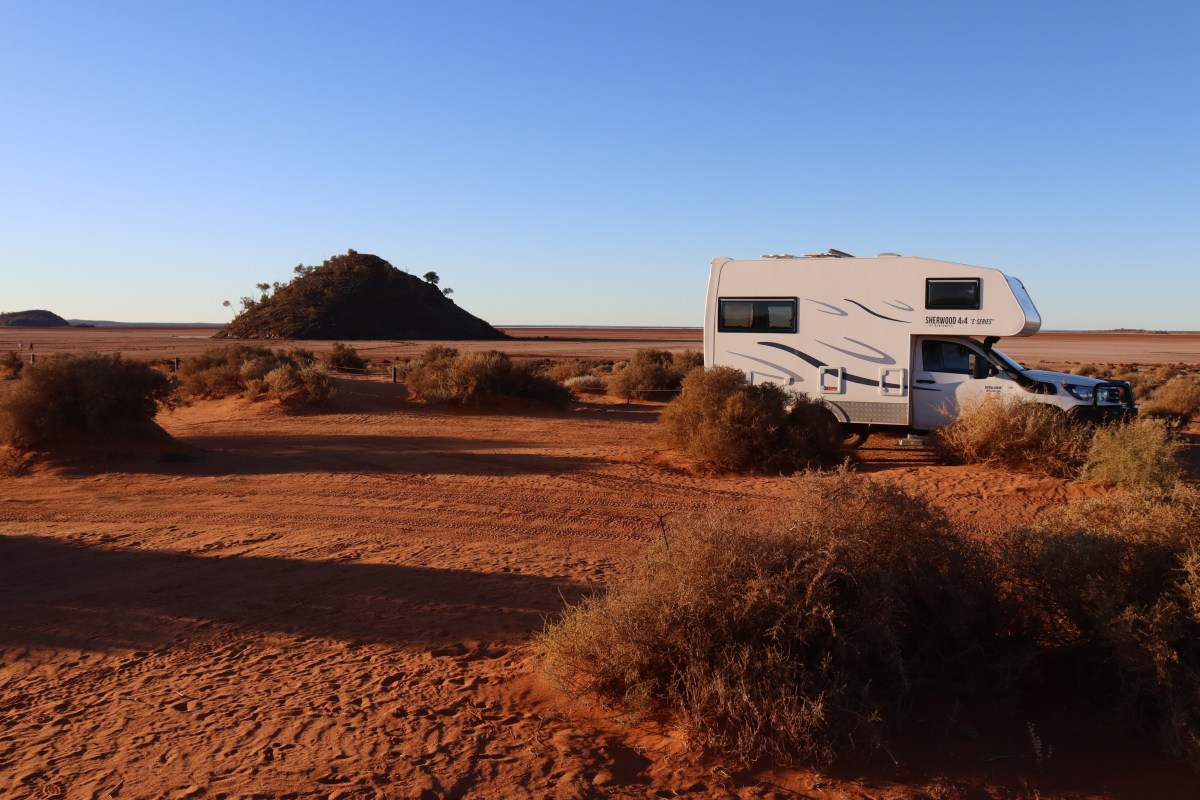
It had been over 36 years since we had travelled over there (except for a brief stop in Perth airport on our way to Broome for a Kimberley Cruise) and we had a few places on the list that we had never been to, so we packed up Roxy (the motorhome) and took off.

Rain once again had impacted on our initial travel plans: we had intended driving up into the Northern Territory and across to WA on the (dirt/gravel) Great Central Road, but as we began our trip, that road was closed due to  rains, as were several others. We even managed to get stranded for a few nights in a couple of places where the rains came after we travelled in and so we had to wait till roads dried a bit and opened again before we were able to get out again. No drama – all part of travelling the outback during winter.

So instead of heading north, we took the “easy” option and drove across the Nullarbor, which was great as we hadn’t done that for 36 years either.

Along the way, we stopped in at a number of places to vary the route and make it a little more interesting.

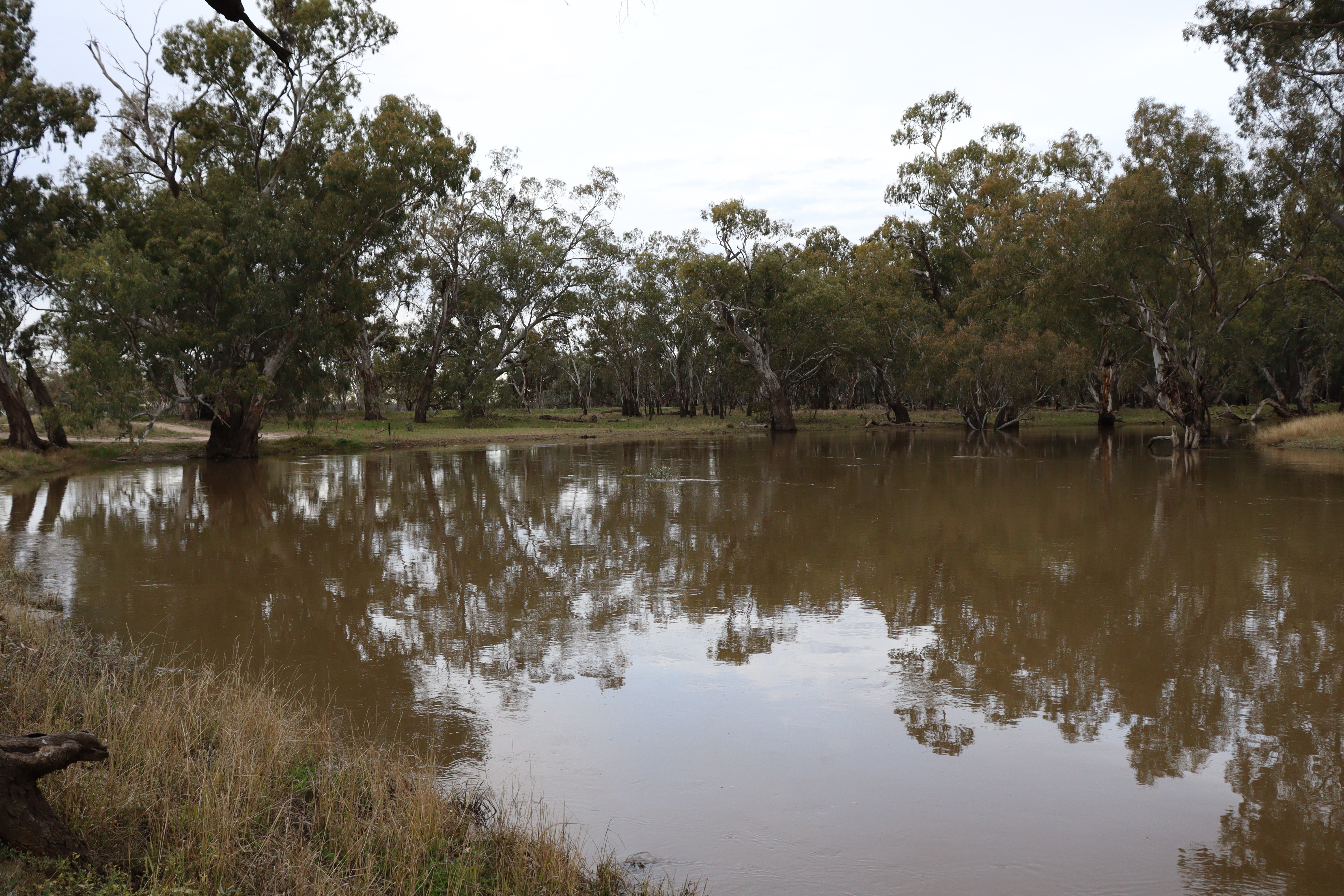
Starting with a couple of nights camping on the Murray just out of Robinvale, we headed up through Mildura to take a back road (dirt of course) across to Renmark, thus avoiding the main highways and traffic. Pulled up for the night at a free camp on the Rufus River Road at Lake Victoria, and true to form, the rain came which kept us there for the next three nights as the road was closed to all traffic. We managed to fill in those days quite easily by exploring the local area, although we couldn’t venture too far as we had to go on foot – even then we found ourselves getting taller with the sticky mud clinging to our shoes. So we checked out Lake Victoria with its resident populations of pelicans and cormorants and other water birds, and its sad history of the Rufus River Massacre of 1841. We also took a longer walk out to the Lock 7, one of the 13 Locks along the Murray River which maintain flow, water levels and navigation of the river. No boats coming through that day, so we turned around and walked the long sticky walk back to our campsite.

After three days we heard the road was open again, so rather than continuing through to Renmark, we thought it was wiser to backtrack the shorter distance to the bitumen and stay on bitumen for a while. In doing this we still had to navigate about 60km of sticky gluey road and we quickly concluded that this road should NOT have been open to traffic yet!! However, we made it back to Wentworth, with Roxy weighing a whole lot more than when we went in, due to the mud that had collected in every wheel well and on the mud guards and bumpers. We even had to stop at one point to clean off the manual step that had dropped down with the weight of the mud it had collected as we drove along.

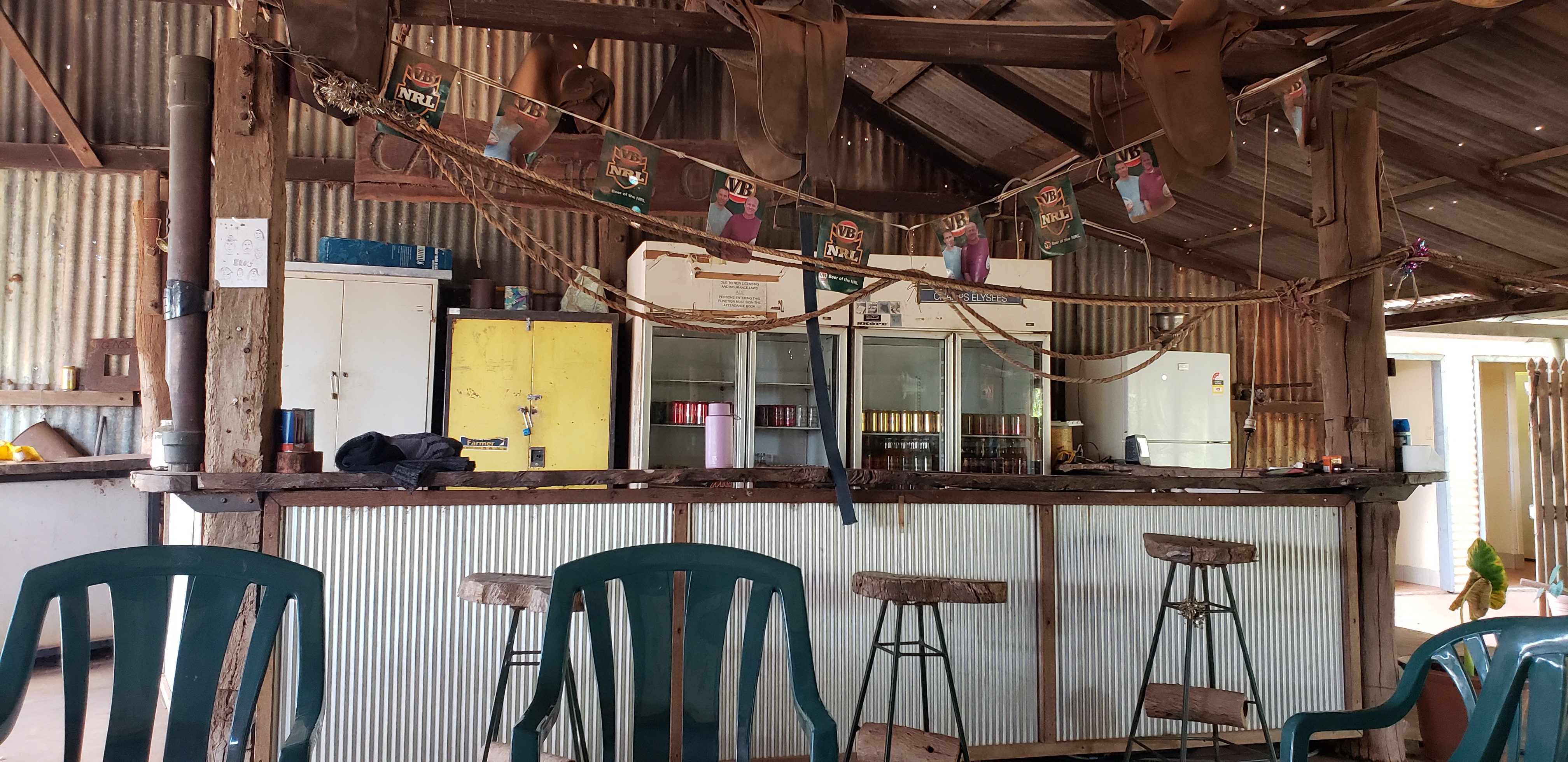
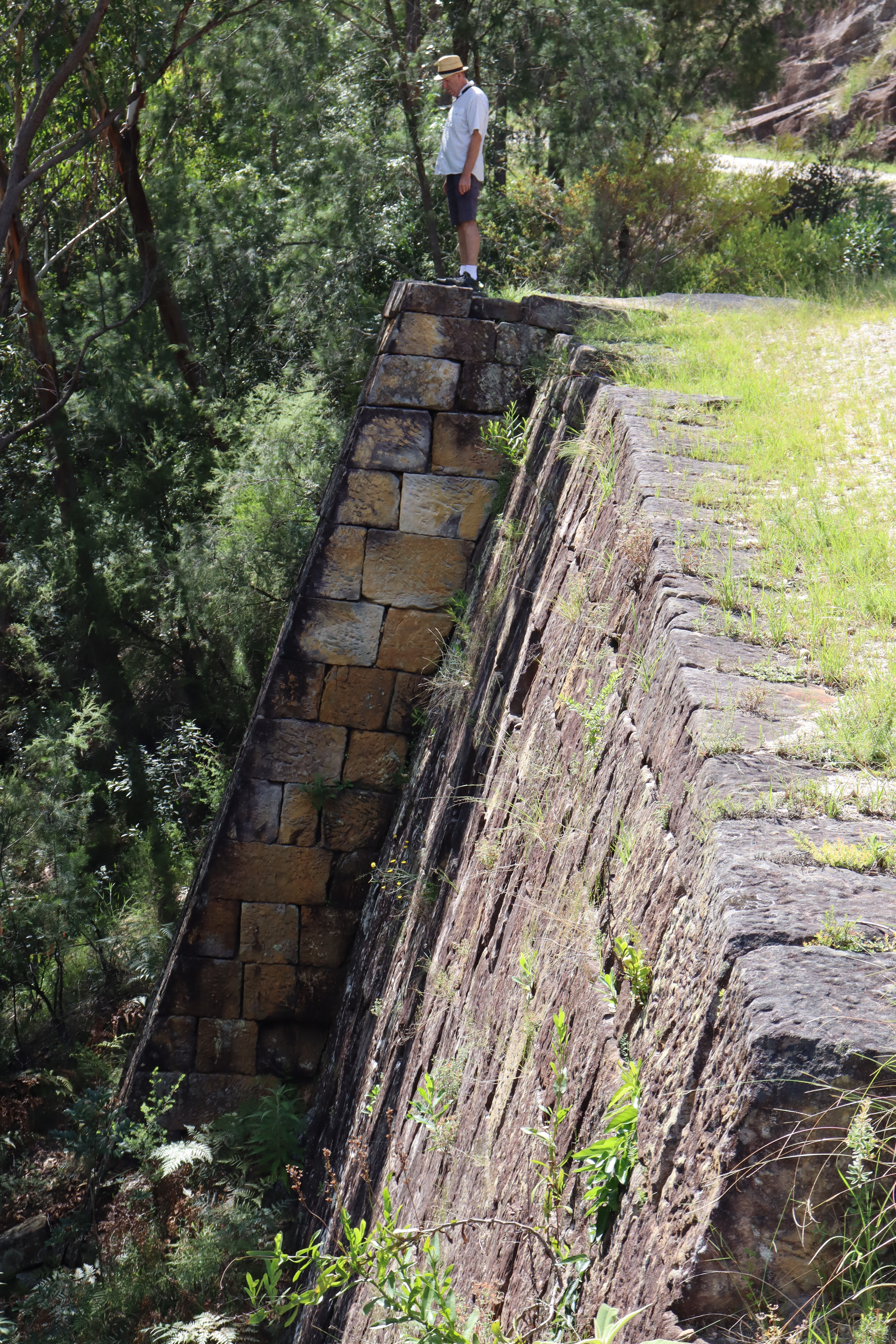
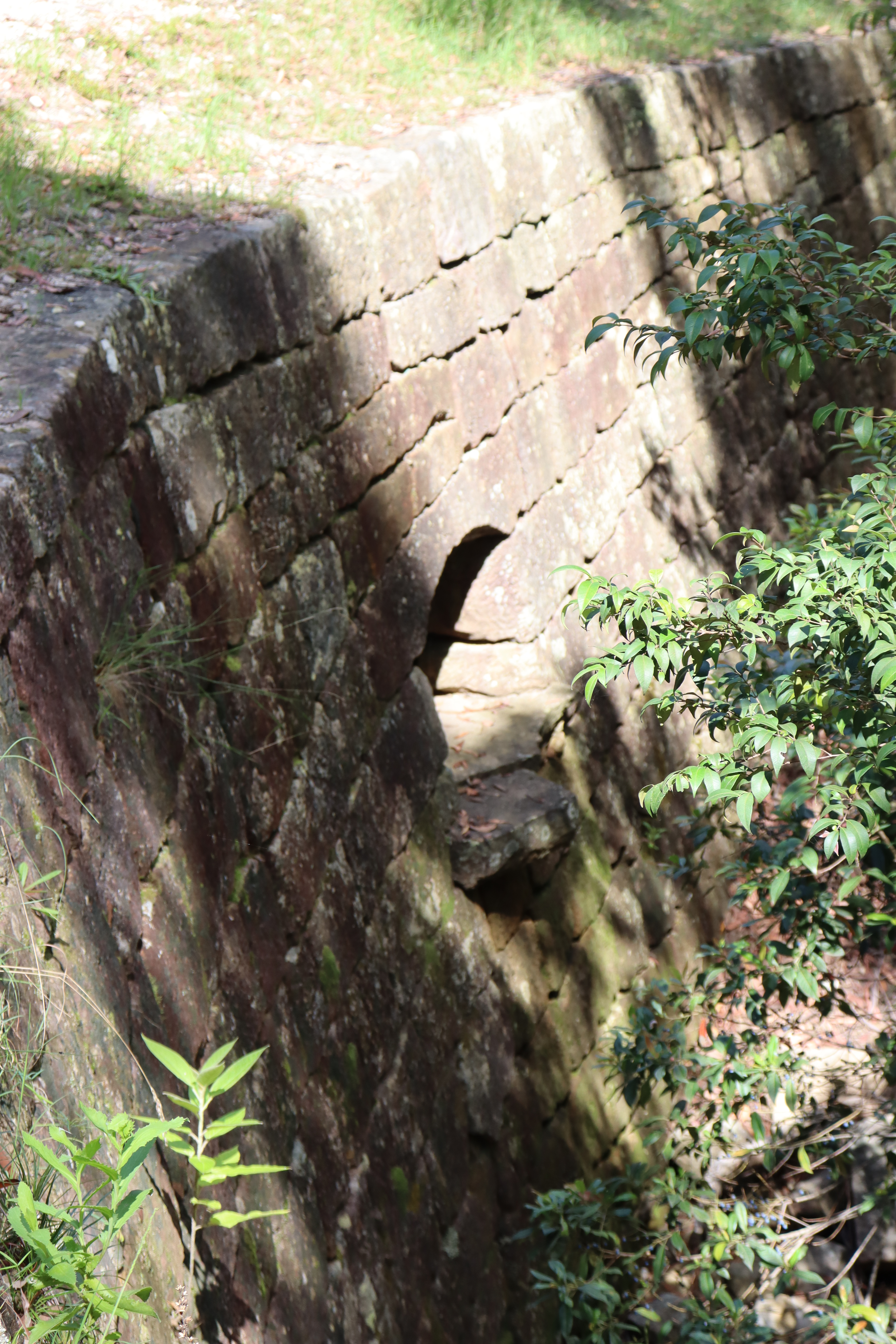
Staying on bitumen till we got through Port Augusta, we turned onto a dirt road to spend a few nights in the Gawler Ranges at Mt Ive Station, a working sheep station that offers camping, accommodation and a bar, along with its unique tourist sites including Lake Gairdner, a huge salt lake where annual Speed Week events occur and Land Speed Records are attempted.  Four-wheel drive tracks around the property take you to other sites of interest, including the Organ Pipes, a large stand of rhyolite pillars, and The Embankment, a dry-stone wall dam built in the late 1800s for water catchment. This dam wall does have a small leak and although he tried (and unlike the little Dutch boy) Gary was unable to stem the flow by plugging it with his finger!

Leaving Mt Ive, we passed through the Gawler Ranges National Park – spotting a Mallee Fowl on the roadside – and down to meet the Eyre highway at Minnipa, to continue on our way out west, with a couple of overnight roadside stops.

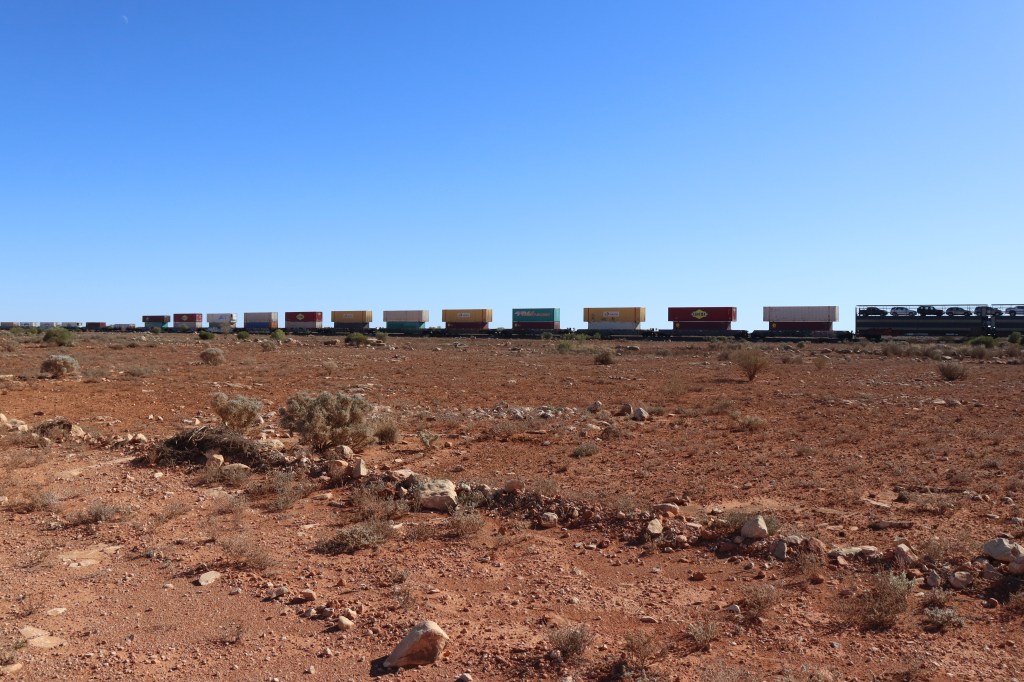
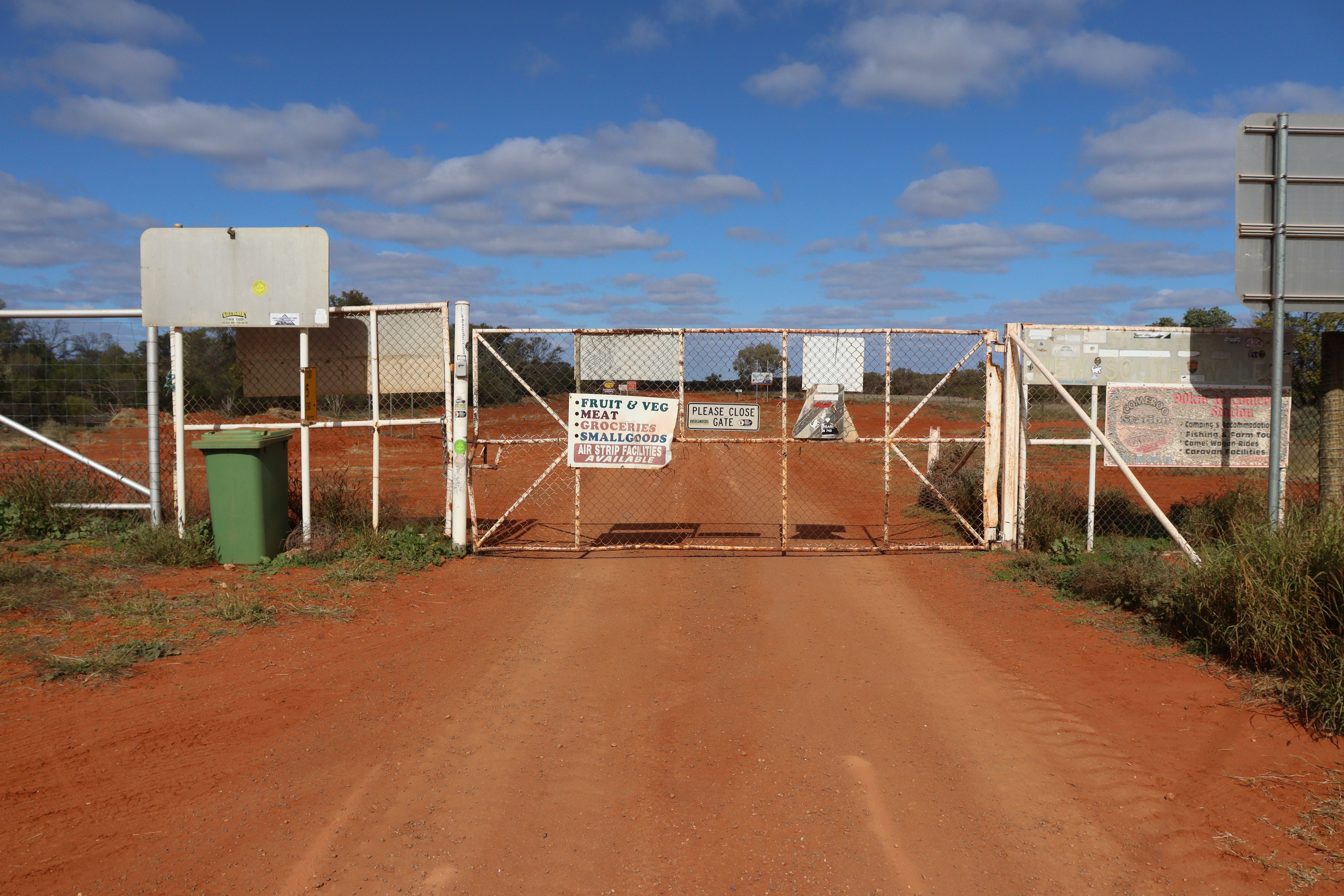
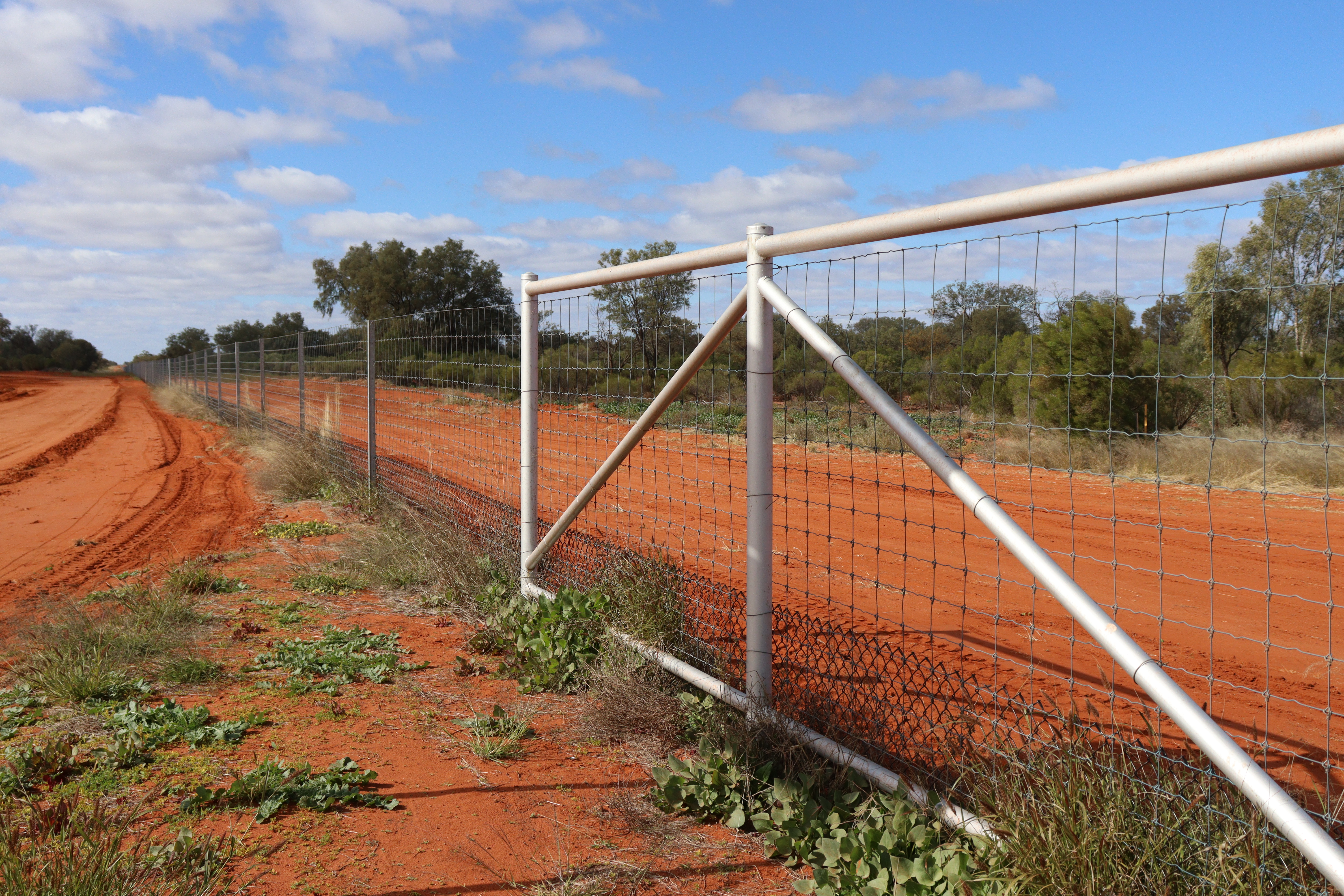
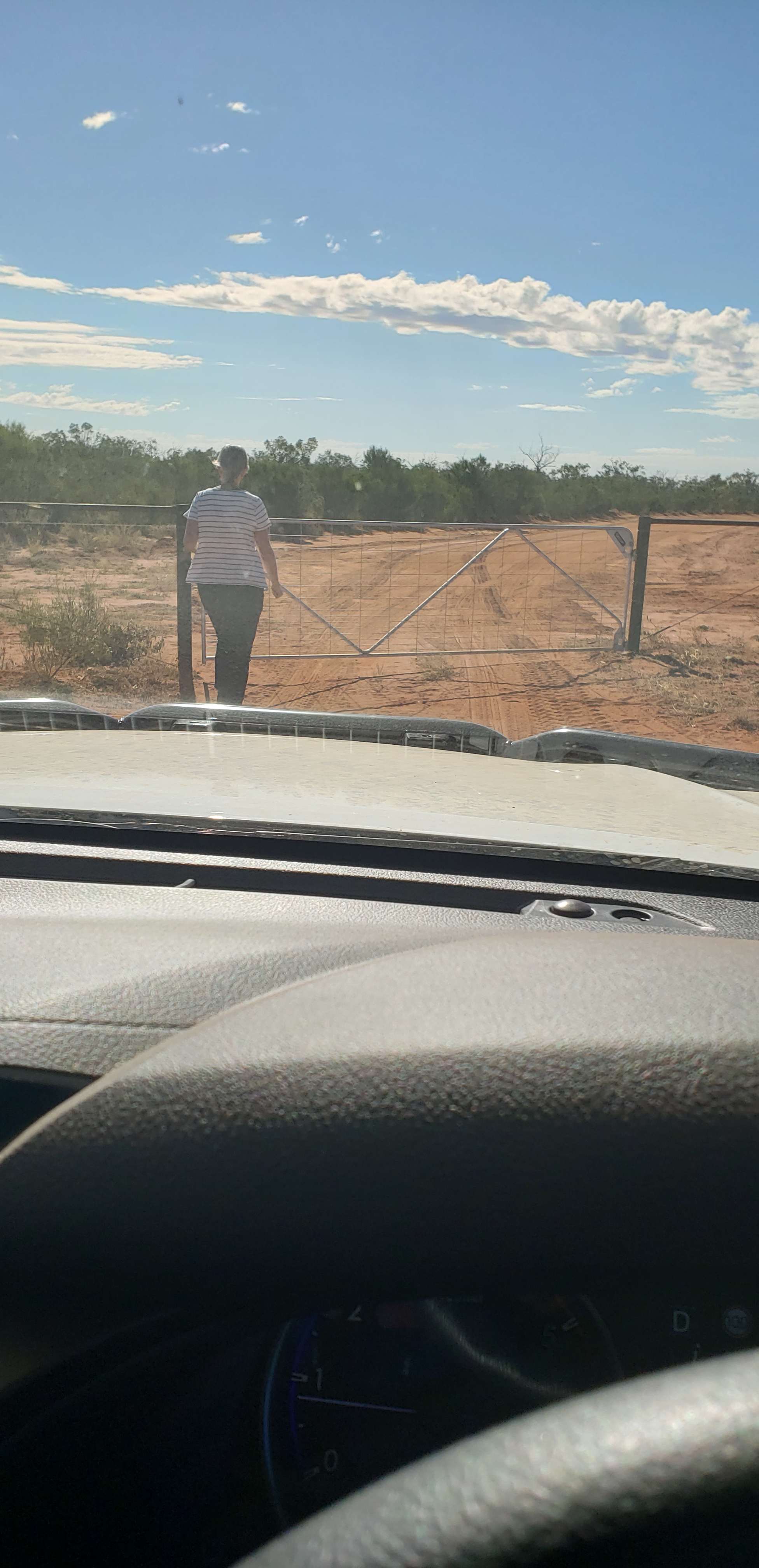
After crossing into WA and driving about 300 km, we detoured off the main highway and crossed the plains northwards on a pretty rough “road” (120 kilometres took us 6 hours!!), through 11 farm gates of varying styles, till we hit the Trans Australian Railway line at Haig, one of the original “towns” along the Line.  From there, we followed the railway line on the Trans Access Road, a very well-maintained dirt road, the rest of the way into Kalgoorlie and the Goldfields.  Stopping in at Rawlinna (population 30) another of the towns along the line, we had lunch and a cuppa on the huge tables at the station, where passengers on the Indian Pacific train trip across the country are treated to an “Outback Experience” of dinner under the stars.

Kalgoorlie has a great FREE (in our price range) Museum of the Goldfields, and lots of grand buildings dating back to the height of the gold rushes there. The town is dominated by the “Superpit”, the huge hole in the earth formed by dredging for gold. If you do nothing else in Kalgoorlie, it is well and truly worth going up to the Lookout which overlooks this massive operation, where, since gold was first discovered in 1893, over 60 million ounces of gold has been produced, making it one of the richest gold producers in the world.

The Super Pit gold mine, Kalgoorlie

North of Kalgoorlie, we called in at the Two Up Shed, one of only two venues in Australia where Two-up, the gambling game popularized by WW1 Australian soldiers, is legally played any time, happening here most weekends and public holidays. Elsewhere playing the game is illegal except on Anzac Day.

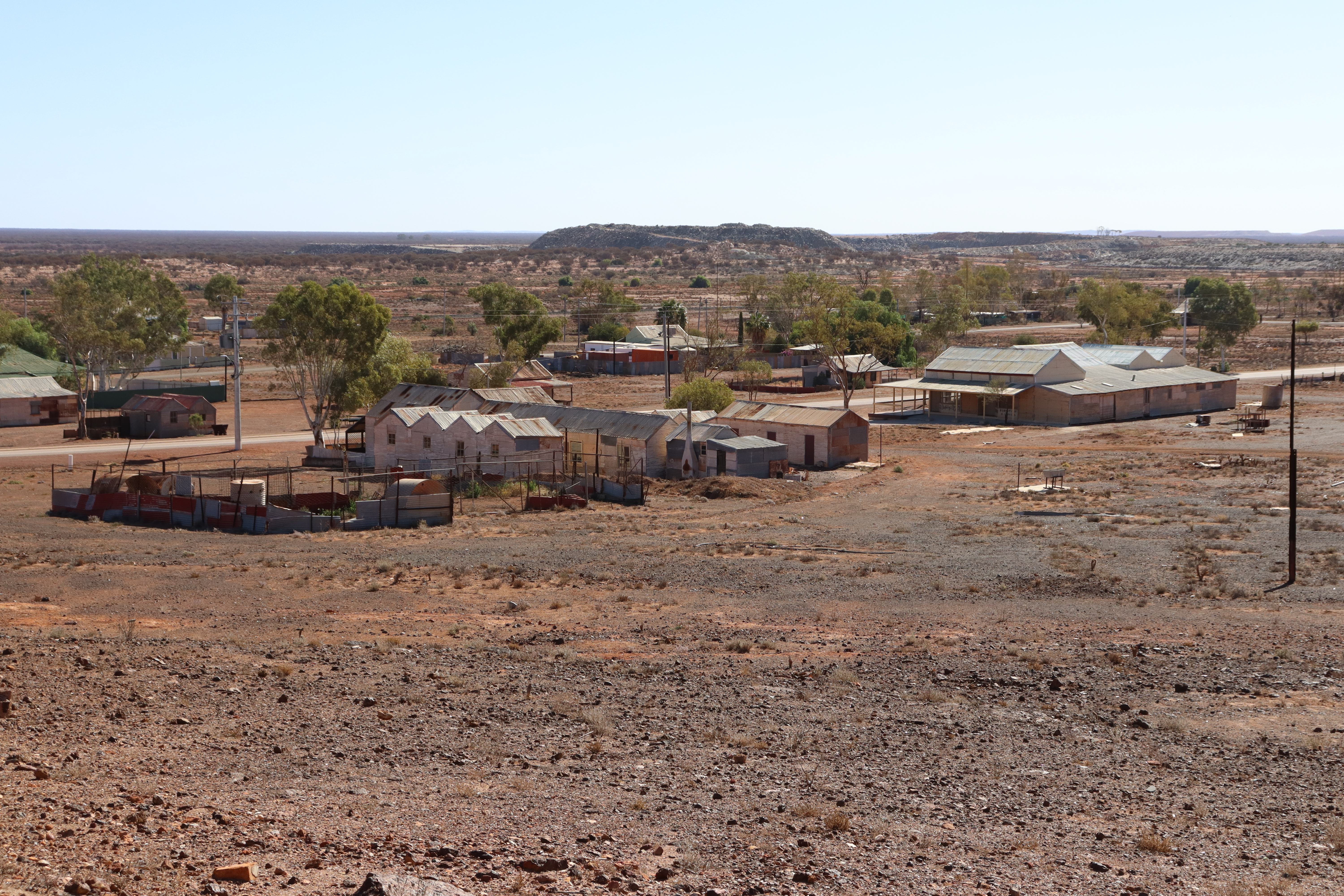
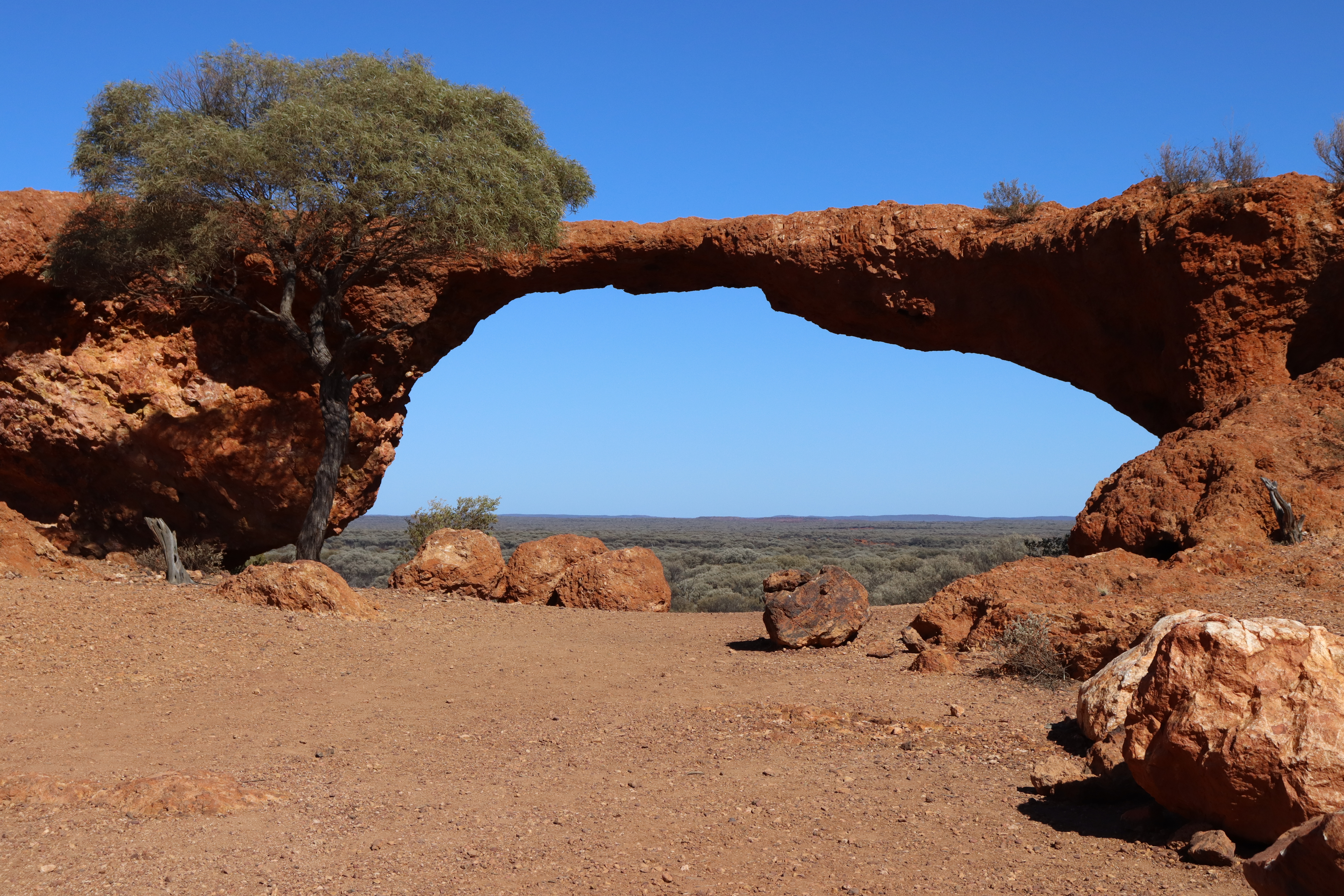
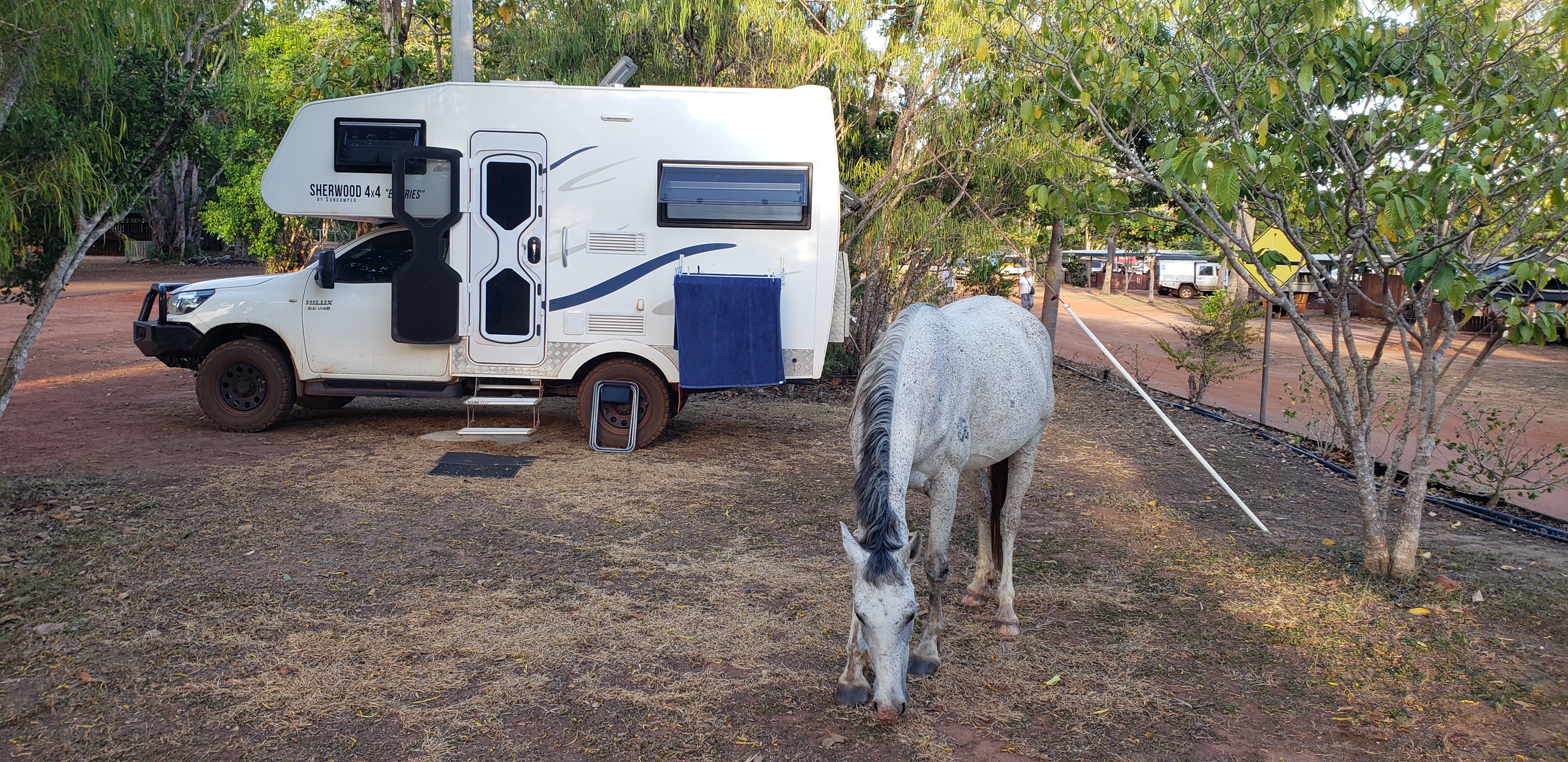
After lunching on the biggest hamburgers I’ve ever seen at Broad Arrow Tavern, we followed the Golden Quest Discovery Trail along  some minor trails and backroads to places steeped in goldfield history, including: Ora Banda, Copperfield, Goongarrie,  Davyhurst and Mount Morgans,  most of which are now just sites of former towns;  and Kookynie, a stop on the rail line that still boasts an open pub – but getting a drink can take a while as feeding the local horse at the front door takes precedence!  And the quaint old town of Gwalia, home of the 1.6 kilometre-deep, 1897-established Sons of Gwalia Mine, once managed by (future US President) Herbert Hoover, and where old miners’ cottages and “camps” (shacks) have been preserved and restored by volunteers. Goldfields towns that still have  decent (and friendly) populations and include Leonora, Menzies, Laverton and Sandstone, are surrounded by some amazing country and natural features, notably The Granites, and Ularring Rocks, both of which are piles of large red boulders and rocks that resemble a mini version of the Devils Marbles of NT; and the impressive London Bridge, a weathered basalt archway believed to be around 350 million years old.

Lake Ballard, a huge (mostly) dry salt lake has an outdoor art gallery featuring 51 life-sized metal statues representing people from the nearby town and spaced out across the surface of the lake, so you need to walk several kilometres to see them all. Gary managed to find about 32 of them but I only got to about 10!

From the goldfields we headed south through Meckering, site of the 1968 earthquake that was felt over a 700 km radius, virtually destroying the township and leaving a 37 km-long fault marking the quake’s vertical lift of 1.98 metres.

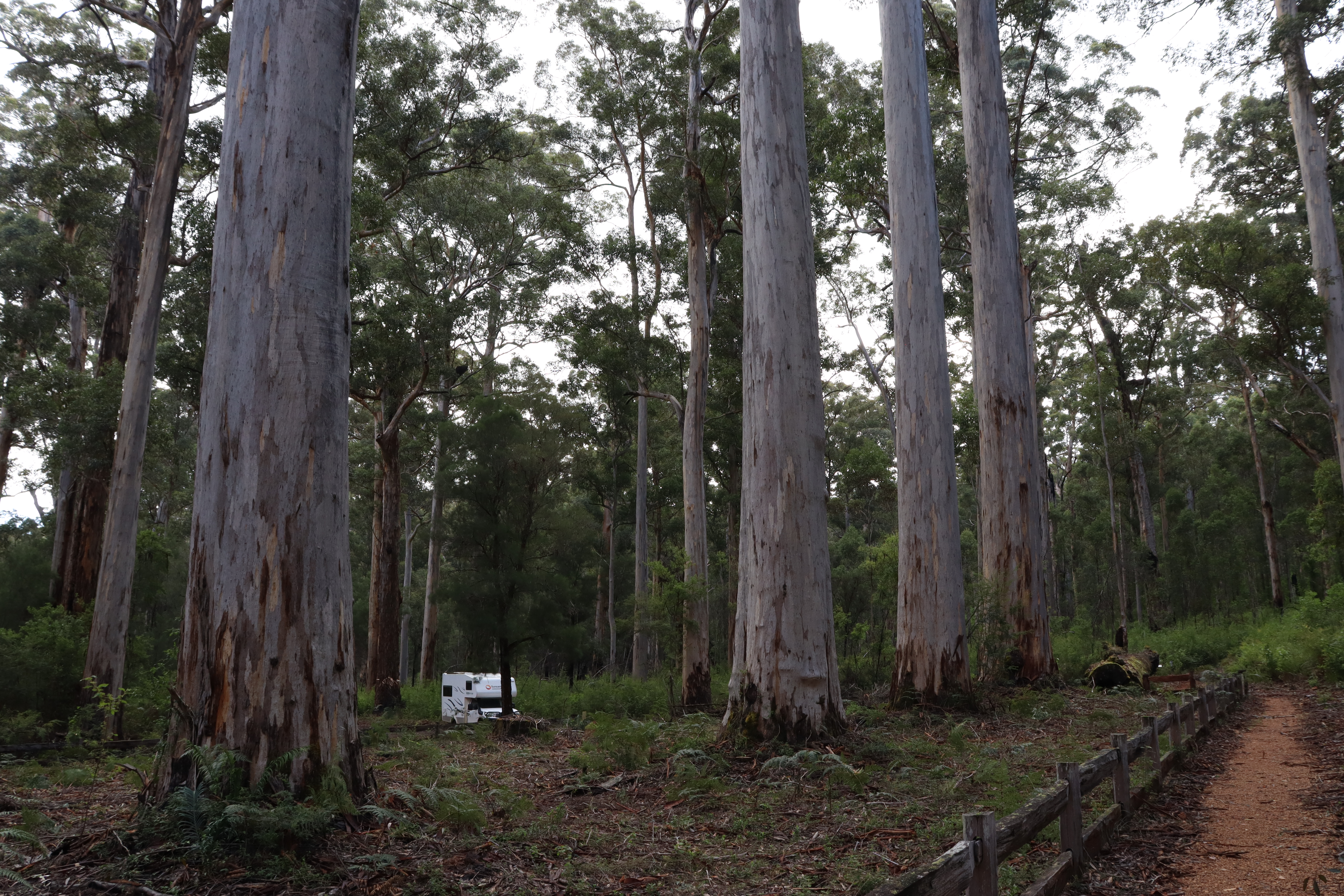
After a couple of days in Mandurah to visit Gary’s sister and brother-in-law, and checking out the Mandurah Giants, massive giants sculpted from timber offcuts – well we only managed to get to one – we continued southwards to visit the giant trees of the Southern Forests. These Karri, Red Tingle and Jarrah trees are amongst Australia’s tallest trees growing to heights between 45 and 80 metres and girths up to 20 metres at the base. Famous among these giants are the fire lookout trees, where the fire-spotters used to climb the peg-ladders to the top of the trees to spend their days on the lookout for fires in the forests. In the past you could climb several of these trees as a tourist thing, but (luckily!!) they were closed for climbing when we were there and due to safety concerns have now been closed indefinitely. We got the tall tree experience by walking the Tree Top Walk in the Valley of the Giants, where you walk along suspension platforms 40 metres above the forest floor, which sway as you walk, simulating the movement of the top sections of these giant trees. Pretty impressive.         

Starting to head eastward again, following the south coast of WA took us through some amazing places, mainly National Parks of the south coast.

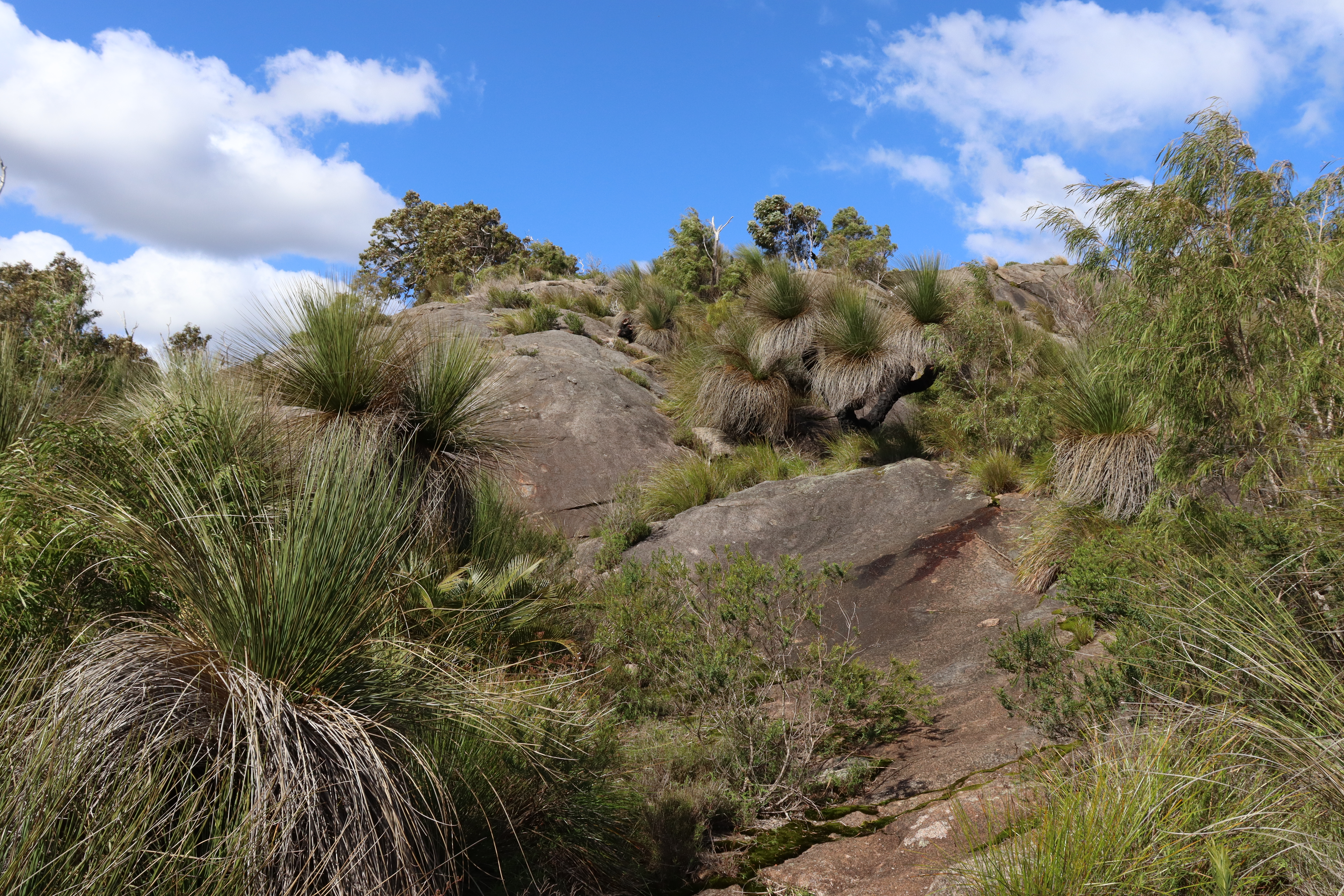
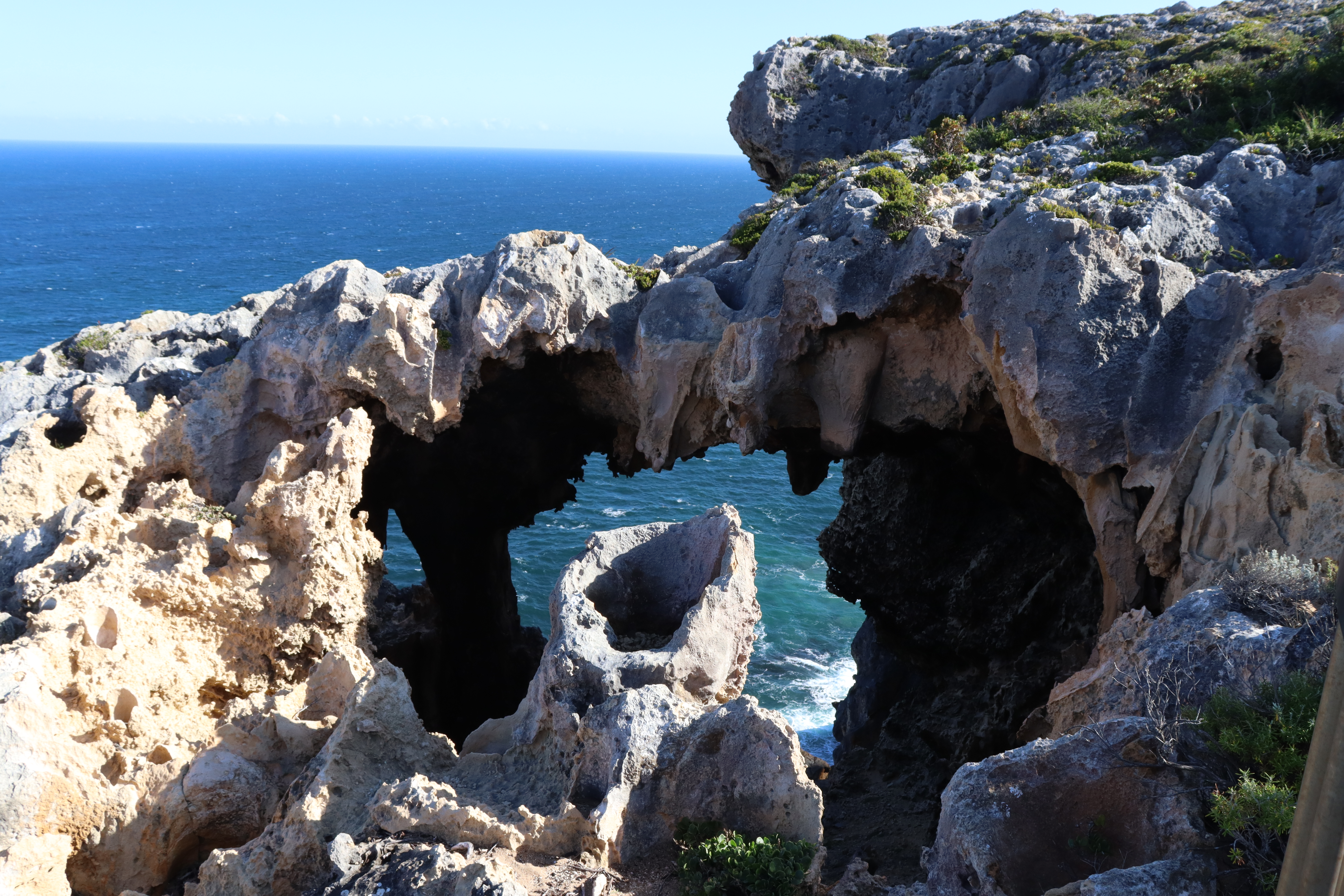
 The D’Entrecasteaux NP ‘s two sections are vastly different from each other but both well worth visiting. The coastal section near Windy Harbour showcases the wild rugged beauty of the coastline bordering the Southern Ocean here and features several lookout points with the highlight being the amazing “Windows” rock formation. Further inland, the NP’s Mount Chudalup section features (oddly enough!!) Mt Chudalup where we walked the 1.5-kilometre trail and scrambled over some steep sections of rocks to the summit of this great granite outcrop for amazing 360° views across the surrounding country all the way to the coast. This section is a botanical treasure trove hosting 42 native moss species, 28 lichens and 6 liverworts, as well as trees, bushes, grasses and grasstrees.

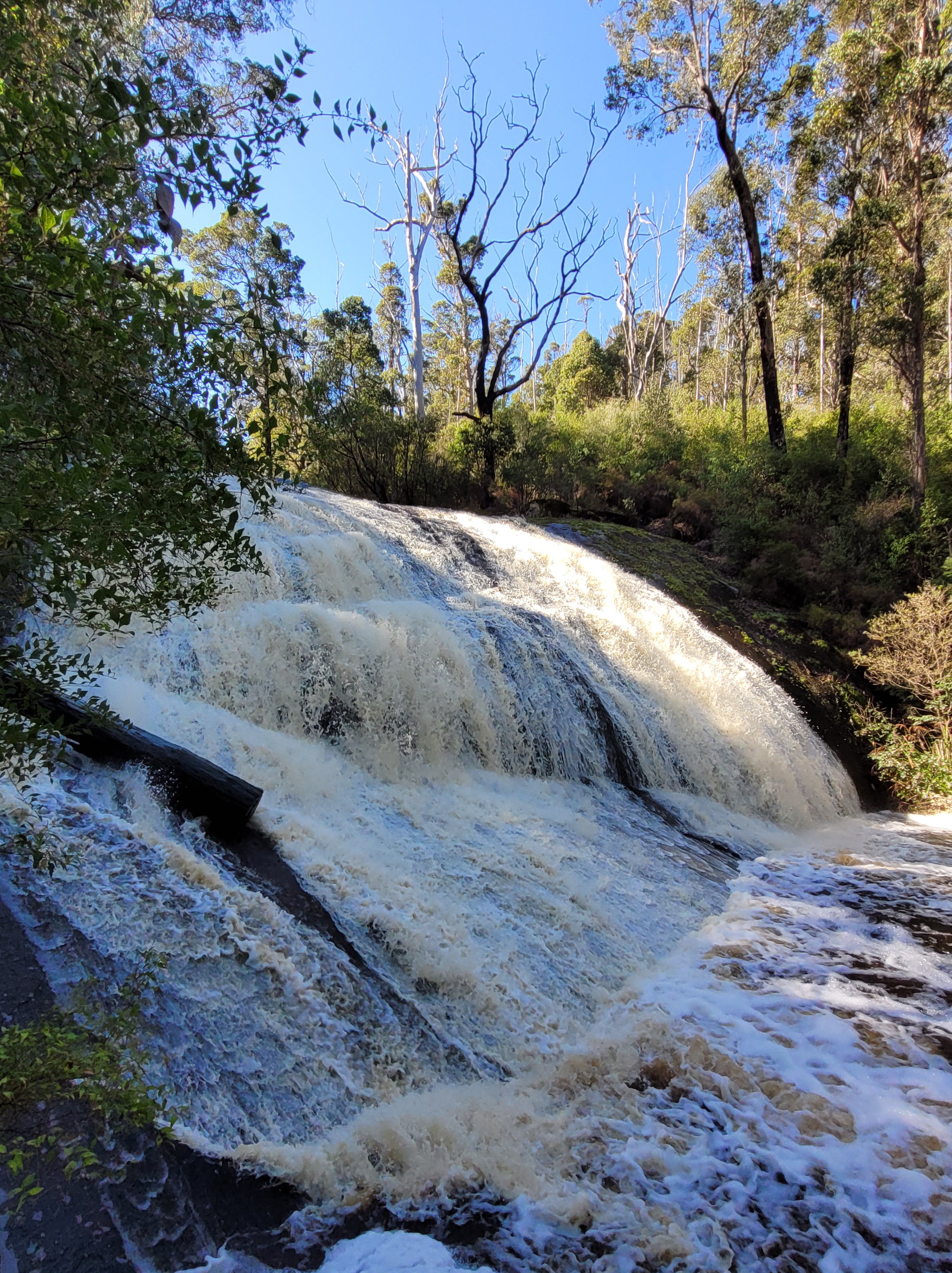
Passing through a number of other National Parks – Boorara Gardner with its spectacular Lane Poole Falls; Shannon NP, site of former timber-workers’ town but now a large camping area; Mount Frankland South NP with the thunderous Fernhook Falls; Mount Frankland NP with its steep trail, over 300 steps and several vertical ladders (and a warning NOT to proceed if “faint of heart or foolhardy” -ha ha!) to reach the summit, where we were nearly blown away by the gale like wind! – we finally came back out to the coast.

Torndirrup NP near Albany, is home to spectacular coastal sites that demonstrate the awesome power of the sea, namely: The Gap, where waves rush into a narrow chasm in the cliff, gradually wearing away the rock over millions of years; The Natural Bridge, where the waves have worn away the rock leaving an arch; and the Blowholes, where a small plaque on the rocks near some small cracks warn you to “Stand Clear – Heavy Swells force air and spray through cracks with great  pressure!” which indeed they do! Standing near the cracks, we were suddenly BLASTED with a huge rush of air which had us in hysterics at the unexpectedness of it!!

Albany is also home to the Historic Whaling Station, and a visit here is well worth it. There are several relics from the days of whale hunting including a whaling boat complete with harpoons, the cutting floor, several skeletons and LOTS of information. You leave this place wondering how the hunters could have continued hunting these beautiful, amazing creatures, and thankful that it has been banned.

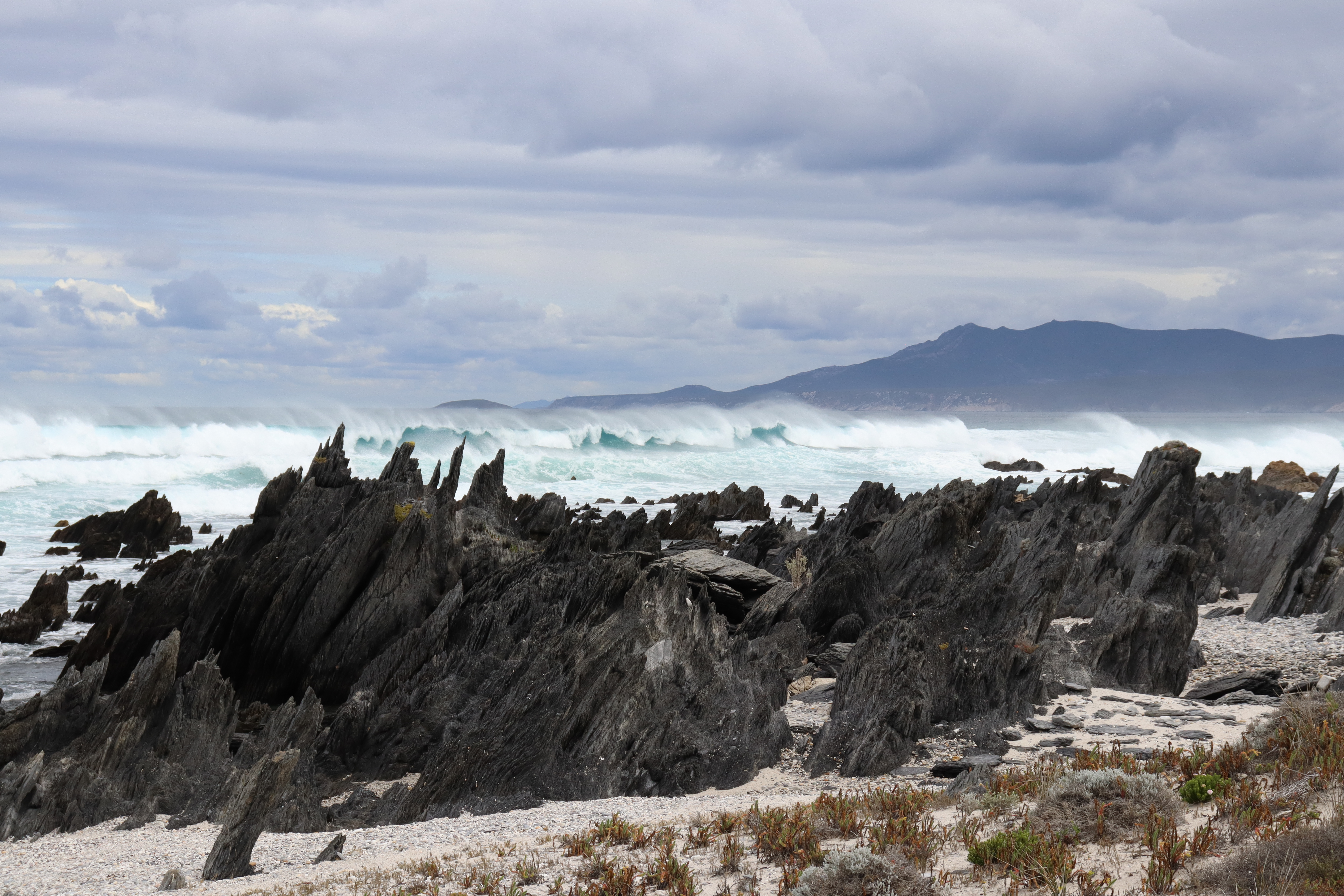
Near Hopetoun on the south coast, Fitzgerald River NP’s skyline is dominated by East Mt Barren rising high above the pristine white sandy beaches and turquoise bays, including Hamersley Inlet and Beach, where the inlet is closed off from the beach by a large sandbar that apparently only opens every ten years or so. Beyond the bar, the beach is filled with hundreds of large, sharp, jagged, shale- or slate-like rock formations sticking up vertically from the sand and the water. AND…. Sooo many coastal wildflowers!

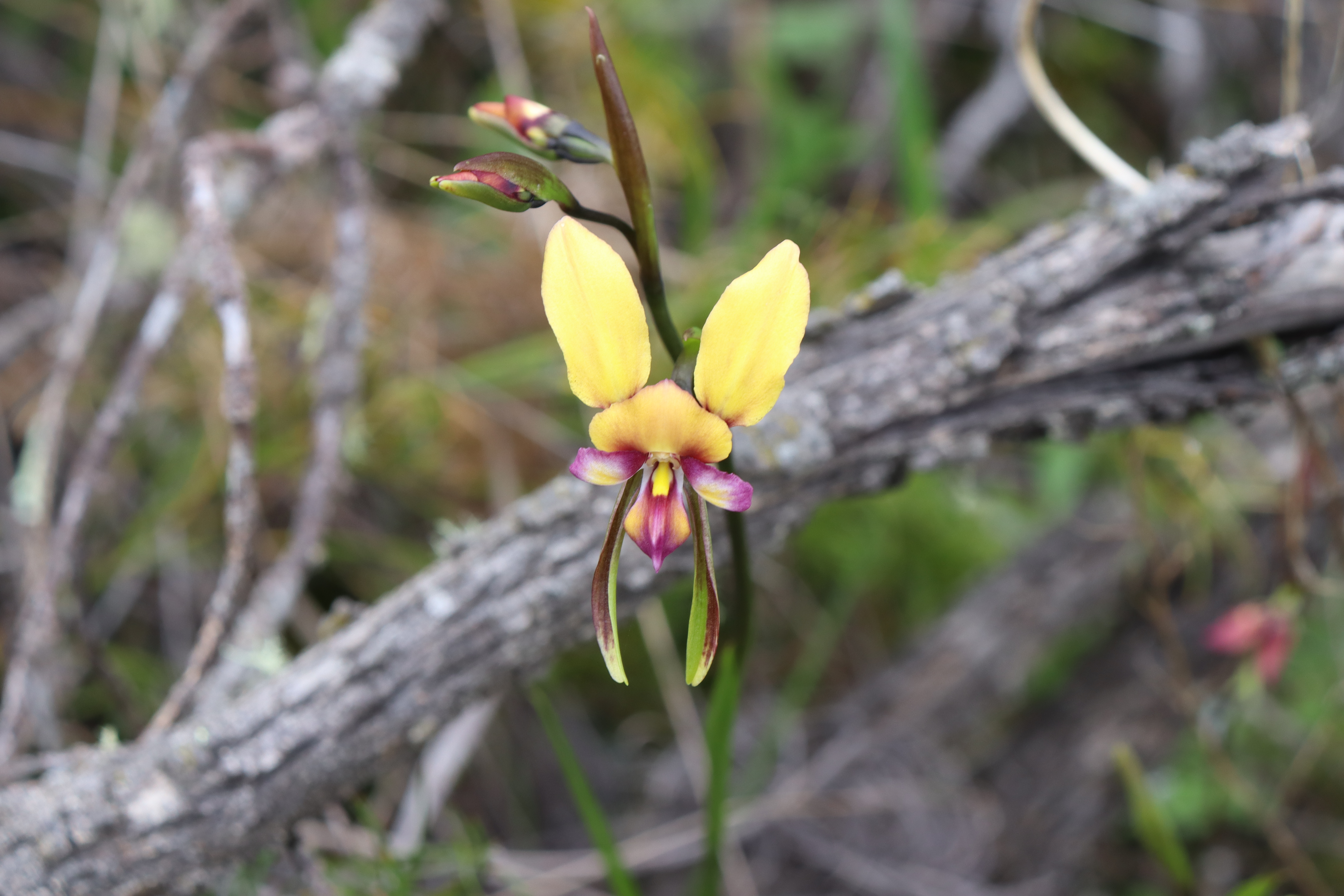
Not far from Esperance is Cape Le Grand NP, where we were treated to the most amazing coastal scenery with rocky ridges, pure white sand and the most perfectly turquoise waters I think I’ve ever seen!  A 3 km walk along the fine white squeaky sands of Lucky Bay – the Jewel in the Crown of this NP – takes you to the far end of the Bay where the turquoise waters break against red granite boulders on which several green copper plaques commemorate Matthew Flinders’ landing here in 1802 in HMS Investigator using the bay as safe anchorage during his circumnavigation of Australia. From the campground, we walked the opposite direction, passing another plaque honoring Flinders, over the headland on the Coastal Walking Trail to Thistle Cove, named in memory of John Thistle, Master of HMS Investigator, and where the huge “Whistling Rock” makes whistling, ocean-like sounds as wind passes through. Further afield more stunning beaches include Hellfire Bay with the same white sand, red granite and turquoise waters, Cape LeGrand Beach where you can drive 22km along the beach to Wylie Bay, and Rossiter Bay where seaweed has washed up and dried creating a carpet about a metre thick! And once again, we were treated to a wondrous display of native wildflowers, including lots of different native orchids in bloom. Magic!

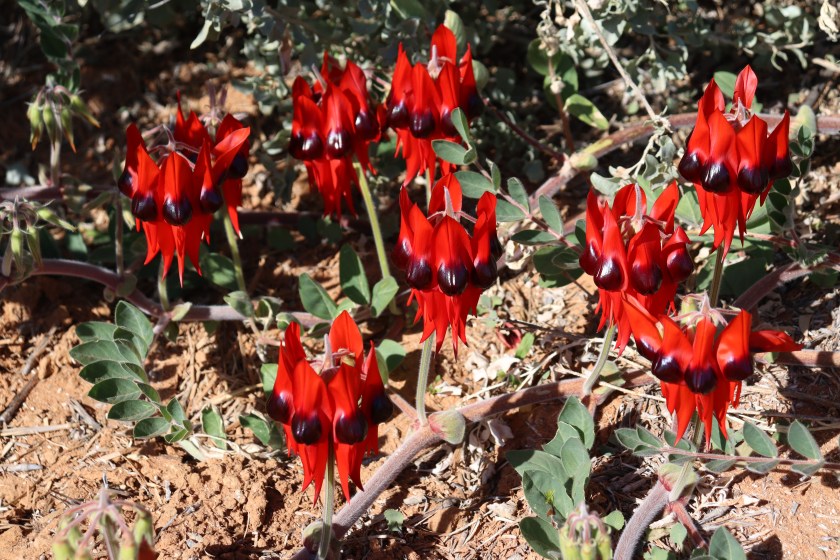
Traversing back across the Nullarbor, we paused to visit the remnants of the Eucla Telegraph Station that are slowly being consumed by the sand dunes, and had to do a U-turn to stop along the highway and take some pics of the only “garden” of the exquisite Sturt’s Desert Pea we saw on our entire trip. Further eastward, we stopped to view the awe-inspiring Bunda Cliffs of the Great Australian Bight, planning to spend the night there like stacks of others. However during the night the wind blew up  to such a force that not only kept us awake, but also had us fearful of Roxy being flipped over, so at 3 in the morning, we got up and drove about ten kilometres further along the highway till we found a little spot that was more sheltered from the wind – and THEN we managed to sleep!

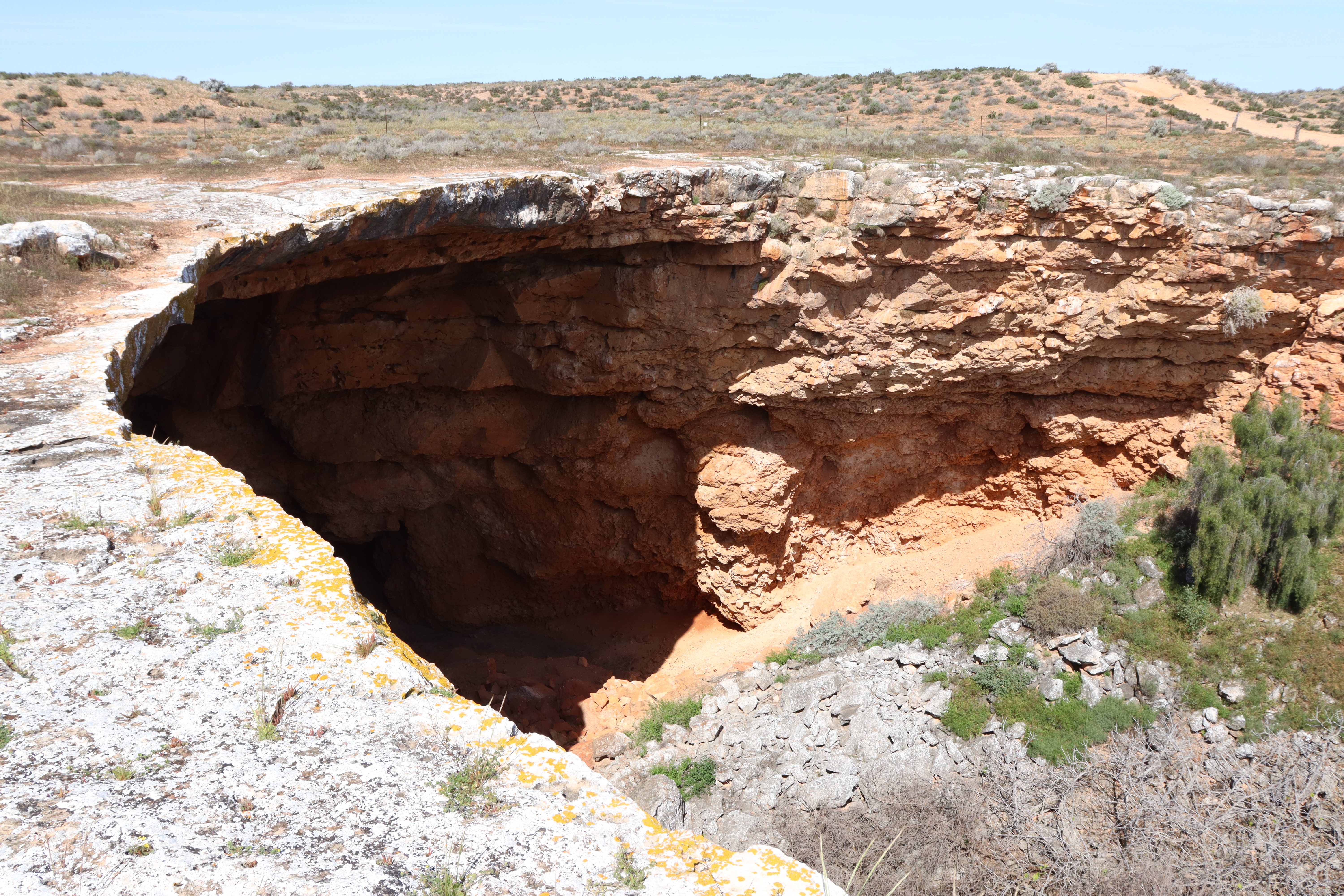
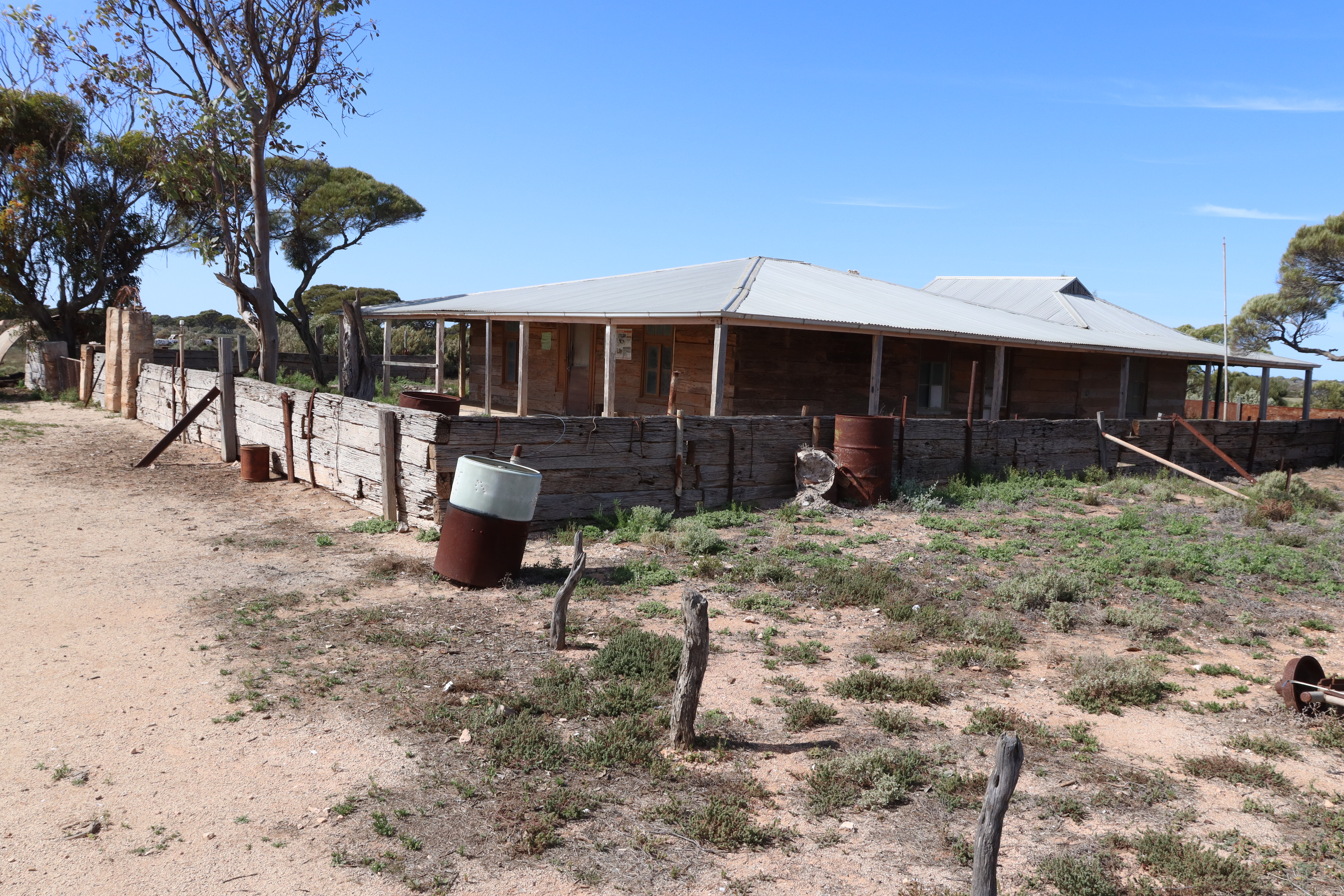
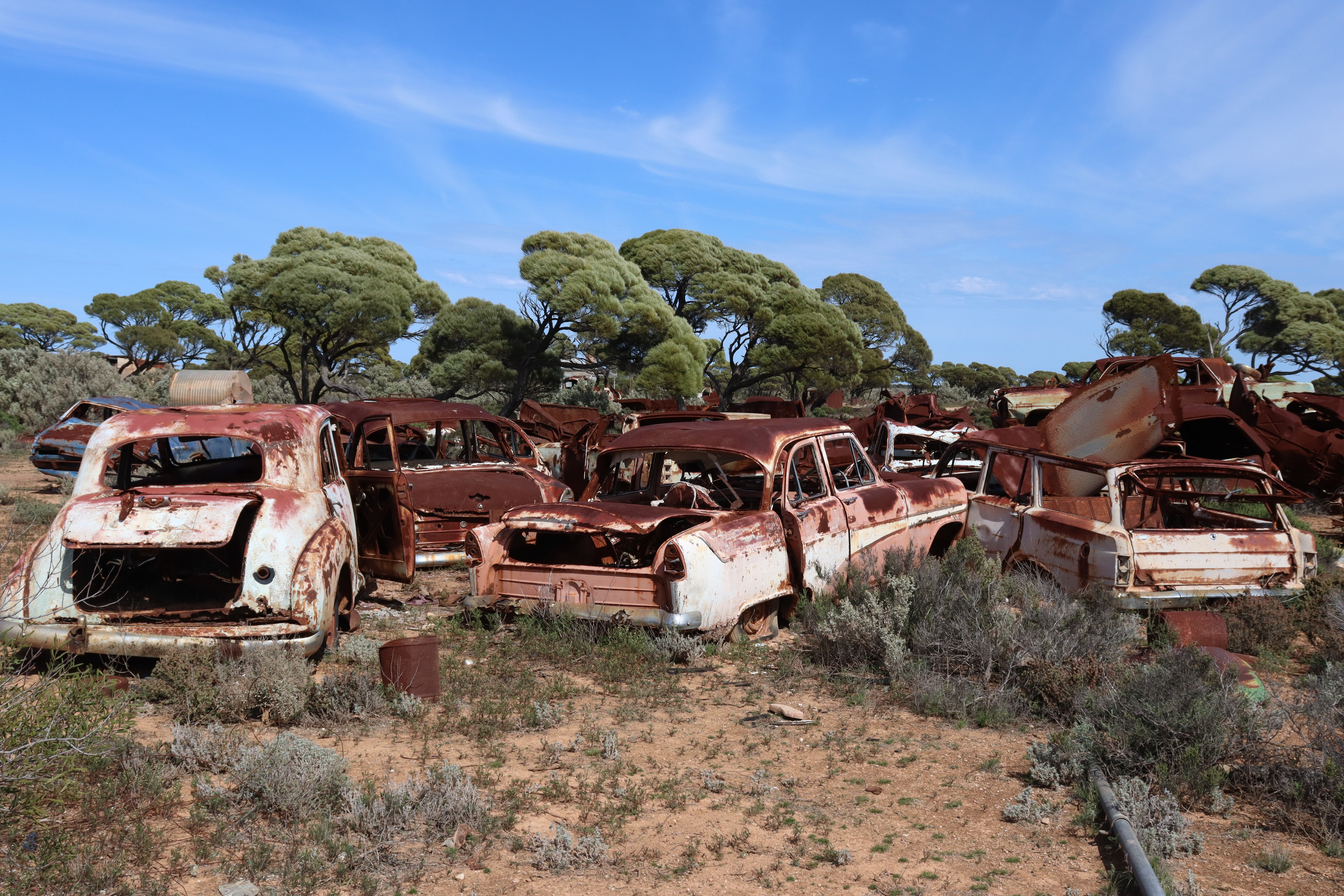
Heading inland, north off the highway, into Nullarbor NP we  checked out the historic Koonalda Homestead, where several of the old buildings, built from old railway sleepers from the  Trans Australia Railway and recycled materials from the old Eucla Telegraph Station,  remain in remarkably good condition, surprisingly with no vandalism or graffiti. What struck us most about this place was the number of “dead” cars – hundreds of them – parked everywhere. Turns out the Homestead was also a roadhouse or service point for travellers along the Old Eyre Highway, and over the years it became a graveyard for the vehicles that broke down! Some 8 kilometres beyond the homestead lies the Koonalda Cave, a huge sinkhole with underground water supplies from which water was pumped to service the homestead and for their stock.

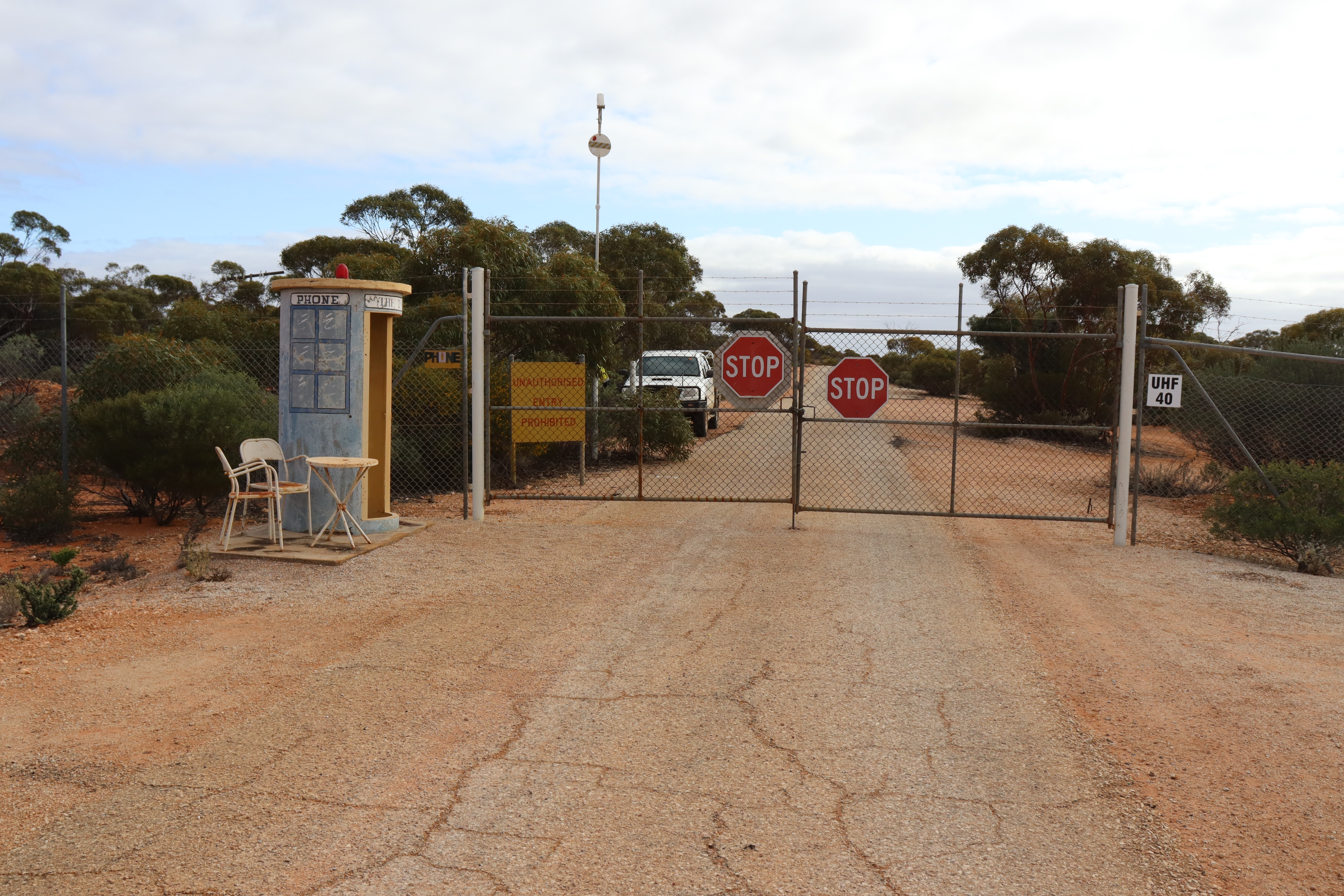
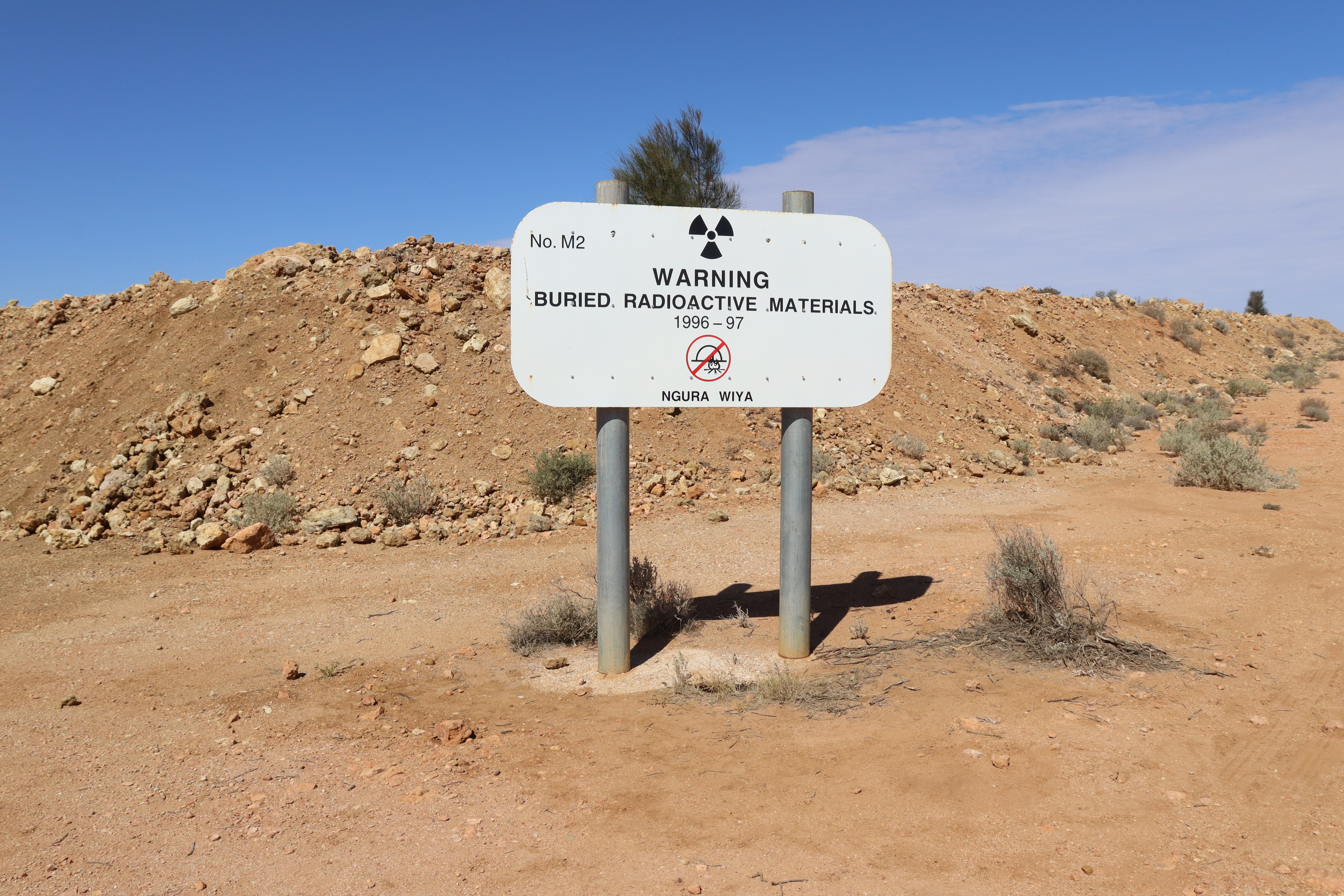
As a conclusion to this trip away, we had decided to spend a few nights and take in a tour of Maralinga, the site of Atomic testing in the 1950s. Camping at the village and then a bus tour out to ground zero of the multiple atomic tests is fascinating but also sobering when you realise the impact these tests had on the local people, their future generations and on the landscape. Our guide was a wealth of information about the building of the town, the test sites and the aftermath and cleanups. There are still lots of radioactive fragments lying around on the ground in the ground zero precinct, although our guide assured us that they were at very minor and safe levels of radioactivity. Hope he’s right!!

In our last few weeks of this trip, we made the decision to sell Roxy, as our plans for the next couple of years included a trip to New Zealand and hopefully an extended time in Europe, which would mean Roxy would sit unused for a couple of years – not good for the vehicle and too much money tied up in her to have her sitting around. So we advertised and due to there being none available and a 2-year-plus wait for a new one, we sold her within a couple of weeks of first advertising, which was great (although a little sad to see her go!). It’s great to know, however, that she is continuing her duties and taking her new owners (who continue to call her Roxy!) to many of the special places this great country has to offer.

WTF or Ha Ha!!

  • Camp at a free camp, go across to the pub for dinner and couple of drinks – AND end up winning the meat raffle!!
  • Roadside camp, not free but gets a few in. We tuck up the back to not be in anyone’s way. Then 2 cars with vans come in and virtually block us in. The wife seems a little embarrassed, but HE says, “If he (obviously referring to Gary) can’t get out of there, he’s a shit driver!”
  • We’re about 100 kilometres short of Kalgoorlie, still on the Trans Access Road (following the Trans Australia rail line) and there on the side of the road is a chest freezer!
  • At Kookynie Pub, Charlie the horse gets hand-fed in the front doorway, then proceeds to “wash” the windows with his tongue!
  • Laverton Lookout has a big tower with water tank on top – and underneath the framework, a picnic table held in place with a big chain!
  • Road signs near Gwalia – “Road Subject to Closure for Blasting”!
  • Caravanning etiquette – apparently, it’s ok to park your coaster camper right across the front of someone’s car, essentially blocking them in, just so you can get better satellite TV reception!
  • Big tourist site at the Valley of the Giants Tree Top Walk in Walpole Nornalup NP – and there’s NO café!!!
  • WHY are 4WD vehicles allowed to drive all along the pristine beach at Lucky Bay in Cape LeGrand NP??
  • WHY do so many National Parks only take camping bookings online ……BUT rarely, if ever, have phone service or Wi-Fi capability to do so??????
  • Old Mate with his dog in a little white van with a surfboard on top in an off-the-highway free camp area, drives around and around EVERY SINGLE track for at least 20 minutes, before he finally settles on a spot. FFS – it’s a FREE camp for ONE night!!
  •  Maralinga town, test sites, and airstrip – which is the world’s ONLY other designated landing site for the space shuttle – was all built within 16 months by 2000 service personnel.  AND the 270 km of sealed and 2500 km unsealed roads were made to last, having never been upgraded or resealed. Maybe those roadbuilders need to come and work for VicRoads!!!
  • What is wrong with people crossing State borders?? Coming through Ceduna (Fruit and Vegie) Quarantine Station, we had nothing to get rid of or declare and the officer was most appreciative of our being “so well organized,” telling us that they had already seized over 80 kilograms of restricted product THAT DAY!!

Outback 2022 – Part 2

Continuing our 2022 journey into the red dust of the outback, we leave Oodnadatta and cross into Queensland on the Plenty Highway.

From Alice to Currawinya and home.

(Click on photos to enlarge.)

Leaving the Oodnadatta and heading back towards the Stuart Highway, the Painted Desert is a fine example of art in nature. With its hills and mesas of different colored sands against a wide desert and gibber plain backdrop, it’s almost impossible to take a bad photo here!

Painted Desert mesas

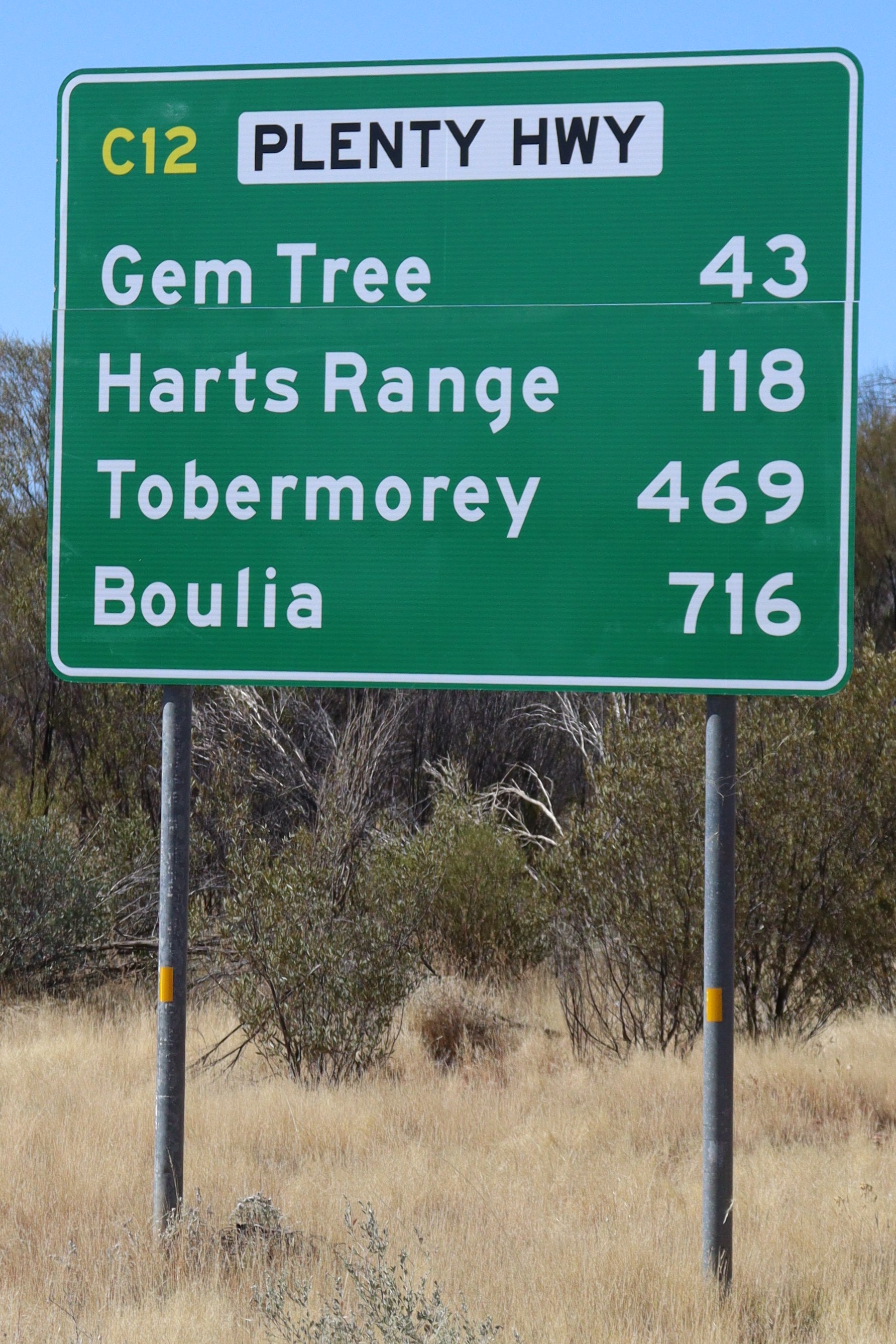
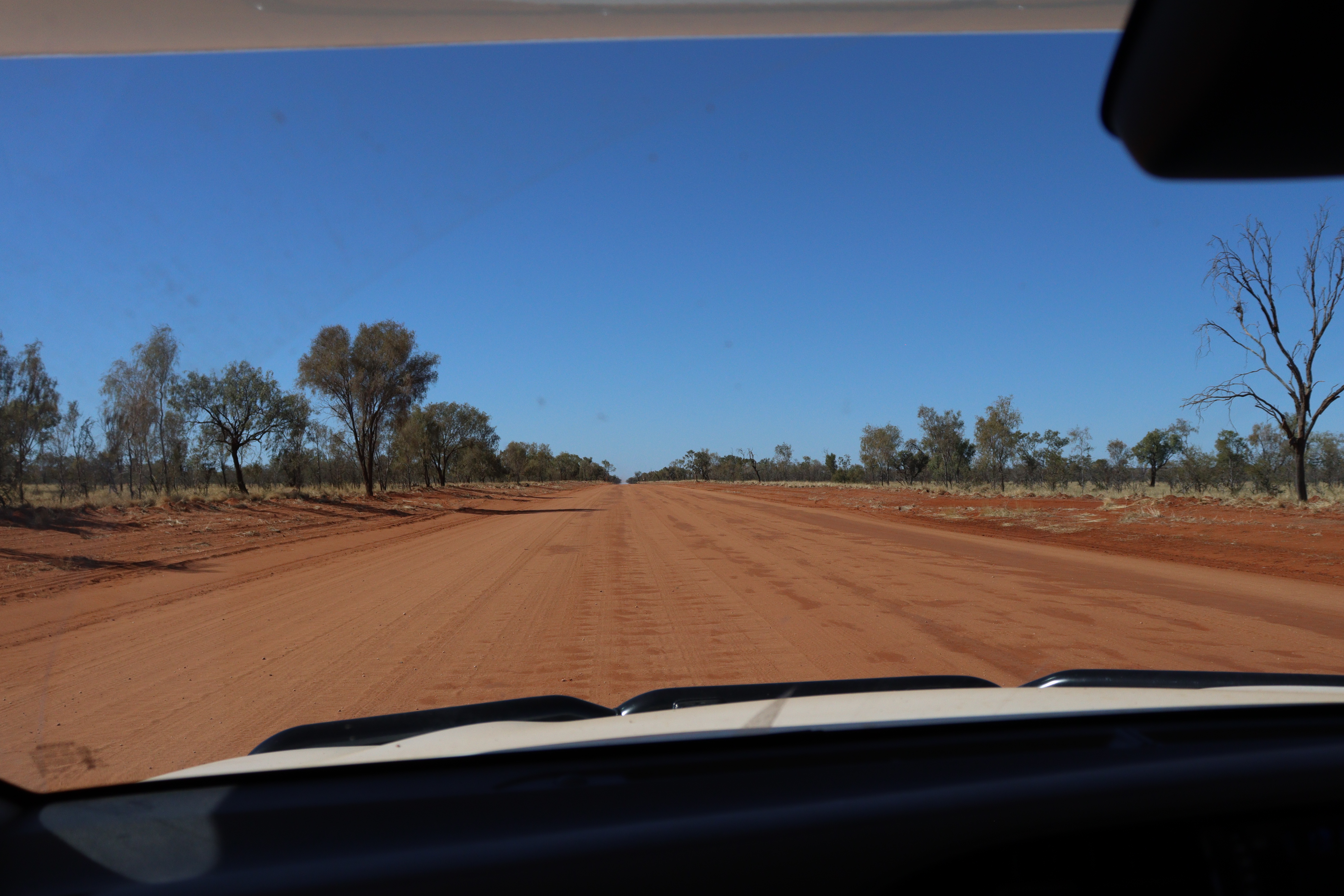
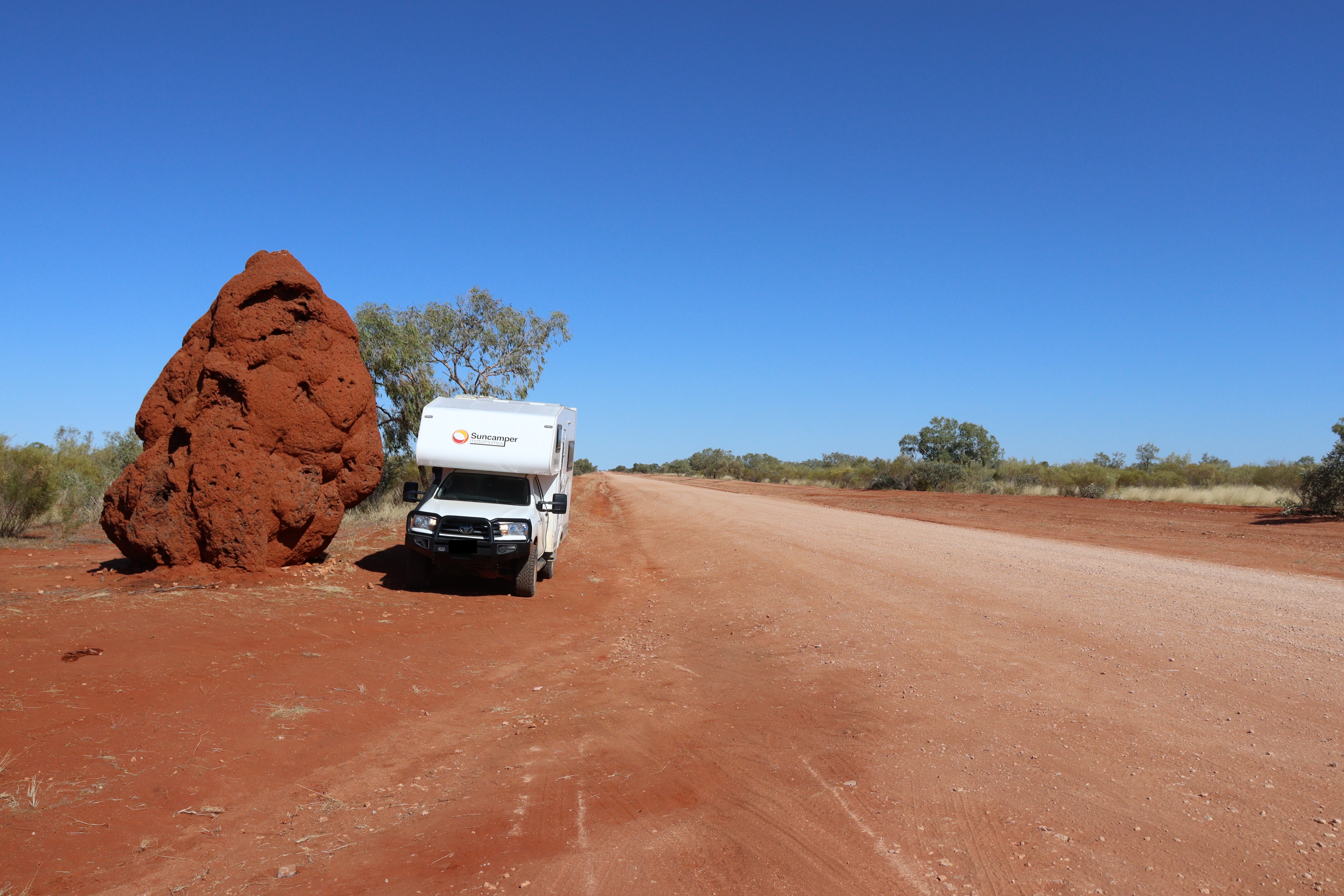
North of Alice Springs, we turned off onto the Plenty Highway for the 700-plus kilometre drive back into Queensland. As with many of our outback roads, this is a “highway” in name only, as only the first 75 or so kilometres are sealed, with the rest of the road being dirt, red sand or gravel and ranging from smooth to quite corrugated. But again, it is a trip worth doing, and for us more appealing as it is a “road less travelled.” Three cattle stations along the way offer camping with amenities -including a bar at two of them! – so, it’s not as remote as it might seem.

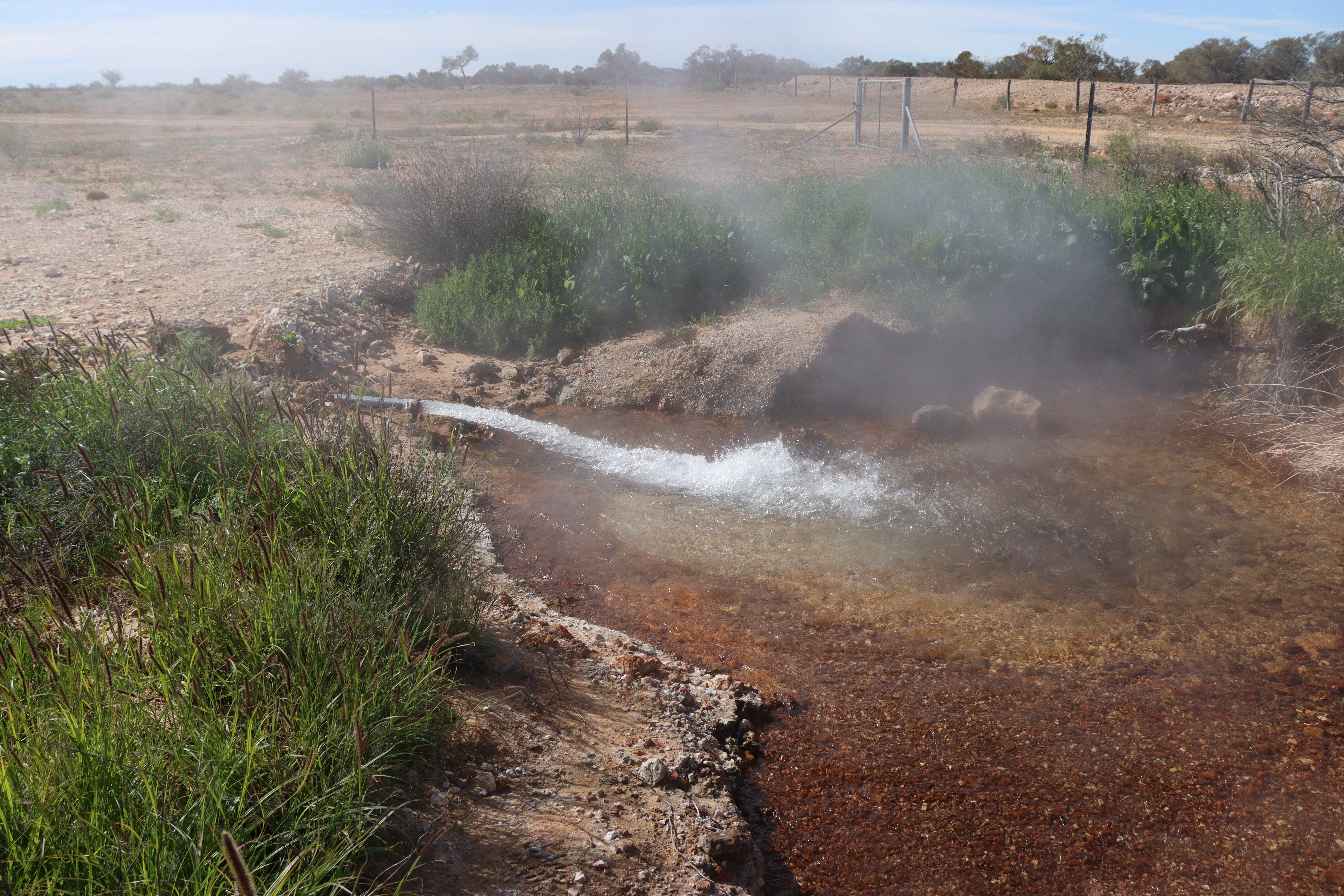
Once into Queensland, we headed through the three Bs – Boulia, Bedourie and Birdsville, passing through fairly quickly aiming to avoid the ten thousand or so music fans heading to Birdsville for the Big Red Bash music festival – too many people for us!! Stopped in at Carcory Ruins and Carcory Bore for a look – love this spot where water from the Great Artesian Basin deep below ground comes to the surface in a constant steaming hot stream flowing into several pretty pools. Tempting for a hot bath but I think the water is still too hot at 85°C, although several hundred metres downstream it’s supposed to be cooler.

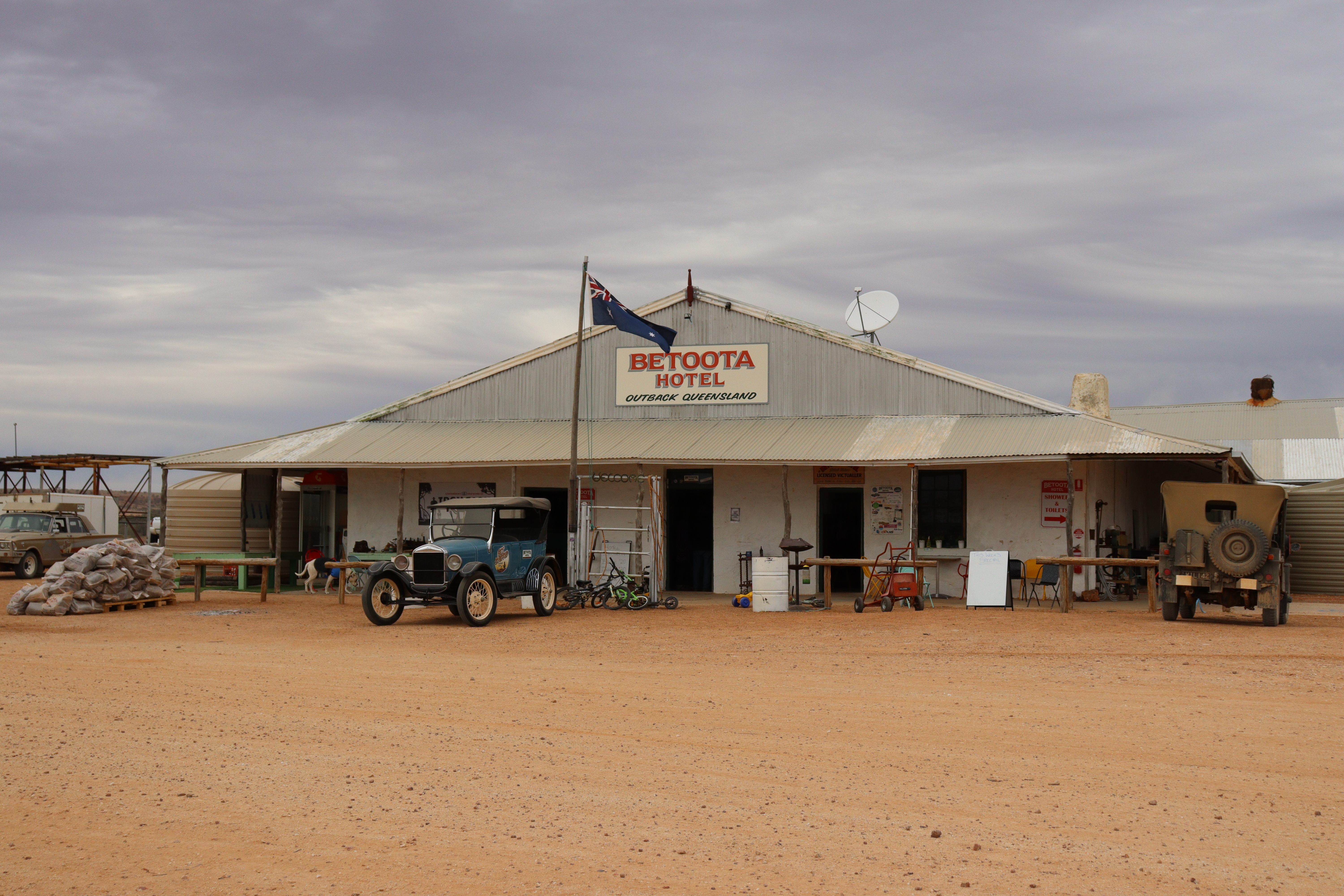
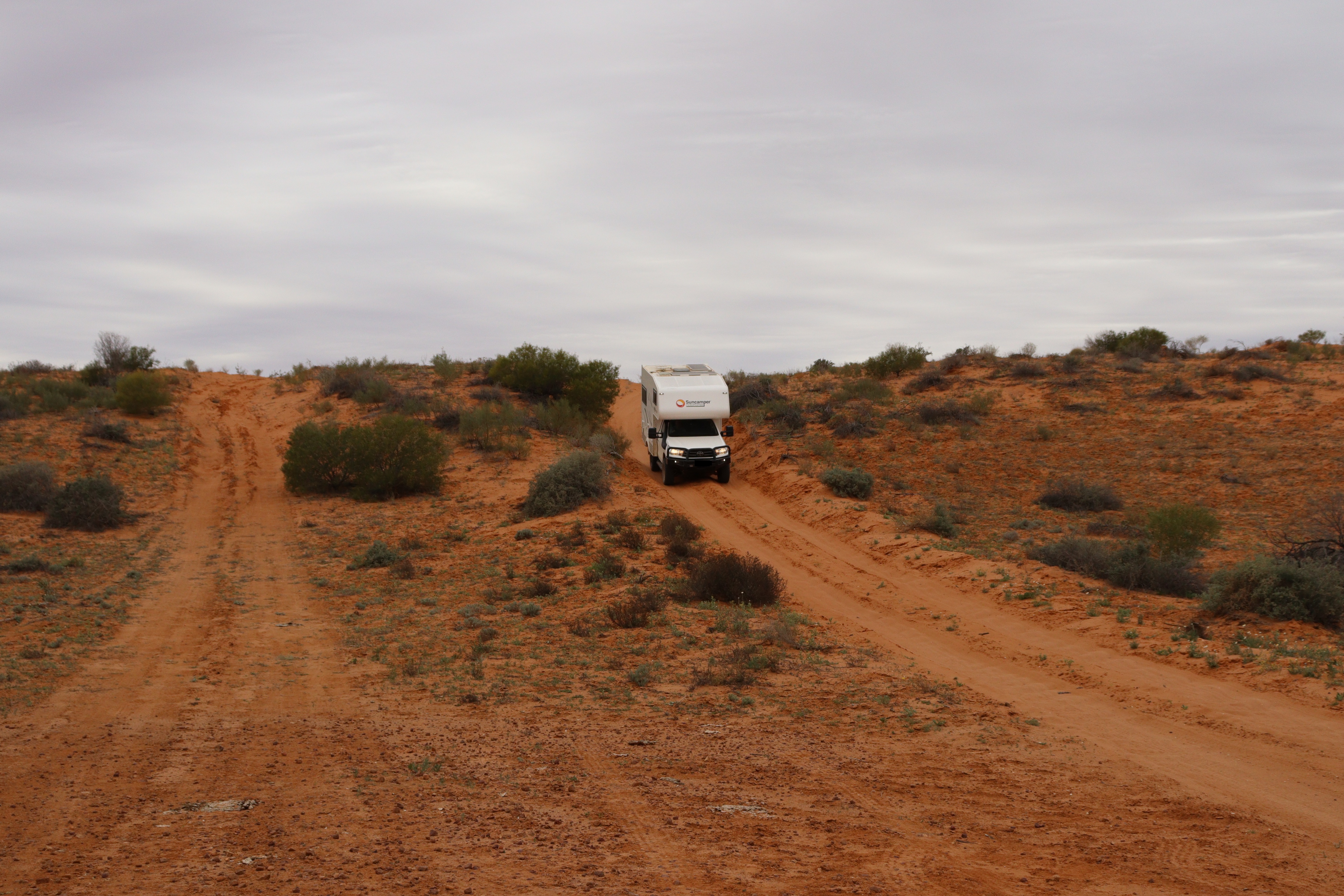
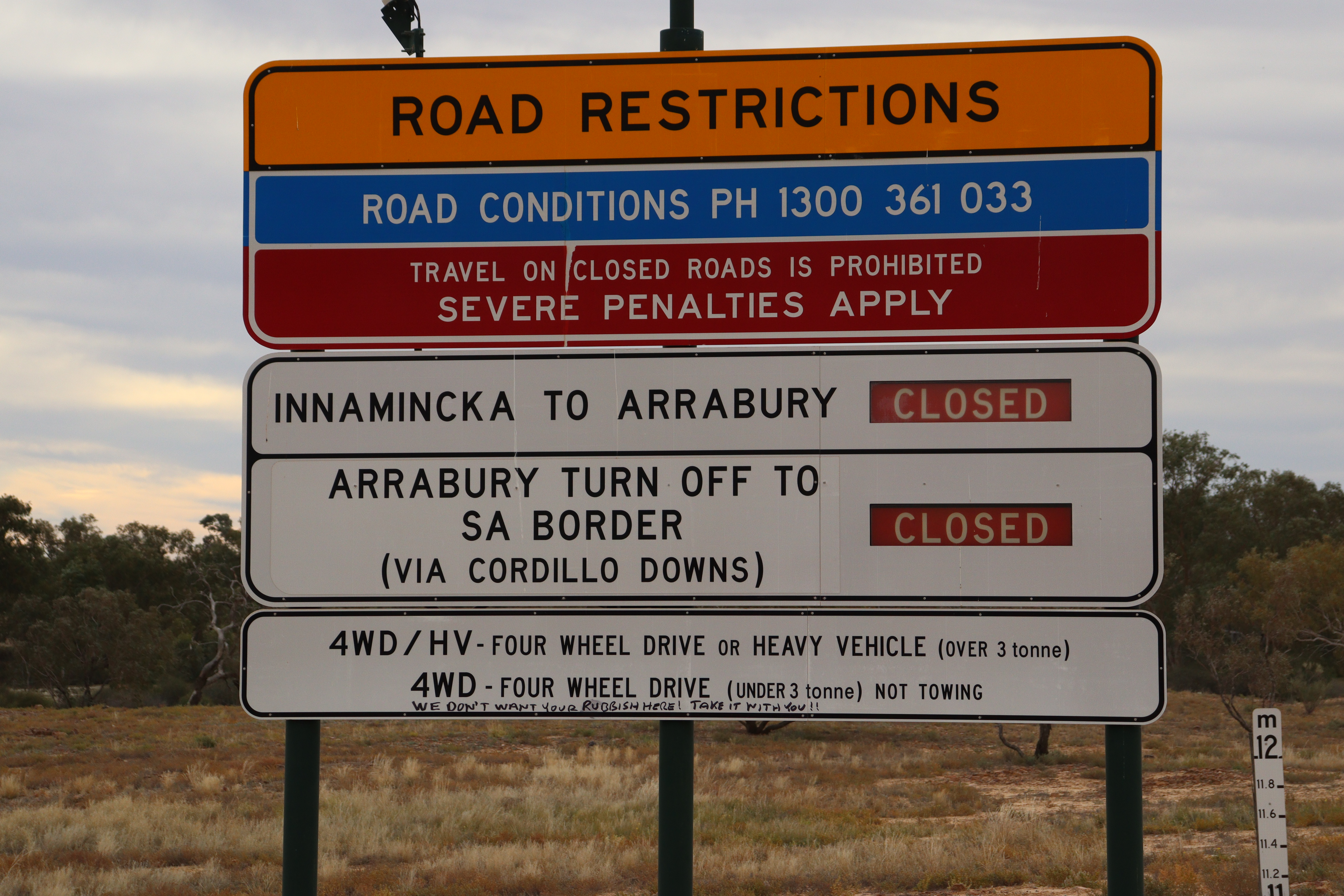
After quick stops at the iconic Betoota Hotel and Deon’s Lookout, we turned down the Arrabury Road heading for Innamincka, and took a side trip to visit Haddon Corner, where Queensland and South Australian borders meet. Taking this side track is a 30-kilometre round trip on a relatively formed track over several red sand dunes, but in the end its quite a long drive to go and see a POST!

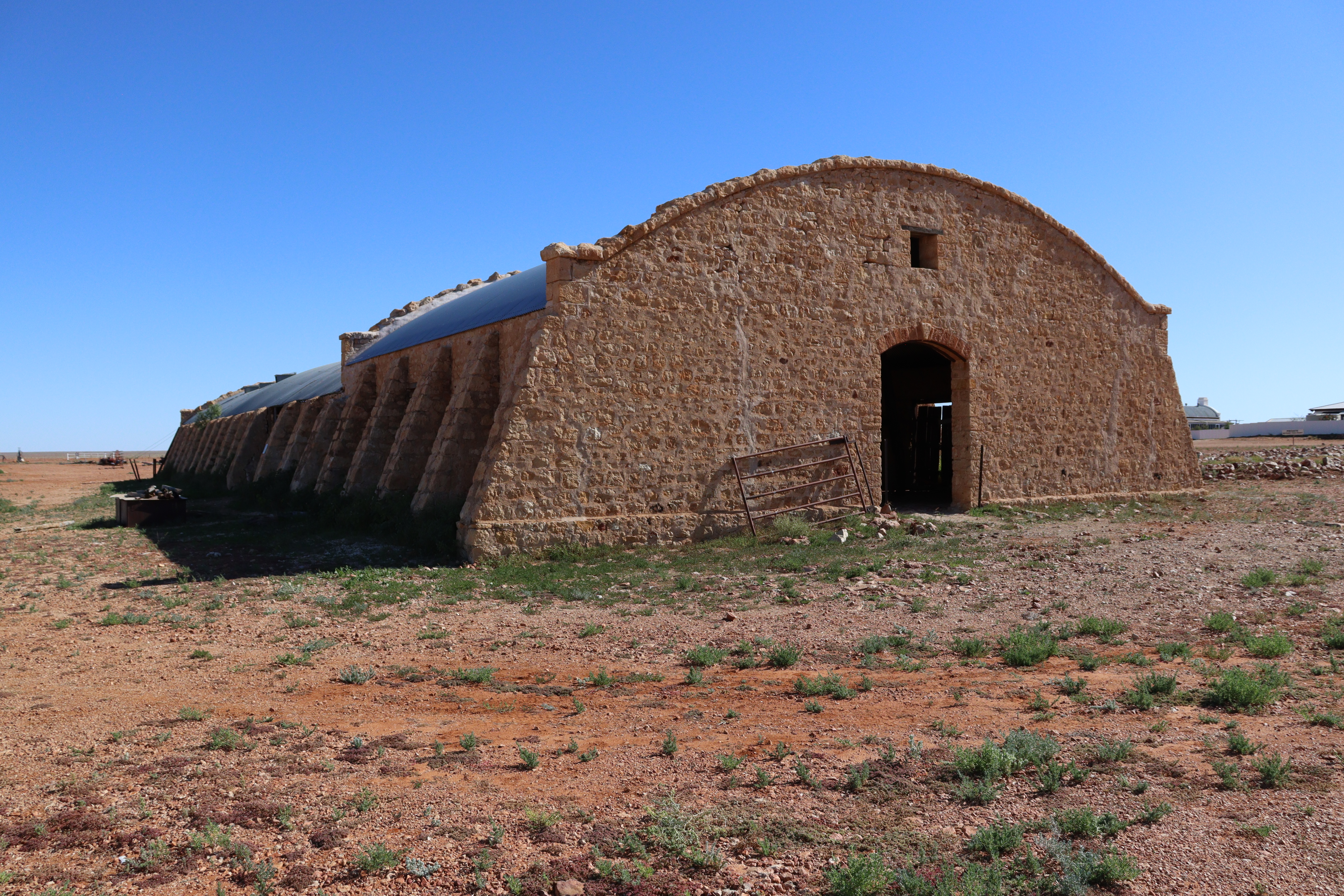
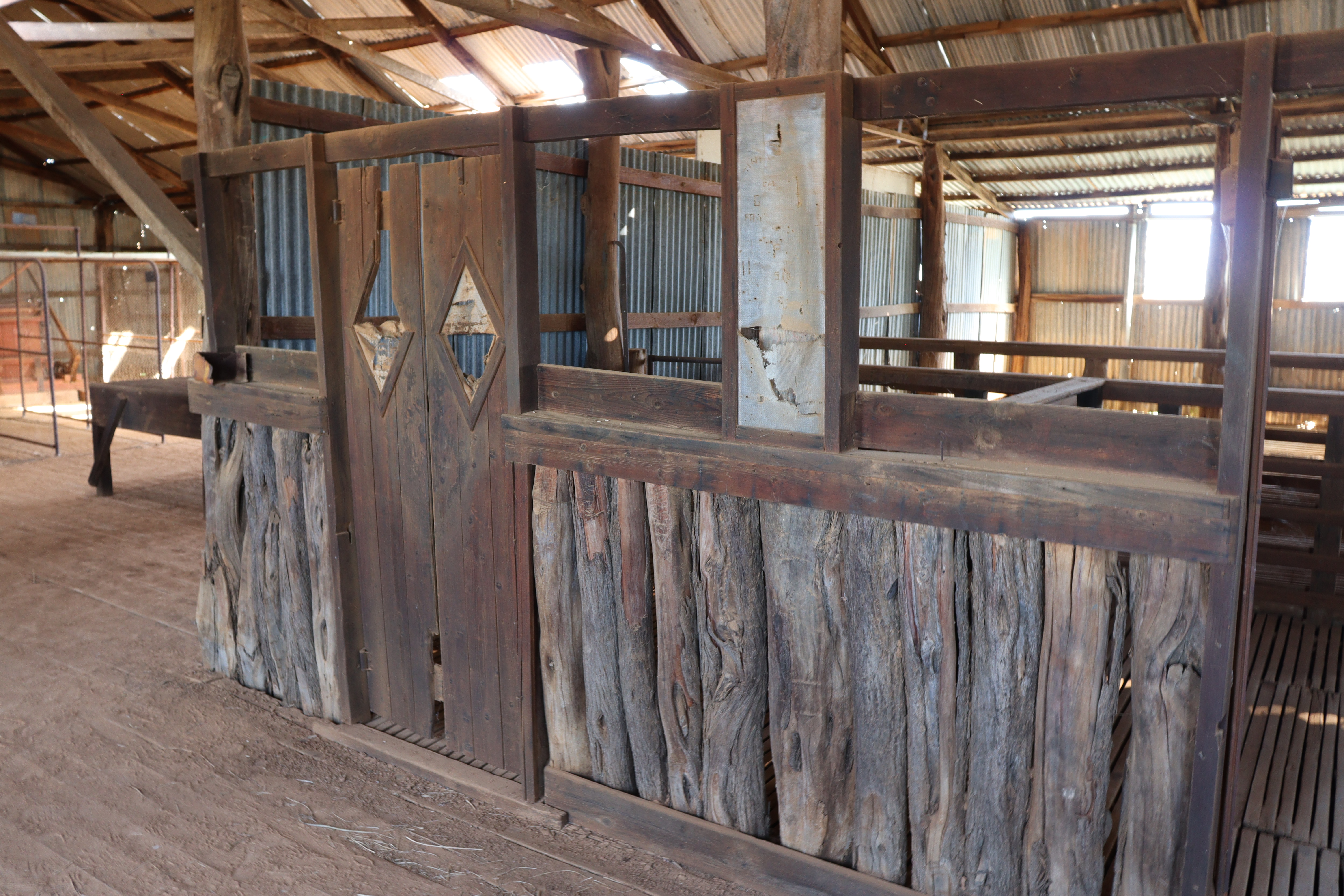
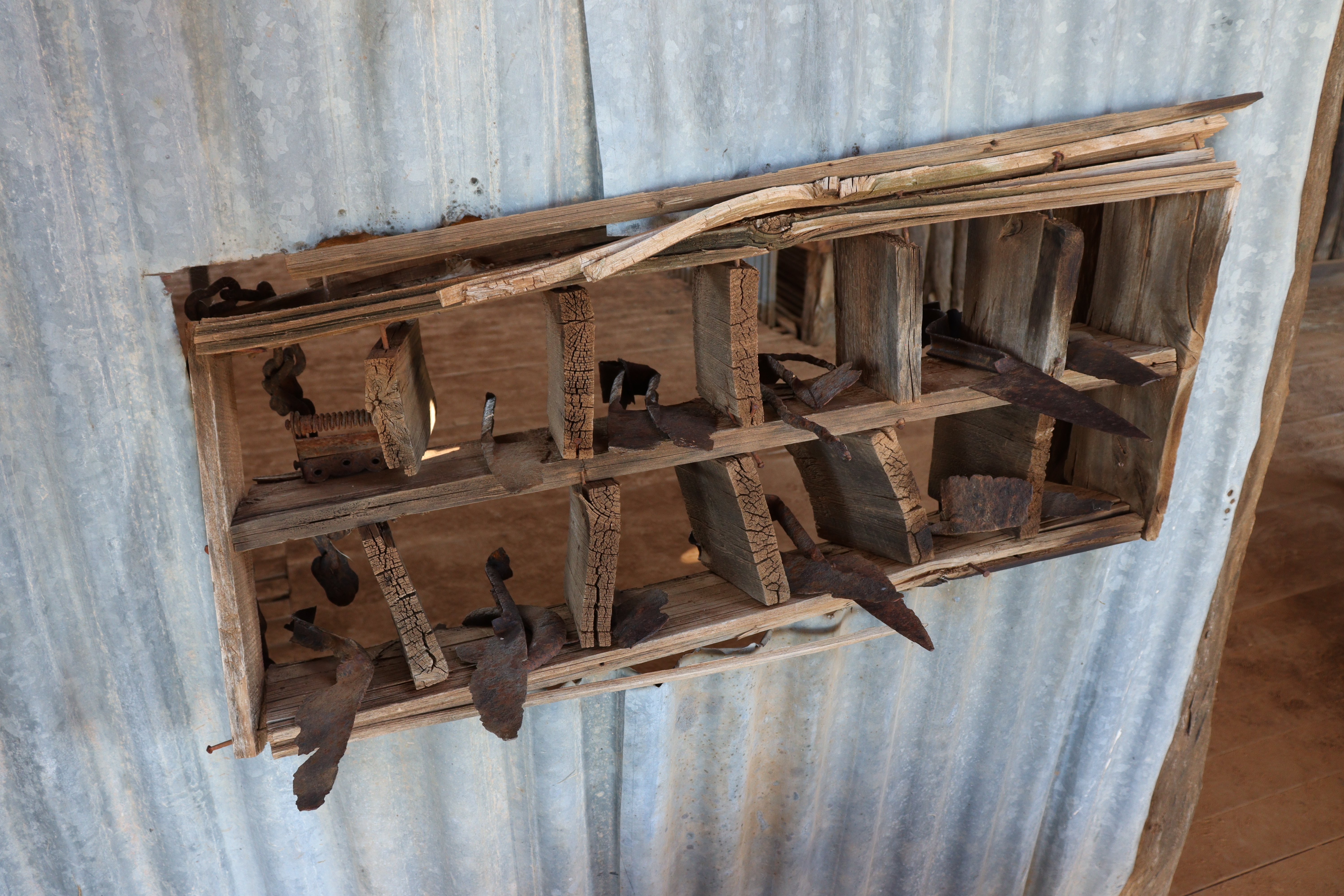
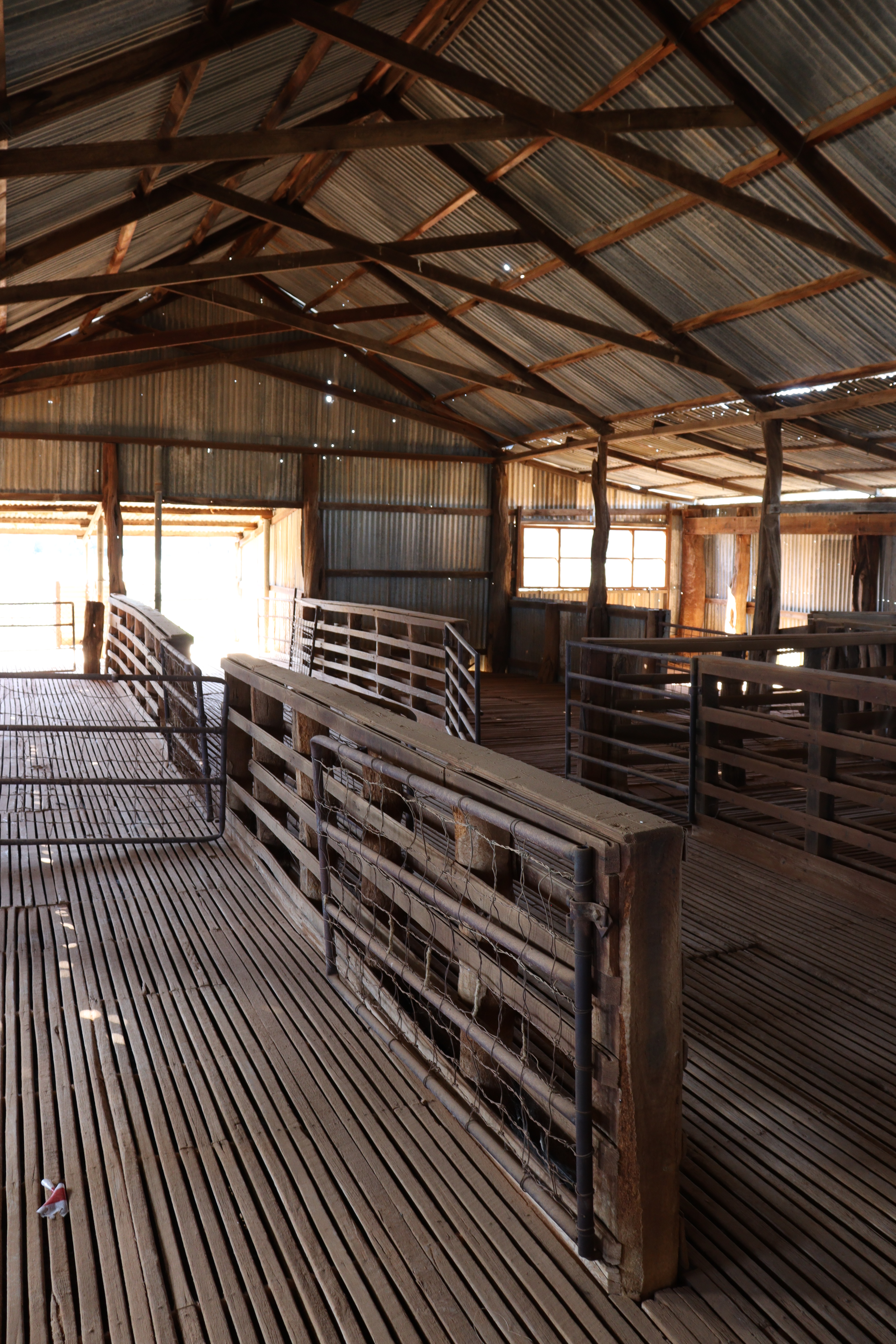
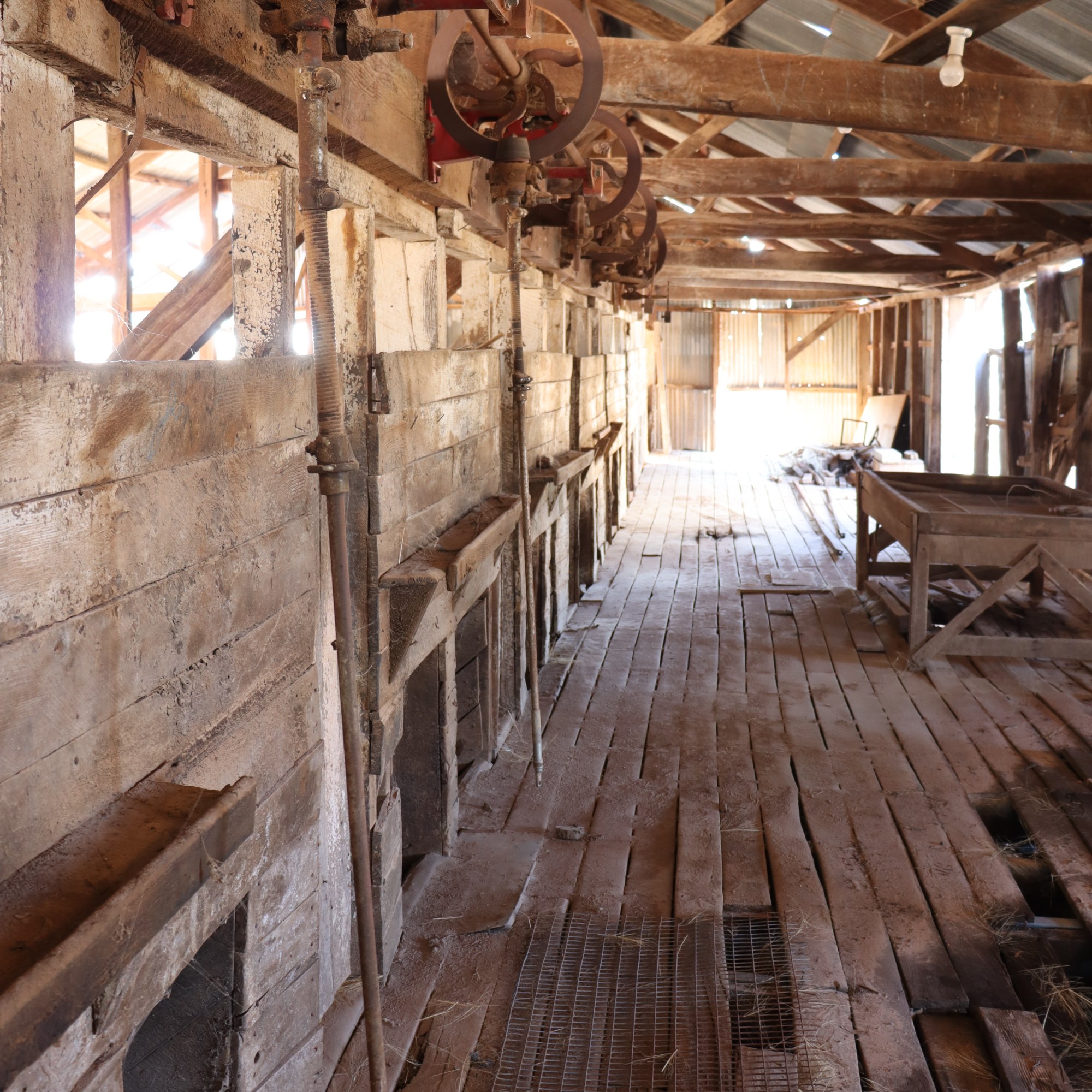
From the Arrabury road we took another detour and drove up to Cordillo Downs Shearing Shed with its unusual sandstone buttress walls and curved roof. Dating back to 1883, this shed once boasted 88 stands (up to 120 stands in 1890) with a record number of 82000 sheep shorn in the 1888 season – all with hand shears!!

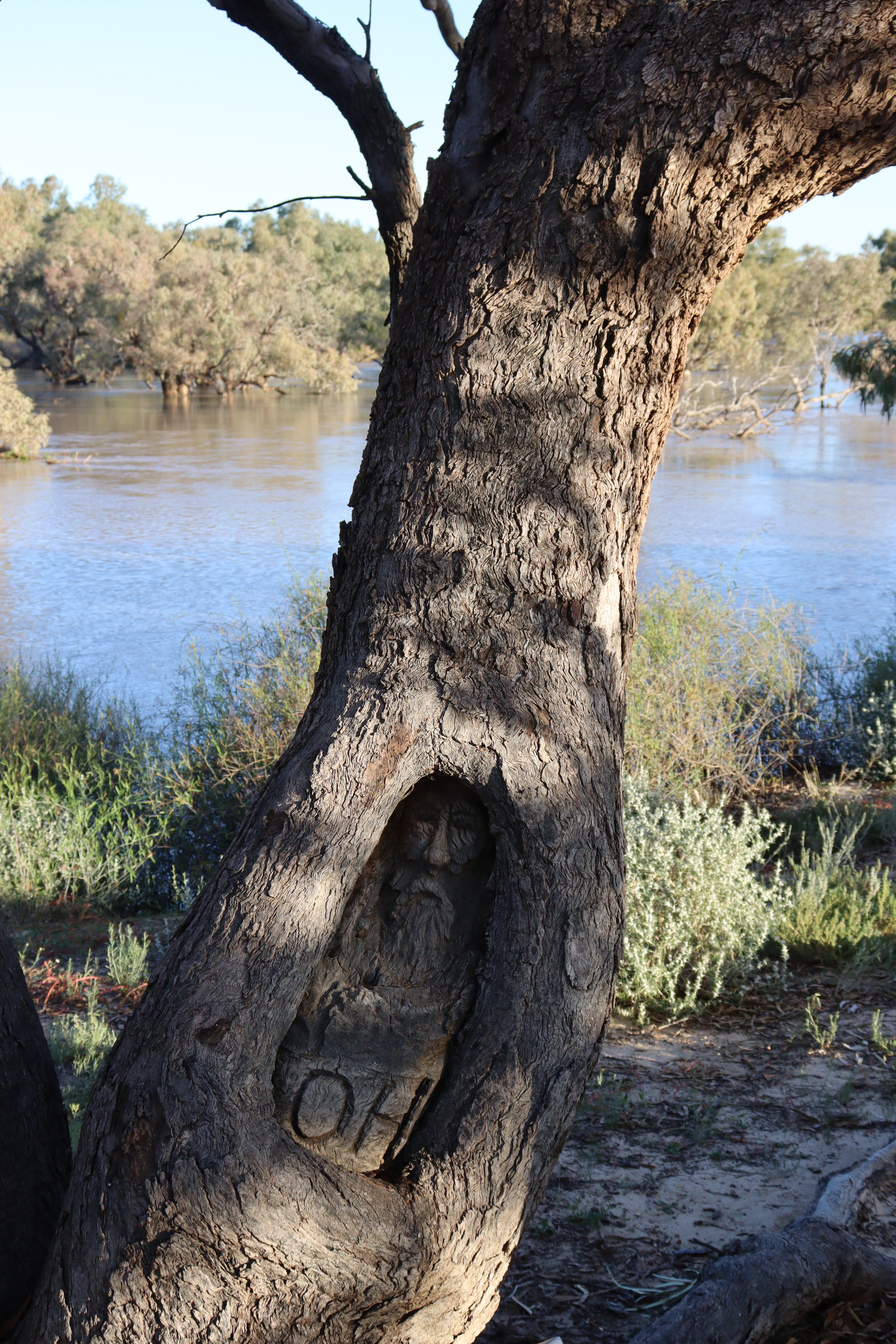
Innamincka is Burke and Wills country so of course we visited the famous Dig Tree, made famous through the ill-fated Burke and Wills expedition of 1861-2, then down into Innamincka “township”, where the Cooper and Strzelecki Creeks had well and truly broken their banks and had cut all roads except for the main one in and out of town. After all the rain that had  been around it wasn’t surprising, but it was certainly a sight to see the Cooper Creek covering the causeway for several hundred metres, and the resulting greenery and wildflowers that had sprung up everywhere.

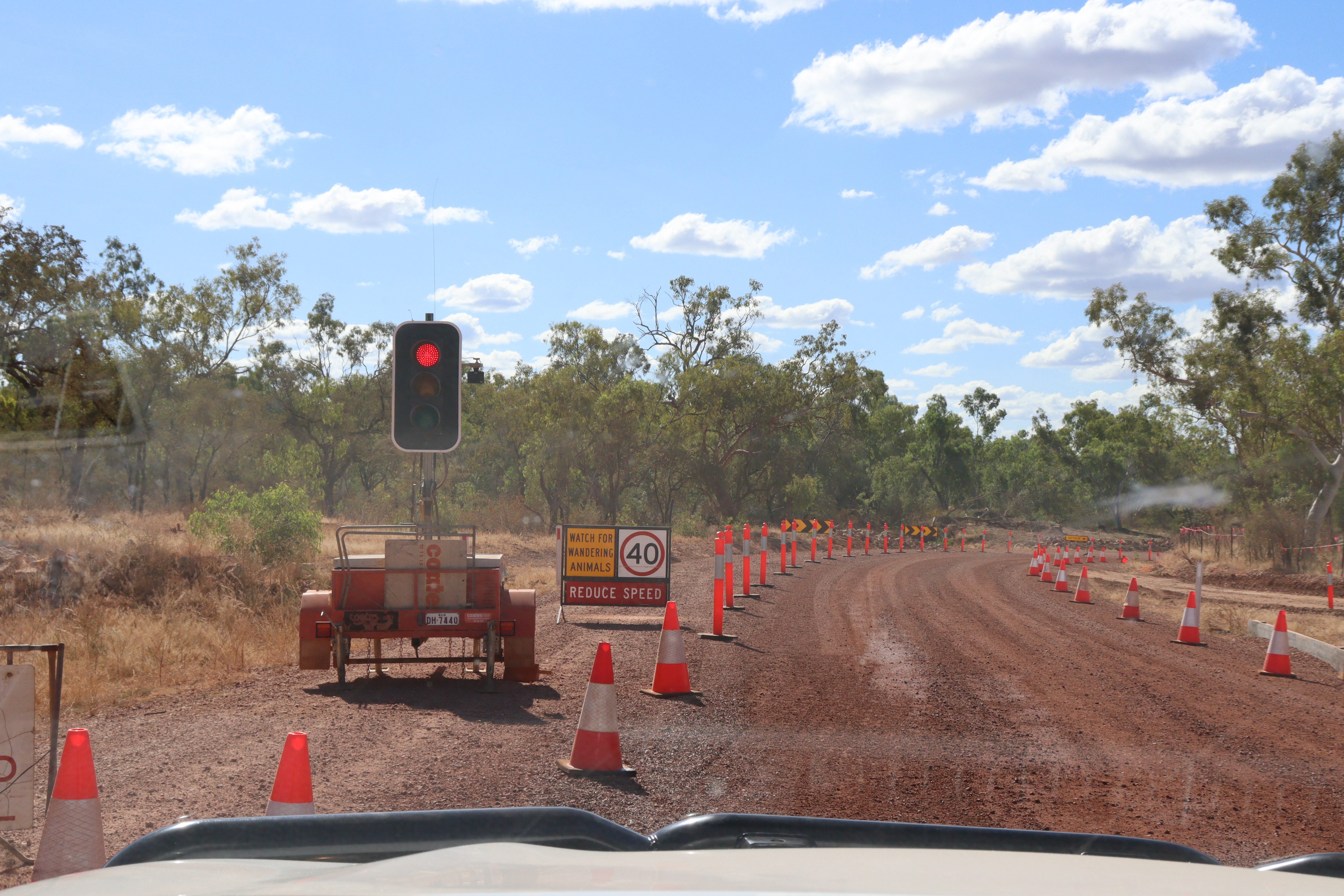
Taking the Strzelecki Track out of Innamincka, we were somewhat surprised at the extent and number of bitumen sections, but even more surprised when we came to a “Stop & Go” man with his sign to hold up the traffic for roadworks!

Cameron Corner marks the meeting point of Queensland, New South Wales and South Australia and also the northern entry to Sturt NP, which is home to the Wild Deserts program. This is a partnership between the NSW Government, UNSW, NSW National Parks & Wildlife Service and Ecological Horizons aiming to understand, promote and manage desert ecosystems through experiments, fieldwork, monitoring and  management of feral species,  and reintroduction of endangered species within their specialised feral-proof enclosures.

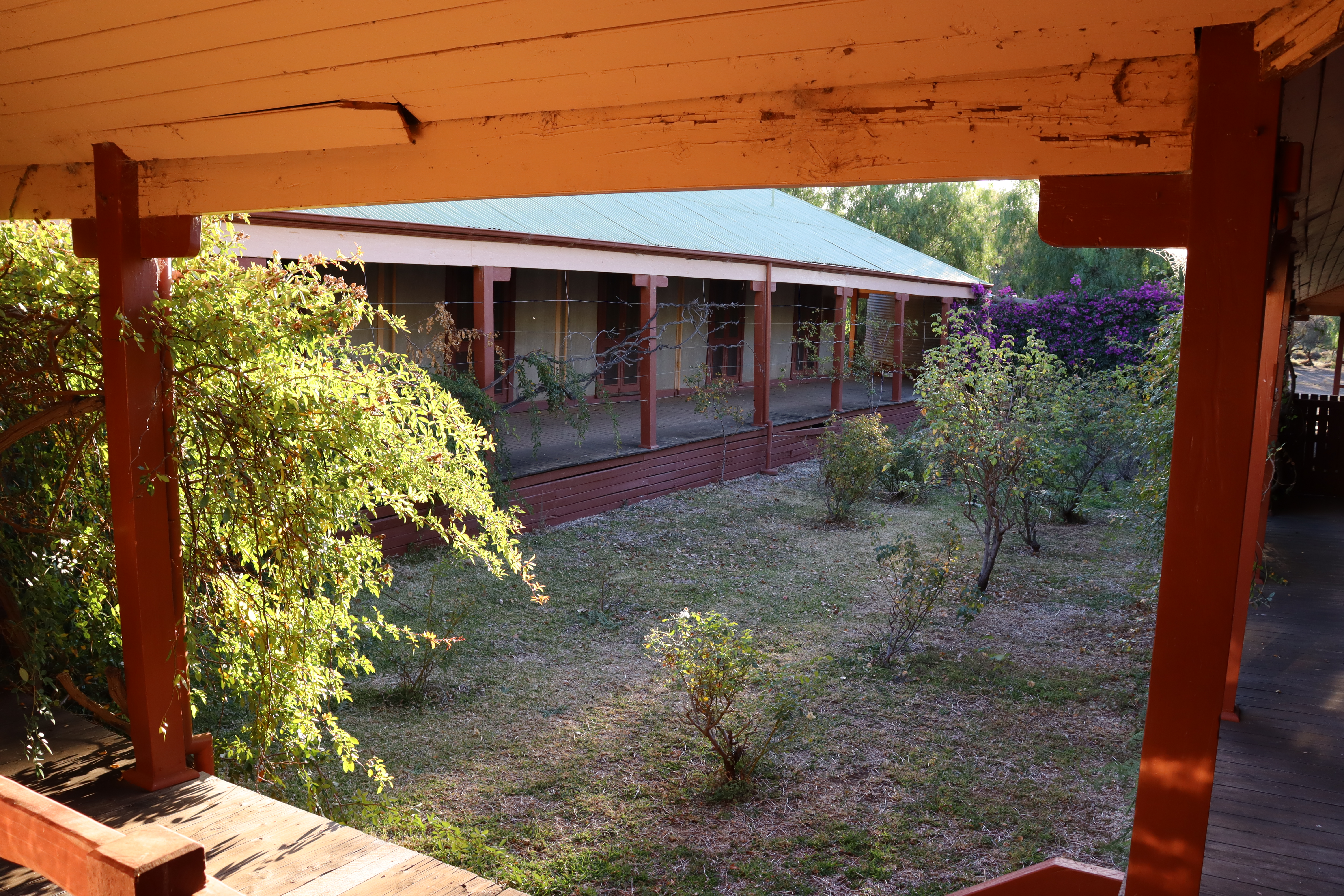
Sturt NP also encompasses several former pastoral stations and therefore several homesteads, shearing sheds, shearers’ quarters and water bores remain to be explored. Some have been restored whilst others have been left to slowly deteriorate and succumb to the elements, but even with that thought in mind, I couldn’t help but think that the original pastoralists at Olive Downs didn’t value their shearers too highly – the shearers’ quarters were made of metal sheeting with no windows except for wire grills and would have been as hot as hell out there!

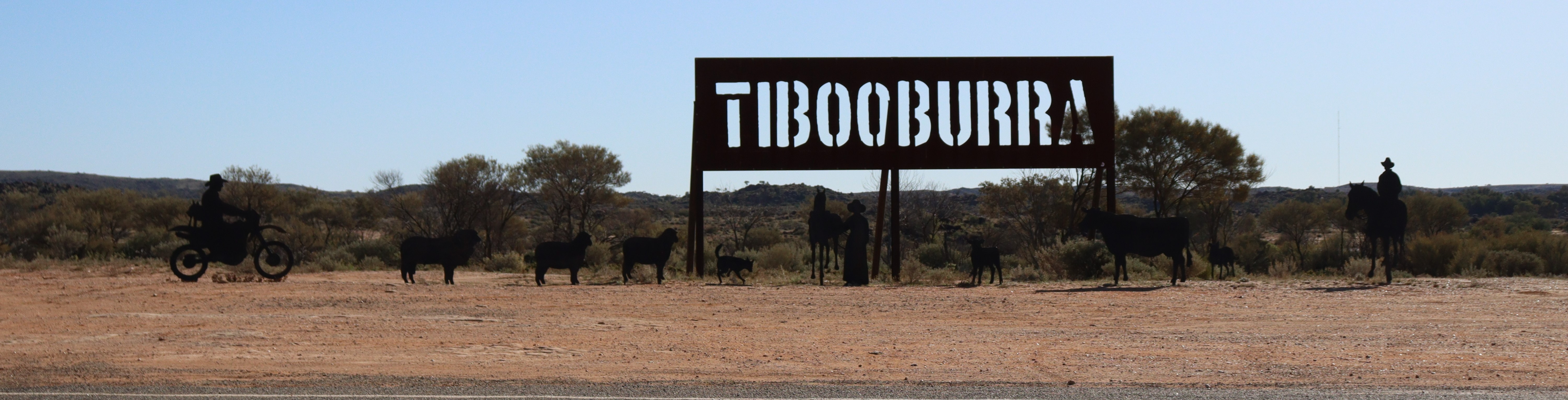
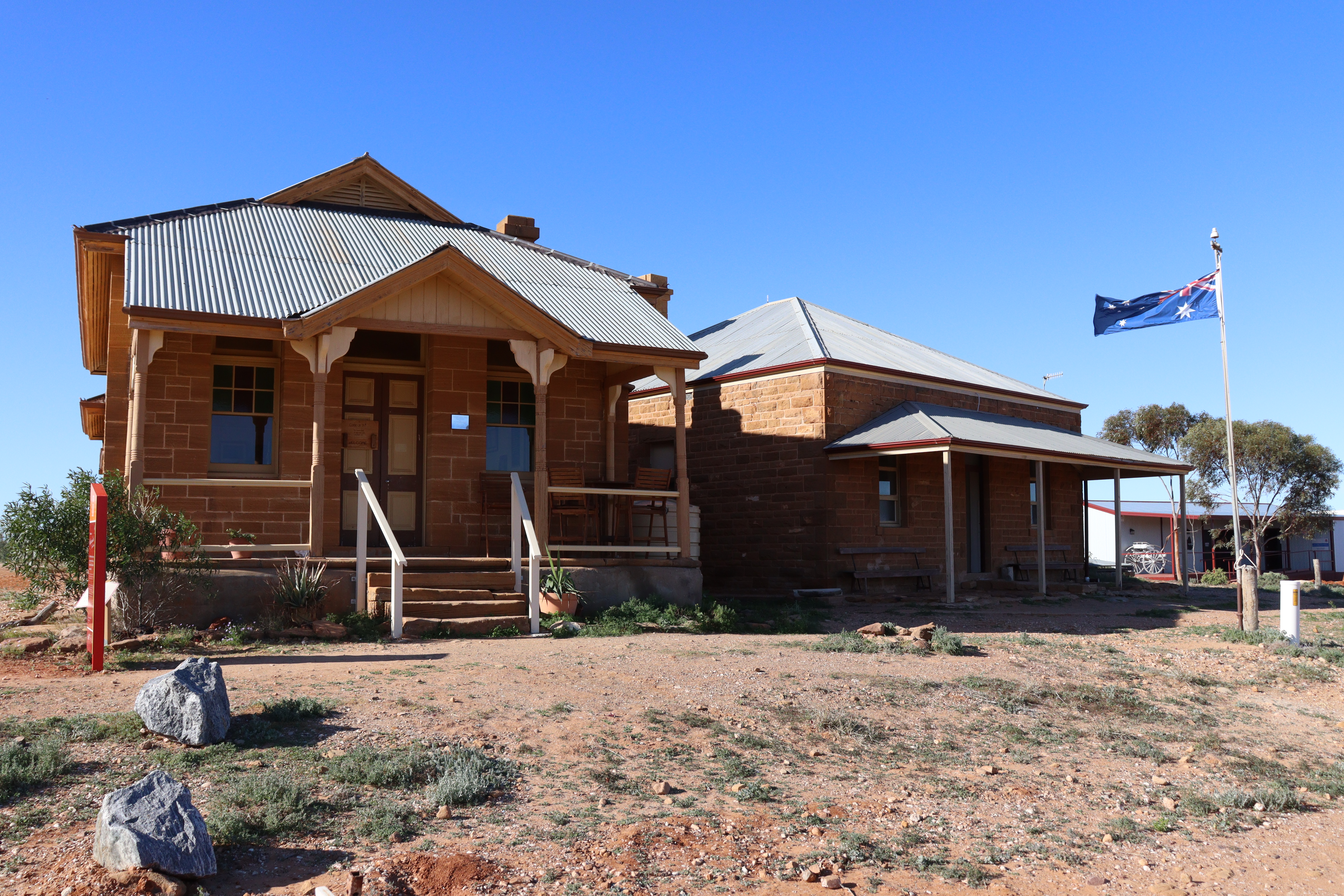
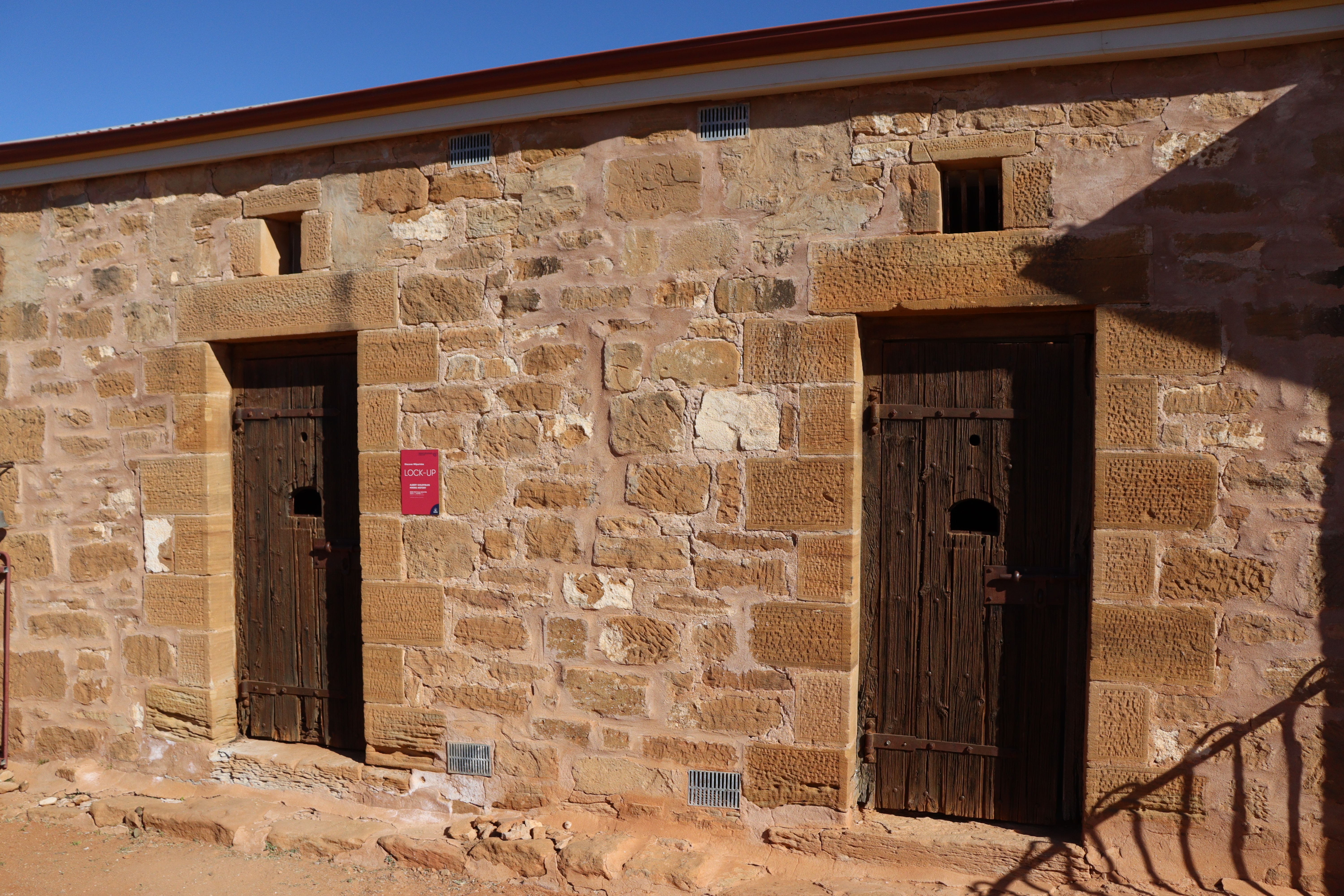
The Corner Country townships of Tibooburra and Milparinka date back to the gold era and as such boast some historic buildings, with the original stone ones in Milparinka being systematically restored by the “Friends of Milparinka”. These feature lots of information on the town’s history and include the courthouse, police station – with two holding cells out back – and the old pub, a very friendly and welcoming place to stop for a drink and a meal.

Took us 6 weeks of travelling before we finally saw these beauties!

Narriearra Caryapundy Swamp National Park is one of the newest NPs in NSW and not too far from Sturt NP, so we headed there not quite knowing what to expect. Well, as it’s so new, there’s not a whole lot! A brand new camp area is situated on an embankment above the surrounding floodplains, with clearly defined sites and brand-spanking new long drop toilets – I think we were the first to use them!! It’s 20 kilometres from the turnoff to the Park gate and then another 30 or so kilometres till you reach the campground, with NOTHING in between except a turnoff to the original homestead! But …. the 360° views from the campsites overlooking the floodplains and the very distant horizons are a sight to behold! AND…. I think we had the official welcoming committee to greet us on our way in …. a group of 40 or more emus strolling along the road not particularly perturbed by us driving through.

Welcoming Committee, Narriearra Caryapundy Swamp NP

Crossing back into Queensland at Hungerford, we headed into Currawinya NP. Once again, this Park resulted from the acquisition of several pastoral stations dating back to the 1860s and features a variety of infrastructures associated with the shearing and wool industry of the past. So once again we visited several woolsheds, shearers’ quarters and so on – it seems that this trip has mainly focused on woolsheds and the like. But it’s amazing how different from each other they all are – different “board” setup, different building design, different outbuildings and state of repair or deterioration – but all of them so interesting!

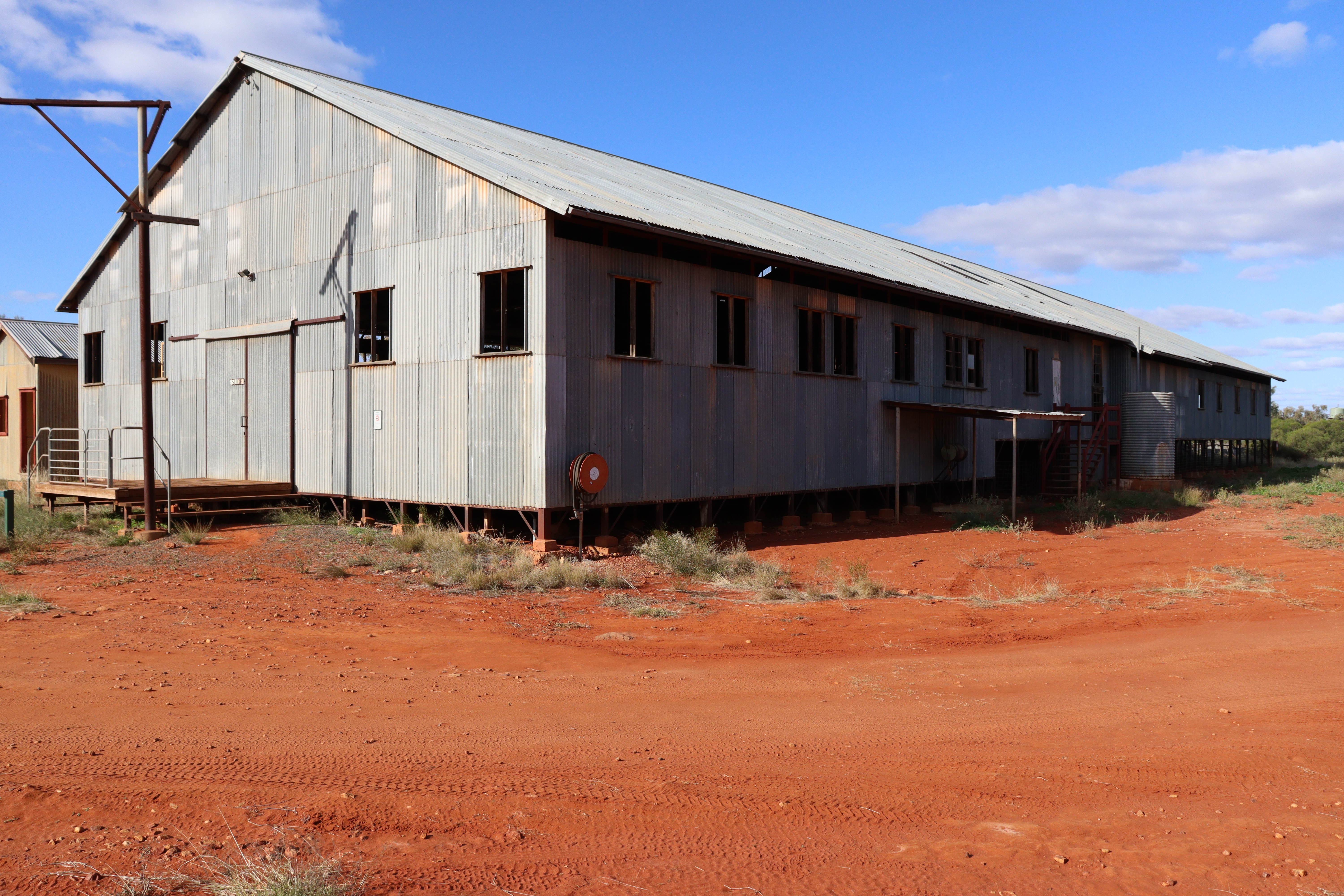
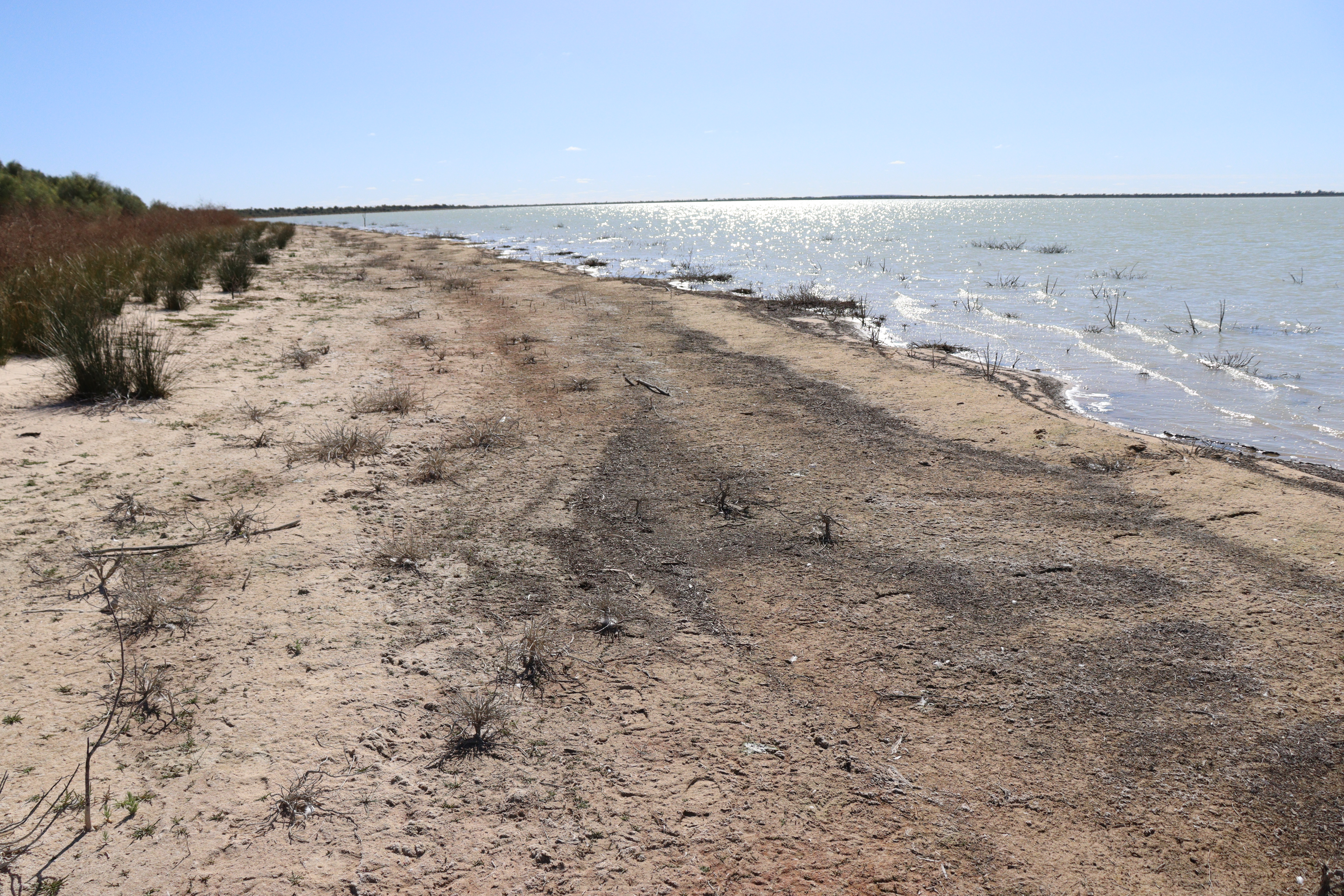
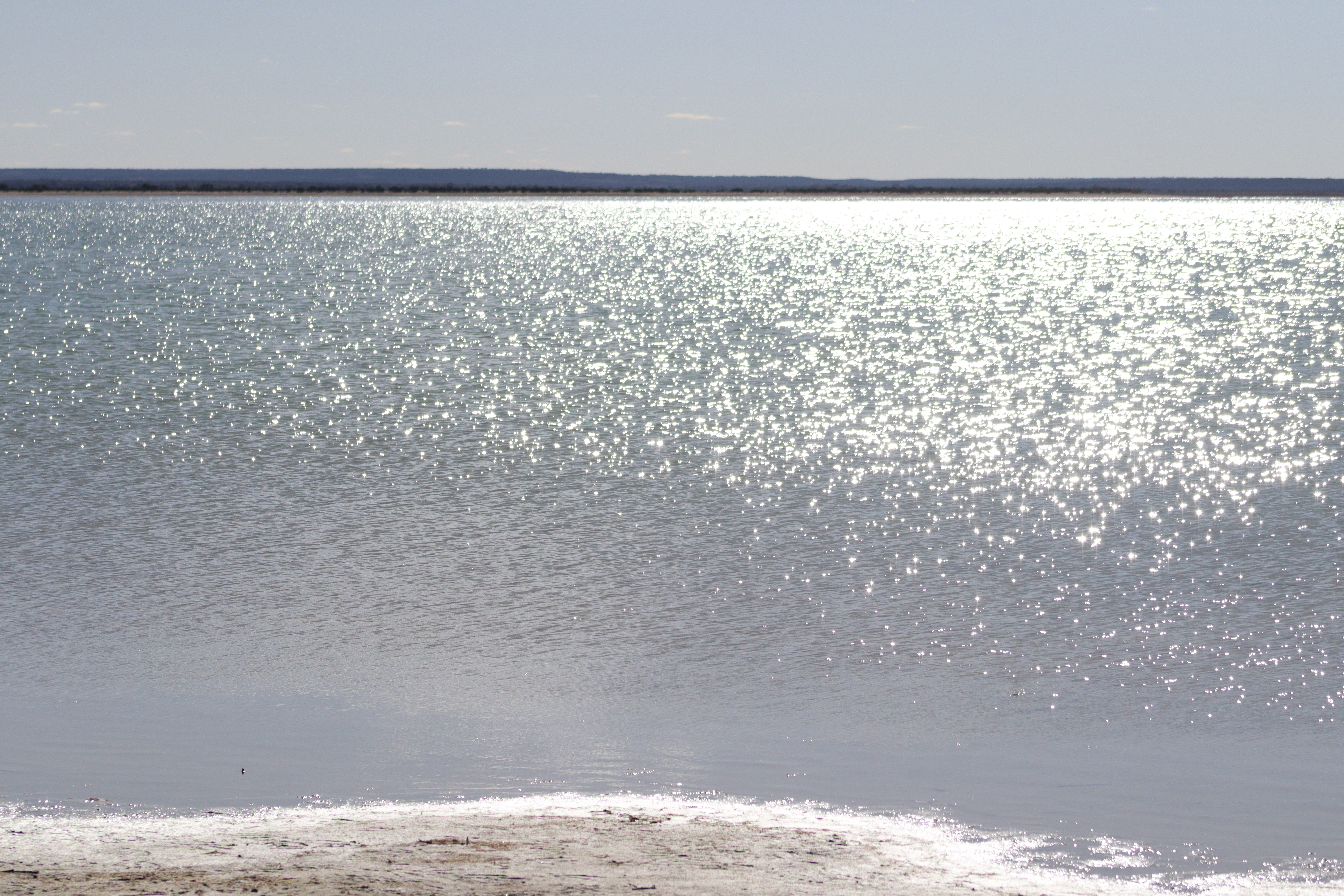
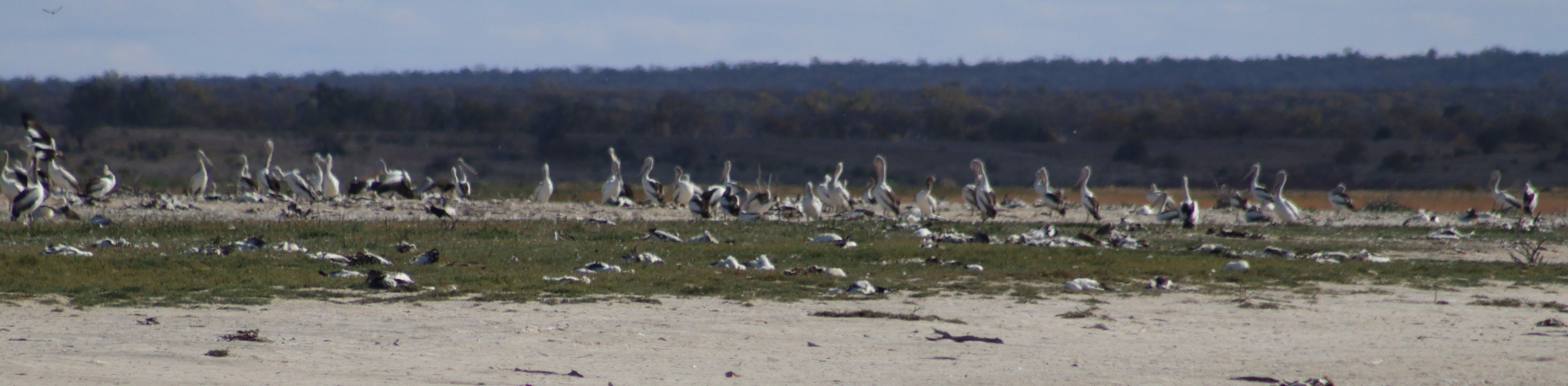
Currawinya, despite its semi-arid landscape, is home to a diversity of waterways and wetlands, and in 1992, it was designated a Ramsar Wetlands Site of international importance. While the Paroo River runs through it, the park also features several mound springs that bring water to the surface from far below, and two huge lakes: Freshwater Lake Numalla which is periodically flushed and refilled by Paroo River floodwaters, and saltwater Lake Wyara which dries to a vast salt-pan in times of drought. During years of good rains and floodwaters when water is abundant, as it was last year, the salt waters of Lake Wyara attract hundreds of thousands of waterbirds, which come to feed and breed, and we were fortunate enough to witness the spectacle of thousands of pelicans that jostled for space around the lake’s edge. Unfortunately though, this huge influx of birds has its downside, and the waters can’t sustain all the new hatchlings through to adulthood and many thousands are left to die there as well. Not a pretty sight, but that’s nature….

So, that was it. We had filled in the gaps of places we missed in the previous trip and added some extras, and after 53 nights, 8200-odd kilometres, 4 States, 1 Territory, and 7 National Parks, it was time to start heading home….. to start thinking and planning for the next trip.

WTF?? Or HaHa!!

  • In Alice Springs – Victorian registered car: that’s normal, but his registration plates are Club Car plates…. thought you were only allowed to drive certain amounts or distances under Club Car rego?
  • Why is it that campers next door packing up at 7 am can only put one thing into the car at a time and then slam the door shut after Every Single Thing?! Wouldn’t it be easier – and less aggravating for the neighbours – to leave all the doors open, get everything packed into the car and then shut the door JUST ONCE?
  • Why is it that groups of more than one vehicle travelling together on outback (dirt) roads have to travel right up each other’s bums? It’s not like they can’t see them – well, actually they can’t! But they can follow the dust trail without having to eat it, surely??!!
  • We are the only ones camped in a camp area that stretches for about a kilometre amongst the dunes, and Old Mate with his caravan pulls in about 20 metres away from us!
  • About 50 km north of Birdsville, came across one of the BEST sights we’ve seen – a concrete garden setting sitting out in the middle of the gibber plains!
Intimate dining, Outback style!

Outback 2022 – Part 1

Home to Oodnadatta.

Most years when we head off in Roxy, we head “north for the winter,” generally up into Queensland to absorb some warmer weather, but last year we had a different idea, namely, to travel a loop incorporating some of the National Parks we had missed the year before. However, the weather impacted on our travel plans, and our route of travel changed several times, due to closed roads or closed National Parks, but in the end, we did manage to get into a couple of parks from our list and even a couple of new ones.

For the first few weeks, we stuck to the bitumen and headed across to South Australia, visiting a few of the older and smaller towns along the way.

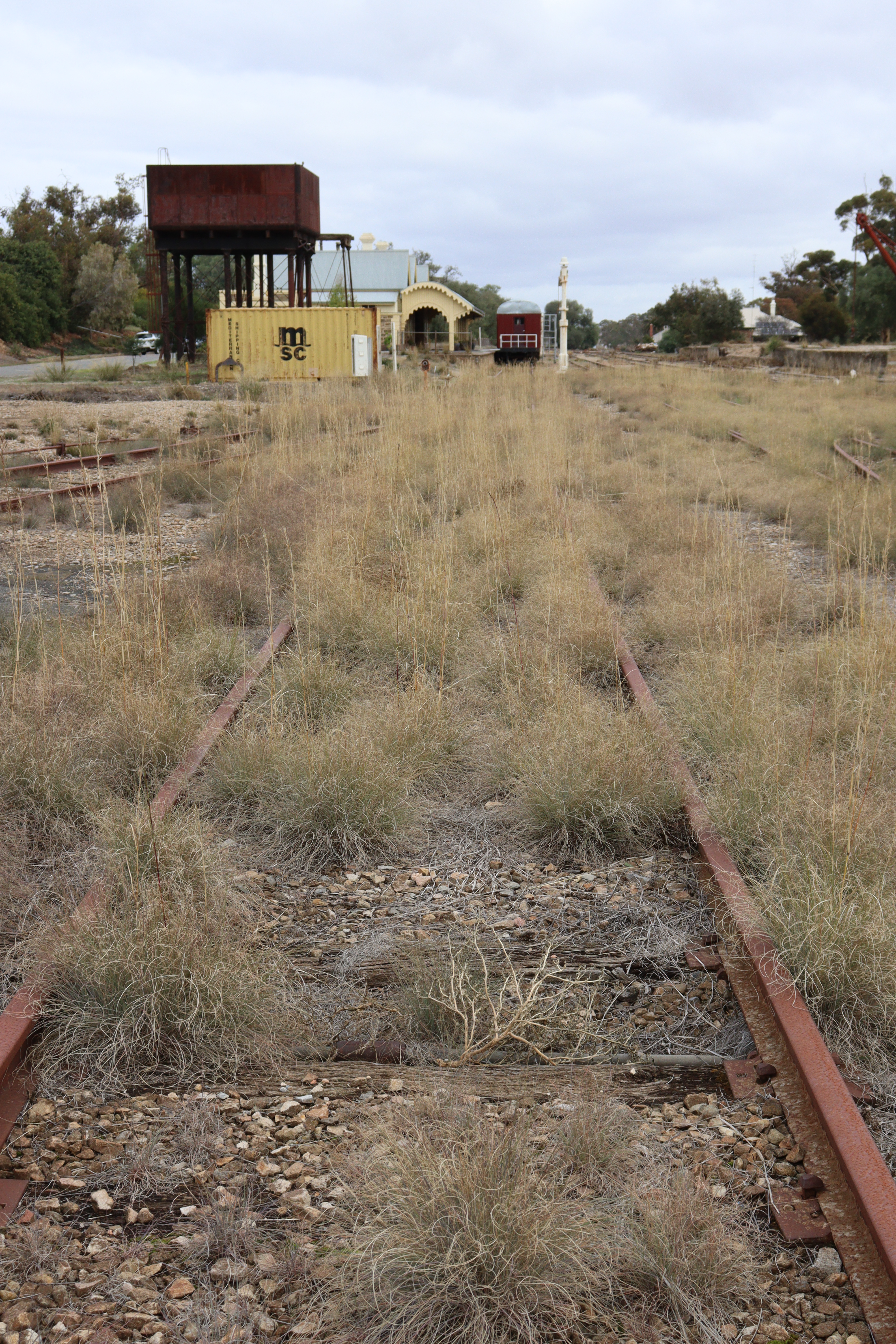
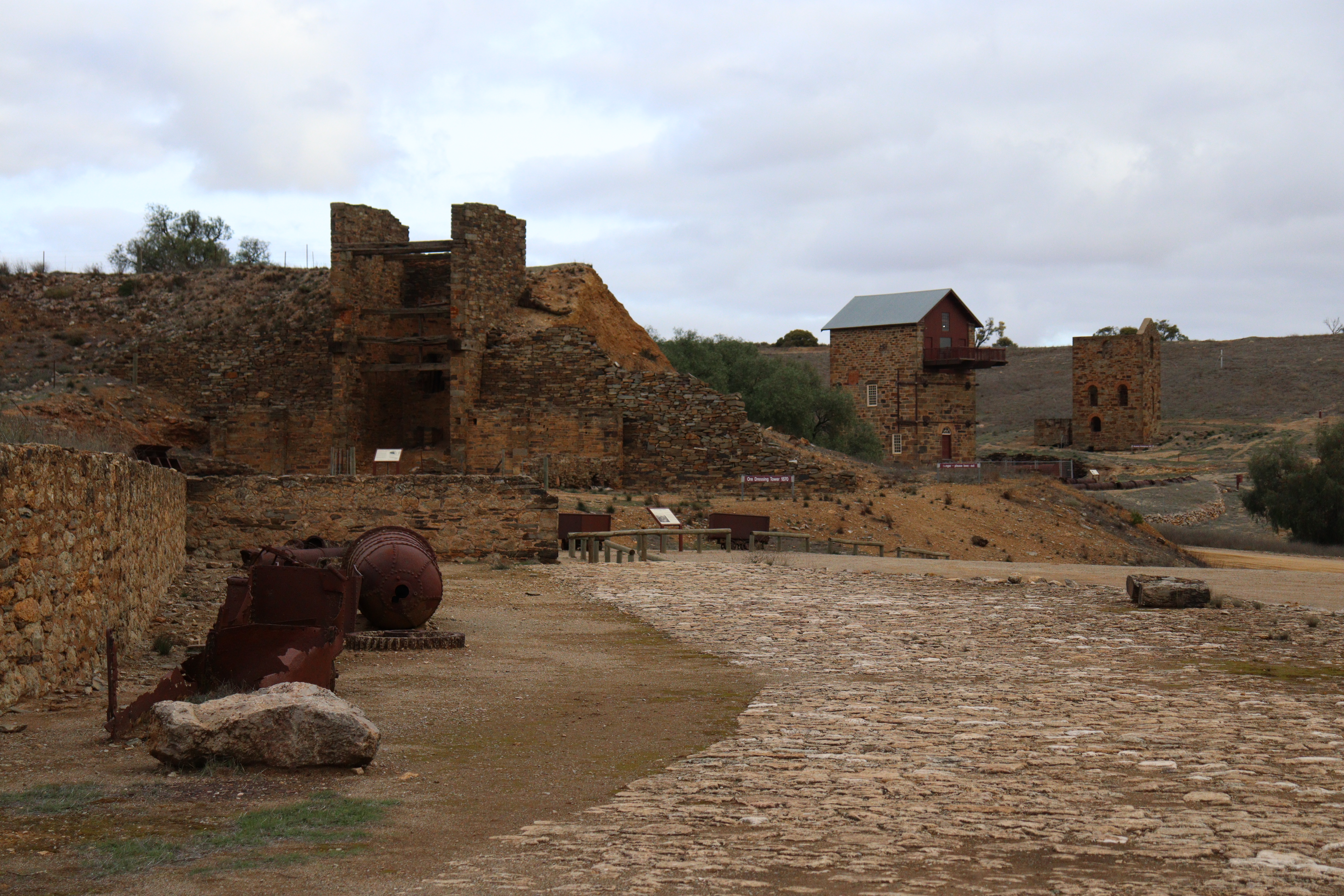
Burra is a quaint little town that we have passed through on several previous occasions, but never really stopped to have a good look at what it has to offer – aside from its yummy Cornish pasties – so we chose to spend a couple of nights there. After checking in to the campground, we set off walking around the town. Following the disused rail line we found the old Railway Station, which has been restored and maintained in a lovely condition.  From there we made our way up the hill to the town lookout and found that we were just near the old open-cut Burra Burra copper mine, so we spent the next few hours in the mining precinct exploring the heritage listed buildings and remnants of the mine’s former glorious past. This mine was one of the first in Australia to employ the revolutionary open cut method, and between 1845 and 1877 produced 50 000 tonnes of copper metal from 700 000 tonnes of ore and was deemed unprofitable, but when it reopened and operated from 1971 to 1981, it produced 24 000 tonnes of copper metal from two million tonnes of ore. Personally, I can’t see how the figures from the first operation deemed it unprofitable when looking at those from the second?? Anyway, we filled in our afternoon checking it all out, so I guess it was kind of profitable for us!

Leaving Burra we stopped just out of town for the must-do photo of the Burra Homestead or Cobb and Co Coach House Hotel (ruins), the humble little stone house on its own in a paddock, which became famous after it featured on the cover of Midnight Oil’s Diesel and Dust album. It’s probably now one of the most photographed little houses of its type and although it’s on private property, there’s a gravel carpark just off the road so you can stop to take your own version of this classic photo.

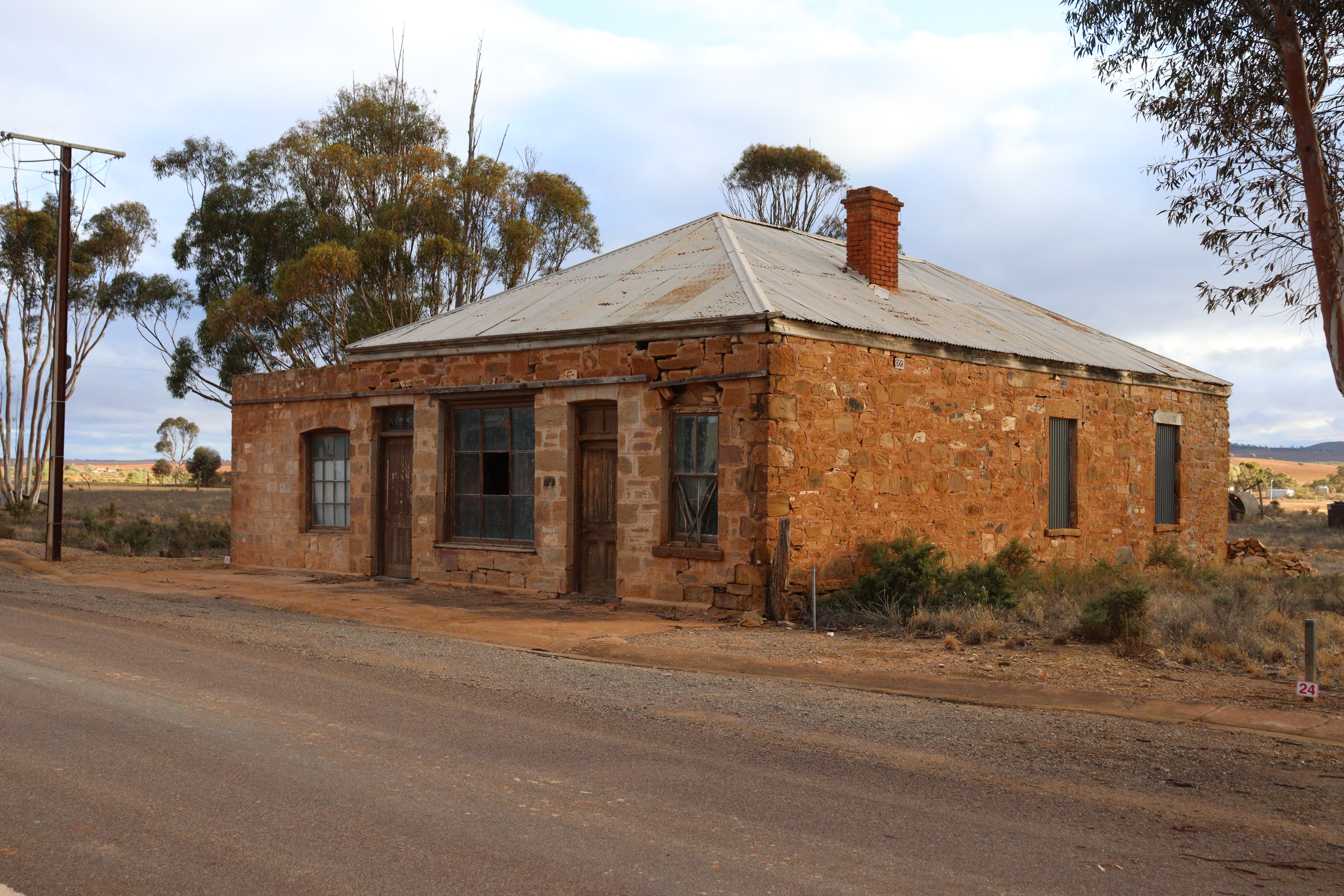
Carrieton, a tiny, charming town in the southern Flinders Ranges, is well worth a visit, if only to check out the old buildings. Surveyed and proclaimed a town in the 1870s, its population had grown to over 200 by the 1890s and, with the railway coming through, the town prospered and added some 40 or so buildings, some of which are still there today. The school which opened in 1882 and at one stage grew to over a hundred students – with just one teacher!! – finally closed in 1997, and it, along with the community store and memorial hall and clubrooms, were taken over by the Progress Association, which also leases the local swimming pool from the council. The Association converted the school into the town’s caravan park, where we were greeted with a friendly welcome and some tourist advice as well. Although the town’s population is now only about 23, I think every one of them, along with many from elsewhere, crowded into the historic pub, The Carrieton Hotel, on the Friday night when we went in for dinner, and the atmosphere was again most hospitable and pleasant.

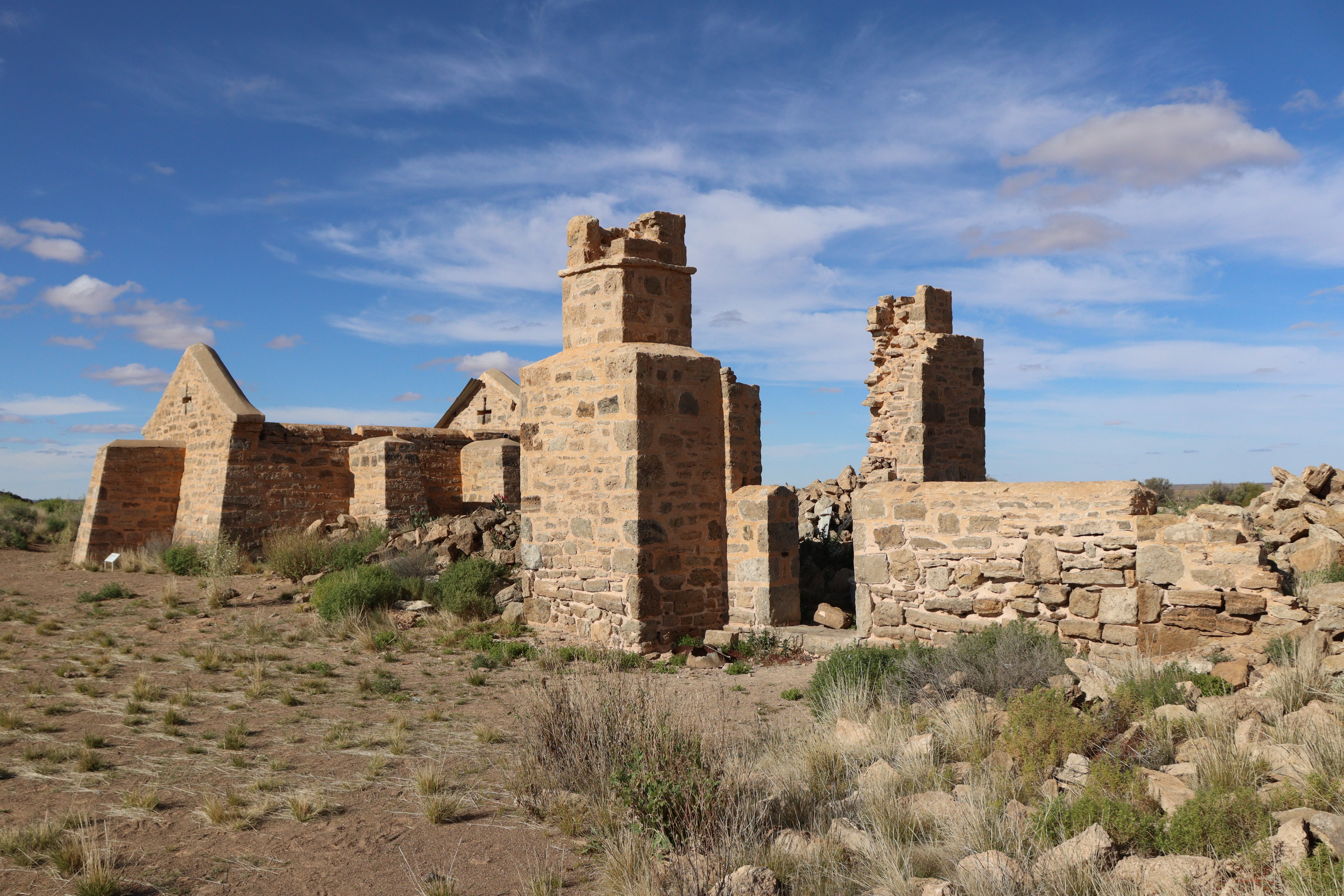
Taking the tourist advice offered in Carrieton, we drove the 80-kilometre Johnburgh loop, which took us out of town, through the Oladdie Range and down into Johnburgh historic township, where we spent several hours exploring the remnants of the town’s buildings. Built of local stone, like most of South Australia’s old towns, many of the buildings are in reasonable condition, and offer plenty of photo opportunities.

Ikara-Flinders Ranges National Park is always worth a visit. With its stunning and ancient mountain backdrops, its pioneering history and the amazing Wilpena Pound, we were quite happy to re-visit this Park, and as per usual, we discovered something we hadn’t seen there before. Taking a walk along part of the Heysen Trail following Wilpena Creek, we found the Old Wilpena Station complex, comprising the original homestead dating back to 1860, and outbuildings such as the Store, Blacksmithy, Stables, and several houses, all built from local stone and all nestled in the valley amongst the huge river redgums.

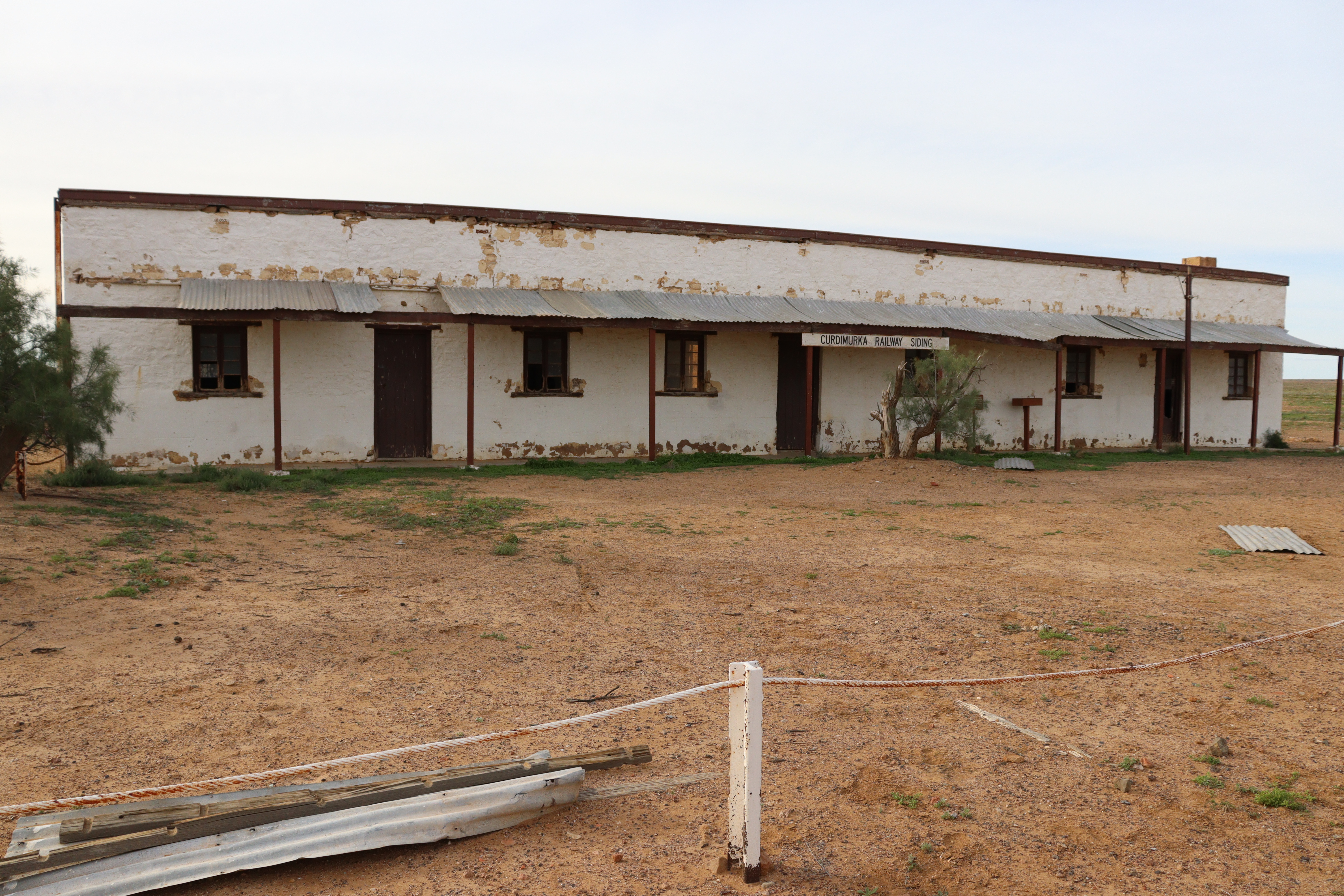
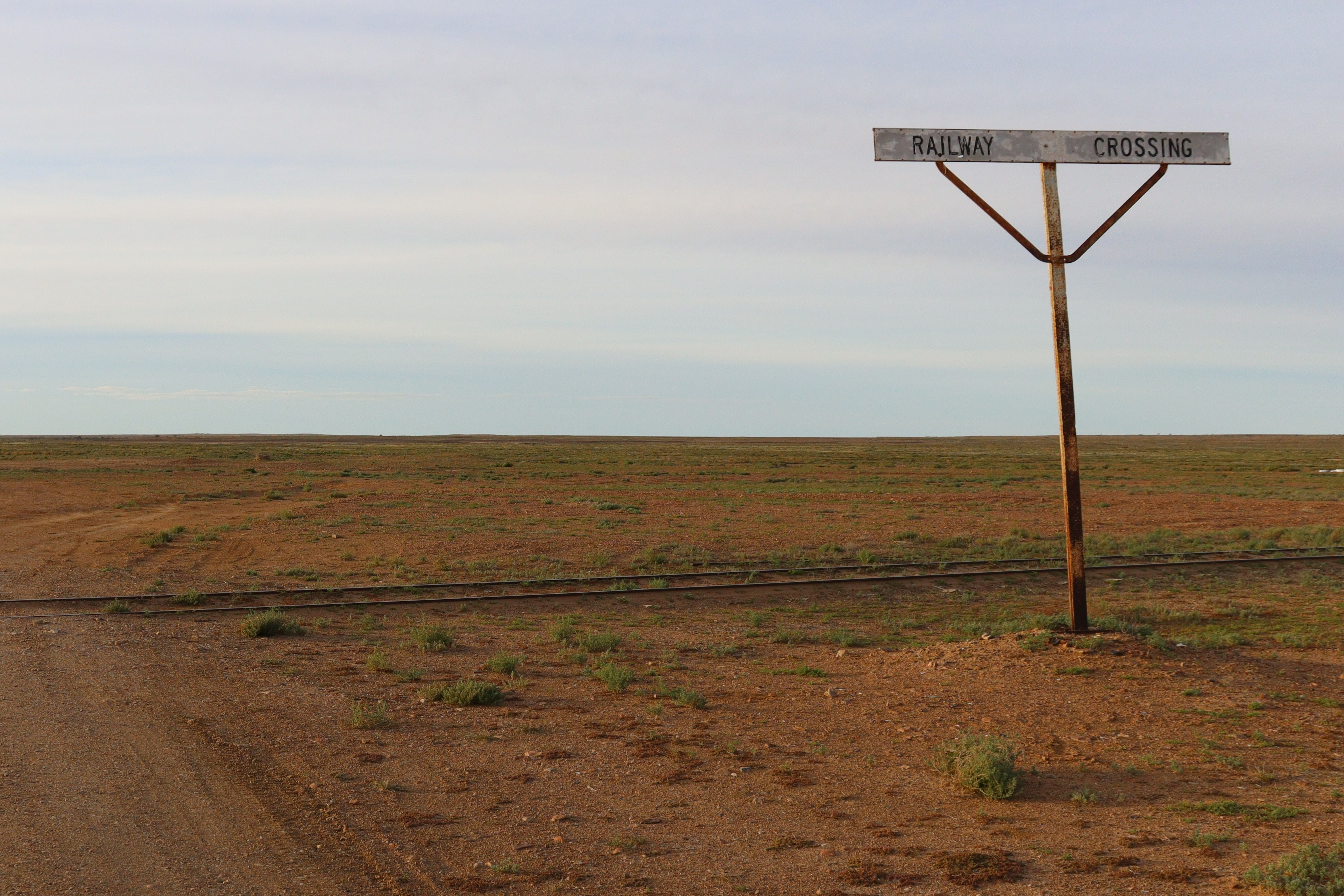
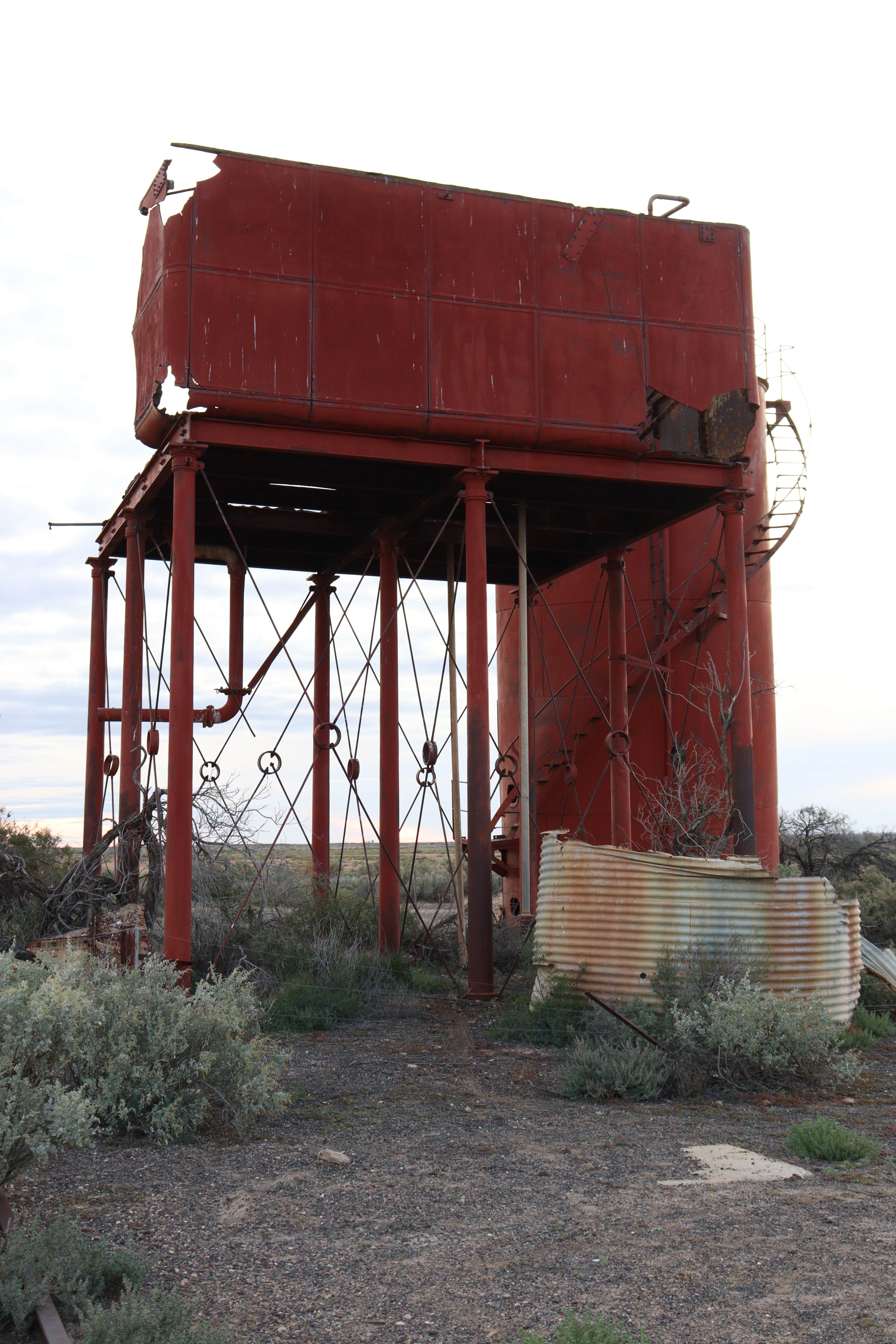
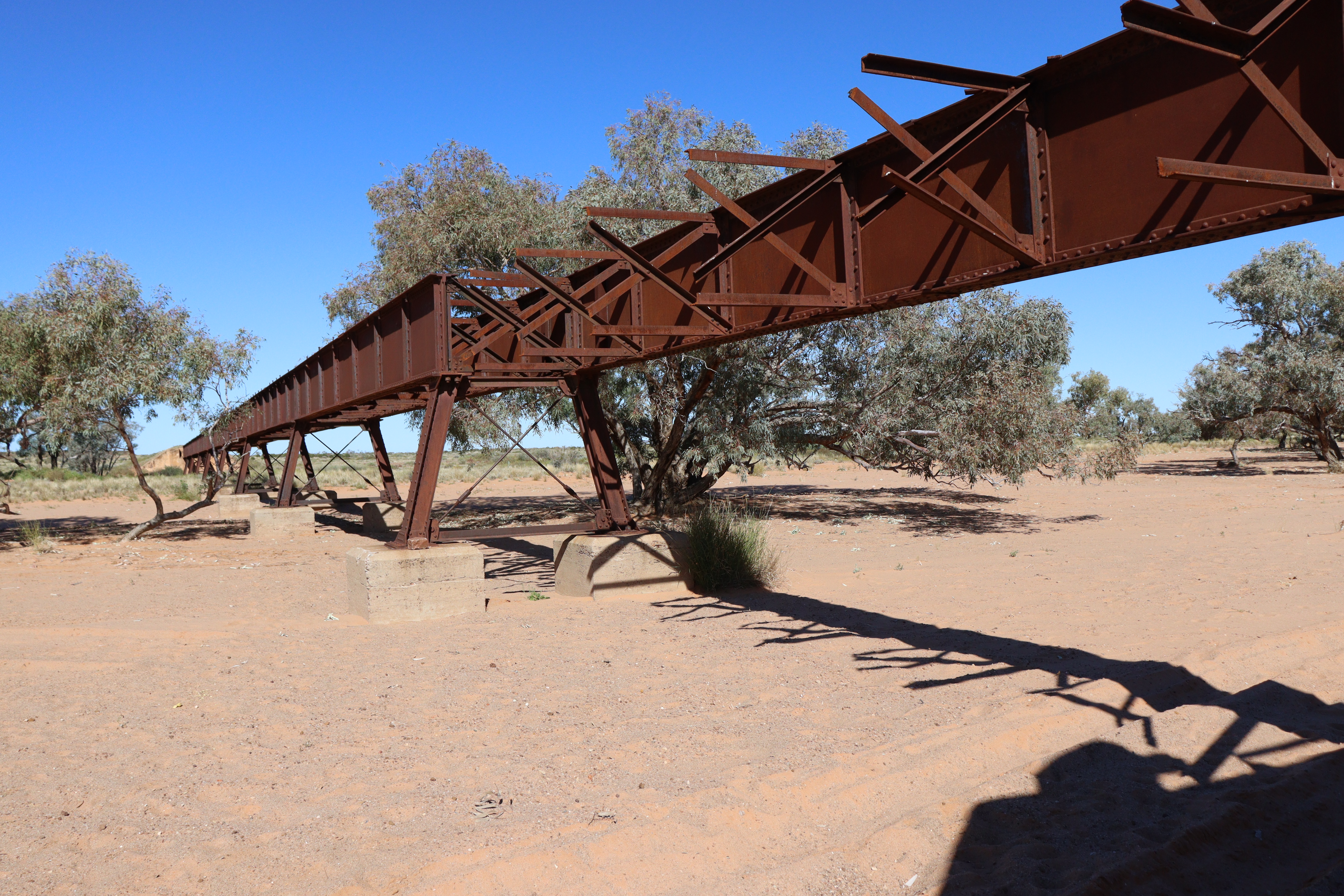
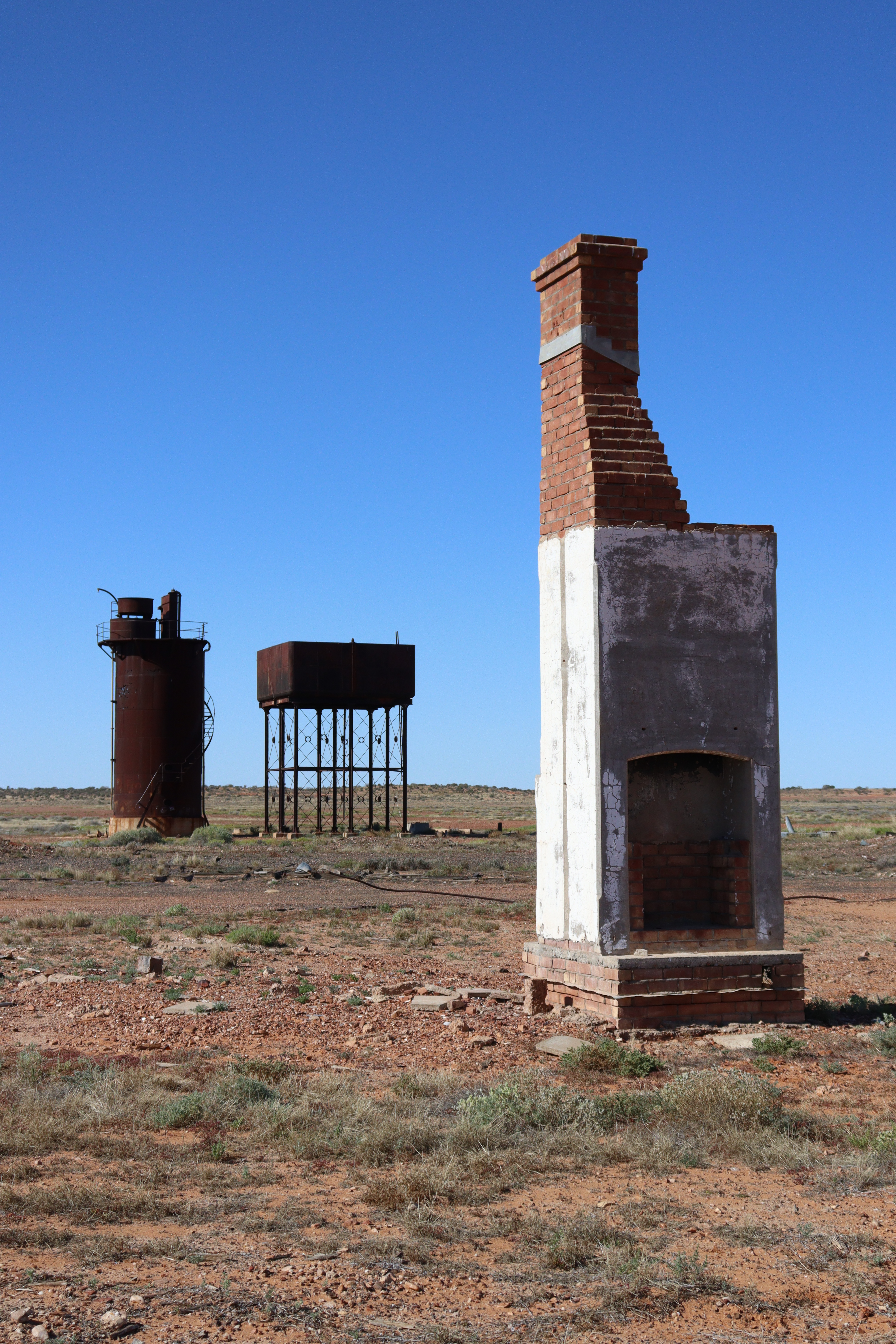
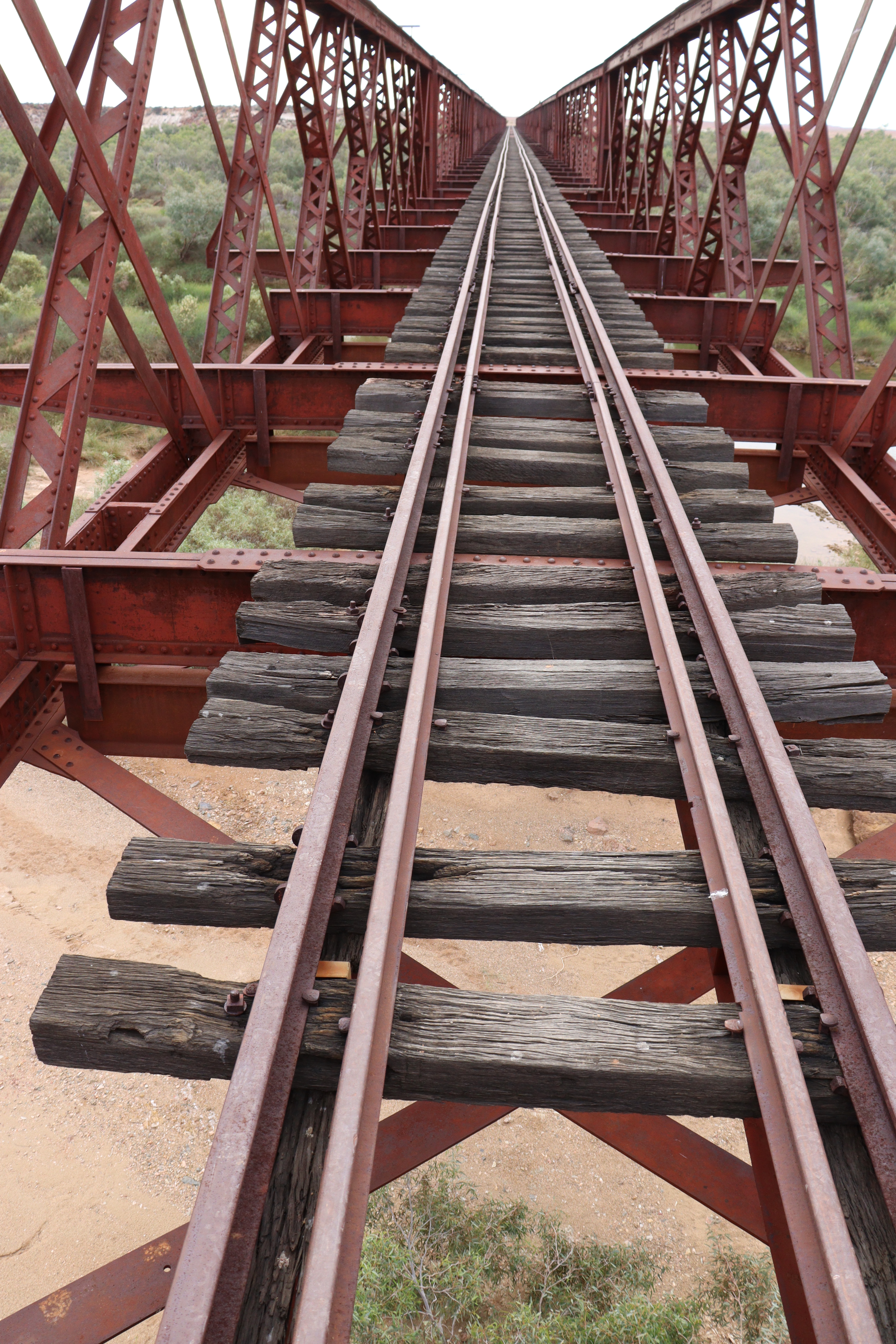
The Oodnadatta Track is an iconic road route that follows the route of the original Old Ghan Railway that linked Adelaide and Alice Springs. Having travelled the Track in the past we knew what to expect, but this time we slowed down and really explored the many sites it offers along the way. Many of these sites, such as Curdimurka, Beresford, and Edward Creek, are the old railway sidings that incorporate fettlers cottages, huge water tanks and Kennicott water softeners and remnants of the old railway tracks. Historic railway bridges occur as frequent reminders of how quickly waterways can fill after a downpour, with some of these bridges being over 300 metres long.

…and so it begins!

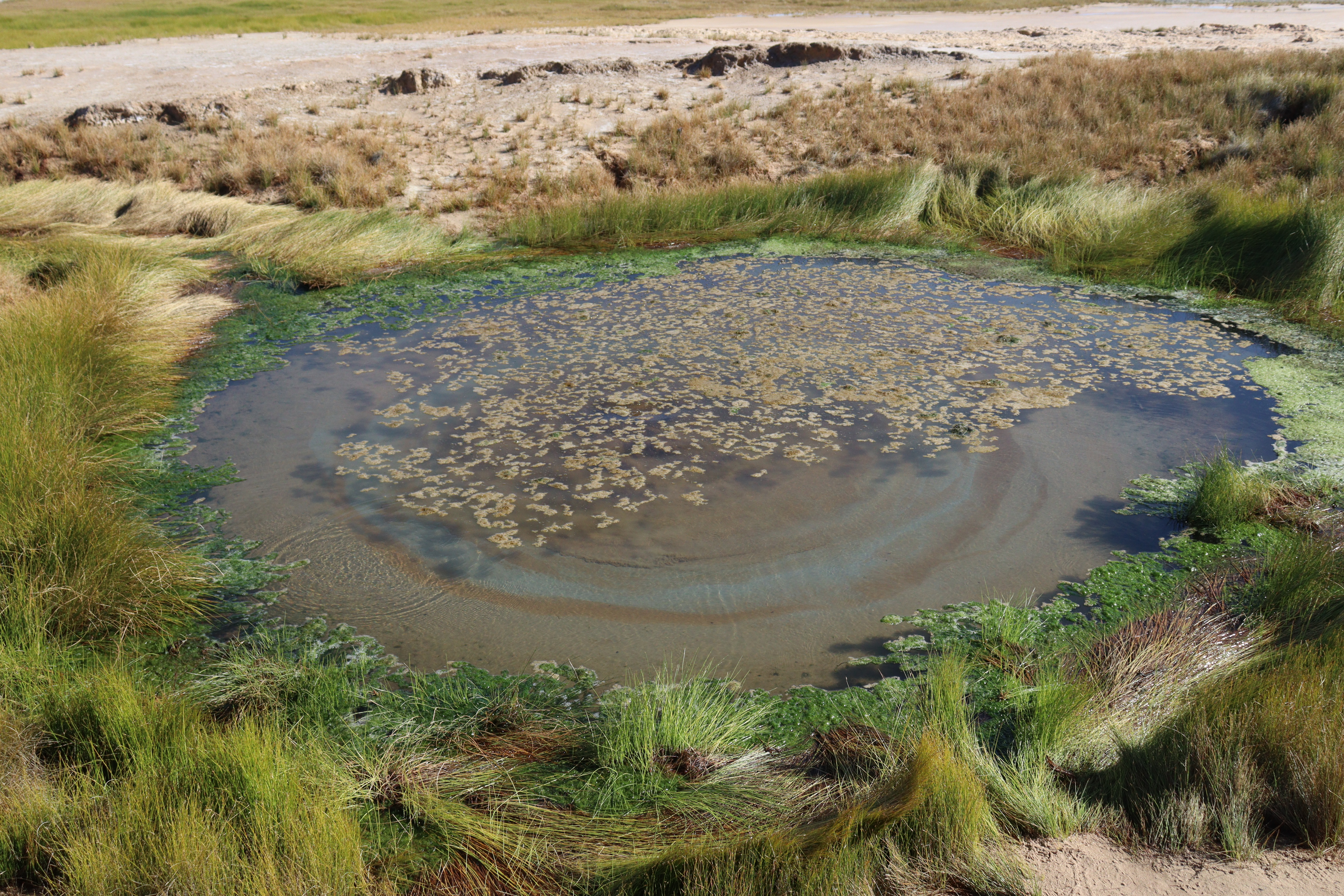
Wabma Kadarbu Mound Springs Conservation Park with its active mound springs bringing water from the Great Artesian Basin to the surface, is worth the short drive off the main track. The Bubbler lives up to its name with water continuously bubbling up from the depths creating lovely patterns in the colored sands, while the Blanche Cup sits atop a fairly high mound with its hot water pool surrounded by a thick growth of reeds.

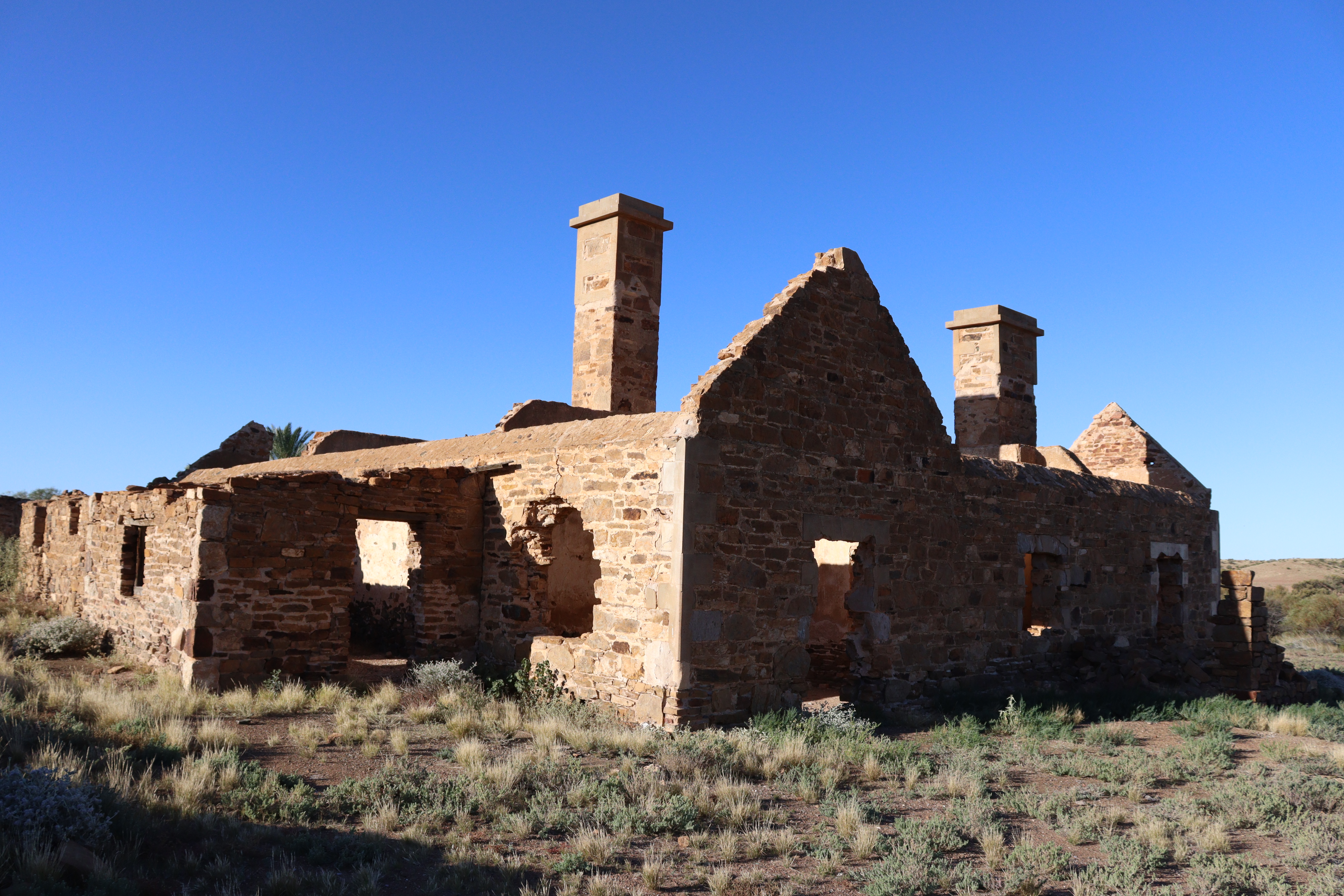
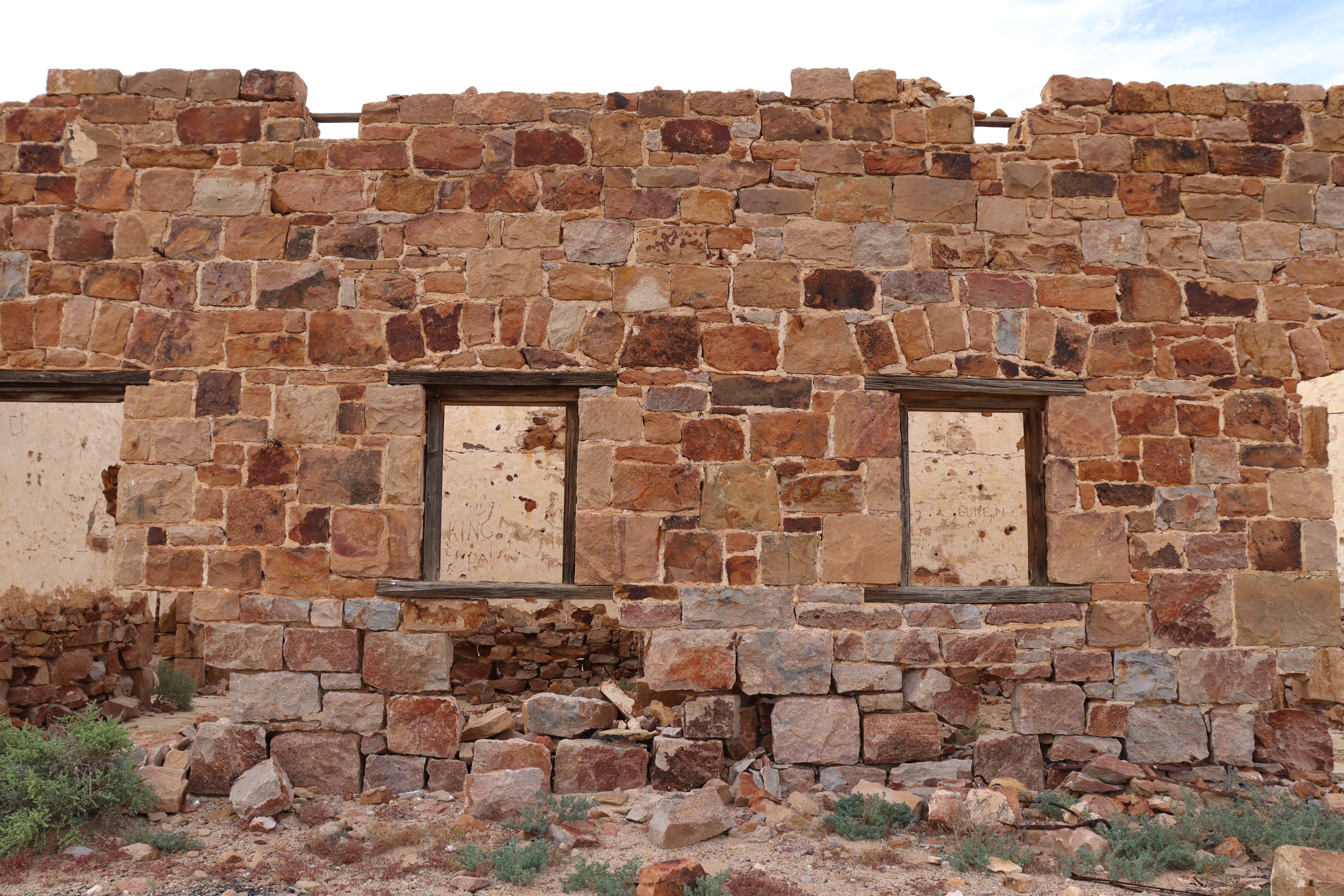
Strangways Springs and The Peake were historic pastoral leases and Overland Telegraph Repeater Stations dating back to the 1870s. While Strangways is a short two kilometres off the Track, The Peake ruins are found at the end of a slow 20-kilometre 4WD track, but both are well and truly worth the effort of getting there. Both of these State Heritage Listed locations feature a number of buildings in varying stages of disrepair and include some very interesting and photo-worthy structures.

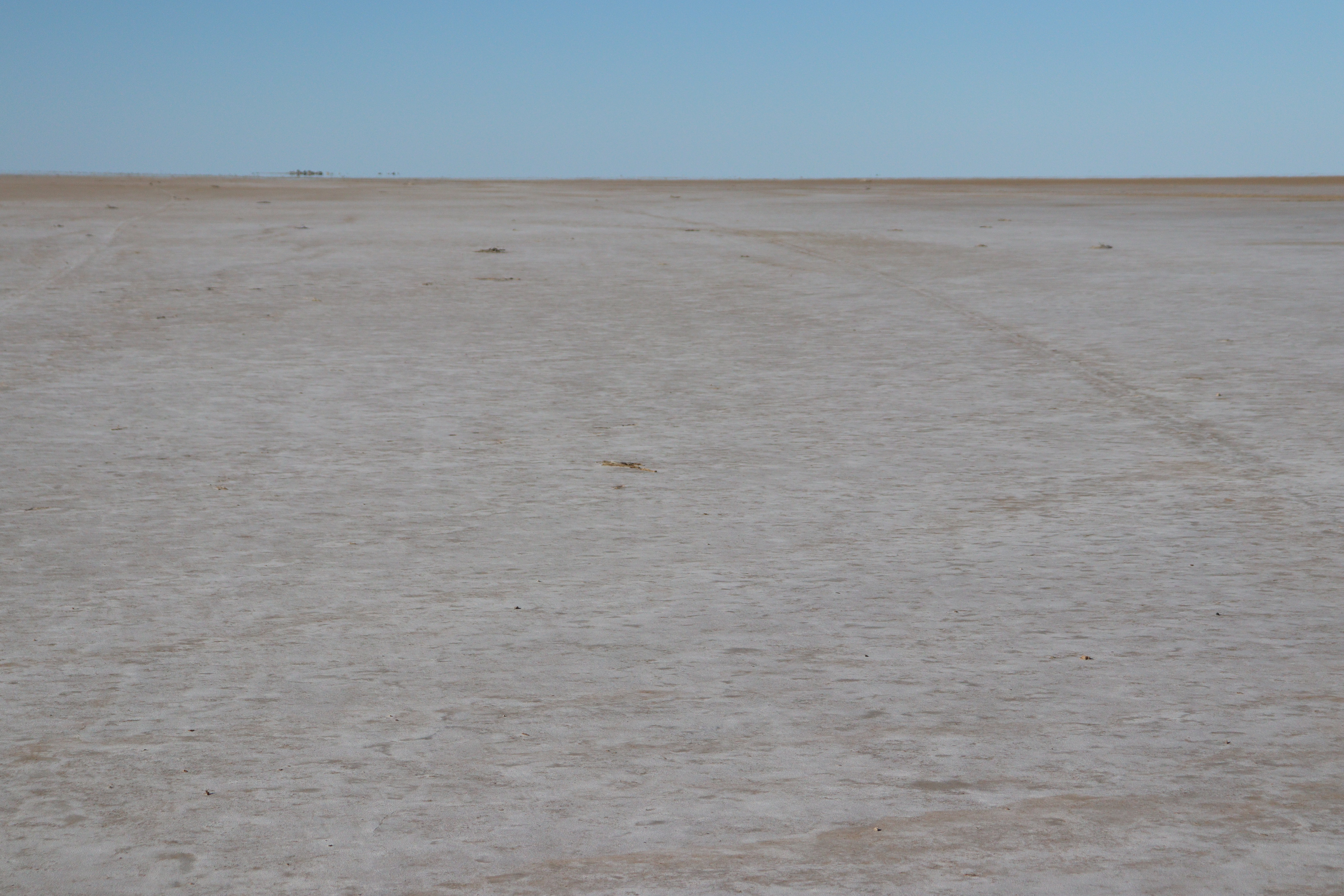
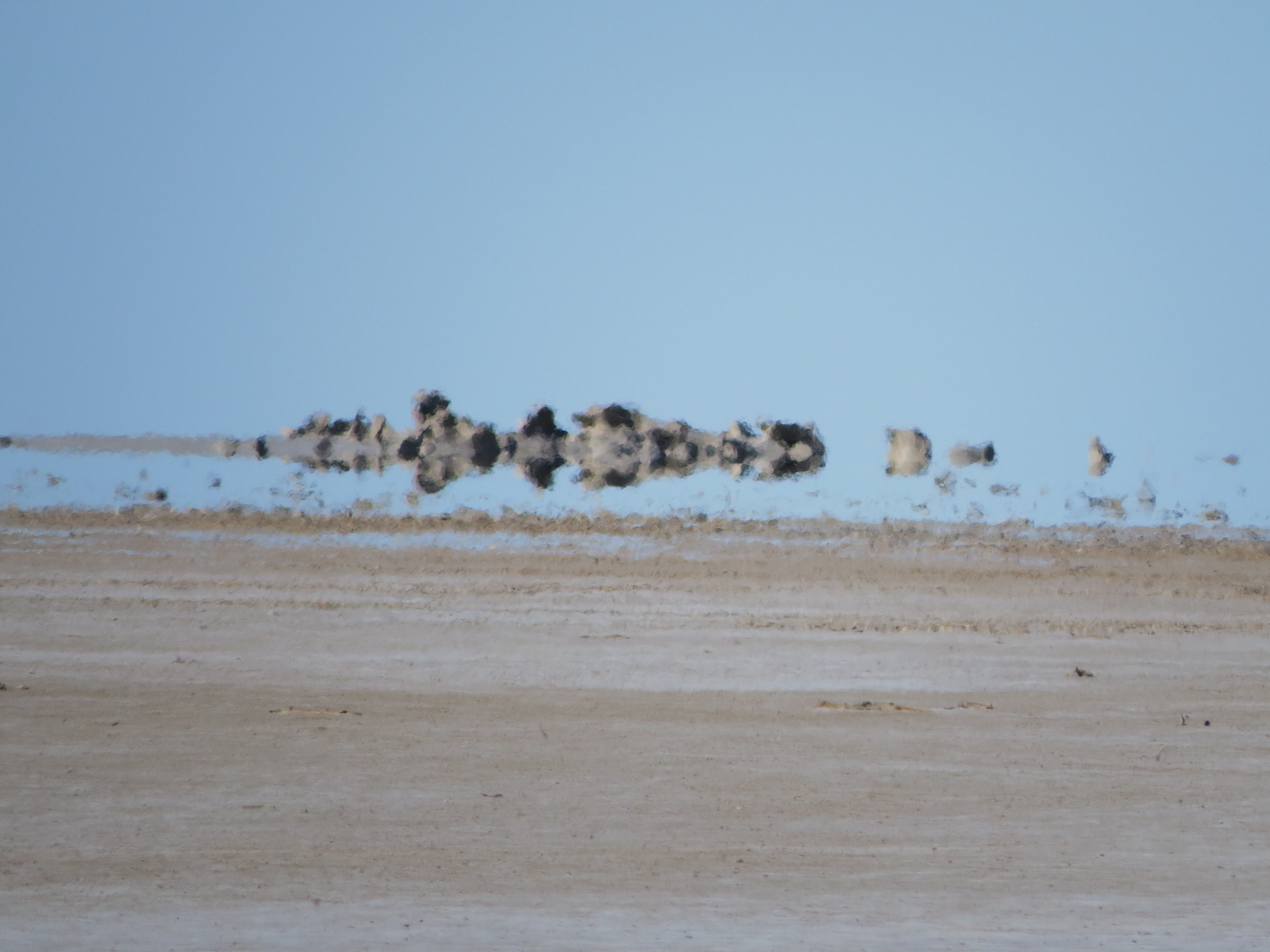
Just out of William Creek “township” is the turnoff to Kati Thanda – Lake Eyre National Park, and the 60-odd kilometre road, which passes through varying landscapes, ranging from dry cattle grazing to gibber plains to a most unexpected “moonscape” of dark rock and mesas, and finally takes you out to Halligan Bay Campground, at the edge of Lake Eyre.  Not sure what to expect out there as there had been varying reports of water in the lake after all the rain up north, but on arrival we found the lake to be much as it usually is – a dry crusted salt pan, and walking out onto it for a couple of hundred metres convinced us that we would not get to see any water there except by turning our feet back and forth in the salt and sand to bring some to the surface. This did not however take away from our experience of Lake Eyre, as it simply must be seen to be appreciated. It is just MASSIVE! At no point could we see the other side, and maybe, just maybe, we were able to see reflections of rocks on distant water – or it may have been reflected on the endless white of the salt.

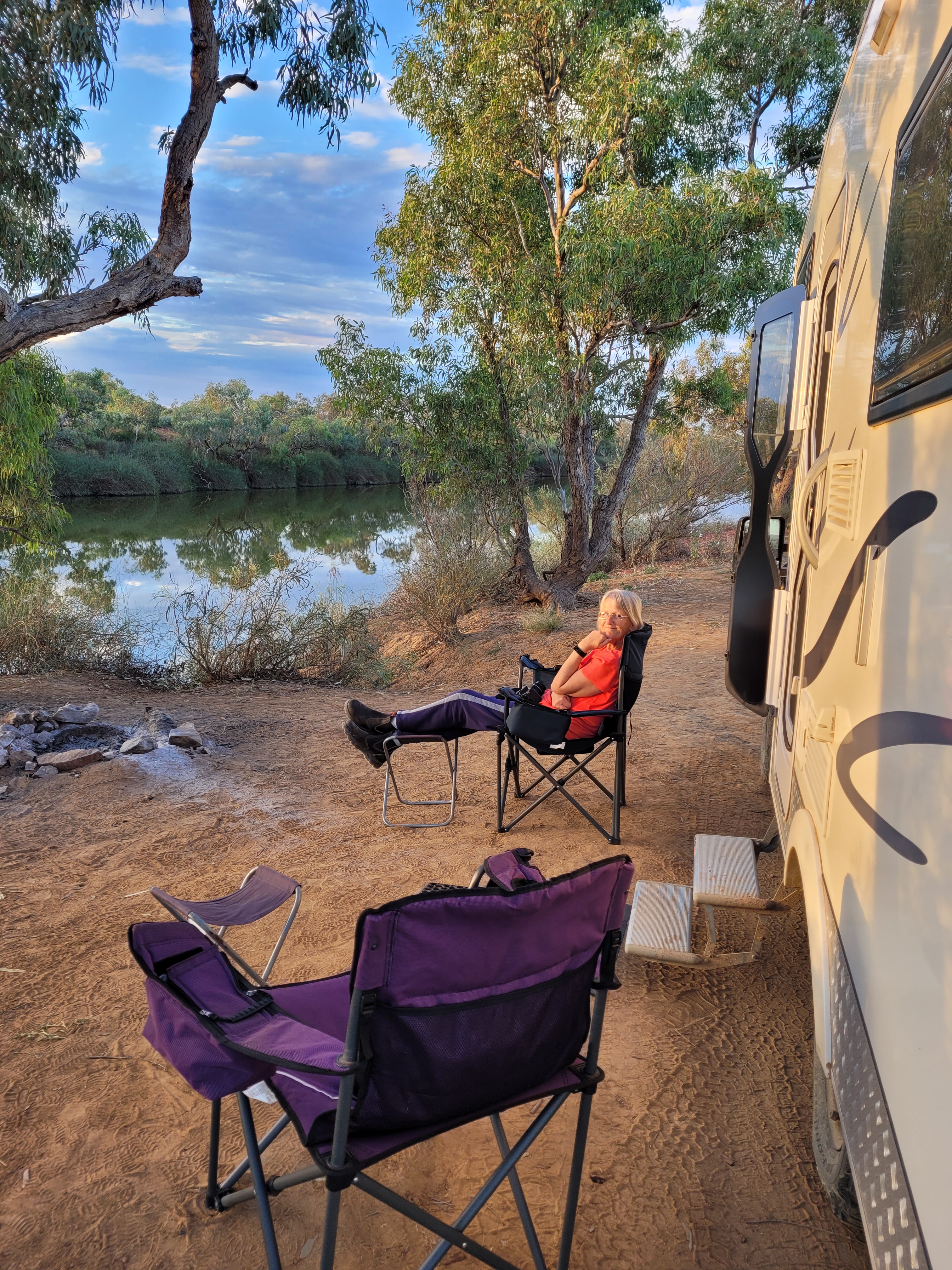
Overnight campsites along the Oodnadatta generally consist of pulling up at the old railway sidings, but the best spot in my view, was the Algebuckina Waterhole, across the track from the historic 527-metre-long railway bridge – the longest on the Track and at one time the longest in SA.  The waterhole is well off the main track, and we spent a lovely night there watching a variety of birds coming and going, including lots of yellow green “swarms” of budgies – just amazing to see!

WTF?? Or HaHa!!

  • Getting back to our site in Mildura after several hours out, we found our outside doormats, which, being very wet, we had left on site to keep our spot, were no longer there. But, new neighbours right next to us had, funnily enough, exactly same ones, even placed in same positions as we had left them. So I knocked on their door and politely said, “You don’t mind if I take our mats back now, do you?” to which he sheepishly replied, “Well, it was very wet when we got in here!”  -no attempt to deny he’d taken them…and from then on, no eye contact or greetings offered!
  • Burra Burra mine site is part of a Tourist Passport where you need a key to access some of the sites. As it turns out, the mine site is one that needs a key. Being on foot wasn’t an issue for us, but a carload of visitors who had driven into the site after finding the gate open, found themselves locked in after their drive around the site. Last we saw of them, they were parked inside the locked gate, trying to ring for help to get them out!
  • Halligan Bay-Lake Eyre – just on sunset a car drives into the campground, round the loop without even stopping and back out again. Why?? It’s a 61-kilometre 4WD-recommended road to get out there and they didn’t even stop!!
  • Algebuckina Bridge -527 metres long, iconic photo-op. so why does this idiot park right under the bridge meaning no one can get a good shot of the bridge without getting his rig in it too?
  • Pink Roadhouse in Oodnadatta – iconic, great hamburgers you can’t jump over, but diesel at $2.999 per litre did hurt a bit!
Oodnadatta’s iconic Pink Roadhouse

Destination Cape York – Final

Rinyirru-Lakefield NP – Cooktown – Home

(Click on images to enlarge)

Coming back down the Cape, we took a detour. Turning eastward from Musgrave Roadhouse onto Lilyvale Road, we headed towards Rinyirru-Lakefield National Park, another of the CYPAL (Cape York Peninsula Aboriginal Land) National Parks.

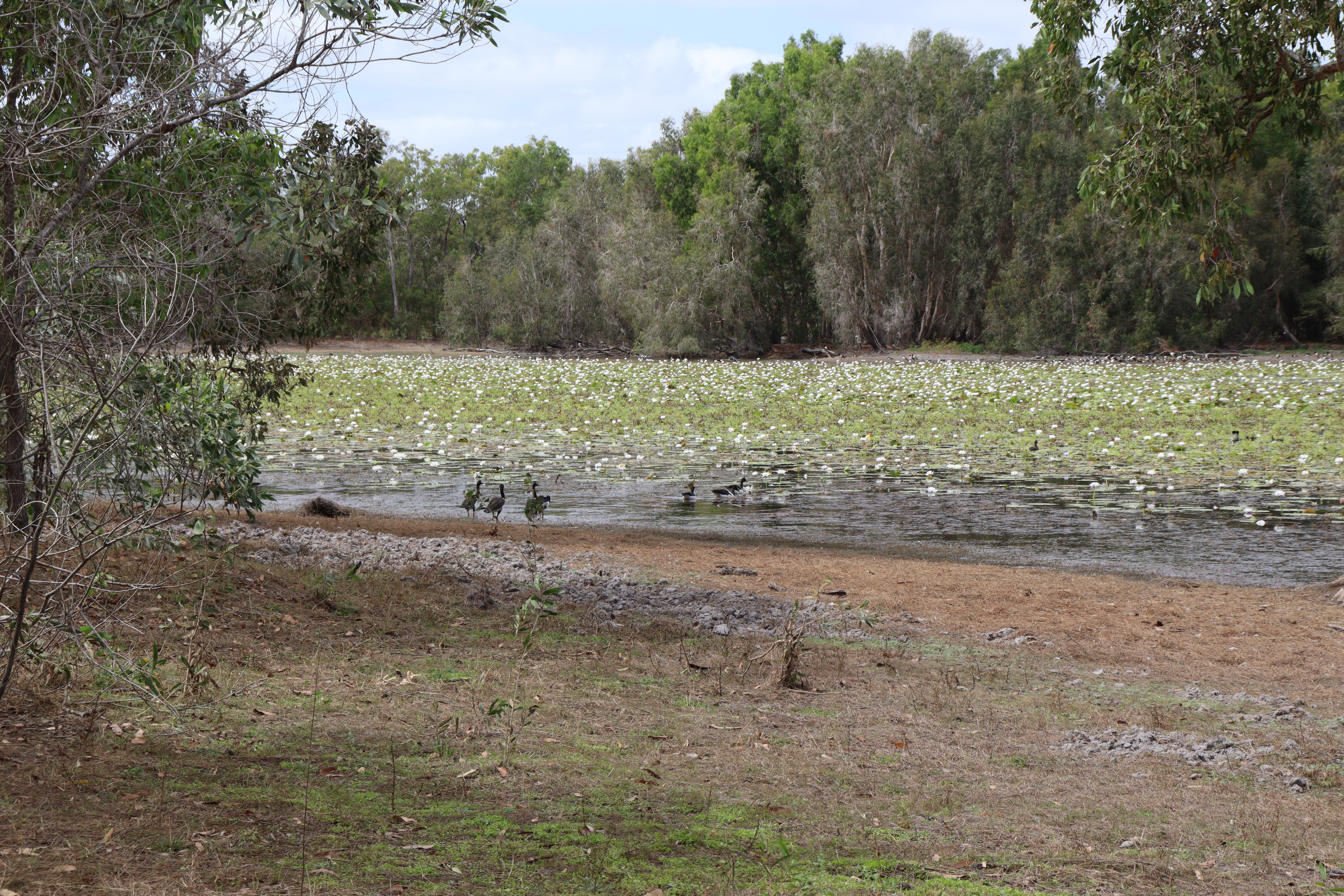
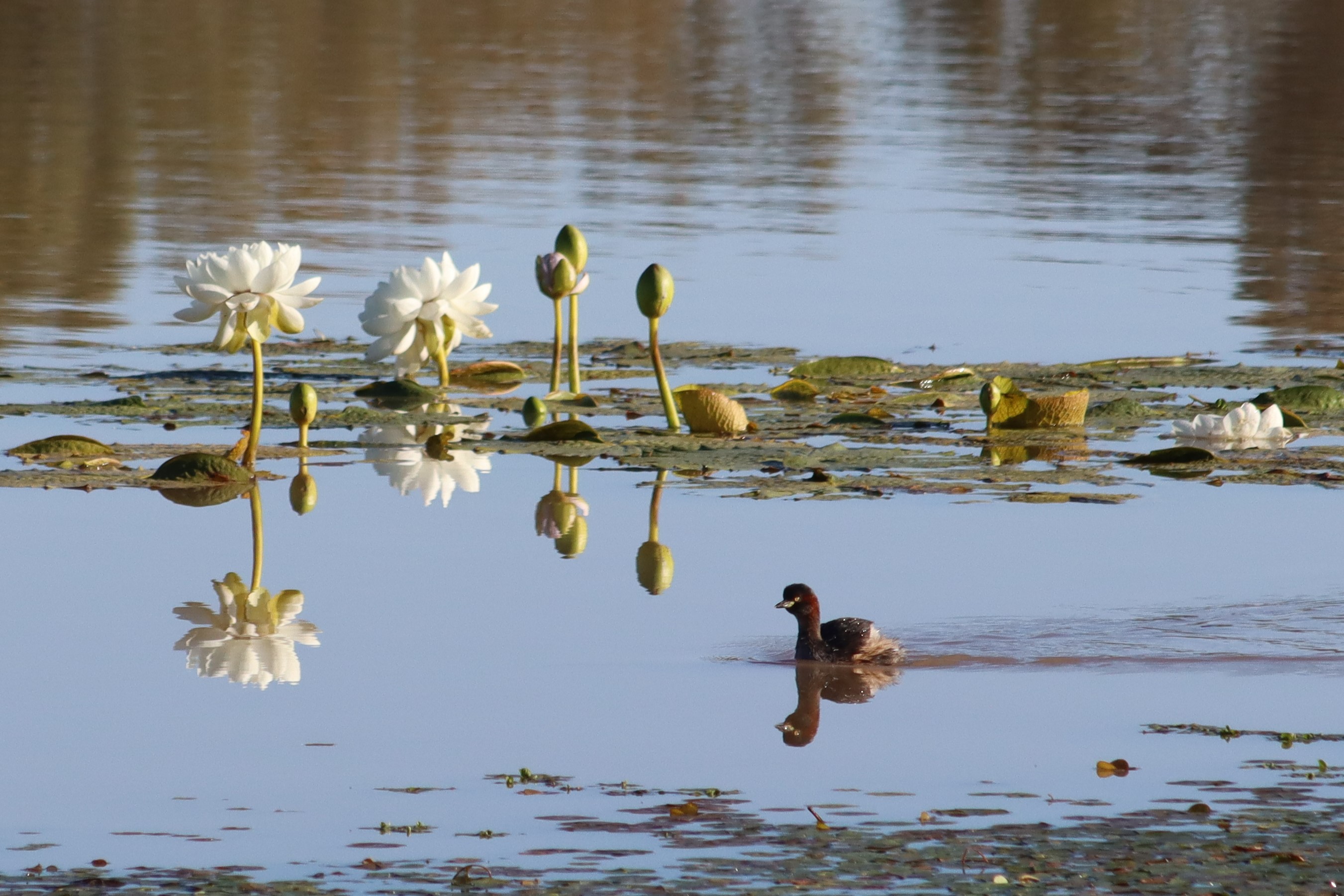
Not far from the turnoff, we pulled into a side track to check out the waterhole at Lotusbird Lodge – the place certainly lives up to its name as the waterhole was covered in lotus lilies and numerous birds including magpie geese and ducks. Further on, we entered Rinyirru Lakefield NP, and we drove through Nifold Plain, where we were suddenly struck by the sight of these weird tall triangular shaped trees in the distance. They turned out to be a variety of Corypha utan palm which originate in India through Malaysia, Philippines Indonesia and into Cape York  and can grow to 20 metres tall, flowering in a massive cluster of up to a million flowers, only once at the end of its life. (thanks Mr Google/Wikipedia.)

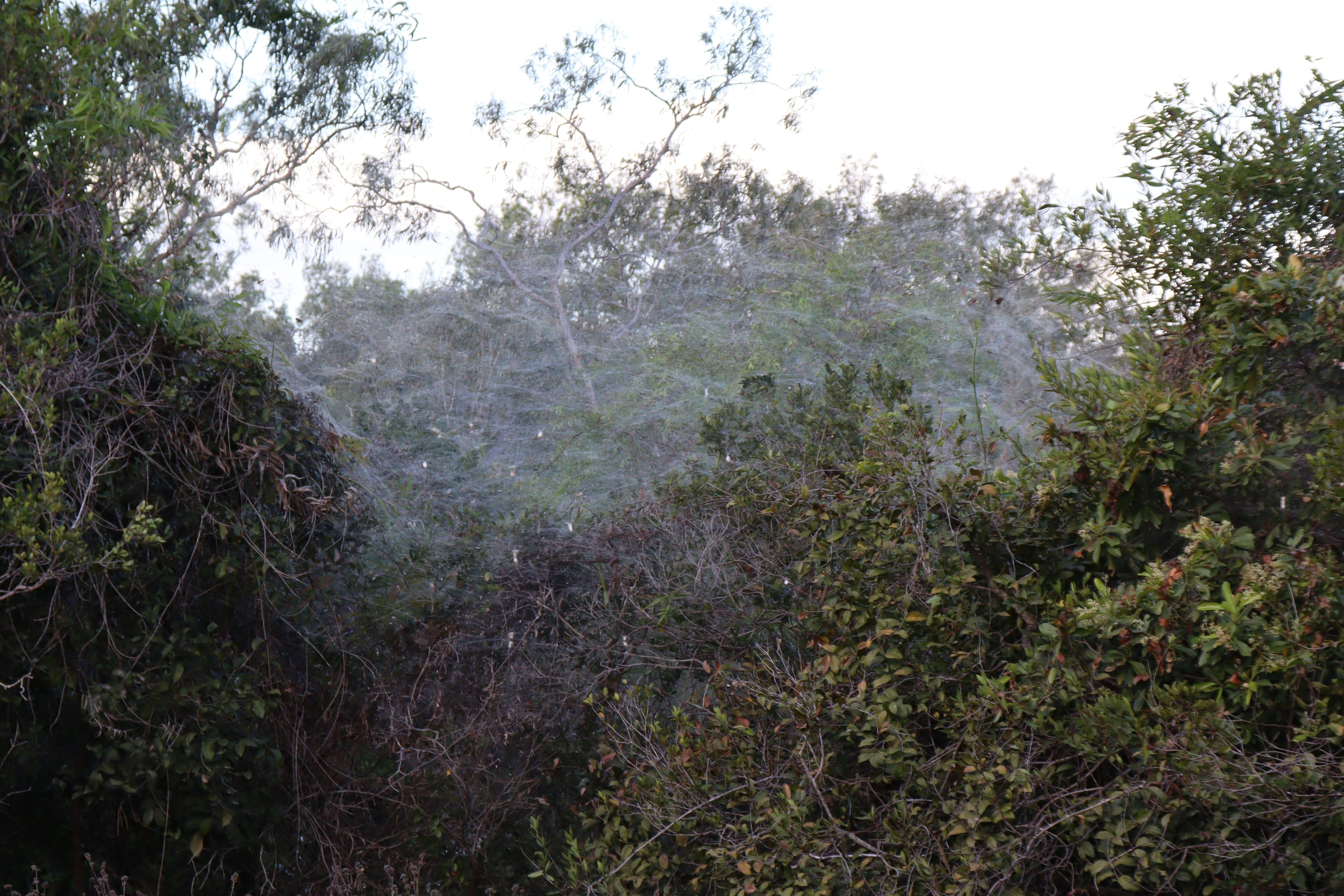
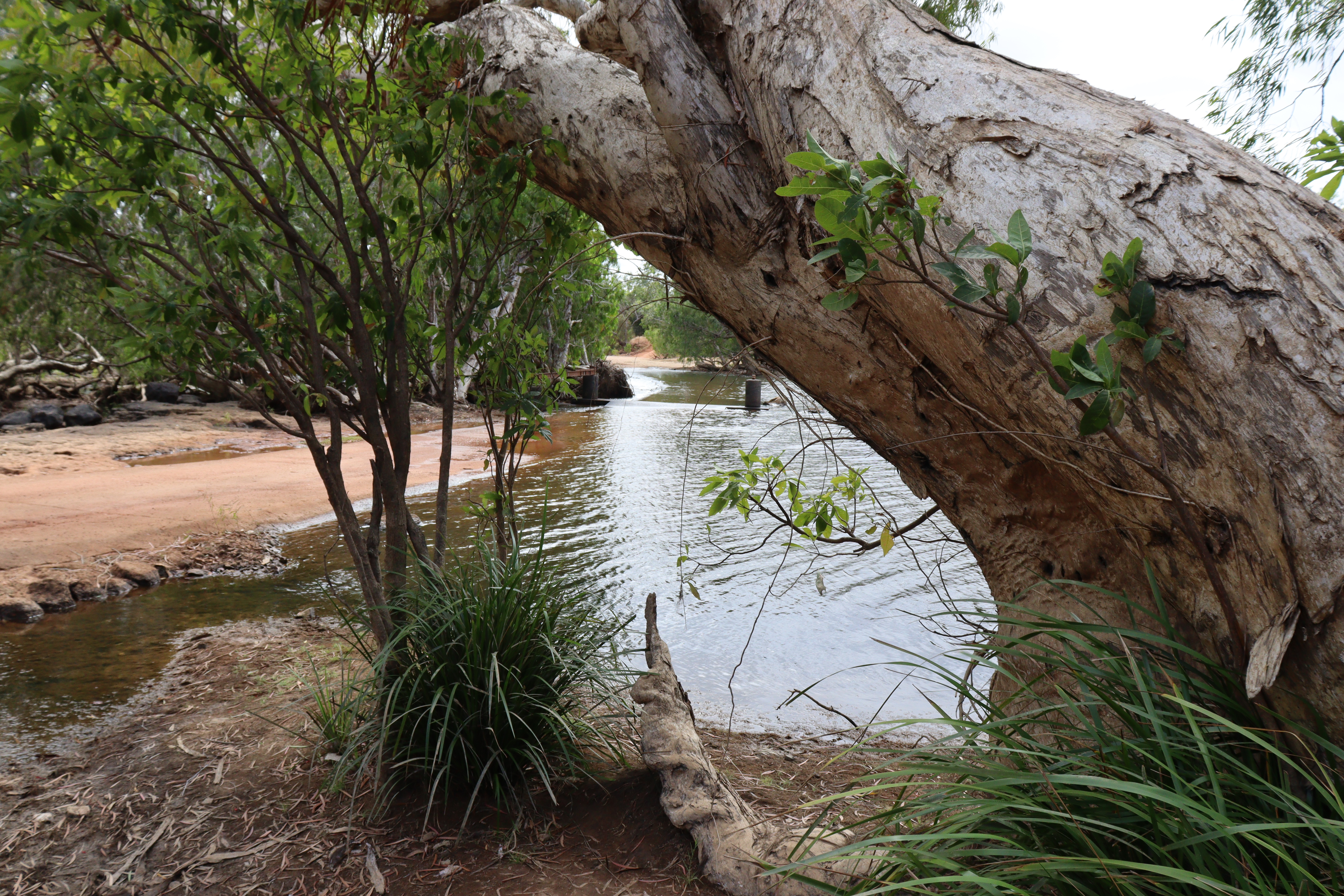
This Park has many campsites at different waterholes and along several different rivers, all of which are tidal and therefore have the “Achtung” croc warnings.  Staying the first night at Hann Crossing on the North Kennedy River, our campsite was a lovely, secluded spot, very quiet on a ledge well above the water.  Walking back to the crossing, it seemed that only a couple of the campsites were occupied. At one point, I saw what appeared to be a smoky haze amongst the bushes, but on closer inspection, it turned out to be a huge mass of spider webs slung thickly between the trees, with hundreds of spiders of different shapes and sizes hanging in them. I’ve never seen anything like it! At the actual Crossing, the river reduces to a narrow chute before cascading into a wide pool that expands to a large waterhole. That night, sitting outside in the dark, we heard a large splash and shining a torch on the water, we spied several pairs of red eyes – CROCS! Luckily our ledge, although close to the water’s edge, was high enough to not be a concern.

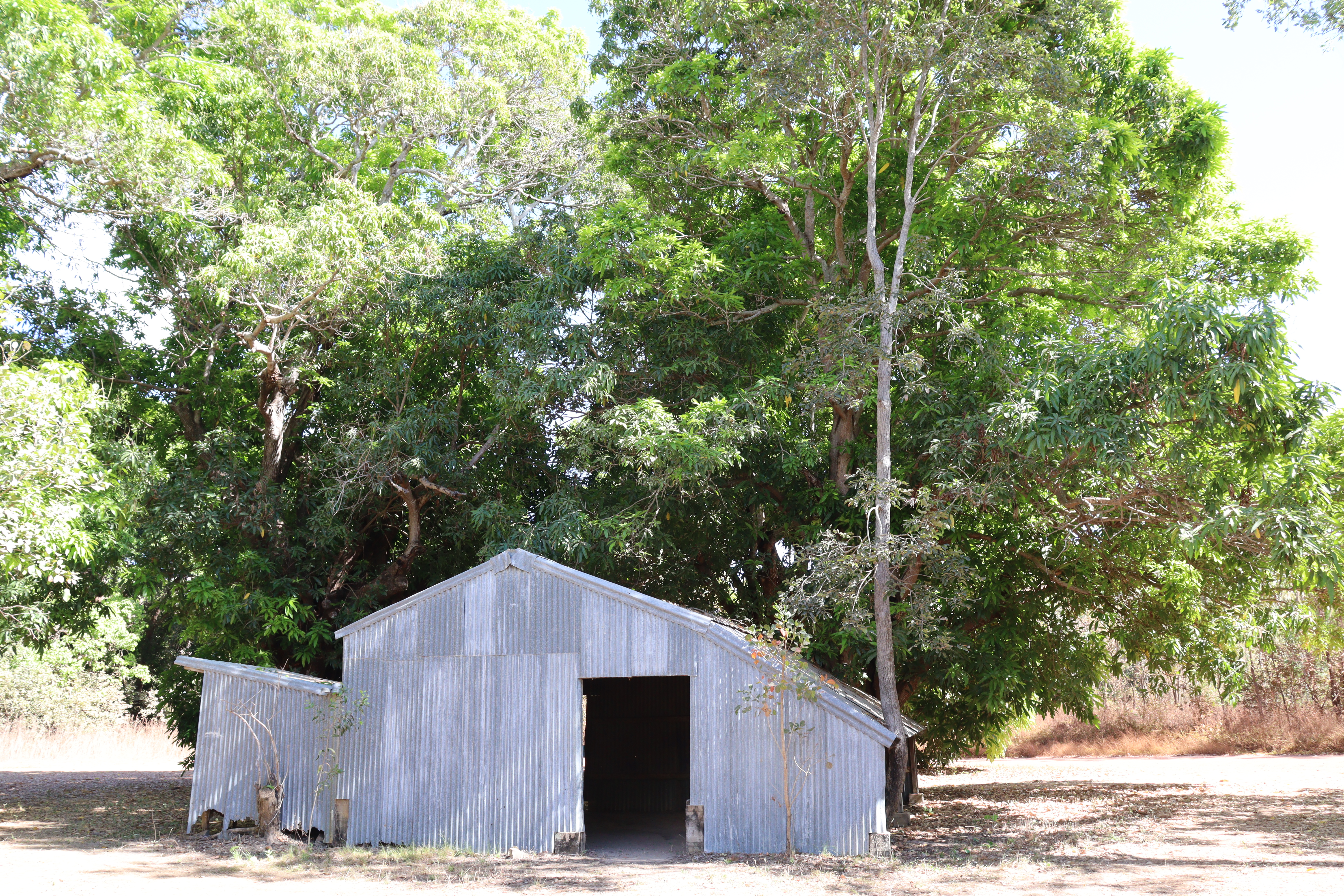
Continuing through the Rinyirru Lakefield NP, we stopped in at Breeza Homestead  historic site where the relics of the original corrugated iron homestead remain nestled under a pair of  huge mango trees a short distance from a large lagoon covered in waterlilies. Further along the road, Red Lily Lagoon boasts a year-round water retention which is ideal for the survival of the many plants, particularly the lotus lilies, that grow there.

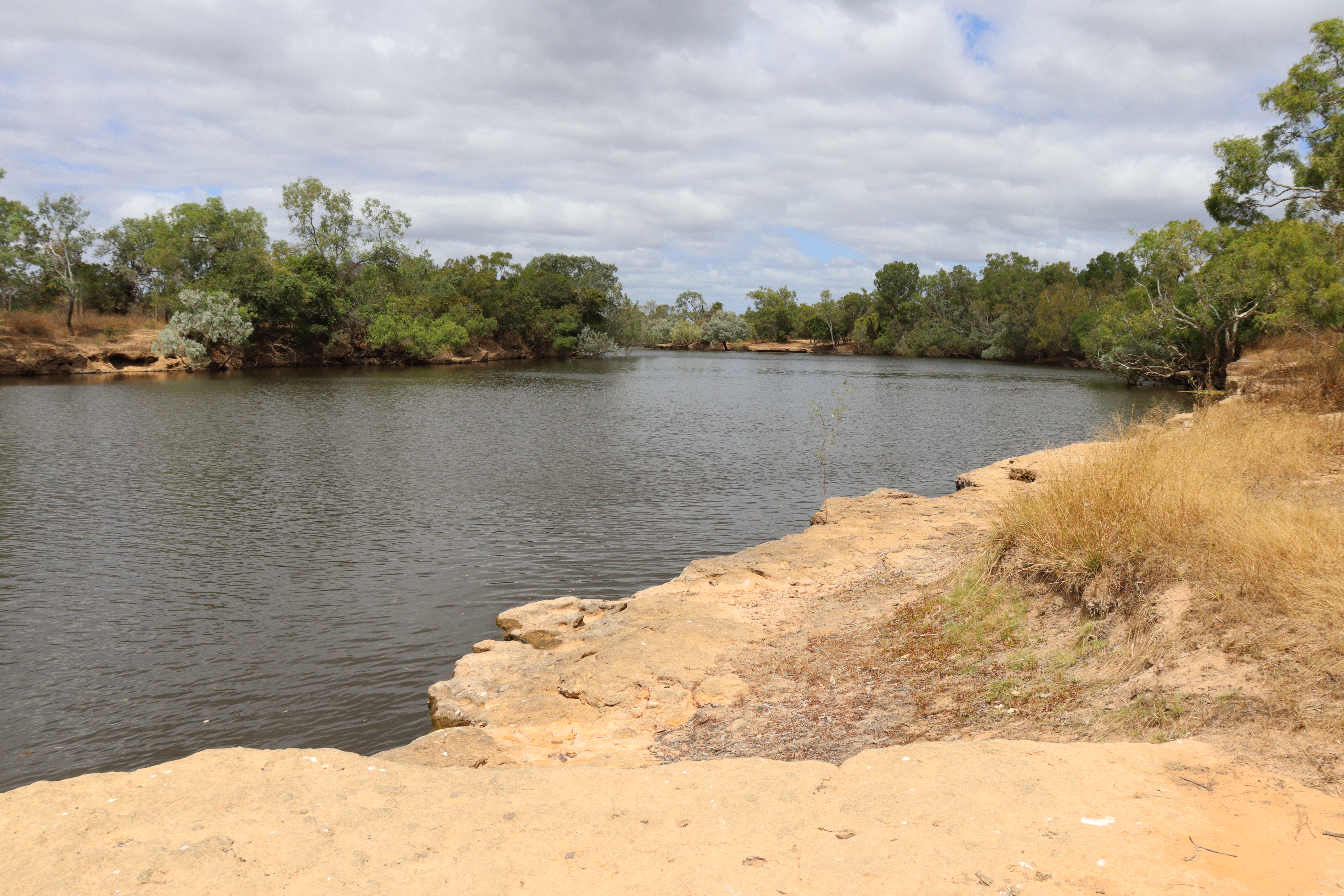
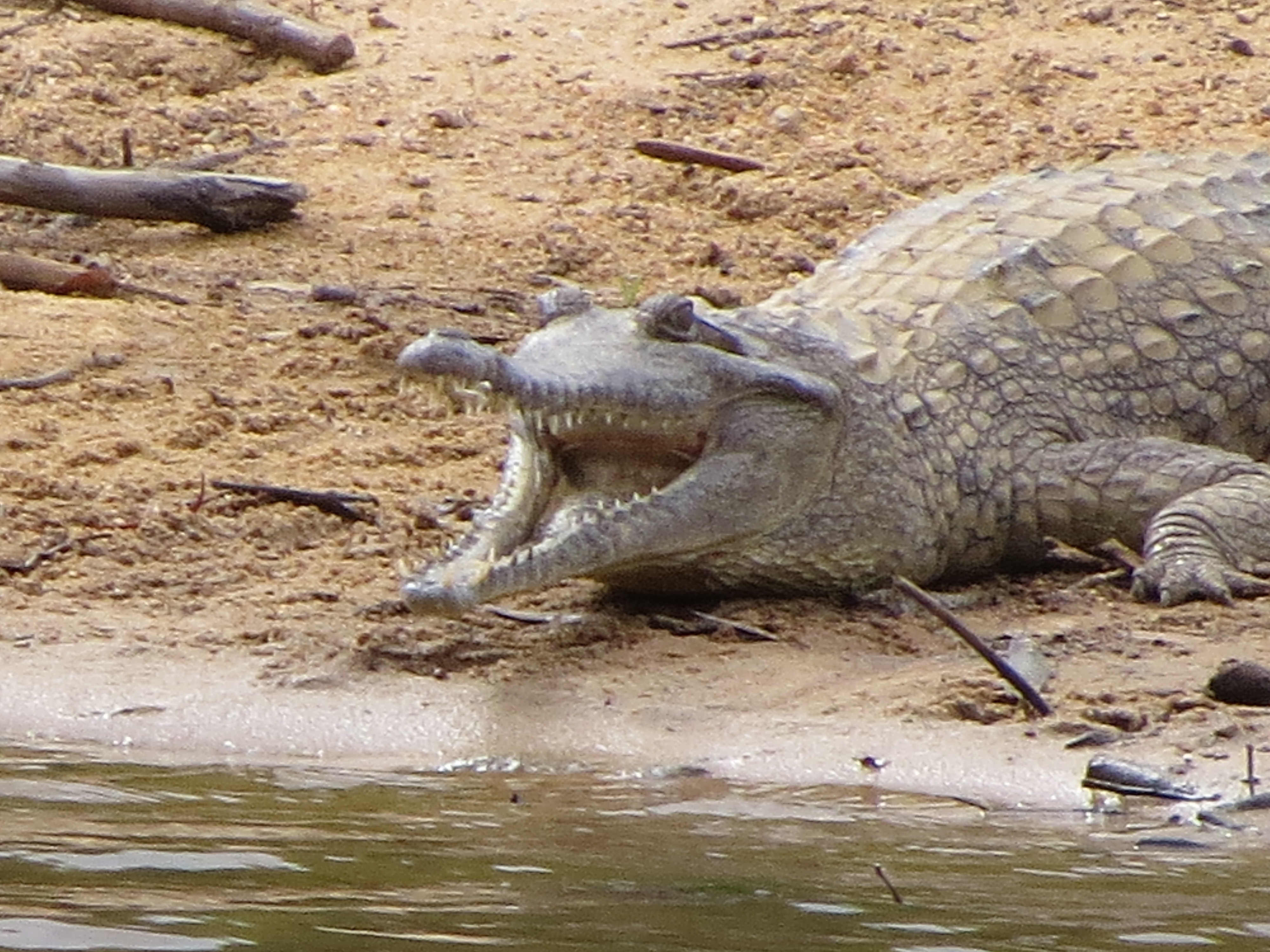
After a refreshing cold shower at the Kalpower Crossing camp area on the Normanby River, we continued to our next campsite at Twelve Mile Lagoon, which according to the signs, was 15 kilometres off the road on a 4WD track but turned out to be not too difficult. Our site at first appeared to be not as pleasant as the night before’s, but we found it to be much more secluded and infinitely quieter being so much further from the road.  Once we set up and dragged our chairs to a point where we were high above the Normanby River, we found that it was a great spot for croc-spotting. And spot plenty of crocs we did! On the opposite bank, we spotted 5 or 6 what we thought were freshies or Johnstone River crocs, but they could have been salties, and we sat watching them for quite some time till later in the afternoon, they were joined by another very large estuarine croc that had to be around 4 metres. He just lay in the water and was obviously not too hungry as several magpie geese walked right by his snout and he made no move to get them. Despite them all being on the opposite bank of this nice wide river, I felt somewhat reassured that the bank on our side was quite high and pretty steep.

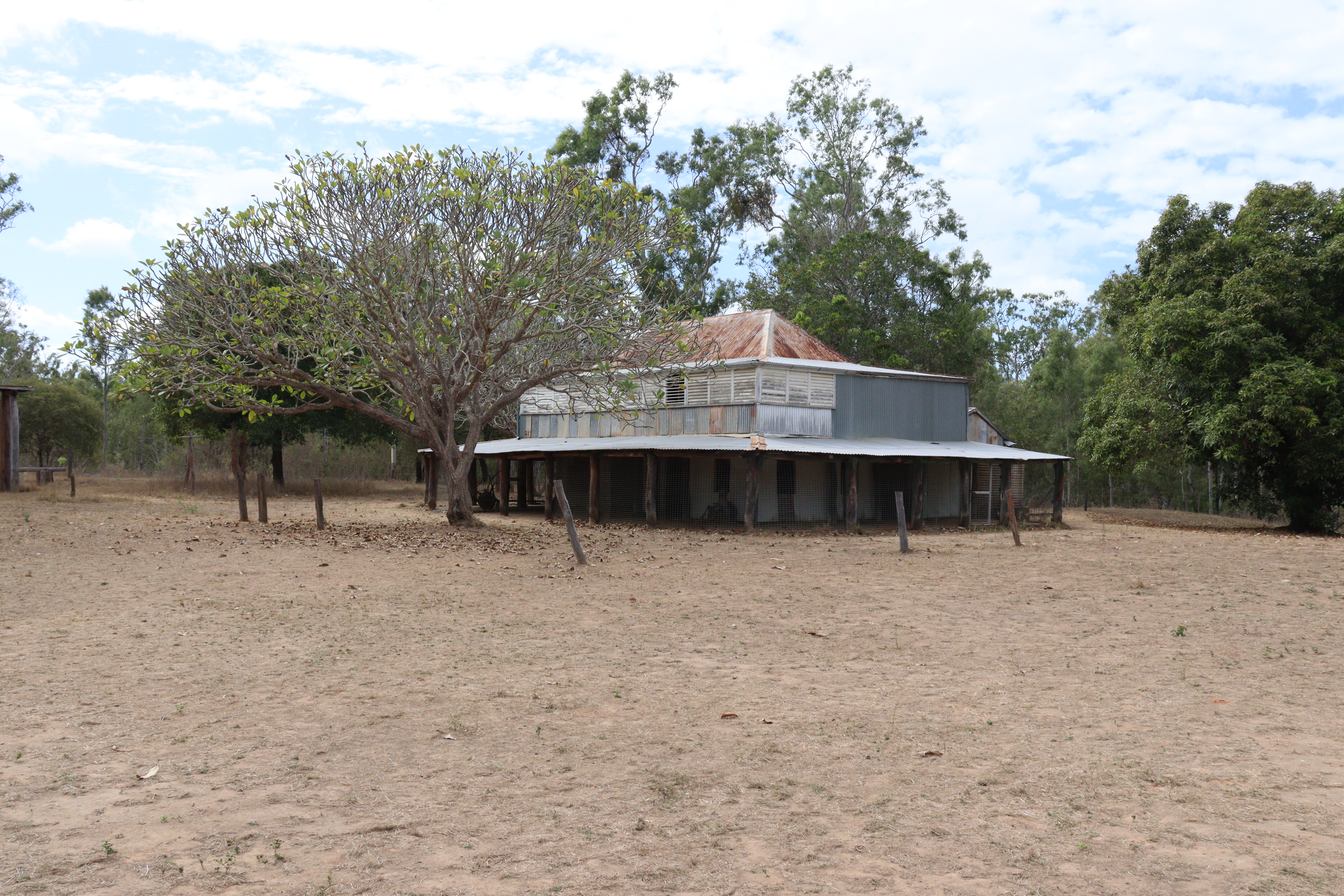
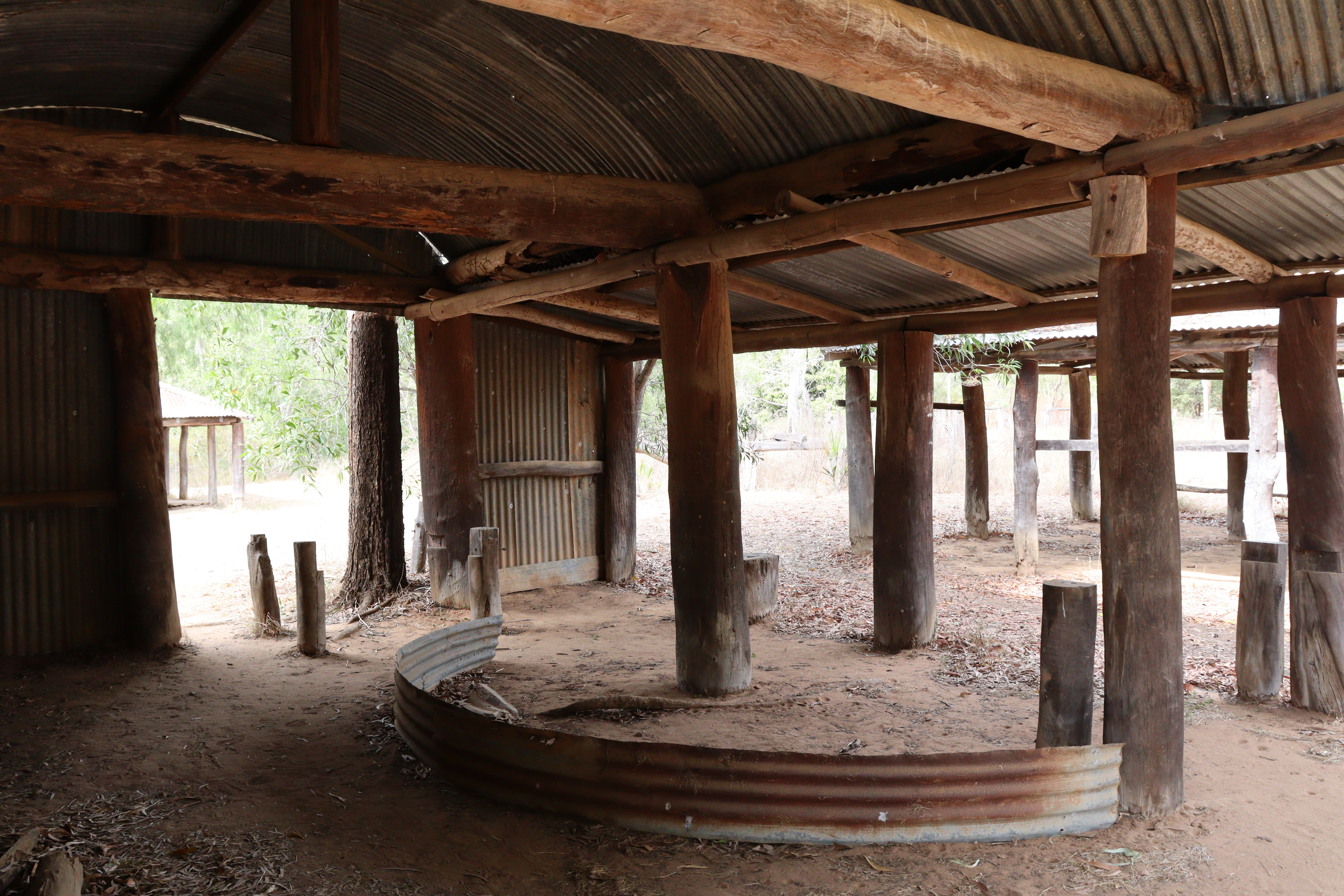
On the way our of Rinyirru, we called in at Old Laura Homestead, a well preserved two storey house complete with shutters and wide verandahs, meathouse, stockmen’s quarters, saddlery and blacksmiths buildings. The Laura cattle station was in continuous operation from the gold rush of 1880 right up till 1966 and despite its isolation and often being cut off by seasonal weather, its community was virtually self-sufficient.

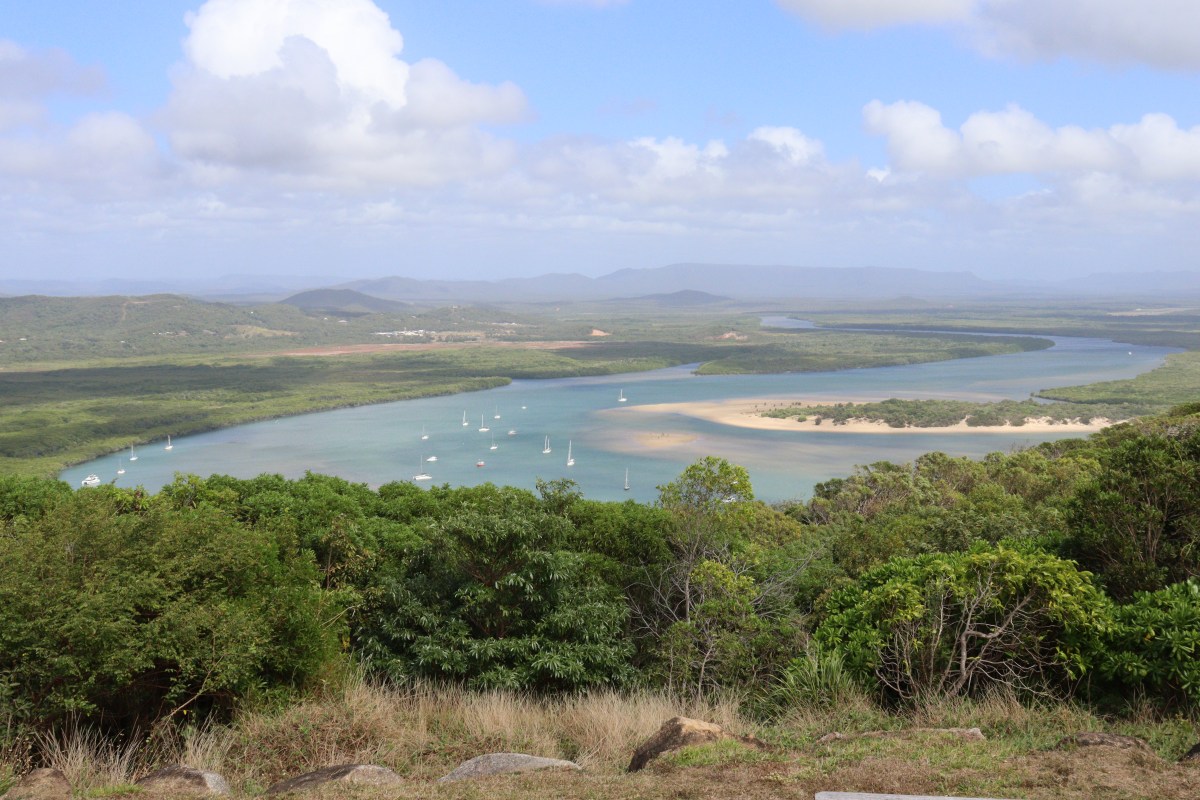
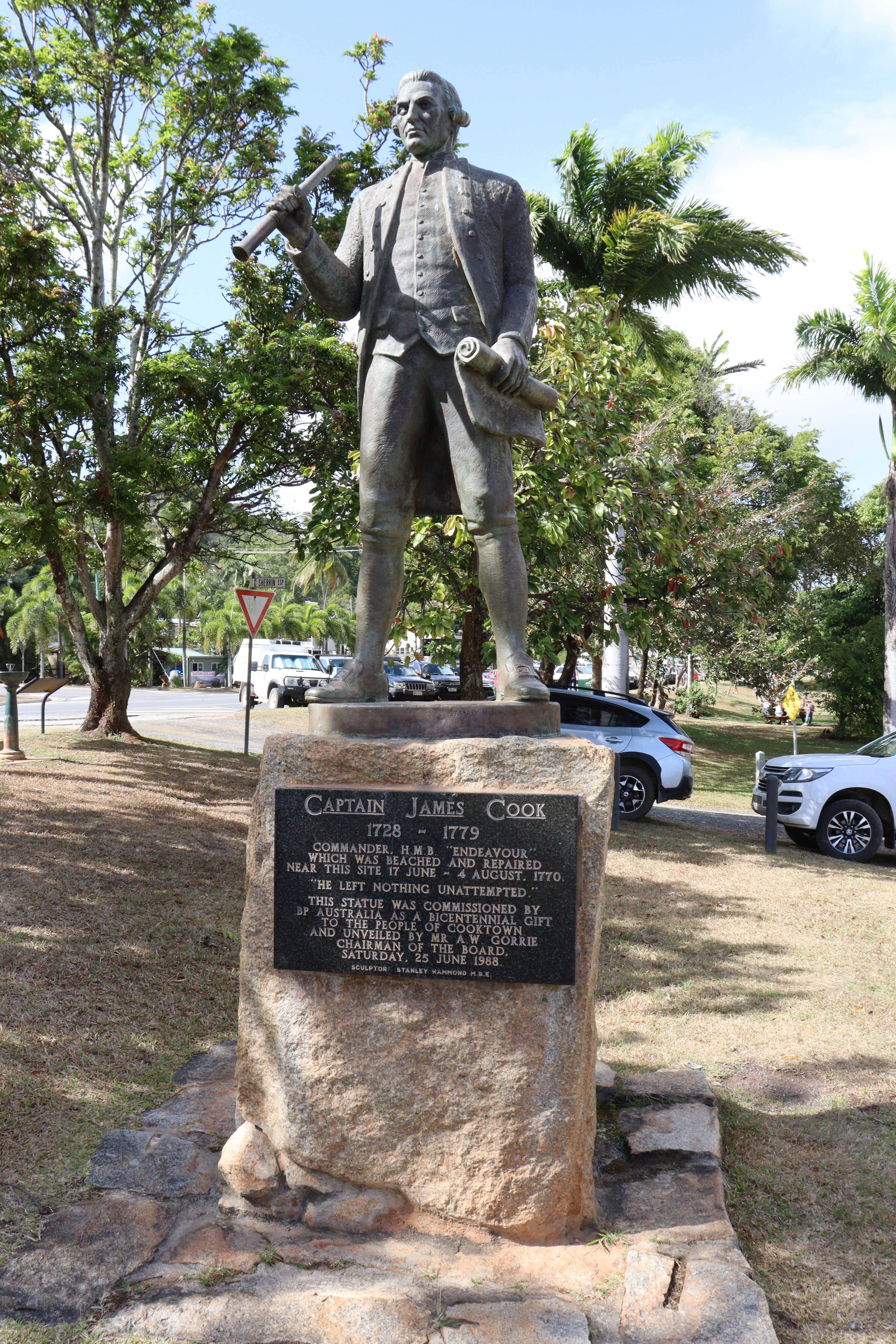
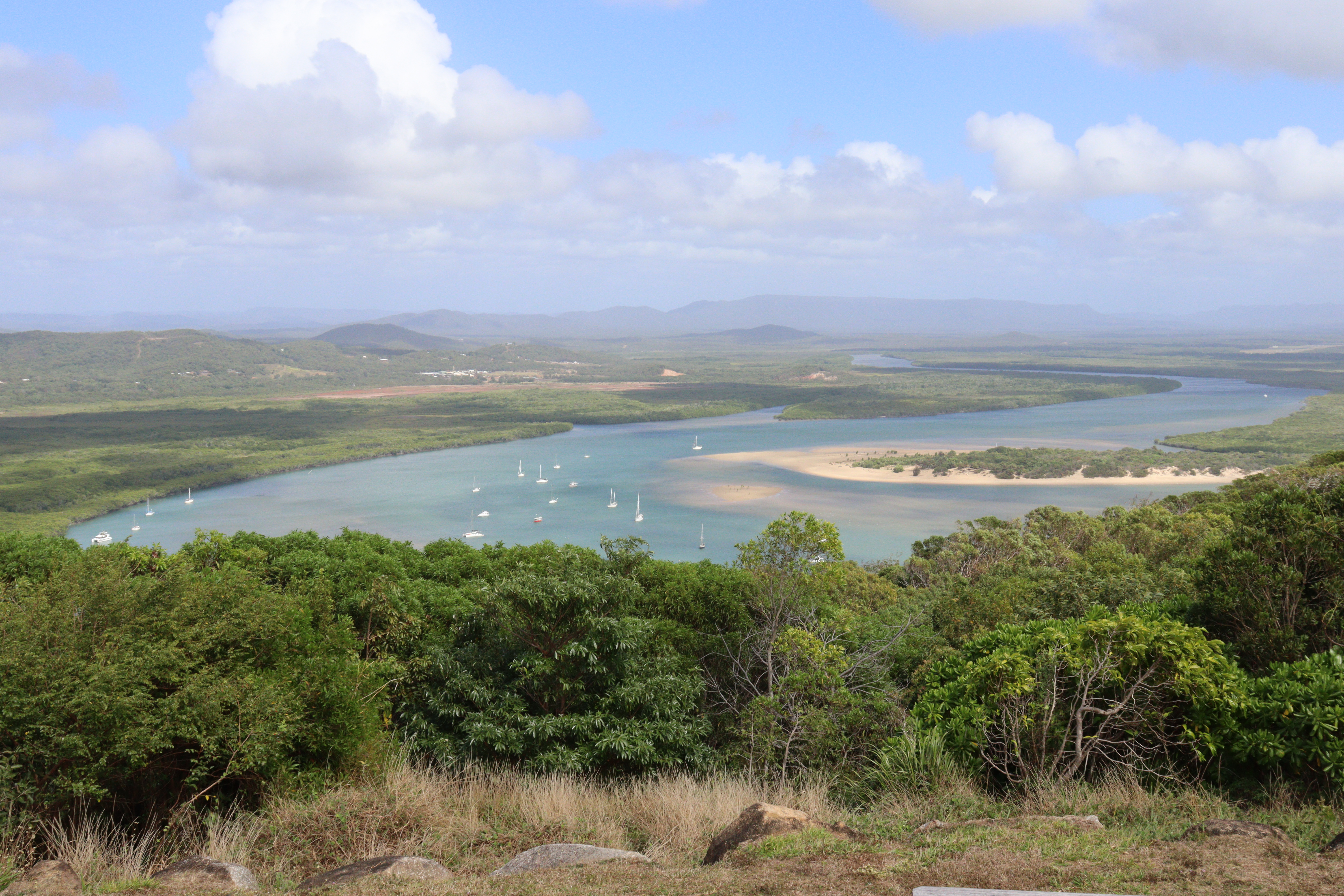
Fording several rivers with wet crossings and causeways, crossing the Great Dividing Range took us down to the coast and to Cooktown, where Captain Cook beached his ship the Endeavour for repairs in 1770. For the next couple of days we explored the sights of Cooktown, including Grassy Hill Lookout and Lighthouse, a very steep slow walk up to the lookout but worth the effort when rewarded with 360° views over the town, the Endeavour River, the Great Divide, and the Coral Sea. From that point we continued a walking trail down through the rainforest, passing two pretty, secluded beaches and into the lovely Botanic Gardens, filled with tropical plants and palm varieties.

A short distance out of Cooktown, heading south, we came across a small pullout and carpark beside the road, where signposts announced we were at Black Mountain NP – Kalkajaka. This mountain actually appears to be no more than a huge pile of rocks, but as the signs explain, it’s a huge, fragmented granite rock that has been eroded away over the last 260 million years, thus forming the pile of rounded boulders we see today.

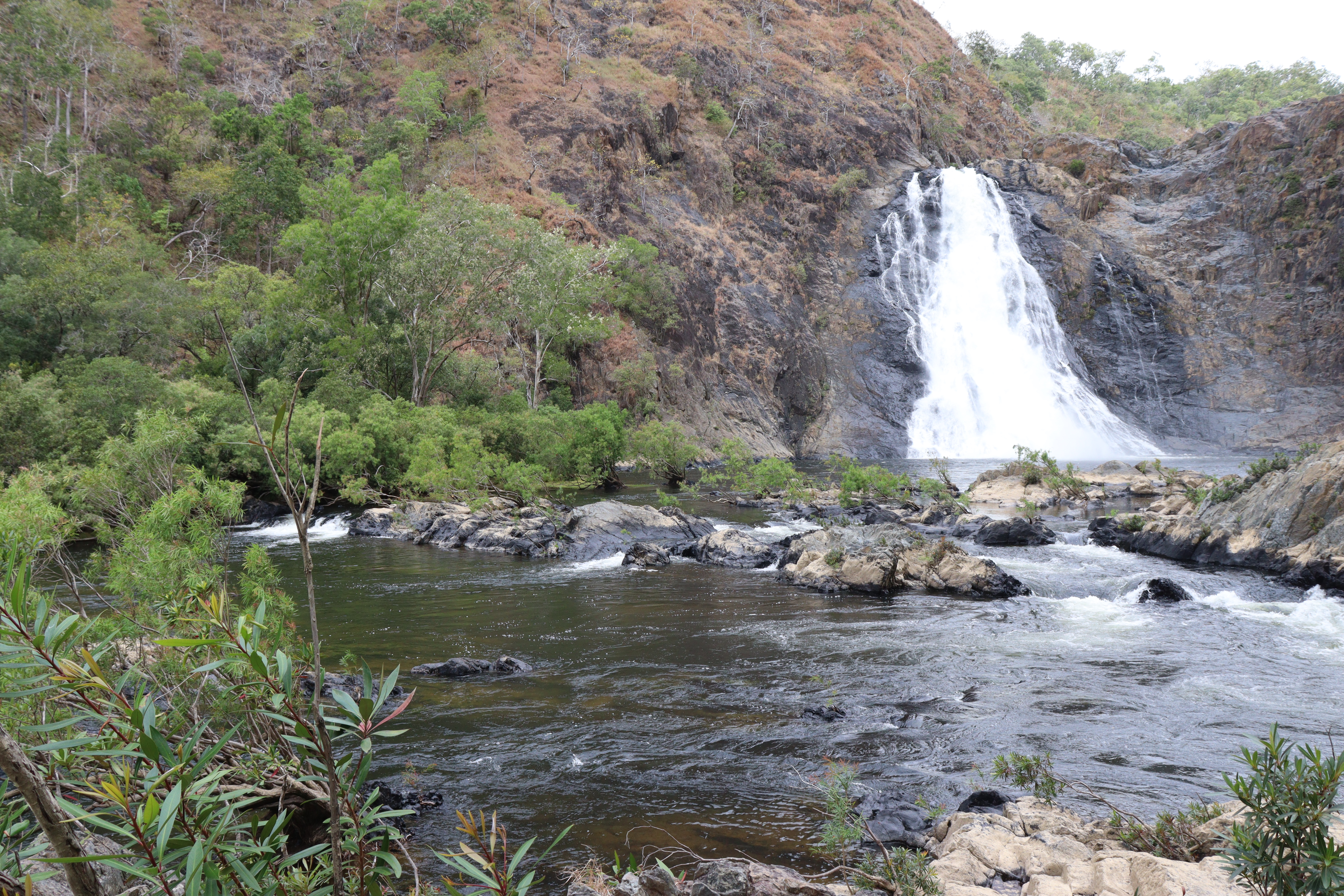
 About 70 kilometres south of Cooktown, within the Daintree NP, are the Bloomfield Falls – Wujal Wujal – where we walked the 1 kilometre track then scrambled over the rock till we came upon these most breathtaking cascades, tumbling about 40 metres over the sheer rock wall with impressive force, probably more so on this day due to the rain we’d had the last few days.

From this point on, we started taking longer days driving. We had covered all the places we wanted to see for this trip, so it was time to start heading home. So after a night at the Three Rivers Hotel (from Townsville to Greenvale they’re building a line…. ), visiting friends at a station on the Burdekin River, and catching up with more friends in Charters Towers, we turned left (south) at Torrens Creek.

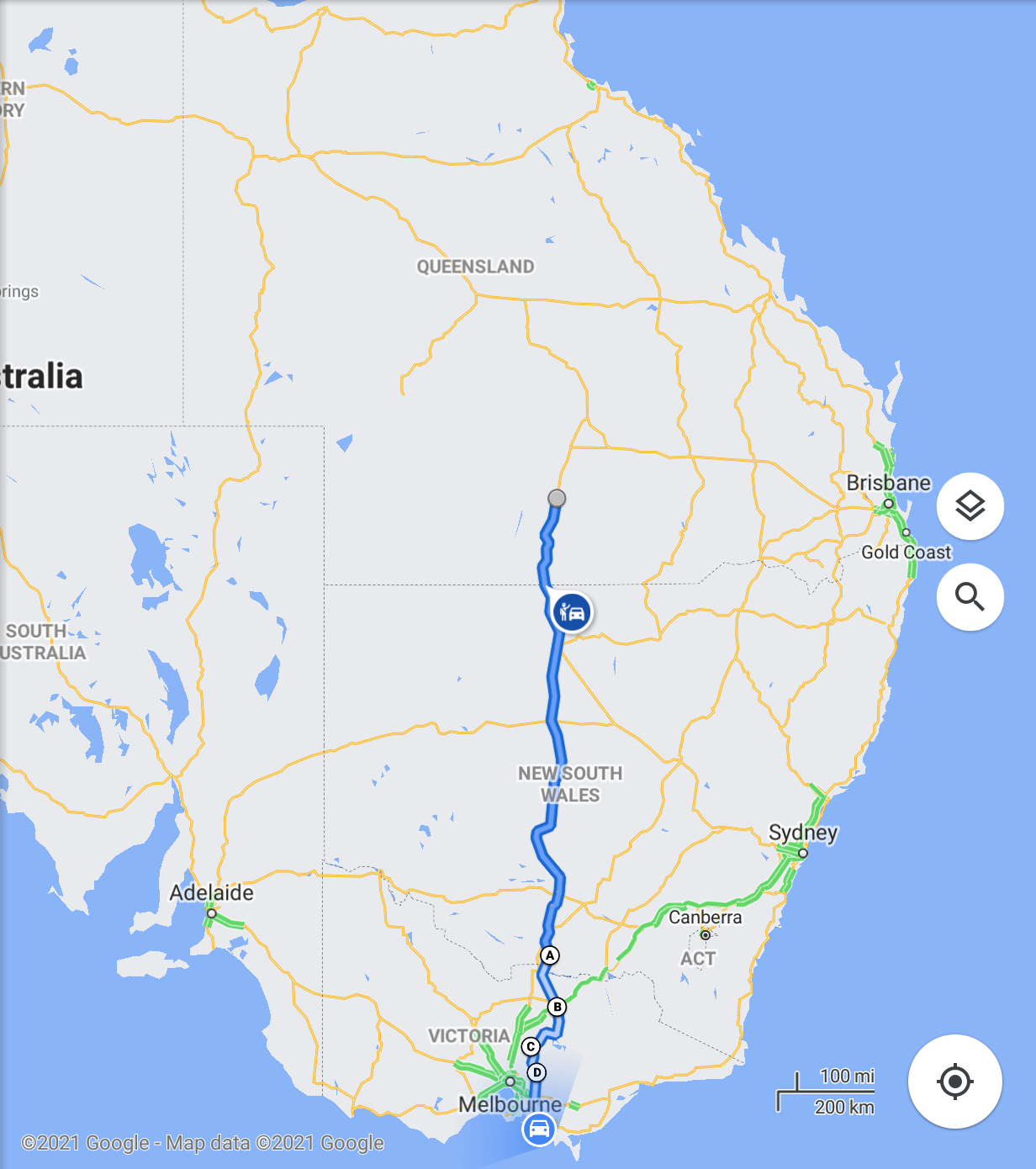
With Covid causing on-again off-again border closures between the states, we had applied for and been granted a 24-hour pass to travel from Queensland through New South Wales and into Victoria. Travelling on this pass, we had to traverse NSW within 24 hours, not have any unnecessary contact with anyone and document any stops for fuel etc.  Many people had been taking detours into Northern Territory and South Australia, but by the time we were about to hit the Qld NSW border, that detour avenue had also closed. So we spent our last night in Queensland about 200km north of the border, started early the next day and drove about 730 kilometres till we got to a roadside stop to spend the night, which left us only about 375 kilometres to get us across the border and back into Victoria the next day.

Best laid plans…..

That all went according to plan. We crossed the border into Victoria in a little over the 24 hours, even with our overnight stop, and had our permit checked by police as we crossed. So all was good. We were now on home territory and could take our time to get the rest of the way home, so we found a bakery and had a late breakfast. When we got back into the car, Gary turned on the radio, which he hardly ever does, just in time to hear the news that within 20 minutes, Victoria was going into lockdown again. WHAT??? This lockdown was a snap announcement with only 2 hours before coming into effect, so after having driven from Queensland and having to get through NSW on our 24-hour permit, we decided to just drive the rest of the way home in the same day. So we ended up driving 1480 km from 8am in Queensland on the Friday till we were home in Victoria by about 4.30pm on the Saturday with a night sleeping at a roadside stop in between! Big days of driving for us…our “big” days are normally a maximum of about 150 – 200 km. Luckily with Roxy we can both drive, because we would never have gotten so far so quickly if had all been up to Gary alone!

And so our Trip to the Tip had come to an end. We had been away for 96 nights (almost 14 weeks) and covered 12100 kilometres in Roxy, visited lots of friends, enjoyed lots of new experiences, had lots of hot weather and seen lots of new sights in this great country of ours.

And now we are home and planning our next adventures.

WTF?? Or Ha Ha!!

  • Weipa Caravan Park Rules – NO working on cars, boat motors etc – BUT just in our little section of the park, there were at least 4 vehicles getting more done than just a tyre change!!
  • We’d been looking forward to a quiet night at a station stay which was on a station owned by friends of friends of ours, but when we got to the gate, there was a huge log blocking the way with signs announcing it was closed. Turned out, as we discovered later, that due to Covid restrictions, it had shut down THAT VERY DAY!!
  • From Torrens Creek, Gary drives about 140 kilometres on good wide double strip bitumen, passing only one car and one motorbike. I take over and within 40 kilometres, it turns to single strip bitumen, and THAT’S when we pass a stock crate, a road train, several cars with caravans AND some more trucks!! WHY is it always when I’m driving???
  • Just outside Barcaldine, we stopped to get fuel at the unmanned fuel depot, where there are three outlets. How does it happen that not one, but ALL THREE of the outlets were out of operation!!
  • Driving on (luckily) a relatively straight stretch of road behind two vehicles towing caravans, when suddenly the front one is swerving onto the wrong side of the road, for no apparent reason: there was nothing on the road he needed to swerve for!! And they wonder how these caravan rollovers and accidents occur!!

Don’t forget, if you want to read about our travels prior to Roxy, head on over to our earlier Blogs at <taberstravels.wordpress.com>

Destination Cape York – part 4

Thursday Island and Pajinka -The Tip

(Click on images to enlarge)

So here we were – we’d made it to the Tip of Cape York, well ALMOST!

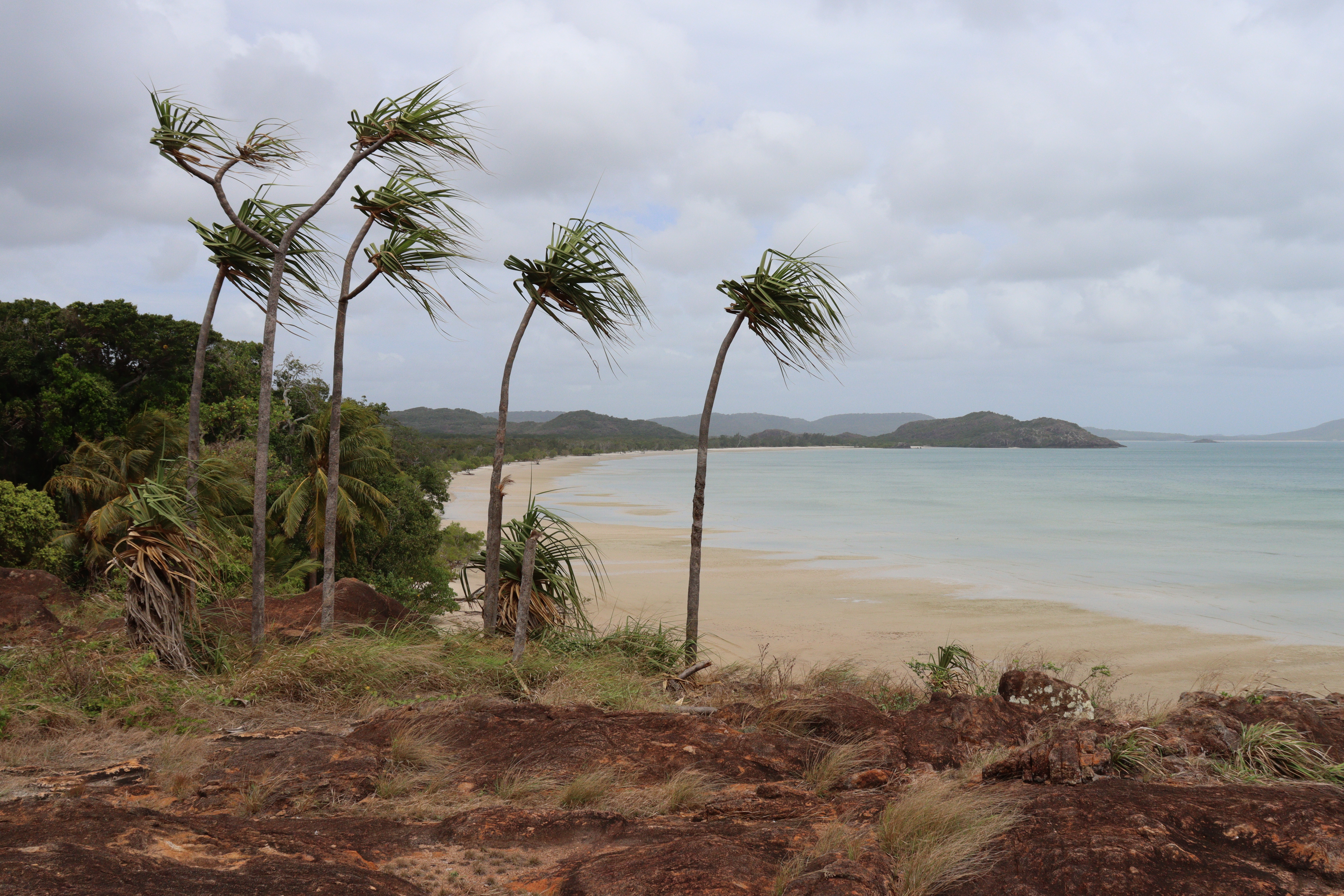
Camping at Loyalty Beach, or anywhere this far north, brings different weather conditions than we are used to. Being tropical, our first couple of days were overcast and very, humid with showers, but that didn’t take away from our enjoyment of the place. Being right on the beach, we had lovely views across the turquoise waters of Torres Strait to the closest of the Torres Strait Islands, and along the coast with palm-fringed beaches. Yes, it is somewhat of a paradise!

The locals are so friendly, always ready with a wide grin. Whilst sitting outside enjoying the views, we were greeted by a young man who pulled up in his ute and offered to “clean up” our site for us, and then proceeded to rake up the masses of dead leaves and piles of horse poo that littered our site. (There are a number of horses that roam freely around the whole area, including both caravan parks.) After about 10 minutes, he announced he had to finish up for the day, and would come back tomorrow to finish the job, so off he went. Surprisingly, he was back the next morning, bright and early and raked up about half of what he’d piled up the day before, but from that point on, each time he drove past our site – and there were many! – he would toot and give a big wave and a wide smile like we were his best mates!

We took a walk along the beach from Loyalty Beach to Seisia, to explore what the town had to offer. Being just a small community, there is not much more than the servo, a café/take-away, a Food Store and the caravan park. The store is reasonably well stocked, considering its distance from suppliers, and we learned that most stuff comes in by ship from Weipa. But our main interest was in finding the wharf area, so we’d know where to head in a few days’ time when we were heading over to Thursday Island. The wharf itself is only short, but stands in relatively deep water, and there were a number of locals using handlines to catch some of the hundreds of small fish that hung around the pylons.

Wanting to be closer to the wharf for our Thursday Island trip, we moved from Loyalty Beah and into the Holiday Park at Seisia, where we were also able to leave Roxy on site for half price while we were away. From our site here, we spied a couple of sizeable estuarine crocodiles lazing in the sun on the beach of Red Island, a short distance offshore opposite the wharf. First ones for this trip.

We took a drive about 7 km south of Seisia, down to Bamaga, the larger of the two towns up here, where just out of town is the airport and a couple of WW2 plane crash sites and fuel dumps. The planes, a DC3 and a Beaufort Bomber are both in expectedly poor condition after crashing over 75 years ago, but the real eye-opener for me was the number of rusty 44-gallon drums strewn all over the place in the surrounding bush – literally thousands of them!

Gary had read somewhere that the local fishing club was open on the Friday night for drinks and dinner and to watch the NRL Broncos vs Cowboys on a big screen, so we decided to go down and join them in what turned out to be a rather pleasant evening with quite a surprising number of customers enjoying the tasty fish and chips, the game and the company on a balmy evening, with the added bonus of a beautiful sunset over Red Island.

After those few days exploring this part of the Cape, we packed a green supermarket bag each and took the ferry about 40km across to Thursday Island. With an area of only about 3.5 km2 and a population of about 3000, it is the capital of the Torres Strait Islands and almost as far north as you can go and still be in Australia. For the next five days we explored pretty much every corner of the island; we reckon we walked every single street and pathway there is on that island and for such a small place, it has plenty of hills to keep your fitness up!! After our first night spent in the motel, we moved up to the second highest house on the island, a beautiful B&B which was our home for the next four nights.

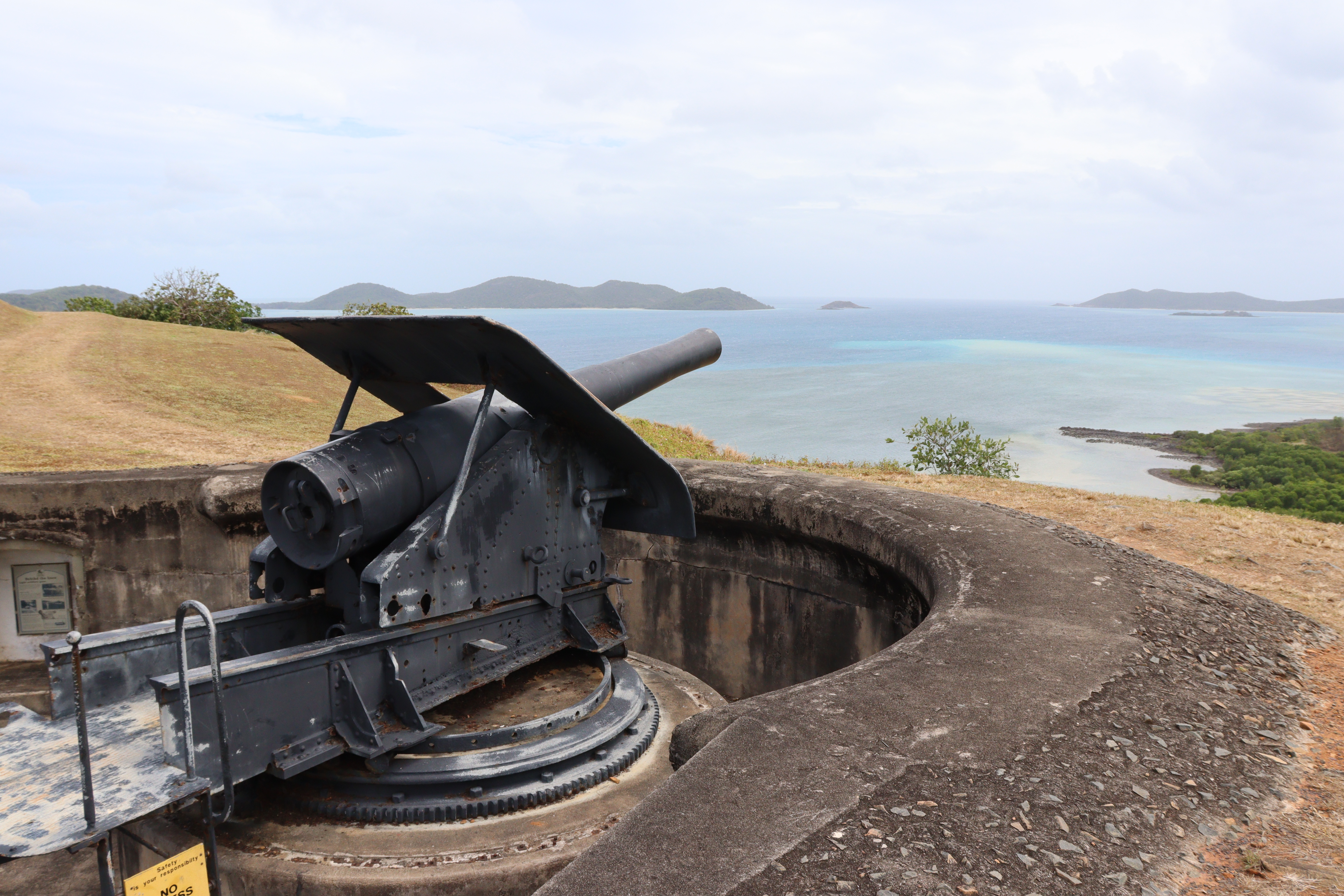
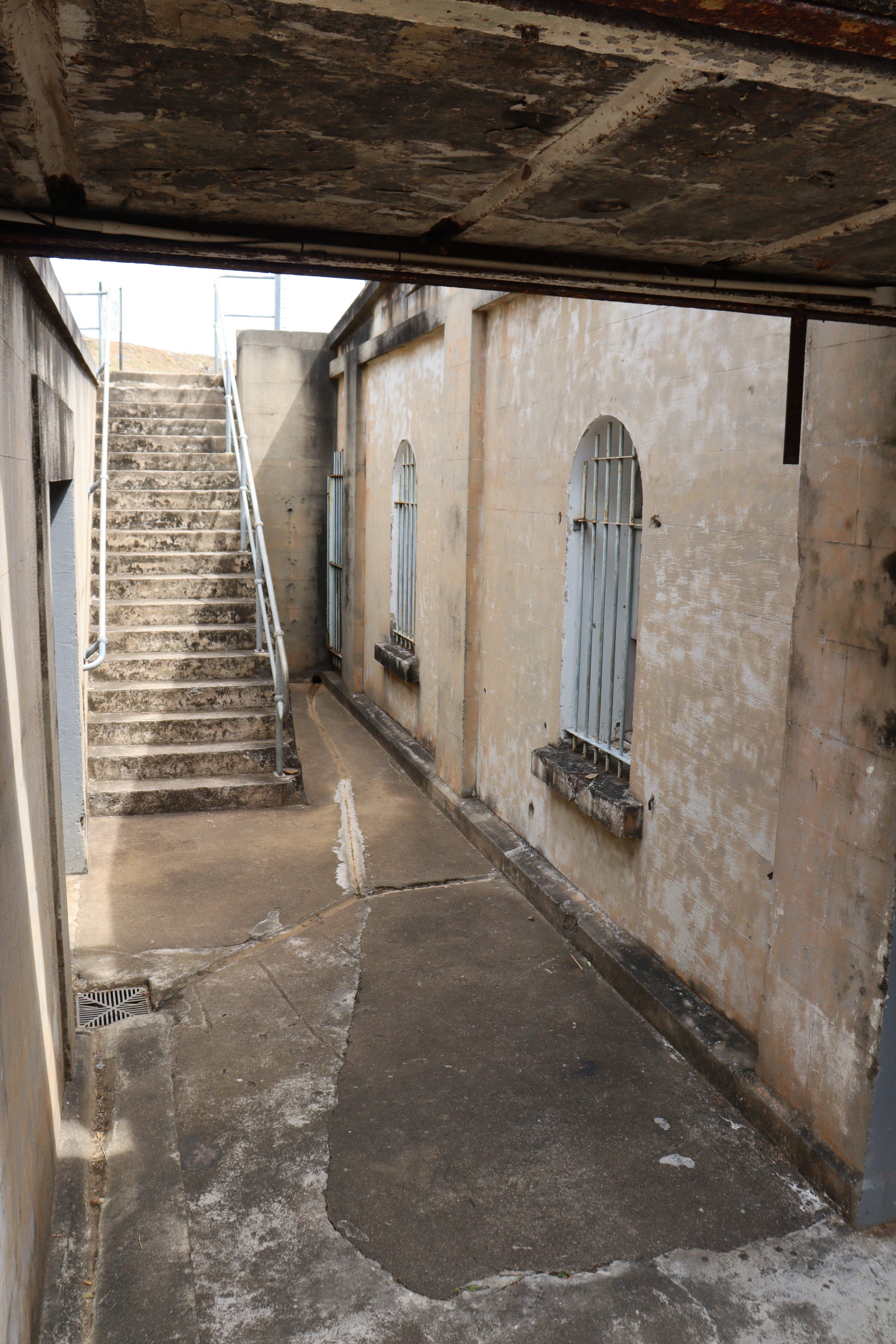
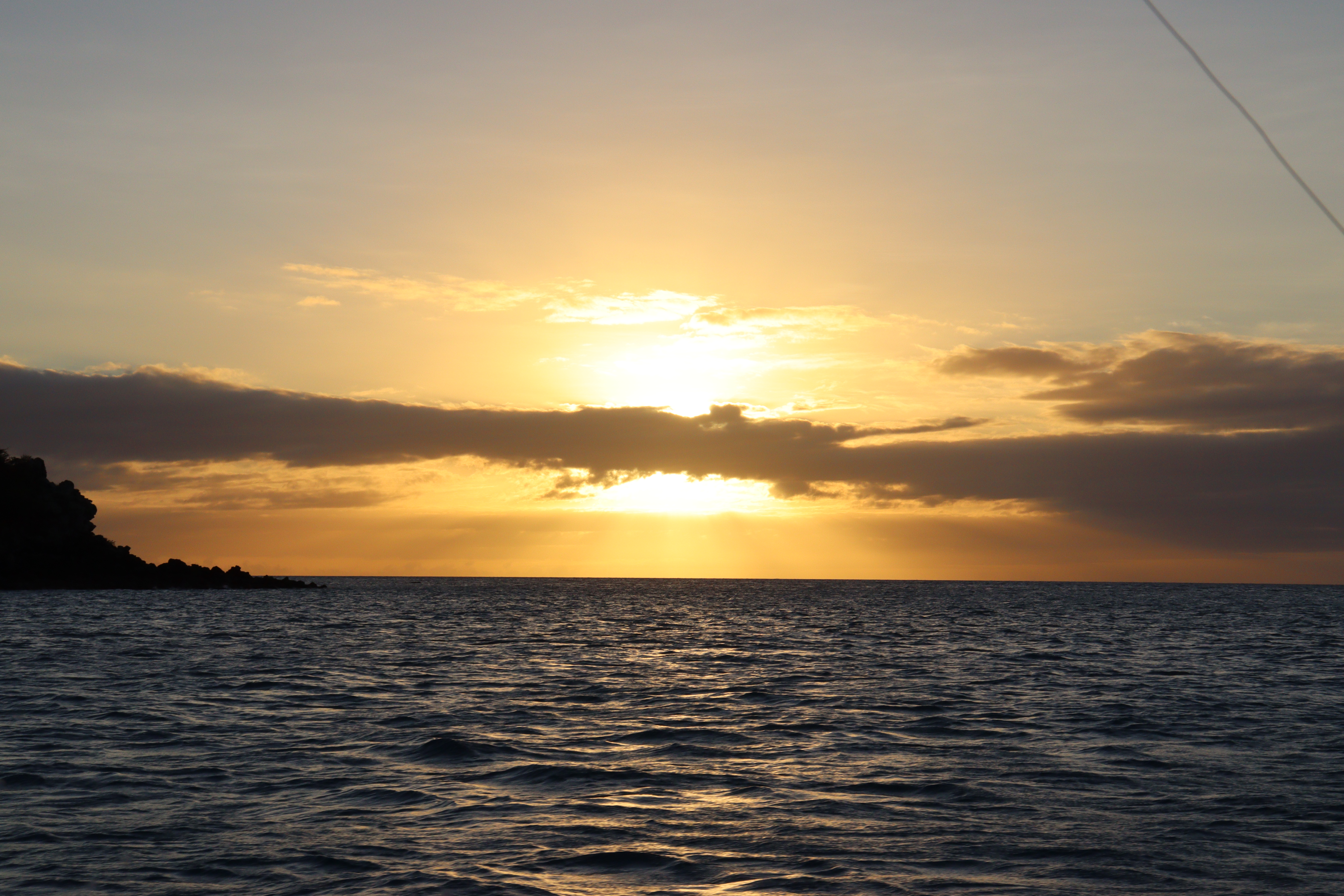
On the highest point of the western end of the Island, not far from our B&B, sits Green Hill Fort, built between 1891-1893 and jointly funded by the Colonies (states) at the time, with Britain supplying the armament. Built in response to the “Russian scare” – a confrontation between Britain and Russia – and as a defence point for the whole of the country, there was never a shot fired in conflict and it has served no military purpose since WW2. After serving as a weather station for the BOM between 1954 and 1993, it has since been restored and is now a Heritage Listed Museum. Apart from its museum, which was closed when we were there, it’s a great place to get views over most of Thursday Island and its neighbouring islands, and possibly to the mainland on a clear day, and is also a popular spot for locals and visitors alike to head with some nibbles and drinks to watch the sun setting over the neighbouring islands.

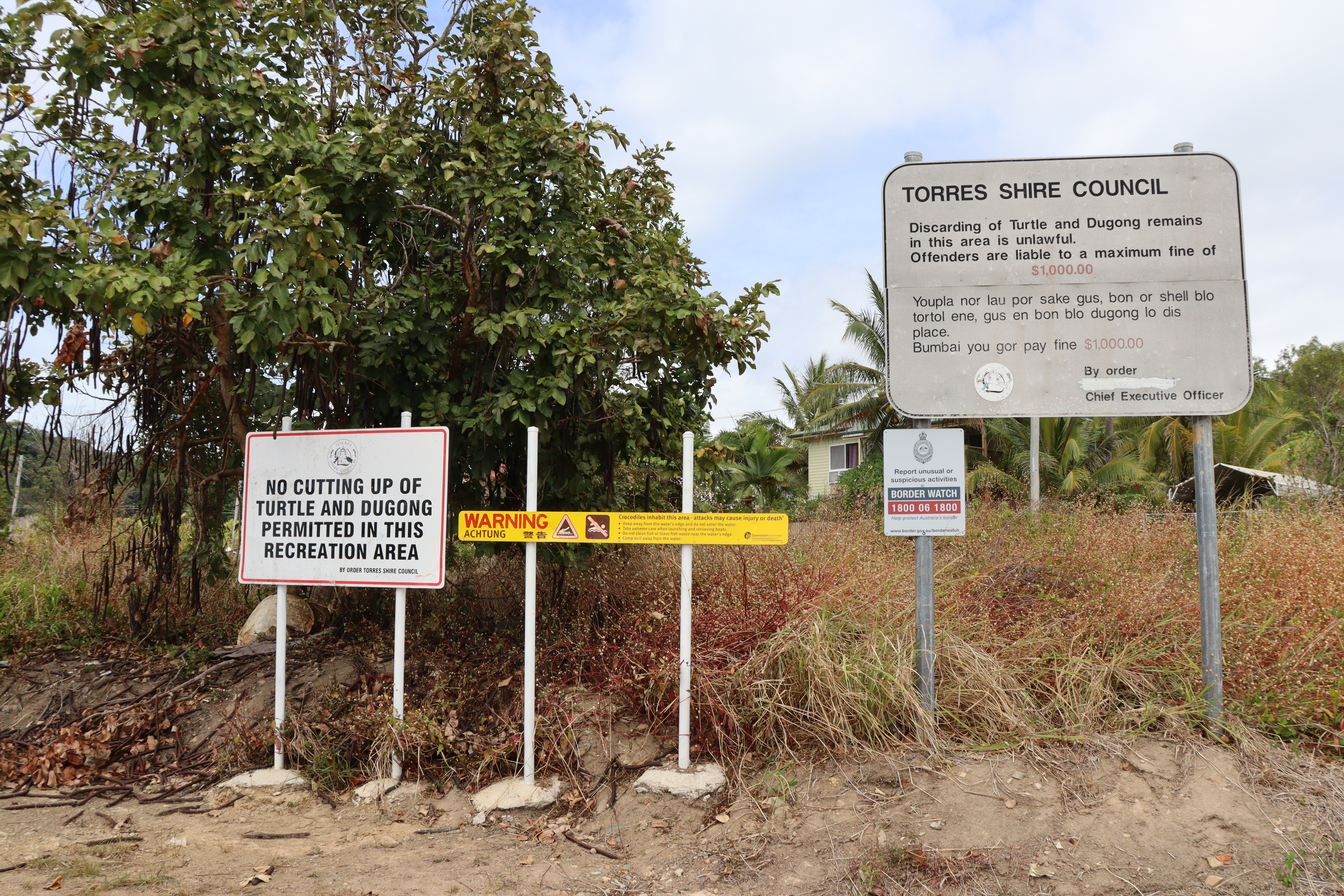
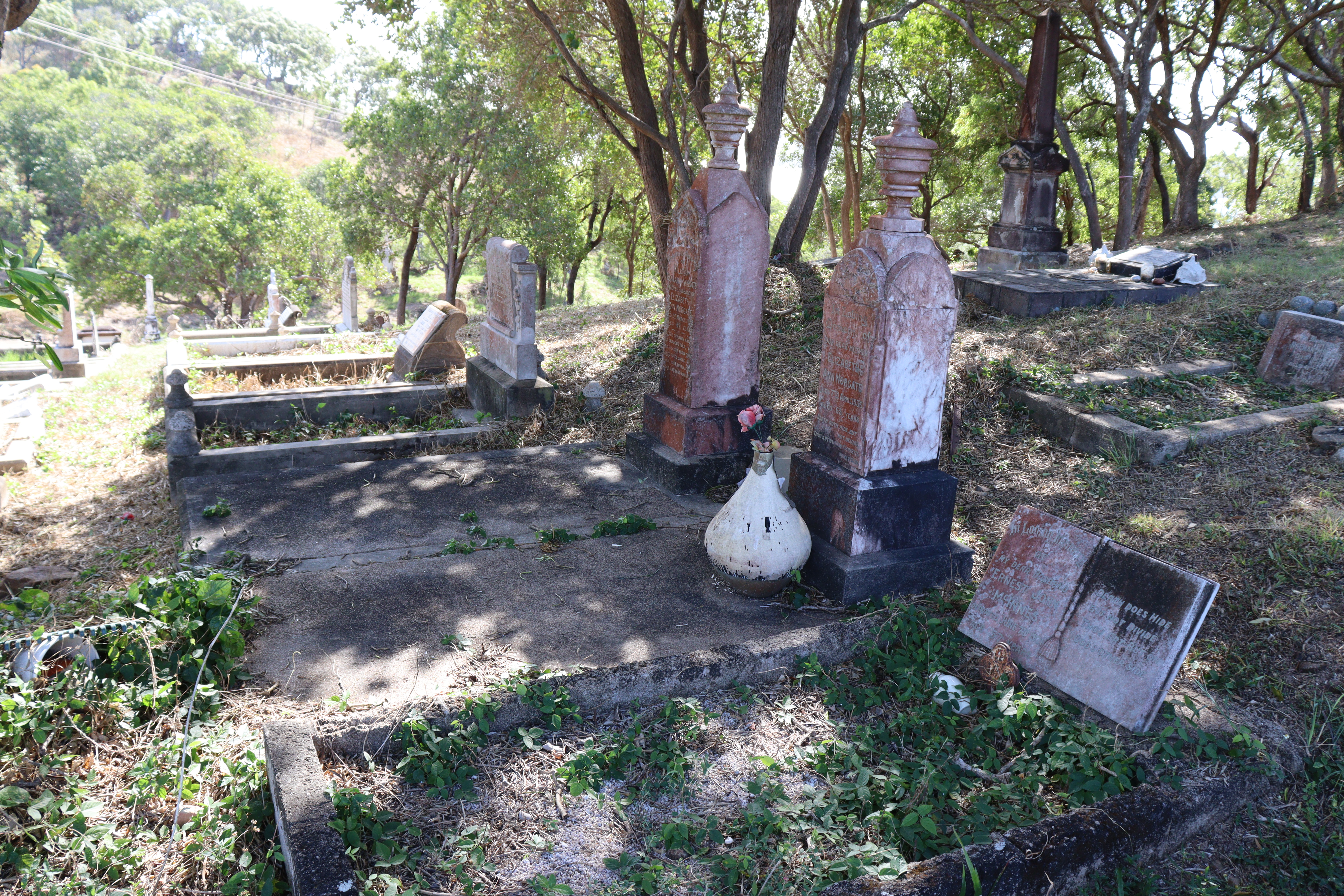
Thursday Island had a lucrative pearling industry founded in the 1880s, which attracted workers from Japan Malaya and India. Although the industry is virtually non-existent since the 1960s, the Heritage Listed Historic cemetery with its incorporated Japanese Cemetery being the final resting place of between 600 and700 Japanese pearl divers and their families, is evidence of how big the industry was.

Access to Thursday Island is by ferry from the mainland after the thousand-kilometre trip up the Cape, or alternatively you can fly from Cairns to Horn Island next door and ferry across from there. Horn Island is larger than Thursday, but with a smaller population, most of which is based at Wasaga Village at the western end of the island and many of whom commute by ferry across to Thursday Island for work or school. Being a larger island, Horn Island is the site of the main water supply dam from which water is piped across to Thursday Island and is also home to the waste management landfill for TI. Horn’s history includes gold mining and pearling industry, and it was home to a major allied airbase, which was attacked several times by Japanese planes during WW2. Taking the ferry across to Horn Island one day, we took a bus tour of the major sights which included historic sites of gun emplacements, WW2 airstrip, WW2 plane crash sites, a restored anti-aircraft gun and slit trenches. The Heritage Museum in town houses an astonishing collection of local history, pearling and war photos and memorabilia, and enough information to last through weeks of reading!

A friend from my teaching days lives on Thursday Island, so we spent an afternoon around at her place meeting her family and catching up, and on a nice calm Torres Strait evening, they took us out in their speedboat for a sunset cruise around the closest islands (Goods, Friday, and past Prince of Wales Islands). The casual Thursday Island lifestyle was clearly evident in this cruise, with Jess and Steve, their four kids ranging from 1 to 7 years old, Gary and me, an esky and two camp chairs all crammed into the back of this boat, having a sip or two of our chosen “poison” and spilling more of it as the boat slapped repeatedly on the choppy waters. Calm? Probably not as calm as I had envisaged!

After 5 nights on the island, we repacked our bags and took the ferry back to Seisia on the mainland and back to Roxy. And then we headed up to our ultimate destination -Pajinka – The Tip of Cape York. It’s about a 40-kilometre drive along corrugated a road – of course! – through tropical forest and jungle with a couple of shallow river crossings, till you get to the carpark. Once you have managed to get a car space amongst the heaps of other vehicles parked there, it’s about 800 metres walking up over a rocky trail and down to The Tip, Australian mainland’s northernmost point, marked by a signpost stating this fact. Considering how far it is to come and how rough the route to get there, it’s surprising to see the hordes of people that flock to this point but gratifying to see the considerate behaviors where everyone waits their turn for THE photos of them beside the signpost, and/or offering to take yours. It’s a rough and wild spot, with waves crashing in from all directions, made more so on our visit by the gusty wind, but the stunning views southwards along the beaches and out to sea and surrounding islands are worth the effort of the trip. And of course, getting THAT pic with the sign is VERY important!!

Heading back to Seisia, we called in at The Croc Tent for souvenirs, then out to Punsand Bay Resort, where many visitors to the area choose to stay, and where we enjoyed a great lunch at the aptly named Corrugation Bar.

So, after almost two weeks at the top, it was time to start heading south again, although the thought of tackling THAT road and all its corrugations again didn’t hold much excitement for either of us.

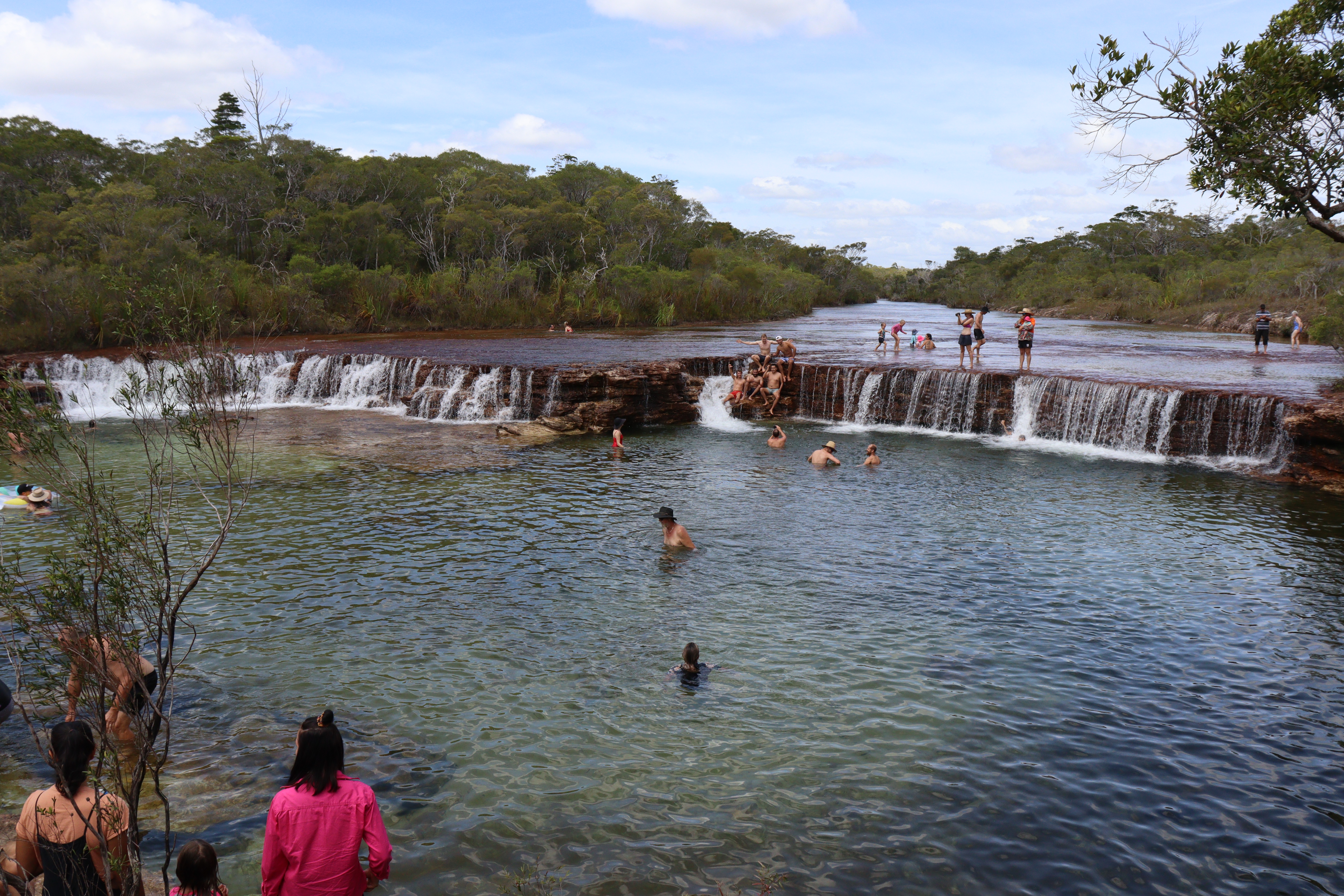
About a hundred kilometres south of Seisia, we turned off the Northern Bypass Road onto a short section of the OTT and headed into Fruit Bat Falls, about 3 km off the road. Again, the carpark was pretty crowded – we were getting used to this by now, so not too surprised! Once we walked along the short boardwalk and track to the falls, we could understand why – Fruit Bat Falls is an undeniable highlight of the sights to see on a trip up Cape York. The track leads to an expansive freshwater pool at the base of a shallow but wide waterfall, above which the sandstone rock platform has several natural “spa” pools. It’s not just a pretty place, but a welcome spot after the heat and dry of the Cape savannah to enjoy a refreshing swim, safe in the knowledge that there’s no crocs. And yes, heaps of people were there availing themselves of that opportunity! Makes it a bit hard to get a photo of the whole falls without people in it!

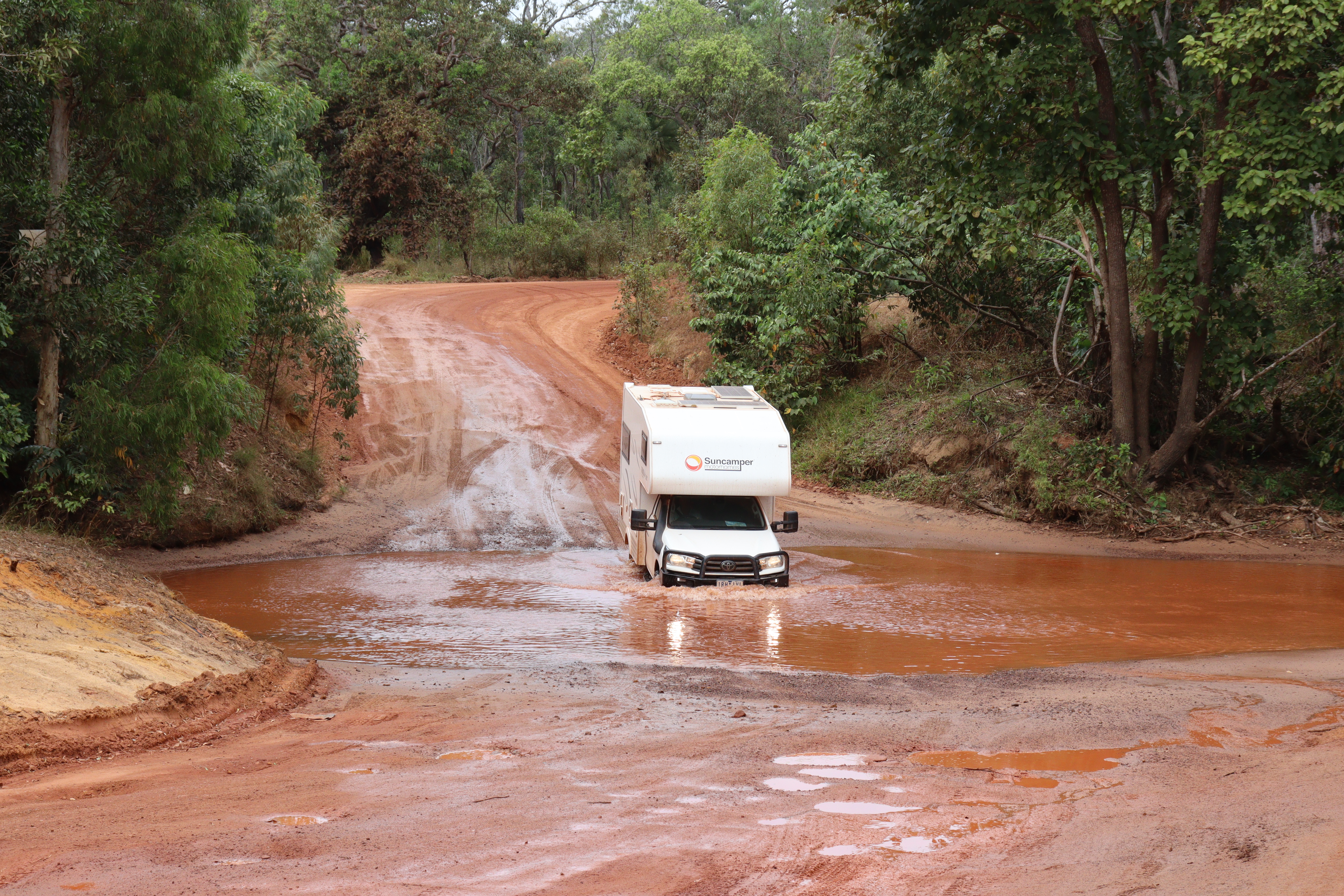
Heading another 8 kilometres up the OTT to visit Eliot and Twin Falls meant negotiating a couple of deep, steep but dry crossing points. After watching a couple of 4WD vehicles go through the first one, we decided that Roxy was also capable so through we went without much worry. Once through, the rest of the track out to the falls was pretty easy going.

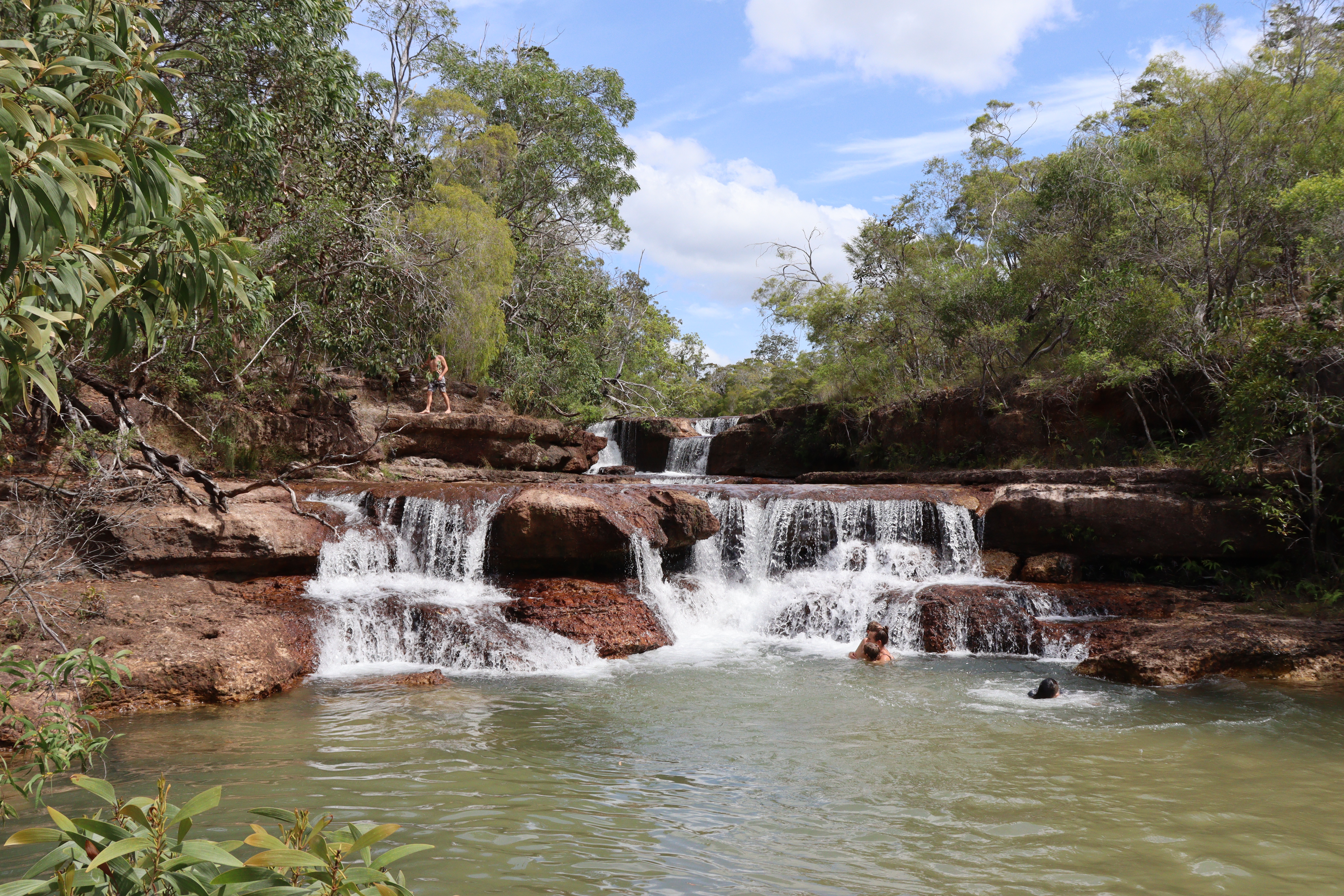
Wow! Is the only word I can use to describe Twin and Eliot Falls. Again, a boardwalk takes you down to the falls area. Twin Falls is a broad cataract where the waters of Canal Creek cascade over several tiers of the sandstone platforms till they join Eliot Creek. Just upstream from the confluence, the Eliot Creek tumbles over a horseshoe shaped ledge, creating several separate waterfalls that flow into the creek below. So inviting and SO amazing! Again, both swimming spots were pretty crowded, so we back tracked a little and crossed another deep steep dry crossing that took us up to a free camp area further upstream on Canal Creek where we spent the night. After setting up camp, we wandered over to the next creek crossing to watch a couple of vehicles taking this wet and challenging crossing of the creek (we’re still on the OTT here) and decided that it was DEFINITELY not for us!  So then we walked upstream a bit further to enjoy a refreshing dip in the myriad bubbling spa pools that had been gouged out of the rock – a great end to the day!

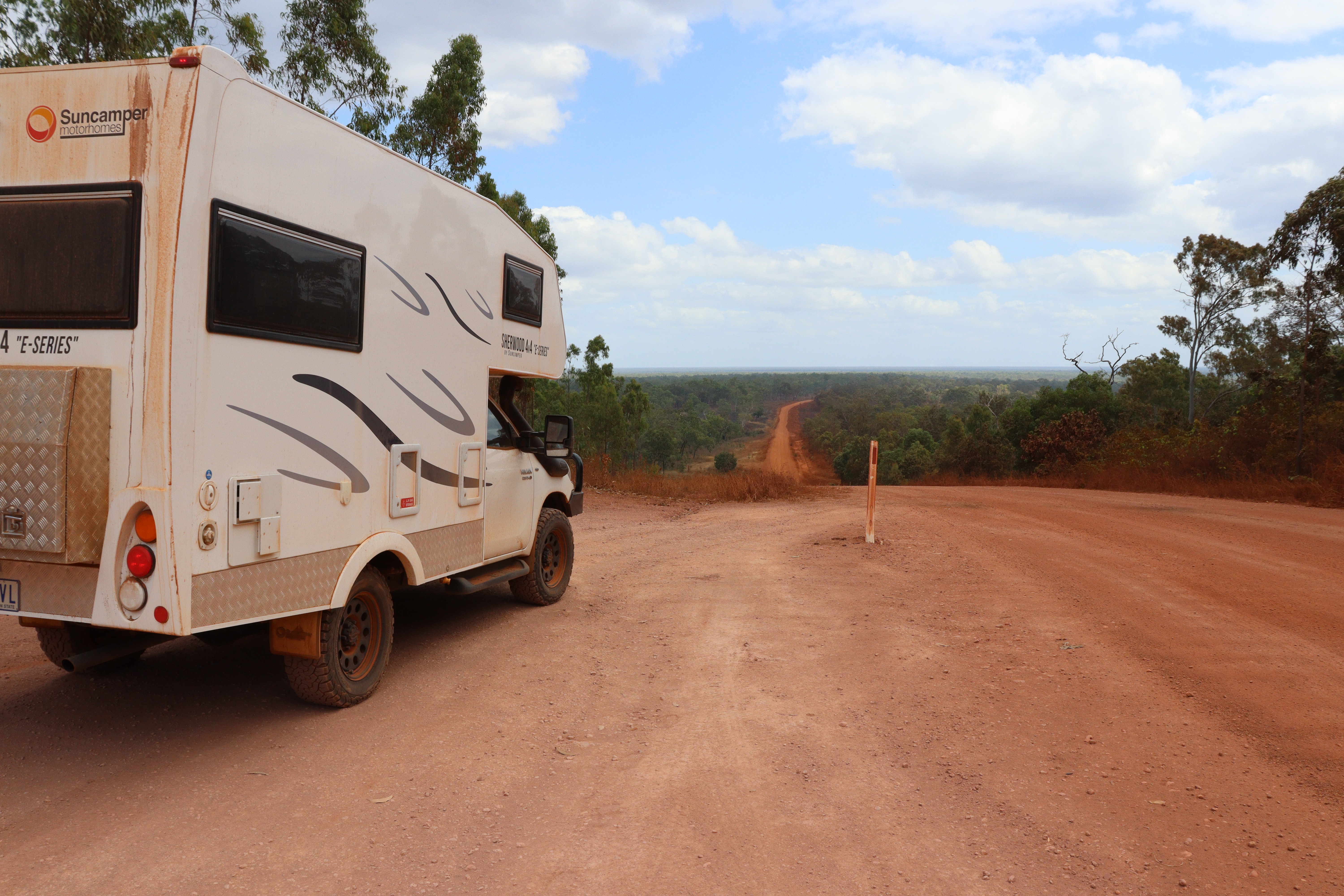
Heading down the Bamaga Road, it seemed the road was even worse than when we went up two weeks ago if that was at all possible, but then there had probably been a couple of thousand vehicles gone through in that time so I guess it was possible!  In any case, driving the 120 kilometres from the Fruit Bat Falls turnoff to Bramwell Junction Roadhouse took us three hours!

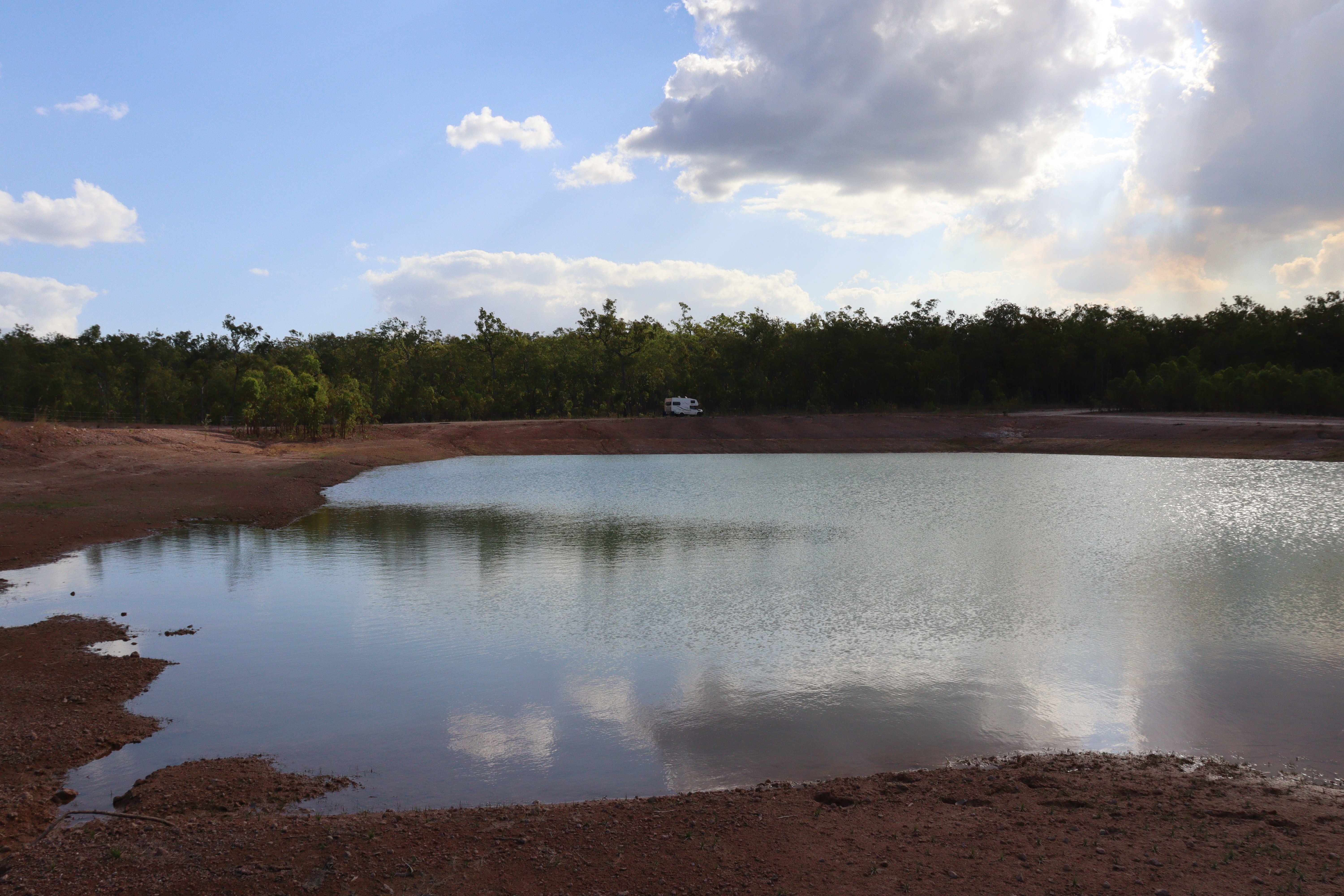
 We turned onto the Batavia Downs Road which took us through to the Peninsula Development Road and only 70 kilometres short of Weipa, so we headed in that direction. Having decided that Weipa would probably be pretty busy by the time we got there and having also seen several signs along the roadside of a cheap $2 camp spot, we thought we would check that out. It turned out to be a large, cleared area beside a dam on York Downs Station. It had a long drop toilet and no one else was there, so it suited us just fine and we spent a restful night beside the dam with only lots of birds for company.

After a night in Weipa and a quick look around – not really too much to see as all the mine tours were booked out for the next few days and the place was packed too – we headed off. Calling in at Archer River on the way through, we hoped to get some forms for the upcoming census, but they only had them for campers staying there. We were pleased however, that we were able to retrieve Gary’s RFDS cap that he had left on a seat when we had dinner there three weeks ago! So we ended up spending the night on the river just above Coen, AND we were visited there by a census collector, so all was good!

WTF?? or Ha Ha!!

  • Having a drink at the beach-front bar at Loyalty, Gary took and posted online a photo of me with the lovely beach, sunset and island background. Response from our 4-year-old grandson – “I see Oma drinking a bourbon!”
  • Thursday Island -first night in a motel, paid almost $250 and they didn’t even have milk for our cup of tea!
  • Heading up to the Tip on the Pajinka Road, we passed three scrawny looking dogs about 10 kilometres beyond The Croc Tent souvenir shop – one appeared to be dead lying on the road. When we got back to the Croc Tent on our way back down, there they were – all three of them. So obviously NOT dead, just resting!
  • At the OTT turnoff to Fruit Bat Falls, here came Old Mate on his pushbike.  He’s taken four weeks from Cairns to pedal up to this point on the OTT, planning to reach the Tip. WHAT WAS HE THINKING??!!!
  • Coming back out of Eliot & Twin Falls, had to wait for 4 vehicles coming through that first steep dry crossing. First one comes through, and Old Mate comes and asks, “Is this the worst crossing?” Gary asked him how far he was going, and he replied, “All the way”. We got the feeling this was his first major 4WD attempt, and if he thought that crossing was hard, then he was in for a very rude shock!!
  • The things you see. Just coming out of Coen and hit the gravel road. There’s a retro looking caravan pulled off the side of the road and standing beside the road is a man wearing a KILT!!

Destination Cape York – Part 3

Karumba to Cape York

(Click on images to enlarge)

By the time we hit Karumba, we had travelled around 6000 kilometres in two months and Karumba was our final familiar place before we started heading up Cape York Peninsula into territory we had previously not visited. Before leaving Karumba, we called in at the caravan park and bought some fresh cooked prawns to take with us for that night’s dinner.

Taking the Burke Development Road (the Alternate Route of the Savannah Way) we expected our next couple of days to be relatively quiet with less traffic, as this road is roughly 600 km unsealed, unserviced and un-touristy terrain, following for the large part, the Mitchell River and travelling through several large cattle stations but no towns or settlements and therefore no fuel stops until you arrive at Chillagoe almost 600 km down the track.  Indeed, the first road sign we came to after turning onto this road indicated “No Fuel for 540km!”  Checking our vehicle’s fuel range indicator, we could have been concerned that it said we only had 431km till empty, but we knew that our long-range tanks were almost full giving us a range of almost 1000 km, so we forged ahead.

Travelling this road, we were also aware that there were no specific camp areas along the whole distance till Chillagoe and we had been told that the first station we passed through had a strictly “No Camping” policy, so we intended to just drive on through and camp somewhere along the road once we had passed through the station boundary. Hadn’t really thought that through had we, as this station stretches for about a hundred kilometres from boundary to boundary along the road, with very little in the way of nice bushy areas you could sneak into for the night. So, once we passed the homestead area, we drove about 80 kilometres and by 5ish and having not passed anything suitable we just pulled off the road and parked, thinking this would do for the night – surely we won’t disturb anyone on this quiet stretch of outback road? How wrong we were!! We certainly hadn’t counted on the amount of traffic that decided to pass by us once we had parked – cars, station utes, campers and quite a number of trucks kicked up dust well into the night. Added to that, Gary’s plan for a nice meal of garlic prawns almost came unstuck too; with no running water (trying to conserve what we had in the tanks) and thousands of little bugs that somehow found their way through the flywire, his task of peeling the prawns became a misery! Got the job done in the end with a bit of help from me and we still managed a delicious dinner on the roadside.

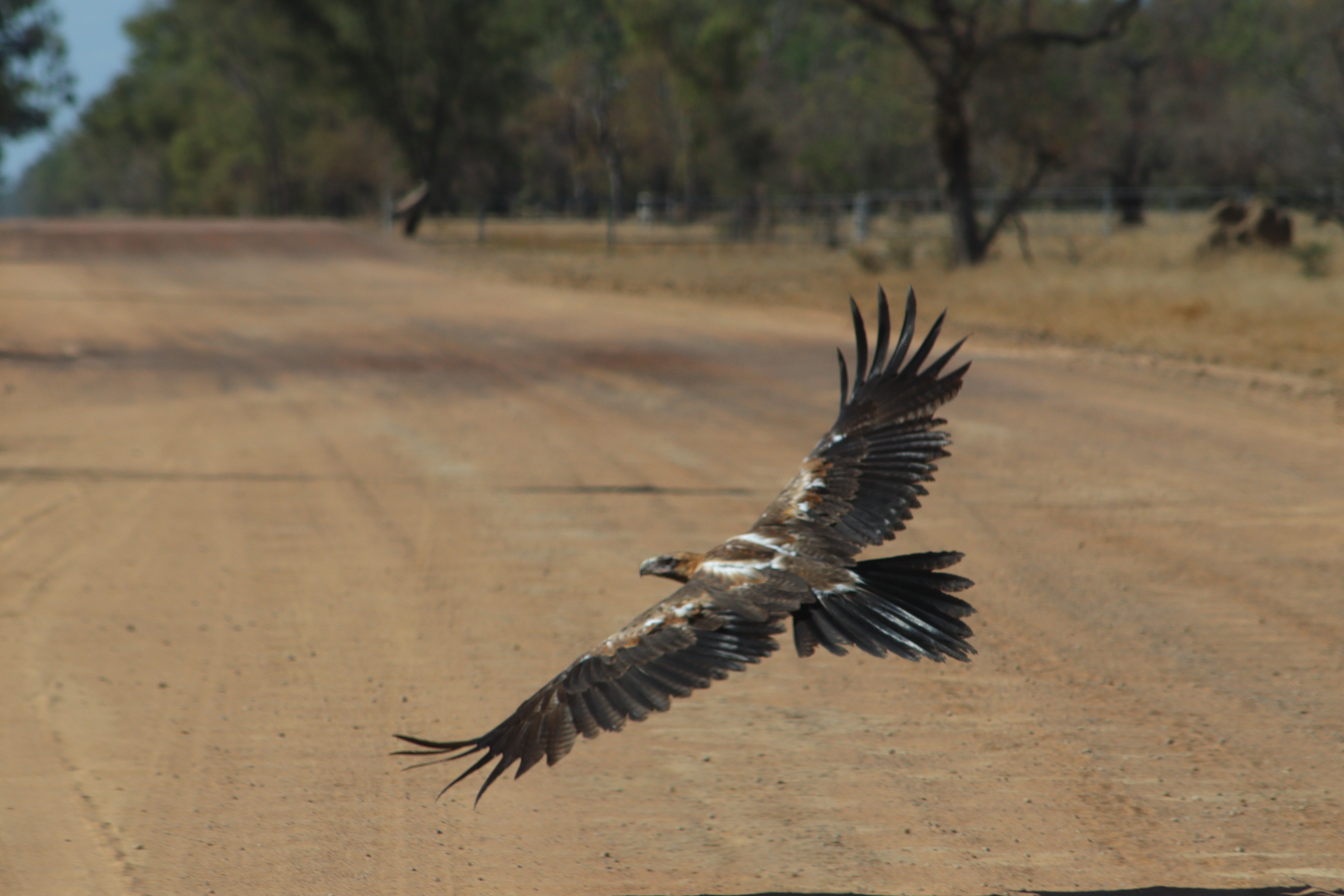
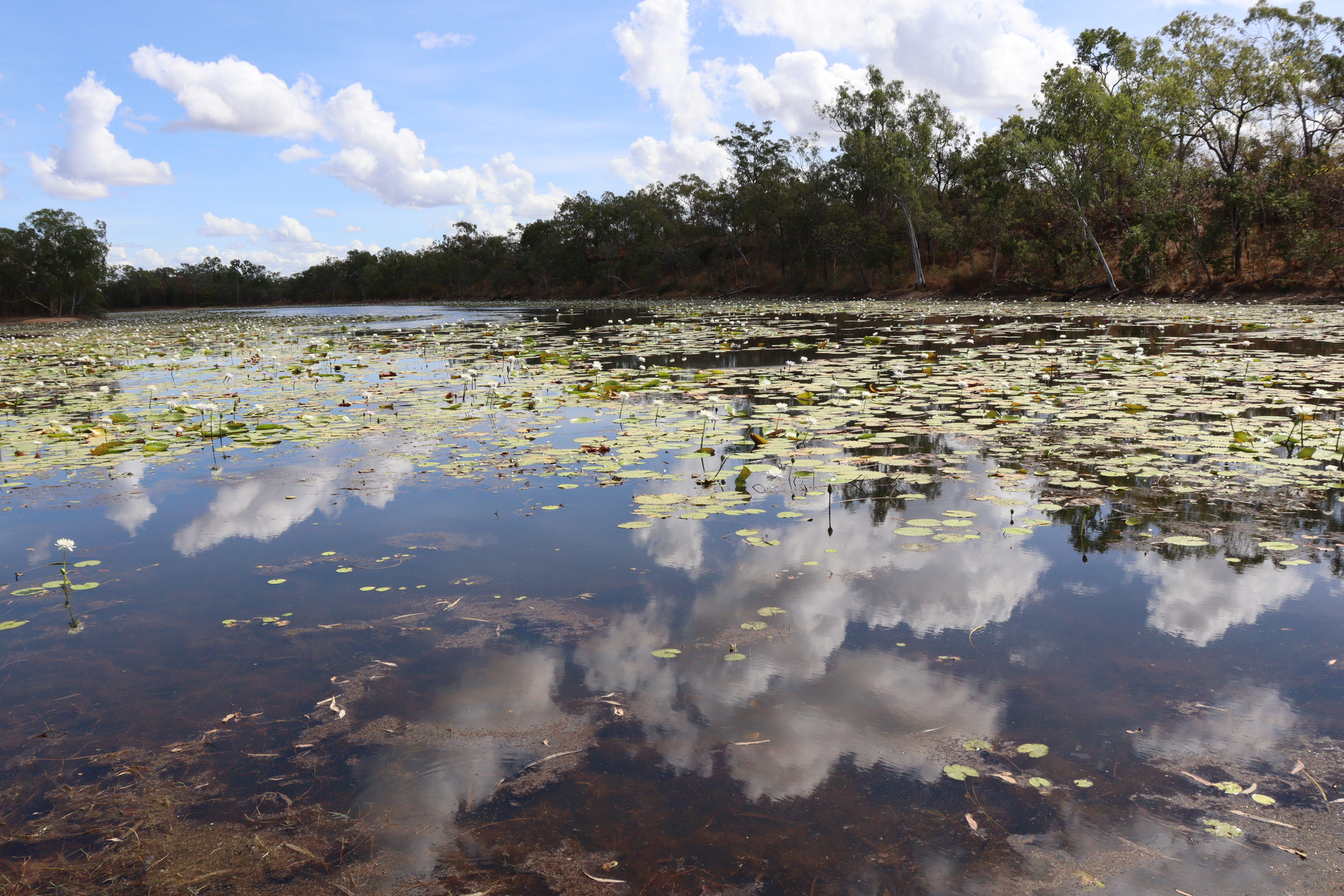
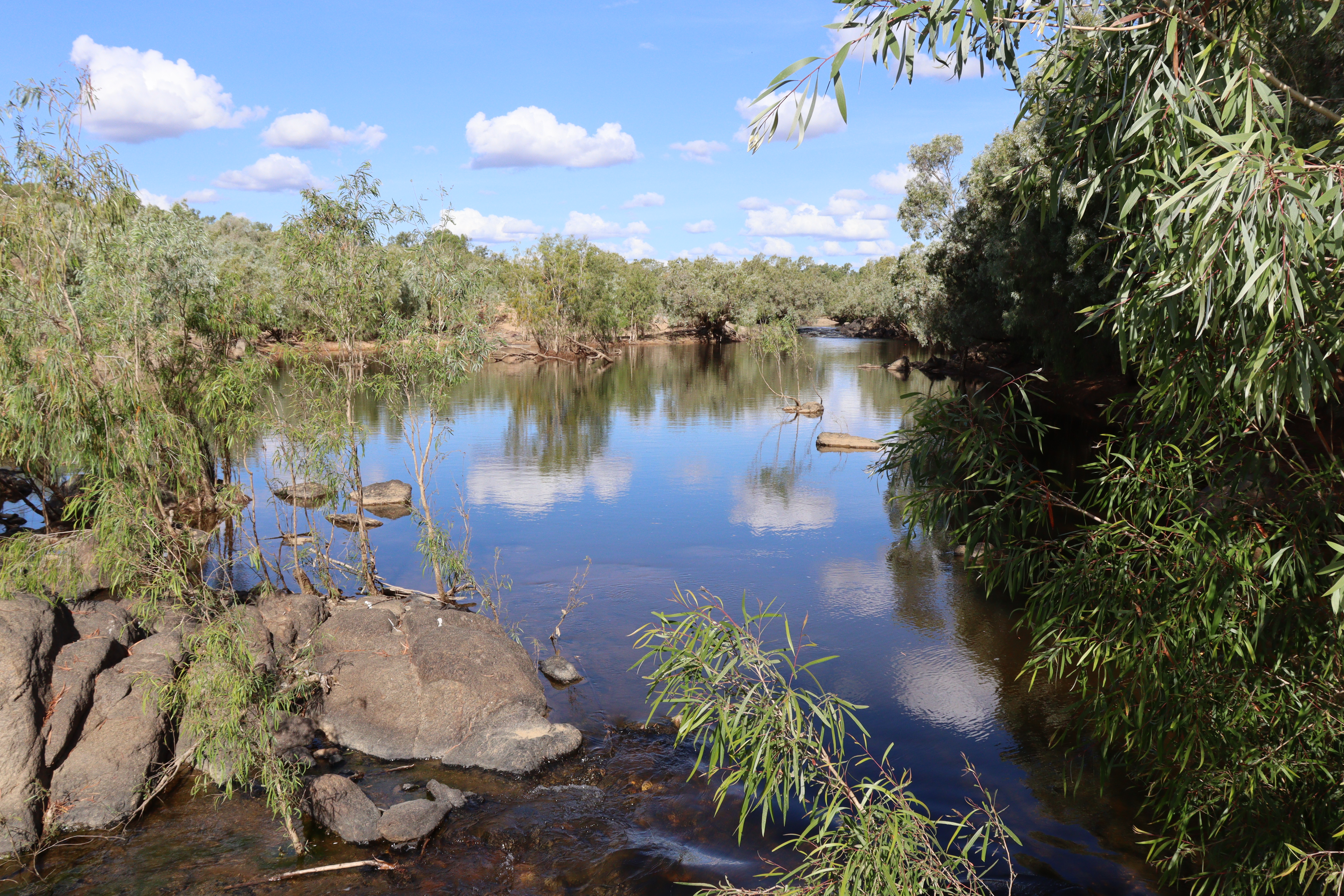
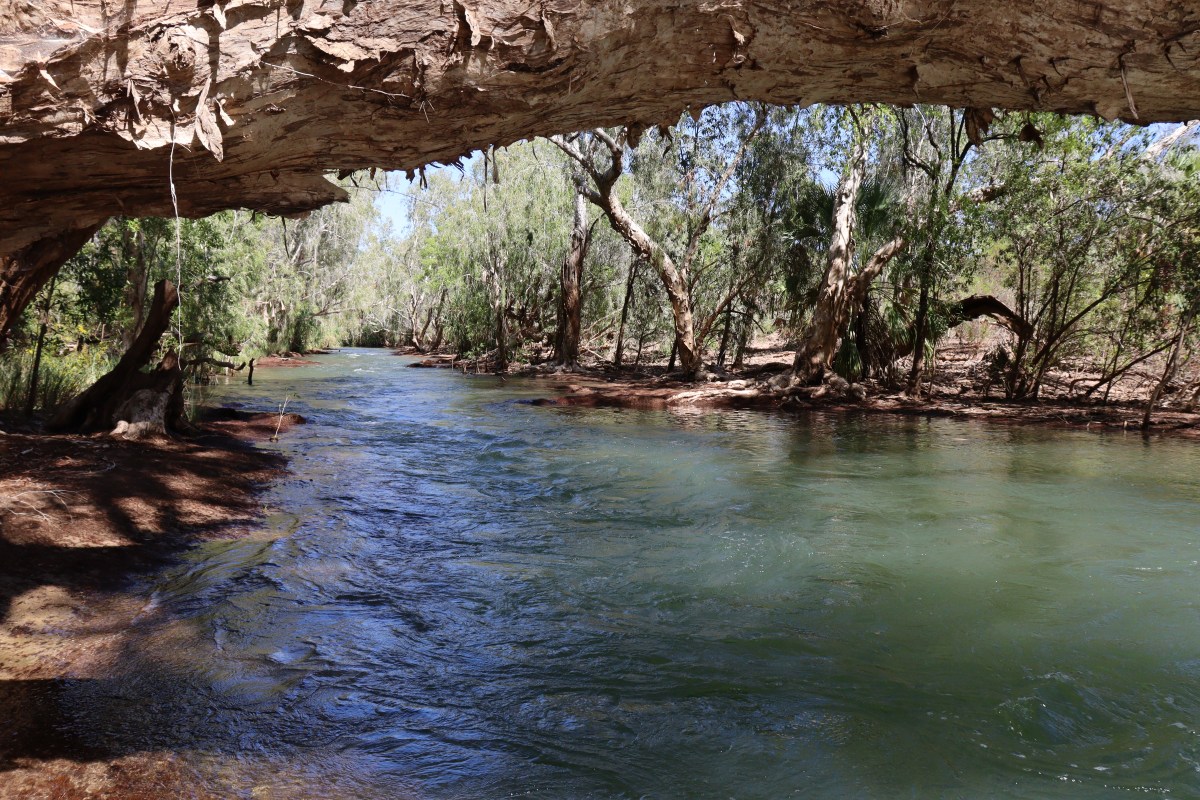
Next morning, we had only driven about 10 kilometres before we came across “Dinnertime Lagoon,” a large and stunning waterhole covered with waterlilies in full flower – would have been a perfect campsite if only we’d known!! For the rest of this day and the next, we continued on the dirt road, encountering a variety of things which made it a memorable drive: cattle on this unfenced road by the hundreds -yeah we’re pretty used to that but always a good sight; a majestic wedge tailed eagle feasting on road kill and not in a hurry to leave it, giving me a chance for some pretty good shots of him through the windscreen; a white bellied sea eagle also soaring past;  signs indicating the 68000 square kilometre shire that has a MASSIVE population of just 2500; 250 kilometres of bulldust holes – and yep I reckon we hit every one of them creating a nice dust cloud in our wake; several waterlily covered waterholes – so pretty and unexpected in this dry savannah country; and several crossings of the Mitchell River where we stopped for a break to admire its sparkling beauty.

After almost 600 kilometres of dirt and dust driving, we hit the bitumen just as we entered Chillagoe, a town that once thrived on mining of gold, silver, copper, and fluorite, but now has just a small zinc mine and marble quarries. However, Chillagoe also boasts a spectacular karst landscape, and the Chillagoe-Mungana Caves National Park is its main tourist drawcard – and rightly so. Of the 600 to 1000 limestone caves in the area, several are open for ranger guided tours while a few offer the self-guided option. The guided tours are well worth doing as they take you deep into the cave systems to learn about their history of formation and discovery, to witness the wonderful formations of stalagmites, stalactites, columns and shawls in a range of colors, as well as a variety of chambers, some small and others huge, and to catch a glimpse of the caves’ wildlife including large hand-sized huntsmen spiders and leaf-nosed- and sheath-tailed- bats. The jewel in the crown is the Royal Arch Cave which boasts two massive chambers, The Cathedral and The Royal Arch – absolutely stunning! -and where Gary got to squeeze through “The Chute,” a tiny claustrophobic tunnel from one chamber to another. As well as the caves there are numerous limestone rock formations surrounding the town including the much-photographed Balancing Rock, and just out of town are the Heritage Listed Chillagoe Smelters, which have their own interesting history.

Thirty kilometres from Chillagoe is the township of Almaden, a thriving metropolis of less than a hundred people. There’s a quaint historic railway station there as it’s on the Mareeba-Chillagoe line and the town also serves as an overnight stopover for passengers on the tourist train, “Savannah Lander,” which runs twice weekly between Cairns and Forsayth. We had joked about the man sitting at the station saying he was waiting for a train, but as it happened, he turned out to be the station master and he actually WAS waiting for the Savannah Lander which was due within half an hour after a four-day trip from Cairns.

Coming to Mareeba, the last big town we would see for the next few weeks, we stopped to stock up on some supplies. Luckily, we hadn’t planned to stay there because the place was packed!! Passing the showgrounds on our way in, there would have been 200 caravans/RVs and then at another reserve, there appeared to be a CMCA gathering of around 300 RVs! No Thanks!! Our stopover at Palmer River Roadhouse 150 kilometres further on proved to be a much better choice, as there was plenty of space and we were able to have a relaxed, quiet evening and enjoyed a great roadhouse dinner – the biggest burgers you’ve ever seen!!
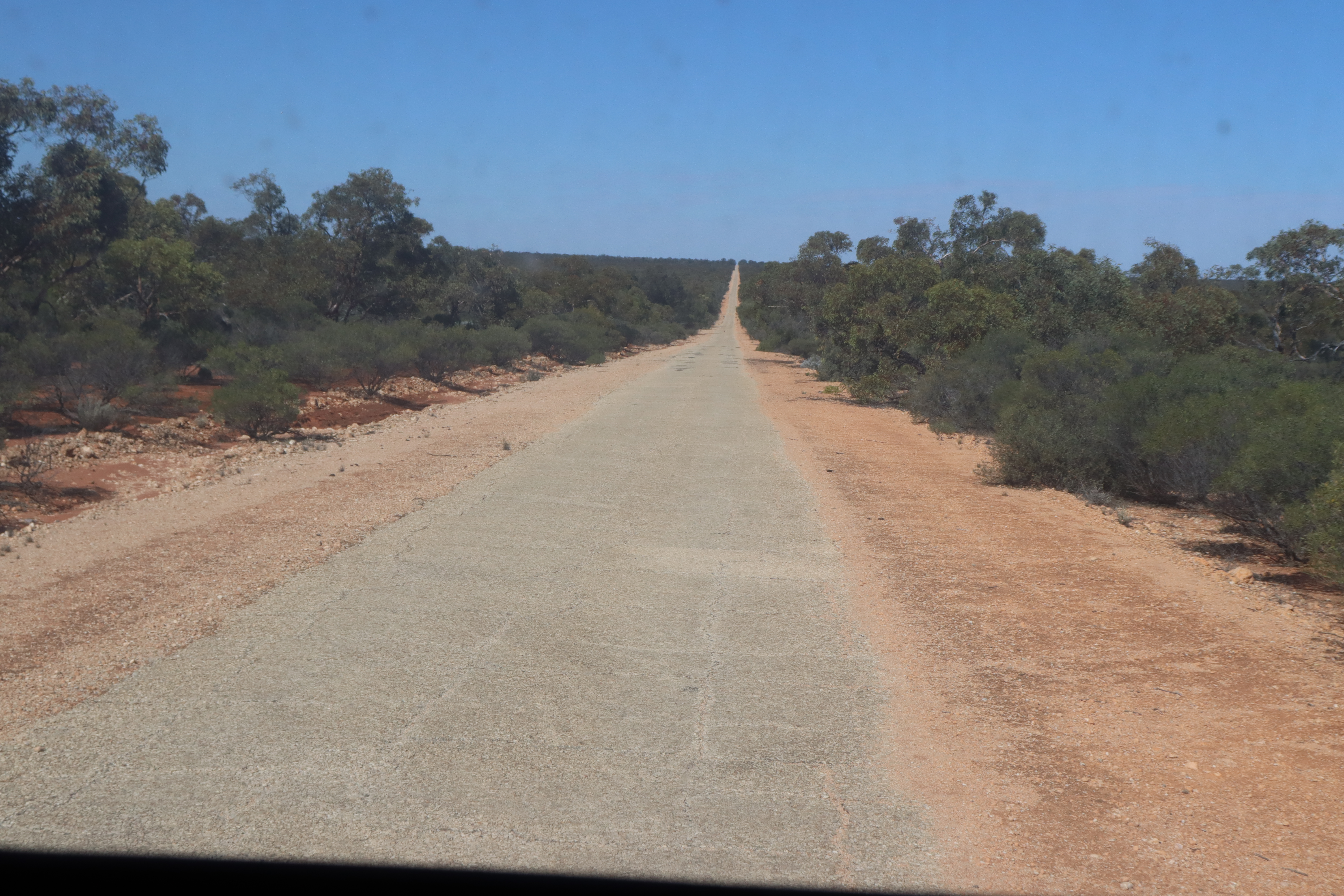
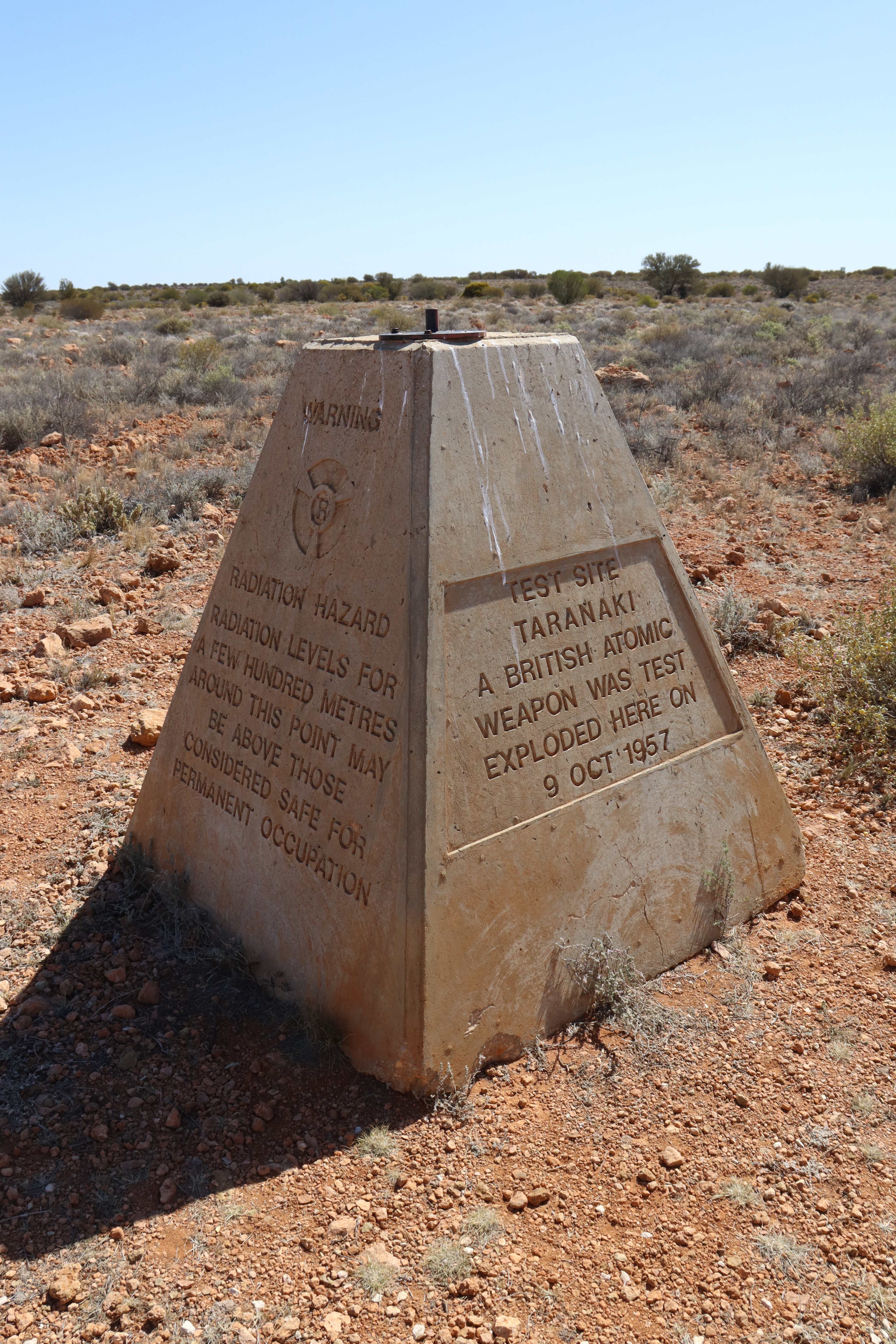
Biggest burgers ever at Palmer River Roadhouse

And so, we reached the PDR – Peninsula Development Road, and for the next 800 kilometres to the Tip of Cape York, the road lived up to its reputation. About 300km or so of the 800km is sealed, sometimes in good long stretches and with more sealing happening each year, but the rest varies between average gravel/dirt road to awful corrugated or rocky, rough or possibly the worst-you’ve-ever-been-on road that “rattles the fillings out of your teeth” according to Gary. Along the way though, there was plenty of interest: scenery changing from dry cattle country to forest to tropical rainforest and waterways ranging from trickles to wide rivers.

Archer River Roadhouse about halfway up the Cape, sits above the Archer River, a lovely clear, wide but shallow waterway that is obviously a popular spot for the locals from Lockhart River Aboriginal Community to come for a crocodile-free swim. Once again, the roadhouse offers camping, accommodation, meals, and a welcome beer or two.

About 50 kilometres north of Archer River the route to the Tip turns onto the Telegraph or Bamaga Road and the awful road conditions continue! A pleasant stop – and a chance to take a break from the corrugations rattling everything – is Moreton Telegraph Station, originally built in 1887 as part of the Overland Electric Telegraph line connecting Australia to the rest of the world. Although it no longer serves as a Telegraph station, its position on the Wenlock River makes it an ideal spot for a break or an overnighter if you so desire. We didn’t stay but called in to the kiosk and the lady there told us about their 3-kilometre walking track along the river to the “barra hole” and down to Cave Creek where the rock has been eroded to form a Natural Bridge and the creek flows under the “bridge” in a small waterfall – well worth the look.

From Bramwell Junction, the road splits; you can continue on the OTT or Old Telegraph Track, a very rough, challenging, strictly 4WD track, which follows the original telegraph line, passing through several deep river crossings, slippery riverbanks and stretches of deep sand. NO thanks – I’ve seen the pictures and videos!!  OR you can follow the Telegraph Road/Northern Bypass Road which gets you there in roughly similar distance but with far less challenging – albeit corrugated – conditions, which suited us just fine! Either route will get you to the Jardine River.

The Jardine River Ferry is operated by the locals and the $100 return fare entitles you to the 30-second crossing each way and to camp in some of the CYPAL (Cape York Peninsula Aboriginal Lands) that are not National Parks or private campgrounds, but we chose to head out to Loyalty Beach campground as we’d heard that the Seisia campground was always packed. Checked in, set up then checked all the cupboards and were pleasantly surprised to find that despite all those corrugations (that rattled our fillings out!), we had not broken so much as an egg or a china cup! Pretty good going!!

So here we were – we’d made it to the Tip of Cape York, well ALMOST!

WTF or Ha Ha!!

  • Chillagoe must have a pre-requisite of guinea-fowl ownership for potential residents. Never before have I seen so many guinea fowl – it seemed like every house had at least a dozen of the noisy critters!!
  • Looking at the Almaden station (dirt) platform, it appeared to have been very neatly raked and I commented that someone had done so. “That would be me -it’s part of the contract” says the man who turned out to be the station master. I guess it’s the outback version of rolling out the red carpet for the visitors.
  • How close is too close? Palmer River campsite, there’s more than 30 metres of clear space between us and the next caravan, but Old Mate backed in SO close to us that when he opened his camper towards us, his bed was about 30 centimetres from our window!!
How close is too close??
  • Parked up for the night in a roadside pull out, two more vehicles together, both towing, pull in, one (A) parking virtually nose to nose with us and second one (B) across the track from us. A little later a third vehicle (C) comes into the pull out and parks near (but not right on top of) vehicle B, so B moves his vehicle up next to his mate (A), almost blocking us in, but still had the cheek to comment that the newest guy was “not very socially acceptable, parking so close!”

Destination Cape York – Part 2

Hungerford to Karumba.

(click on photos to enlarge)

Having spent about three weeks in outback NSW, following the Darling River for much of that time, we had now crossed over the border (through a gate) and into Queensland at Hungerford. Our plan was to have a short lunch stop there and then continue into the Currawinya NP nearby. Our plans soon changed on talking to the local publican, who said, “I’d be heading straight out of here and getting to the bitumen as fast as possible if I were you….the rain’s on its way and should be here by about 4 o’clock!” Knowing that the road would become impassable for a few days at least after the rain, we took his advice and headed straight up to Eulo, travelling on a beautiful smooth dirt road all the way to the bitumen. No sooner had we checked into the Eulo caravan park, than the rain started – virtually right on time at about 4.15!

Anyone who has spent time in these outback parts knows that rain is not just a shower – it pelts down in buckets, and so it did for the entire night. Next morning dawned bright and sunny, but the rain had taken its toll. The road from Hungerford was closed and probably would be for a week, so lucky we had taken the publican’s advice. Several campers in the free camp area just out of town in Eulo had not heeded the locals’ warnings and were now destined to remain on site there for a few more days than they had planned, as the soil down there “turns to glass” after rain. So we had definitely made the right choice to stay in town.

North of Eulo, we called in at Toompine to check out the old Toompine Hotel, out there on its own, miles from anywhere and a stopping point we have visited several times passing through this area. We had heard it had changed hands and were quite surprised to see that it was only a skeleton of its former self. Apparently in the process of renovation and extension, they had discovered a serious white ant infestation, so were pretty much rebuilding from the ground up. Next door, the café is run by one of the pub’s owners who was happy to take us through the “new’ building which, when finished, will look and feel much like the original.

Lake Houdraman, about 5 kilometres east of Quilpie, is an absolute paradise, and an oasis in the outback. Situated on a private working sheep, goat and cattle property, The Lake campground is operated by the owners and is a beautiful, tranquil place to spend a night or two. We chose to set up right on the water’s edge where we enjoyed viewing many varieties of birds that visit the lake and the beautiful shady trees surrounding it, and took in the splendid sight of an outback sunset over the lake, a scene enhanced by the thousands of beautiful waterlilies growing on the lake. The bush campsite is not free, but has great amenities including flushing toilets and showers, and welcoming evenings around a great campfire at the onsite “Lakeview Pub”. Highly recommended!!
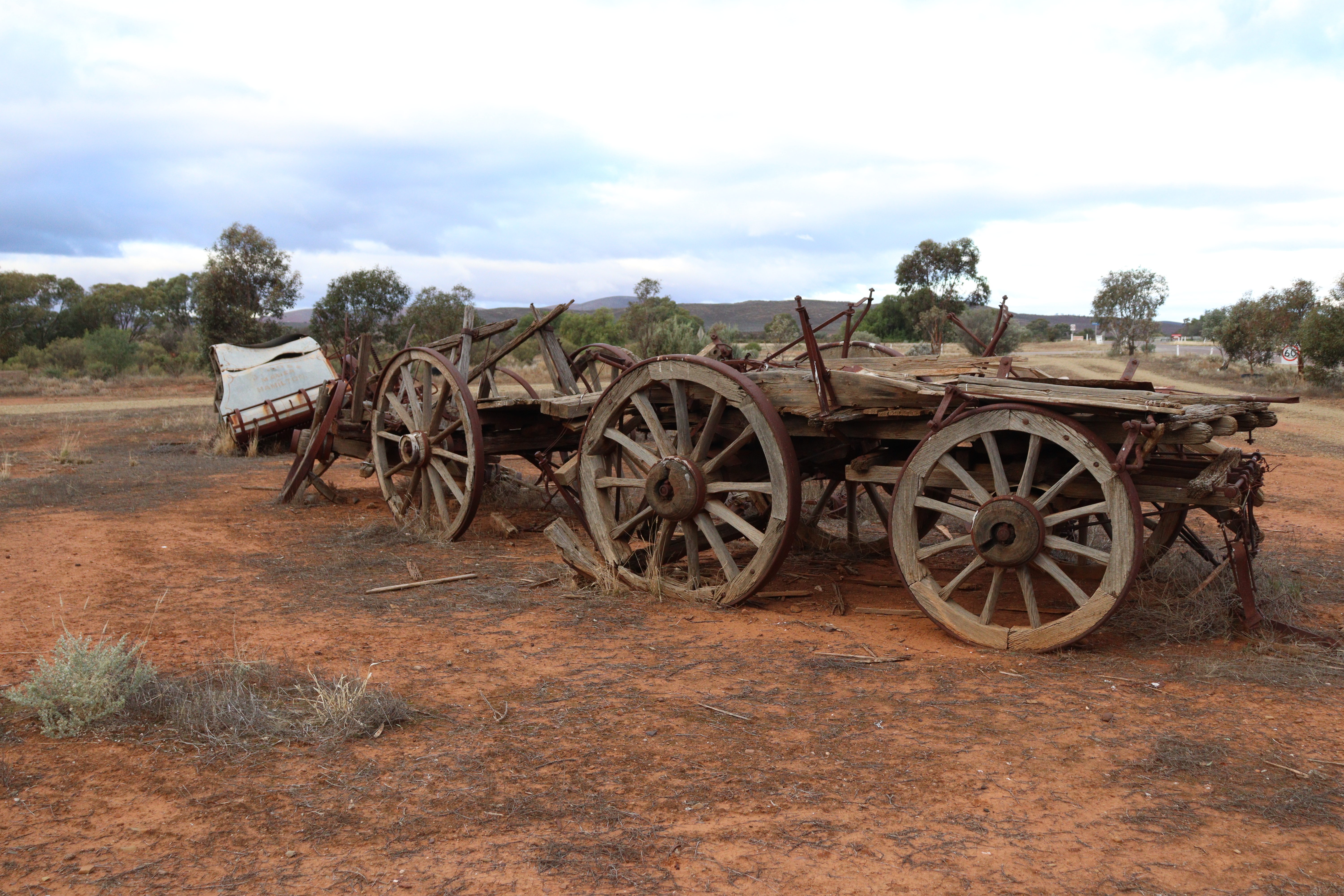
After a few overnight stops along the way (and the obligatory lunch at Tattersalls Hotel in Winton) we arrived at Corfield in time to join in the festivities at the Corfield Club Hotel for the first State of Origin Rugby match. We had been invited via Facebook by Amy at the cattle station we looked after for a month back in 2018, but judging by the double take and look of complete surprise on Hilton the barman’s face when we turned up, it seems they weren’t really expecting us to come. So after a pleasant night catching up with some of the locals – and unfortunately watching Queensland lose the first game of the series! –  we then spent a night out on “our” cattle station catching up with our friends, Hilton, Amy, and Jack -and George the dog.

Outback sunset, Morella

Clem Walton Park, on the Corella Dam between Cloncurry and Mt Isa, is another unexpected oasis and a popular camping area. Having previously been there for a picnic, we knew it would be a pleasant camp spot for a couple of quiet nights and were not disappointed. Despite the number of other campers, we managed to get a good roomy spot beside the river with plenty of shade, where we again watched and listened to the birds and went for a wander along the river and up to the dam wall.

Corella River, Clem Walton Park

For the next month our time was spent at Gregory Downs, the cattle station where our daughter worked as a ringer for seven years and where we have developed strong friendships with Dave and Tess (the manager and his wife (who is also the station cook) as well as quite a few of the local station crew and townsfolk. Knowing that they were planning to retire at the end of the year we wanted to take one last opportunity to visit them at the station – and our favourite riverside campsite – before they handed over to the new managers, who at that time were an unknown quantity. We earned our keep while there by helping out in various tasks – cleaning the social club, restacking social club fridges and helping out in the kitchen.

We had planned our arrival time so we’d be available to help over the weekend at the Gregory Campdraft, which ran from the Friday night through to late Sunday afternoon. I’m not sure we knew what we were letting ourselves in for!! Friday, we spent all day at the station kitchen assisting in the preparation of huge dishes of salad, pasta, potato bakes, curries and casseroles, all of which (along with many donations of similar kinds from other stations in the area) were destined for the Saturday night campdraft dinner. Then down to the campdraft kitchen at the racetrack where we helped cooking, making, and serving hundreds of steak sandwiches and sausages in rolls for almost 5 hours. We had taken Roxy down there so we could camp there for the weekend, making it easier to come and go from our kitchen duties. So Saturday morning we awoke before 6am (!!) to the sounds of the announcers calling the first competitors up with, “We’ll start events as soon as we can see”. So back to the kitchen for the day, firstly cooking/serving bacon and egg rolls for the campdrafters’ breakfasts, progressing through the day to lunch -hot foods, sandwiches, snacks, drinks etc all the while continuously doing dishes, preparing, chopping, slicing, replenishing supplies, till later in the afternoon when the casseroles etc had to be heated ready for the evening plated dinners which started at 7pm.  I don’t think I’ve ever seen so much food laid out on a buffet spread in a non-commercial setting, but then I’ve never seen such a continuous line of eager diners that just kept on coming in to savour the delights of country hospitality. After such a long busy day, we felt we deserved a drink or two out at the bar area where the campdrafters were in full party mode, but it didn’t take us long to head over to Roxy and bed.
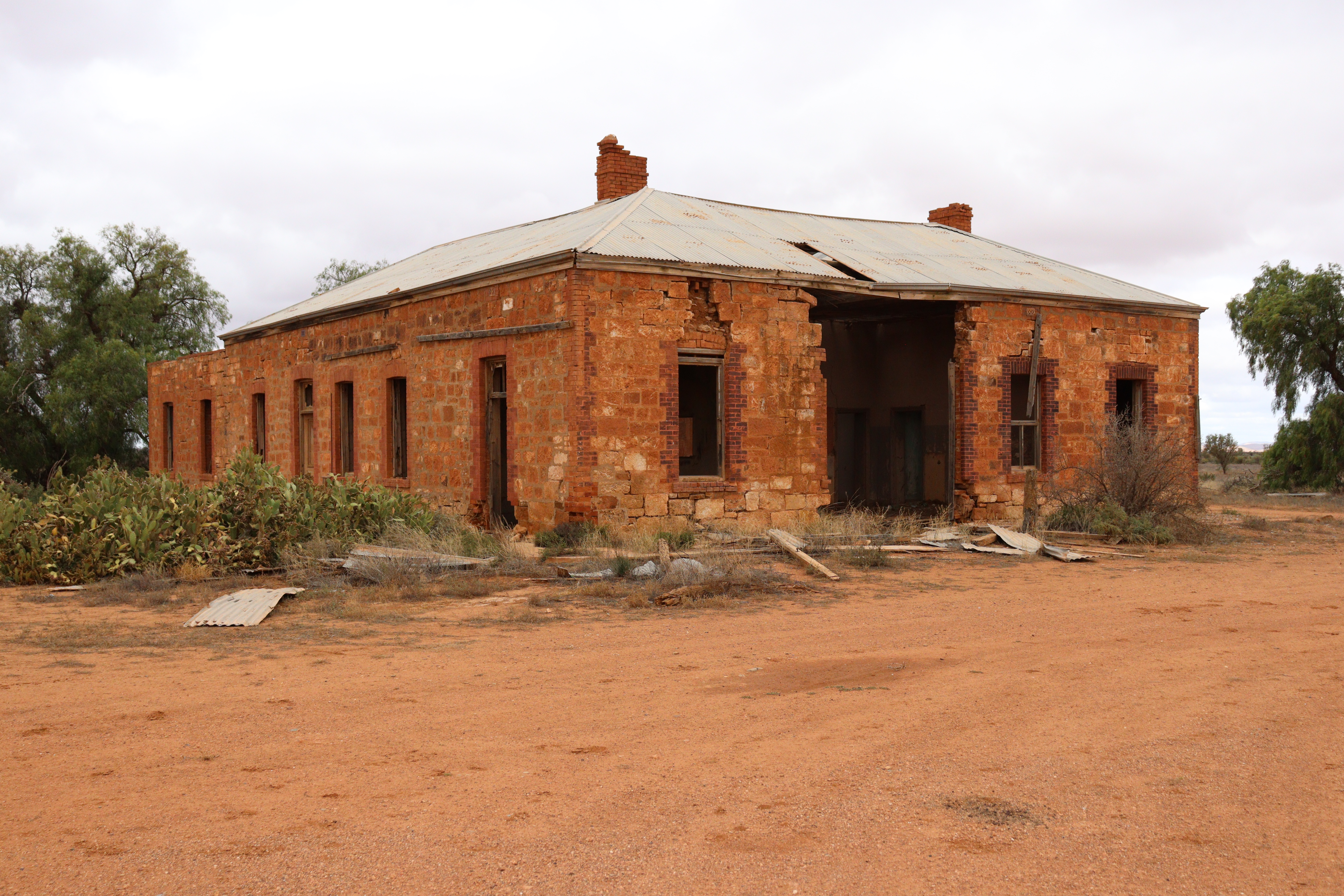
Campdrafters party time

Sunday morning, we started early and did it all over again working from 8am till 6pm! More bacon egg rolls, more sandwiches, more roast beef and gravy rolls, more chips, more pies, more steak sandwiches, more hot dogs, more, more more…..and then at the end of it was the big clean up!  Gary estimated that over the weekend, he cooked about 35 kg of chips and over 400 steaks and innumerable sausages, aside from all the other food we served. To say we were buggered is an understatement! But in all of this we have found a renewed admiration and respect for the local CWA ladies and station ladies who turn up and do this several times a year, year after year to serve their community. Well done ladies!!!
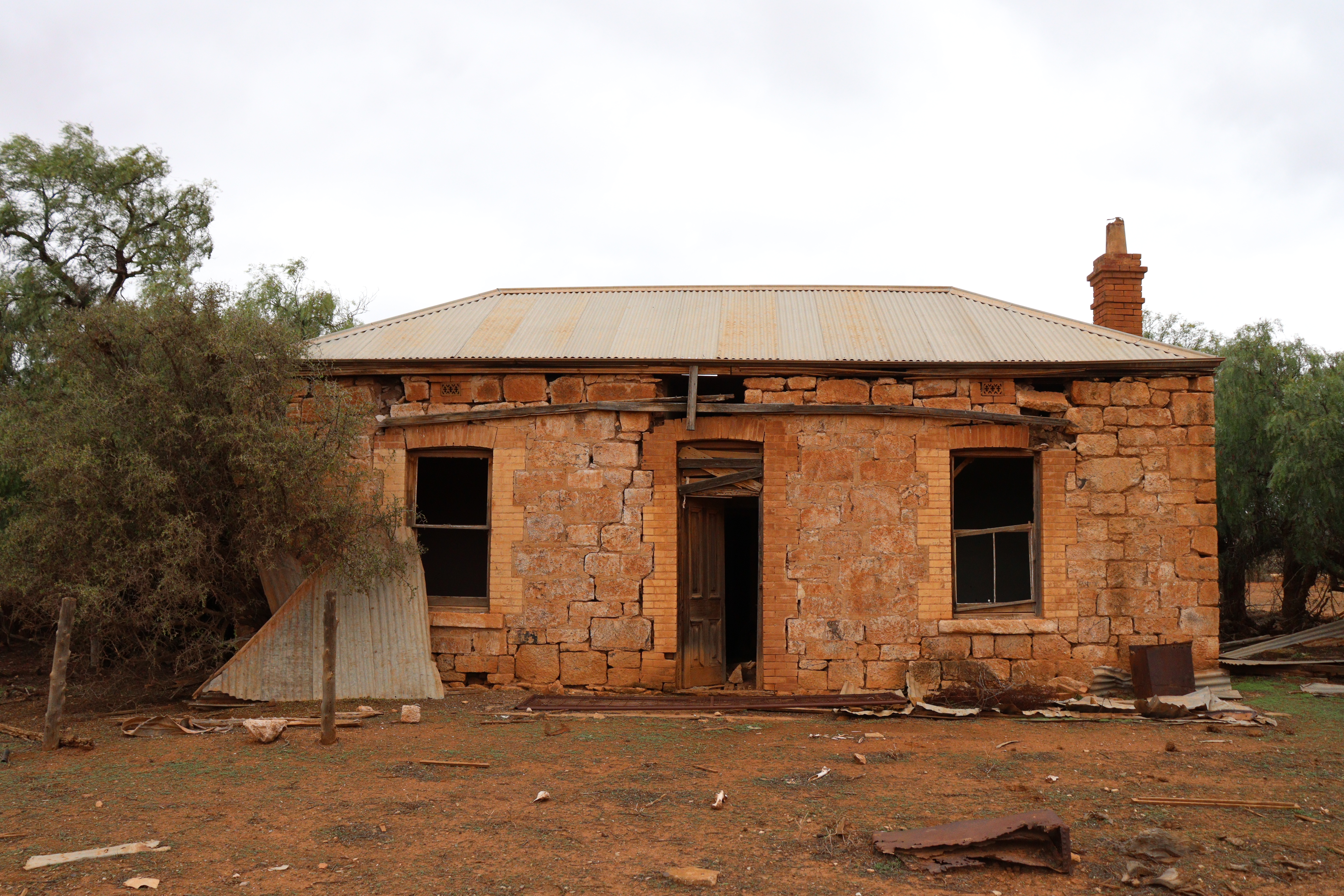
Once the campdraft weekend was over, we tended to alternate between camping down at our spot on the river or camping up at the homestead compound outside the station social club. In the past, we used to drive our car the 3km from our camp up to social club, leaving our caravan set up by the river, so I’d been wondering whether having Roxy the motorhome would make it a bit more of a hassle to go up to social club – because we go up there EVERY night! –  but it actually turned out pretty well because we could go up, have a few drinks, and then just sleep in Roxy in the compound if we needed to. Very handy – no drink driving!

The second game of the State of Origin series was to be a big night for the station stock crew at the Social Club with pizzas for dinner, so Gary and I gave Tess the night off and took care of making the pizzas – 18 of them, ranging from meat lovers to cheese and garlic to “the lot” to “arseburner” – one made with hot salami, chillies and tabasco – Ouch!! – which all won the seal of approval from all who partook.

Sue and John who own the next-door station, 20 or so kilometres up the road, invited us to come out to their outstation about an hour or so further on, where the rest of the family was camped out while mustering, so we went.  After having some lunch which Sue had brought for them, the crew set out again- two on horseback, one on a motorbike, one in the chopper, and Gary in the “bullcatcher” with John, where for the next three hours he was hammered and battered by tree branches and pea bush hitting him in the face! You see, the “bullcatcher” is a classy vehicle – no doors, no windscreen and no windows, but it does have a heavy duty bullbar equipped with tyres for extra punch when catching the bulls. I was the lucky one who fared much better and got a lift partway back to the home station in the chopper!

On our last night cooking for the station crew, we were allowed to use the BRAND new, never-before-used barbecue to cook up the most delicious looking pork chops which had come from station-reared piggies. Everyone was looking forward to a feed of pork which would make a nice change from beef which constitutes a good part of the menu here, being a beef cattle station. Alas! Within five minutes of putting them on the barbie, Gary was yelling out to me to bring out the fire blanket! Although the chops were well trimmed of fat, there was still enough to run down onto the burners and catch fire pretty well straight away. The fire blanket did nothing to quell the flames, so out came the fire extinguisher – and that put an abrupt end to our pork chops for dinner! Luckily we had some leftovers we could quickly heat and serve and in the end, after a good scrub, the barbie wasn’t ruined forever, so not as much of a disaster as we thought! The next night, Dave was very quick to refuse Gary’s offer to cook the weekly Saturday barbecue down at social club – wonder why??

Having spent a month at Gregory Downs, we decided it was time to make a move and continue our quest to reach the Tip, so we headed up through Burketown and out to stop at Leichhardt Falls for the night. We have visited these falls many times over the last twenty years and only once have we seen them in full flow. This time, like so many previous visits, there was not even so much as a trickle falling over the rock ledges, but we were treated to the sights of a couple of freshwater crocodiles lazing on rocks at the base of the “falls,” as well as flocks of cockatiels and thousands of corellas settling in the trees and proceeding to strip them of any foliage.

From there we had a quick lunch stop in Normanton, long enough for me to get eaten by Kris the enormous crocodile, before heading up to Karumba on the Gulf of Carpentaria to visit Frank, the former Gregory Downs gardener, who was happy to show us his daily routine of feeding by hand the wild whistling kites and black kites, and where we stayed long enough to enjoy another wonderful Karumba sunset over the Gulf waters.

Sunset on the Gulf, Karumba

Karumba was our final familiar place before we started heading up Cape York Peninsula into territory we had previously not visited.

WTF? Or Ha Ha

  • After the rain in Eulo, we walked down to the free camp area to join many others watching the idiot who had stayed through the night’s rain, but then decided he urgently needed to leave, and in trying to get his car and caravan out, became so hopelessly bogged to the axles that it took him about 5 hours of winching to different points back and forth before he finally got out. Having made a right spectacle of himself, making his wife quite embarrassed and having made a real boggy mess of the campsite, it turns out he was only heading 90 kilometres up the road!!
  • Rental motorhome at Cooper’s Creek Bridge near Windorah, drives from sign to sign taking photos – but not getting out of the vehicle, then when crossing the bridge stops dead in the middle -totally oblivious to the road train right behind him!!
  • Camping at a roadside stop with several other vehicles beside a fenced station property, one idiot climbs through the fence and proceeds to cut down trees for firewood using a chainsaw! It’s PRIVATE PROPERTY!!!!
  • After all the dirt roads travelled so far, how does it happen that we get a stone chip in the windscreen when travelling on a sealed highway??
  • Standing talking outside the main house at the station, Tess suddenly days “oh my goodness” and promptly stands on a little python that was crawling around the kids’ feet.
  • After spending 5 nights camped in the station compound due to our commitment to cooking/helping out in the kitchen and due to the rain that had also descended on us in that time, we went back to our riverside camp to find the river was now about a metre deeper than when we left.  Normal for these parts… and it receded just as quickly.
  • How to disappoint a person looking forward to a good feed of barramundi and chips – tell her you are cooking it using mum’s old recipe of boiling it in vinegar. INSTANT “20 past 8 smile”. (Of course, we were joking!)
  • At Leichhardt Falls, a lone camper came to ask if he could “borrow“ some hot water to heat his noodles, as he had come away three months ago a “bit under-prepared”. A BIT??? No stove or cooking or eating utensils and he’s a BIT under-prepared??!!

Destination Cape York

Part 1 – Home to Hungerford, Qld.

(Click on images to enlarge.)

Back in May last year, (2021) we seized a window of opportunity and took off, heading northwards towards warmer weather. The week after we left home, Victoria closed under lock down, so we’d made it out just in time, and although NSW closed borders to Victorians coming in, we were able to travel in NSW quite freely because we were already there and in outback areas, so not a real problem.

After spending the first two nights away visiting our daughter and then friends across the border in Finley, we set off in earnest, travelling up through Hay along the Long Paddock. Our first stop or point of interest was the One Tree Plain, home of the One Tree Hotel, a lovely rustic old building constructed in 1862 of wood and corrugated iron and taking its name from the single large gum tree that grew in the centre of the 200 000-hectare sheep station there at the time. The area surrounding the hotel also claims to have been Australia’s smallest forestry-timber reserve, (gazetted for its single tree in 1864) and is completely devoid of any major vegetation, making the hotel a standout feature on the barren horizon.

Our next stop, Willandra National Park is a wonderful window into the history of the “Big Willandra” of shearing folklore. First purchased in 1863, Willandra Station was developed as a sheep station, established as a merino stud in 1886, and after enduring recurring bouts of drought and flood, it was finally proclaimed a National Park in the 1970s and cleared of livestock – although the Willandra Bloodlines still produce merino wool today. Restoration work was carried out on all the major buildings, namely the homestead and the shearing precinct and it was great to wander inside and around these buildings getting a glimpse into how the place was run and how their lives were lived back then.  A walk around the property took us through the old dump area which we found to be a treasure trove of odd bits and pieces including hundreds of rusted fuel drums, a large boiler engine, a mechanised butter churn, an old truck, and several derelict wagons. We were especially pleased to note that of all these restored buildings, not one was marred by any signs of vandalism or graffiti- hopefully this is a trend that continues!

After having several nights in a row on rustic sites (= non powered), we were alerted by an alarm that our solar power supply was letting us down and our battery storage seemed to be running low, so a quick change of itinerary had us foregoing our plans of going up to Ivanhoe (AGAIN- several times we have planned to go to Ivanhoe but still haven’t managed to get there!) and instead we travelled back to Griffith to get a replacement battery.. Once that was sorted, we continued up the Kidman Way, through Cobar, stopping for a look at the big hole at Fort Bourke Mine Lookout, and then up to Gundabooka National Park, about 50 km south of Bourke, to spend the night at Dry Tank Campground.

Starting the day with a walk on the Little Mountain walk up to Mt Gunderbooka Lookout, we enjoyed the variety of trees along the way -wilga, mulga, eucalyptus, and one lovely Karrajung tree- and once up to the lookout, the view of the mountain range and the surrounding floodplains was breathtaking. A quick stop in Bourke had us at the Percy Hobson Park with Silo Art honouring (oddly enough!) Percy Hobson, the first Indigenous Australian to win gold at a Commonwealth Games -for high jump at Perth in 1962. From there we turned Southwest, following the Darling River down to Louth. After a look around the sprawling metropolis of Louth – took about 5 minutes – and lunch in the pub, we crossed the Darling, which incidentally had more water in it than we’ve ever seen in it before, and continued down the west side to Dunlop Station, a very welcoming Station-stay on the banks of the river.

Dunlop Station, in the hands of a private owner rather than National Parks, is a work in progress and similarly to Willandra, features the main homestead and a large shearing shed and shearers’ quarters. Unlike Willandra however, Dunlop has been a labour of love in its restoration by one determined and passionate lady over the last ten years, and to assist in funding her work, she invites campers to enjoy a station-stay, and gives guided tours of the property, which are most informative with a delicious morning tea as a bonus.  Having spent the night camping within the shearing precinct, we had already had a good wander through and look at the shearing shed which had not yet received the hand of restoration but is apparently next on the list. Thus, it was in pretty rundown condition with several sections of floorboards either full of gaps or totally missing, and in other parts the floor supports had sunk creating a wavy effect. The original shearing stands remain as a proud reminder of days gone by and the whole woolshed, though decrepit, has a real character and charm.

Back at Roxy, we were treated to our first sights of flocks of Red-tailed black cockatoos, landing in the trees just near us, and later that evening we shared stories and a great fire with four motor bikers who were staying in the shearers’ quarters, and who also recommended we go up to the homestead for the morning tea tomorrow. Keeping in mind that these guys had already done the tour and had the morning tea, and that there seemed to be hardly anyone else camped here at the station, we were flabbergasted on arriving at the homestead next morning, to find at least thirty people lining up to join in. Bearing in mind that Dunlop Station is pretty much out in the middle of nowhere and well over a hundred kilometres from a town of any note, we couldn’t help but wonder where all these people came from?? So we all enjoyed a fabulous morning tea with homemade sponges and cakes (good for our brekkie!) before Kim, the owner, regaled us with stories of the history of the station, and how she came to be the current owner. Very interesting stories.

The original homestead was built in 1880s by a single man, so heaven only knows why he needed nine bedrooms (including servants’ rooms), but he kept adding neighbouring properties until he had over a million acres. After he had sold it in 1912 and died in 1916, by 1935 the property had been reduced to around 80 000 acres. Its 40-stand shearing shed was the first to use machinery shears to shear up to 400 000 sheep a year. By the time Kim bought it, the homestead had been largely destroyed by fire and rebuilt in 1932 to its original glory, but her predecessors had gone broke and allowed the entire property to run down till the bank sold off 78 000 acres to recoup the debt. So Kim bought the remaining 2000 acres and started working and over the last ten years has restored the homestead, and the station store building. As I said a real labour of love, and we wished her well for the future of the place.

Following the Darling further south-west took us to Tilpa, home of the only Boer War memorial to commemorate Harry Breaker Morant, and Australia’s shortest Heritage Trail consisting of just two signs, one either side of the main road. Further on in Wilcannia, we had a couple of nights to restock and do some washing. Well, why wouldn’t we? The caravan park washing machines were right in our price range: FREE! Wilcannia is a town that has had a bit of a bad name in the past, but locals have worked really hard to clean it up and improve its image and we found it to be quite a nice little town with lots of lovely historical buildings. Worth a look!

Roughly a hundred kilometres north of Wilcannia, White Cliffs is an opal mining town where, like the more well-known Coober Pedy, many buildings are partially or fully underground, and many of the locals spend much of their time underground hoping to find that elusive opal that will make them rich and set them up for life – which of course generally won’t happen! After checking into the caravan park, we set off to walk the town Heritage Trail – this one has more than two signs and is about seven kilometres, taking us all around the opal fields which surround the town. The fields are a real eye-opener with their thousands of holes and mounds where innumerable claims have been dug, but not fenced so you really must watch your step lest you fall in an open hole! Amongst all these dugouts is the most assorted collection of old and rusted machinery, trucks and cars, most of which, by all appearances, are probably in non-working condition. With 28 years having passed since we last visited White Cliffs, I think I can honestly say that NOTHING has changed in that time – well, not much anyway, except perhaps that now there are MORE mounds and MORE holes to fall in!

Travelling on a ‘dry-weather only’ dirt road from White Cliffs towards Wanaaring, keeping an eye on the ominous grey clouds that were gathering, we called in at Peery Lake (day use area) in Paroo Darling National Park. The lake is not a permanent feature of the landscape here, but once it fills, it can remain for three years, becoming a haven for over 50 000 birds. On this day it wasn’t full and only a few emus wandered along the lakeshore in the far distance. It was a large expanse of water nevertheless and from our distant viewpoint, it seemed more of a mirage than a lake.

Closer to Wanaaring, we drove off the road again, into Nocoleche Nature Reserve to check out the King Charlie Waterhole. What a beautiful spot! Here the Paroo River opens out to a wide, calm waterhole which perfectly reflected the surrounding redgums and eucalypts on its tranquil surface. It seemed to attract lots of birds too, going by the noise, and we were able to catch sight of a few zebra finches, some sacred kingfishers,  lots of white browed woodswallows and a single budgerigar.

King Charlie Waterhole, Nocoleche Nature Reserve

We were now getting closer to the Queensland border, aiming to cross at Hungerford, so from Wanaaring, not trusting Google maps route directions to be accurate (which they often are NOT when travelling these outback roads), we took the Glen Hope Road which, according to signs from Wanaaring and by our trusty travel bible – our Hema map book – was the main road to take. After passing through several cattle/sheep stations AND at least 12 gates, ALL of which I had to get out to open and close, we crossed the Paroo River and about 5 kilometres further on came to a large crossroad. From this point I had estimated it was about 30 kilometres to Hungerford, so after about 45, we decided we were going the wrong way, so did a Uey and headed back to that crossroad. Only when we got to it did we see the signpost, now facing us, that pointed north to Hungerford and South to Wanaaring. So it appeared that in this case we could have trusted the directions given by Google maps as a more direct route, and would have saved us a lot of time – and a lot of gate-opening!

And so, we crossed the border (yep – another gate!) into the township of Hungerford and Queensland.

WTF?? OR Ha Ha!!

  • Coming out of Willandra NP, along a wide dirt road we passed a car parked right on the road and its driver appeared to be asleep but didn’t stir as we drove past. Feeling a bit concerned, we turned back to make sure he was ok, and despite us pulling right alongside his open window, he still didn’t stir until Gary called out to him. He replied that he was ok, just having a snooze. So we drove off again only to have him overtake us within minutes.  An hour or so later, after we had had a stop for lunch, as we were heading towards Griffith, there on the side of the road was the SAME car with the SAME man, fast asleep AGAIN!! No, we didn’t stop this time!
  • Is it Gund-A-booka as in the National Park or Gund-ER-booka as in the mountain range here??
  • In Louth, an old woman was sitting near her gate as if waiting for the mail. She was there when we first got to Louth, still there after we looked around the town, and STILL there after we’d had a counter lunch at the pub. Not so unusual – Except she was sitting in EXACTLY the same position the WHOLE time, leading us to wonder if she was even alive!
  • Wilcannia Golf Club – nice quiet club for a nice quiet drink, but on the first night there was an hour wait for dinner and the next night, the kitchen was closed! We weren’t destined to get a meal there!
  • Also Wilcannia Golf Club – the barmaid overheard us talking to a couple of others about their intentions to head up to Burketown and we happened to mention Gregory and how our daughter had worked there. So she asked when Blair had been there and turns out she is the mother of a friend of ours -and Blair’s- who had been the cook in the pub at Gregory at the same time and who has also cooked us many a burger there over the years! Small world indeed!
  • Lake Peery in Paroo Darling NP – signs encourage you to stop for a picnic or BBQ. Unfortunately, the BBQ was out of gas!
  • At Lake Peery, from the lookout we could see a car driving into the day use area but were astounded to see it just turn around and drive right back out again! The picnic area is 3 km off the road, and over 50 km from the nearest town, so WHY would you just drive in and out again??

Sydney to the High Plains

(Click on images to enlarge.)

The year is passing so quickly and despite the restrictions placed on us again with Covid-19 outbreaks, we have still managed to escape a couple of times and get out there in Roxy.

Our first getaway for the year was a couple of days in Melbourne, not in Roxy of course, but staying in a city hotel for the first few days of the year. We try to do this at this time every year as the city is much quieter which makes for easier getting around, although this year it was eerily quiet with many places still shut due to covid. So we spent the days shopping, going to the movies, walking and eating out. We took the train down to Geelong for a day to visit the National Geographic “Wildlife Photographer of the Year” exhibition which was well worth seeing. We also took the opportunity to visit Herring Island, a National Park on a tiny island in the Yarra River. I’m sure most people aren’t even aware that this NP exists right in Melbourne, but on a pleasant day it’s a lovely spot to escape the city and wander amongst the picnic areas, and sculpture gardens, and despite its proximity to the city, it is quite peaceful and relaxing.

We had a couple of maintenance and warranty issues we wanted done on Roxy, so decided to incorporate a visit to the factory with our next trip away. Borders (NSW/Vic) were open, so we headed up the Hume, taking an overnight stop on the way, then a night in a caravan park not far from the factory. Up bright and early next morning, we navigated our way through the outer Sydney traffic to the factory, and after a quick discussion with them, supplying a list of our requirements, we left Roxy in their care for the day. Deciding they’d probably have her for the whole day, we took a train into the city, and almost an hour later, when we were almost at Central Station, we got a phone call: they ran through the list with Gary and finished up by double checking that they could have Roxy till late the NEXT day! No problem!

So there we were in Sydney with just the clothes we were wearing for the day, and phone and wallet. Never to pass an opportunity, Gary suggested we take the ferry across to Manly, and as I had never been there before, we did exactly that. Managing to secure accommodation at a nice hotel on the waterfront made it even more enticing, so across the harbor we went and spent a lovely warm day exploring and walking from one end of Manly to the other – after buying some bare essential toiletries to keep us decent for the night!

Once we had picked up Roxy, we started heading north out of town towards Wisemans Ferry, with its two ferries crossing the expansive Hawkesbury River one way and the lesser (but not much less) Webb Creek the other. After driving up to St Albans for a quick look at the historic pub and cemetery, we headed back down to Dharug National Park where we had two nights in the campground. What a great place! Not too far from the city (only about 80km) but you’d think you were a couple of hundred kilometres away. It’s such peaceful, native bushland, with the river nearby, large grass trees with huge flowers – and we had it virtually all to ourselves. Well, except for several lace monitors that roamed through the campsite and several lyrebirds that graced us with their presence and with their repertoire of mimicry.

Within the National Park is the Convict Trail Walk, which takes you up the Devine’s Hill section of the Old Great North Road. This steep 1.8 kilometre section of the road was built by chain-gangs of convicts over the eleven years from 1825 – 1836. Listed on the UNESCO World Heritage Register, it was to be a route linking Sydney to the Hunter Valley, and shows an amazing feat of engineering and workmanship, where the convicts cut huge blocks of sandstone from the hillside and placed them with precision to build the road’s supporting walls and buttresses up to 12 metres in height, with culverts and drains running underneath to prevent water from undermining the road. Along the walk are information boards which tell the fascinating story of this road, which sadly became redundant even before it was finished, as steamships became the preferred mode of travel along this route. A walk well worth the effort!

Leaving the Dharug NP, we followed the Hawkesbury down to Sackville and back up to Lower Portland, then followed the Colo River, staying in the Upper Colo Reserve, which despite its cold showers, appears to be a very popular weekend camp spot! From there we headed down to Lithgow, driving along the Bells Line of Road which revealed incredible views of the Blue Mountains cliff faces that are more visible now since the devastating fires in the area a couple of years ago.

Cowra was our next port of call, taking time to visit the wonderful Japanese Gardens and the very sobering POW Internment Camp and Japanese Cemetery, where victims of the “Cowra Breakout” and those who died in the POW camp are buried. I still cannot understand why second and third generation Japanese in Australia were interned and treated like enemies during the war?? A sad part of our history, indeed.

Grenfell, a town with many historic buildings, was once a gold mining town and is now noted as being the birthplace of our famous writer and poet, Henry Lawson, and therefore many monuments to the man can be found around the town. Not far from Grenfell we ventured into the Weddin Mountains National Park to walk up to Ben Halls Cave, reputedly where he and other bushrangers hid out to escape the law. Whilst in the NP we also visited Seaton’s Farm, where the Seaton family, having arrived in 1936, began farming the land and eked out an existence for over 35 years with the most primitive farming buildings and implements, mostly made from scrounged scrap materials, with nothing going to waste as there would always be a use for it.

Passing through several small towns before crossing the Murray and back into Victoria at Jingellic, we headed for the Omeo Highway to take us southward to Mitta Mitta, where we camped in a lovely campground just out of town on the banks of the Mitta Mitta River. The Katie Peters Memorial Reserve was established in memory of a young 20-year-old local woman who was tragically killed by a falling tree whilst fighting bushfires in 2013. This campground is expansive, with lots of river front sites and plenty of shade for those who need it and is well maintained, providing a night of peace and tranquility.

After checking out the nearby Dartmouth Dam – at 180 metres high this is the highest dam in Australia and the largest water storage in the River Murray Catchment – we continued down the Omeo Highway, enjoying forested areas and vast mountain views before turning onto the Bogong High Plains Road and back into the high country of Alpine National Park. This part of our journey  proved very scenic and enjoyable with lots of stopping points along the way.

First stop was Cope Hut, built in 1929 as a stopover or rest point for cross country skiers and unlike most other high country huts, this was the first purpose-built tourist structure on the high plains. Nestled amongst the snowgums, with its welcoming fireplace, water on tap and 8 bunks, it would be a welcome relief for many a skier traversing the high country trails. A short distance away, our next visit was to Wallace’s Hut. Built by the Wallace brothers in 1889 as shelter for cattlemen from the valleys below bringing cattle up to the high plains for summer grazing, it is the oldest of the Cattlemen’s Huts still standing in the Alpine National Park and as such has been classified by the National Trust. Expecting to find this rustic building standing alone amongst the snowgums, we were somewhat surprised or even gobsmacked to be greeted with a most unexpected and surprising sight – lots of tables spread with white linen, set with fine cutlery and adorned with tall vases of roses, a host of people rushing about in the throes of organization, and a “kitchen” and a “bar” complete with a variety of wines and sparklings. Assuming this to be the setting for a high plains wedding, our looks of (apparently obvious) confusion must have been noticed by one kind lady who explained that they were gearing up for their tenth annual “Worlds Biggest Lunch” fundraiser, with about two hundred guests coming by bus from Falls Creek to enjoy the day. We hoped the imminent-looking rain held off for them!

Passing by Rocky Valley Dam and through Falls Creek village, we came to Fainter Falls with its short trail down to a lookout and about 200 metres of steep steps to a better, closer viewpoint of these impressive waterfalls cascading about 60 metres over several tiers surrounded by tree ferns.

From there we headed through Mt Beauty and Harrietville to Danny’s Lookout at Mt Hotham, before backtracking to the Dargo High Plains Road which took us back down out of the high country and back to civilization and home after travelling almost 2800 kilometres in our two weeks away.

 Happily, Roxy is proving to be comfortable and reliable.

WTF?

  • On a hot Melbourne day, were looking forward to a nice cold milkshake, so into the ice-cream/milkshake shop we went. “Sorry we only have soy or almond milk – ran out of normal milk this morning!” This was around 3pm – what – they haven’t had time to go get some more??
  • Woman drives into the National Park campground and lets out her three large dogs, none of them on leash and one promptly disappears. After we commented on her irresponsibility, she argued that she didn’t know dogs weren’t allowed. Who, unless they are a complete idiot, doesn’t know that???
  • Carcour Dam – why are there steps and ladders leading to the bottom or the dam and across the spillway?
  • Those beautifully dressed tables at Wallaces Hut! (no words!)