
Part 1 – Home to Hungerford, Qld.
(Click on images to enlarge.)
Back in May last year, (2021) we seized a window of opportunity and took off, heading northwards towards warmer weather. The week after we left home, Victoria closed under lock down, so we’d made it out just in time, and although NSW closed borders to Victorians coming in, we were able to travel in NSW quite freely because we were already there and in outback areas, so not a real problem.
After spending the first two nights away visiting our daughter and then friends across the border in Finley, we set off in earnest, travelling up through Hay along the Long Paddock. Our first stop or point of interest was the One Tree Plain, home of the One Tree Hotel, a lovely rustic old building constructed in 1862 of wood and corrugated iron and taking its name from the single large gum tree that grew in the centre of the 200 000-hectare sheep station there at the time. The area surrounding the hotel also claims to have been Australia’s smallest forestry-timber reserve, (gazetted for its single tree in 1864) and is completely devoid of any major vegetation, making the hotel a standout feature on the barren horizon.


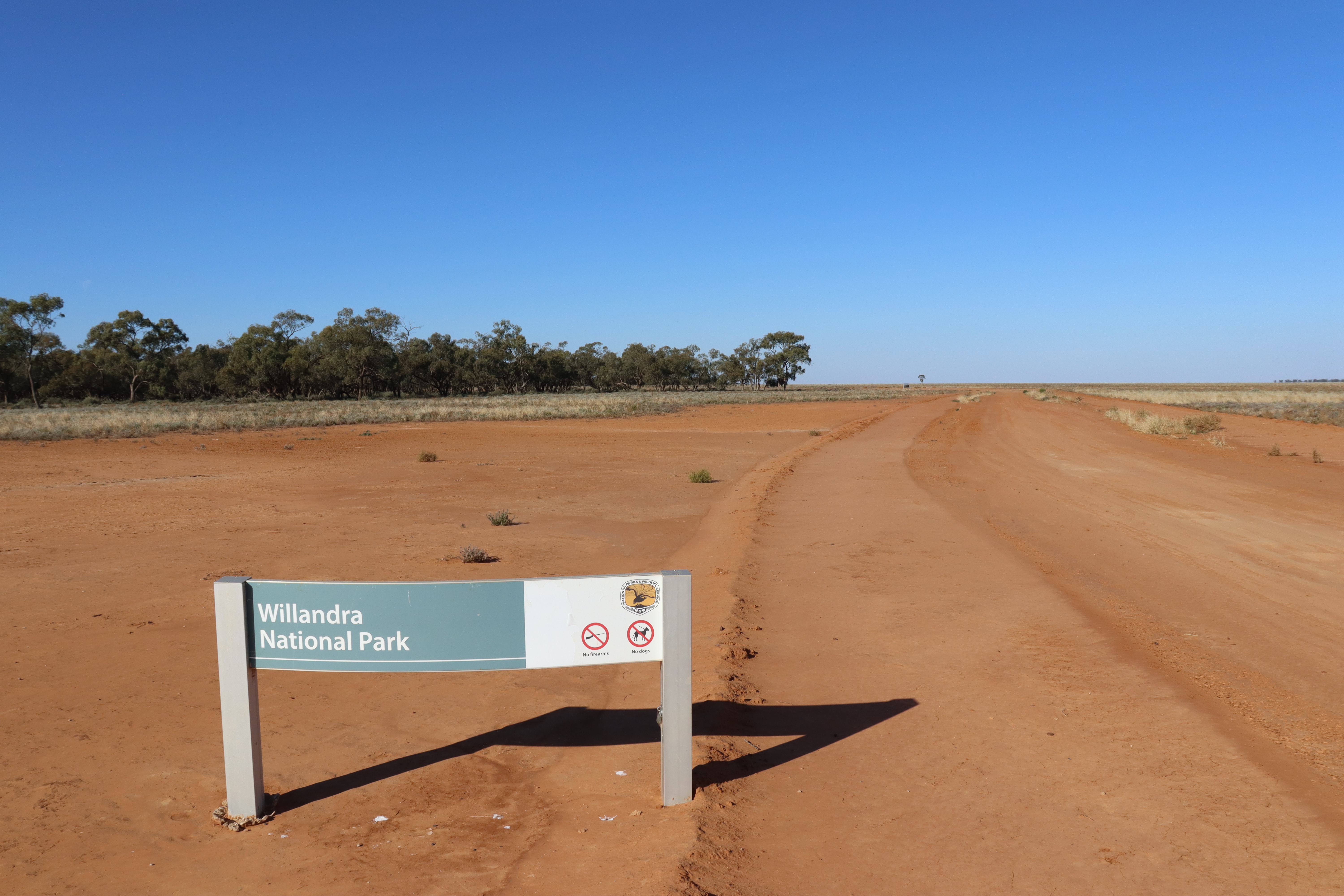
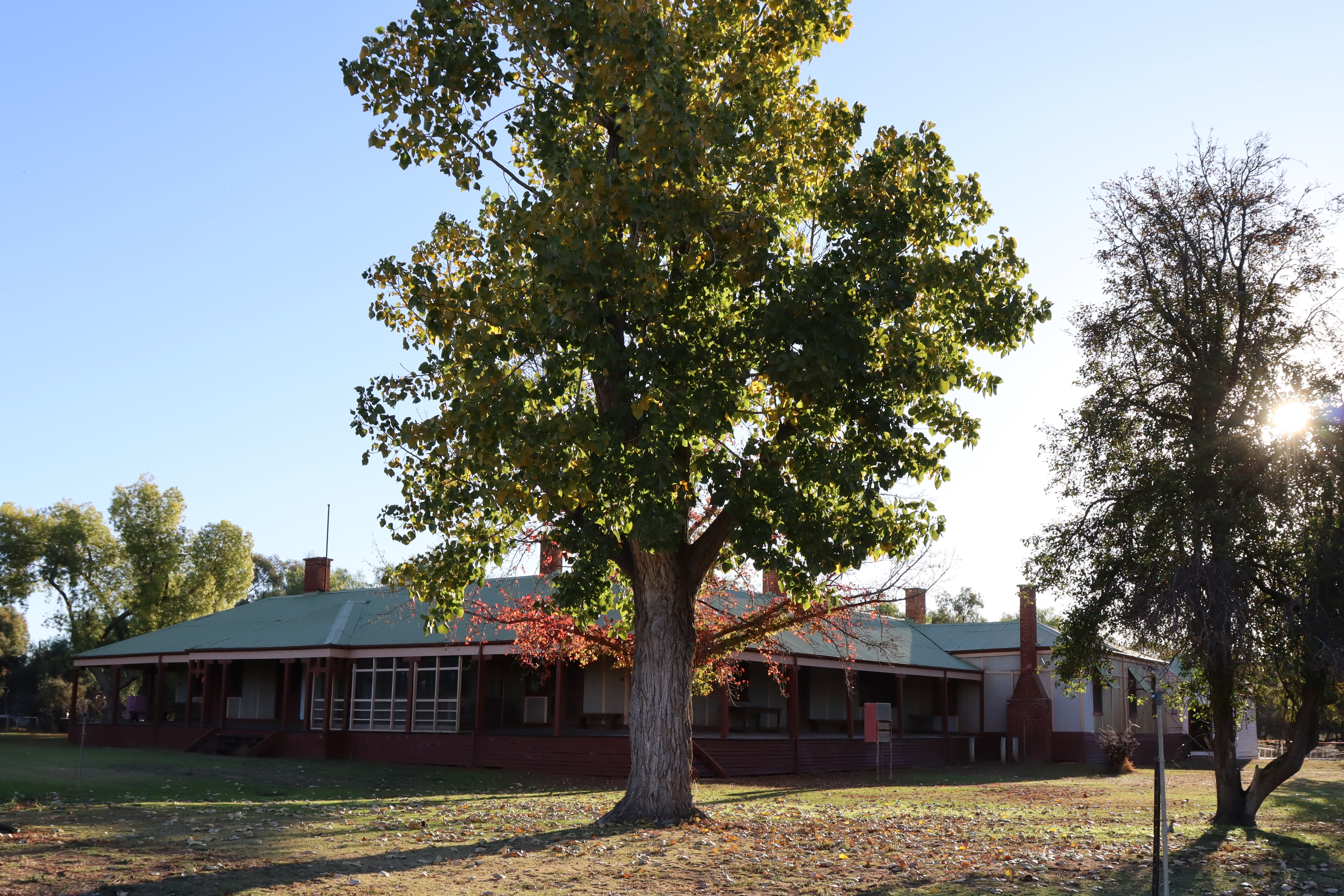
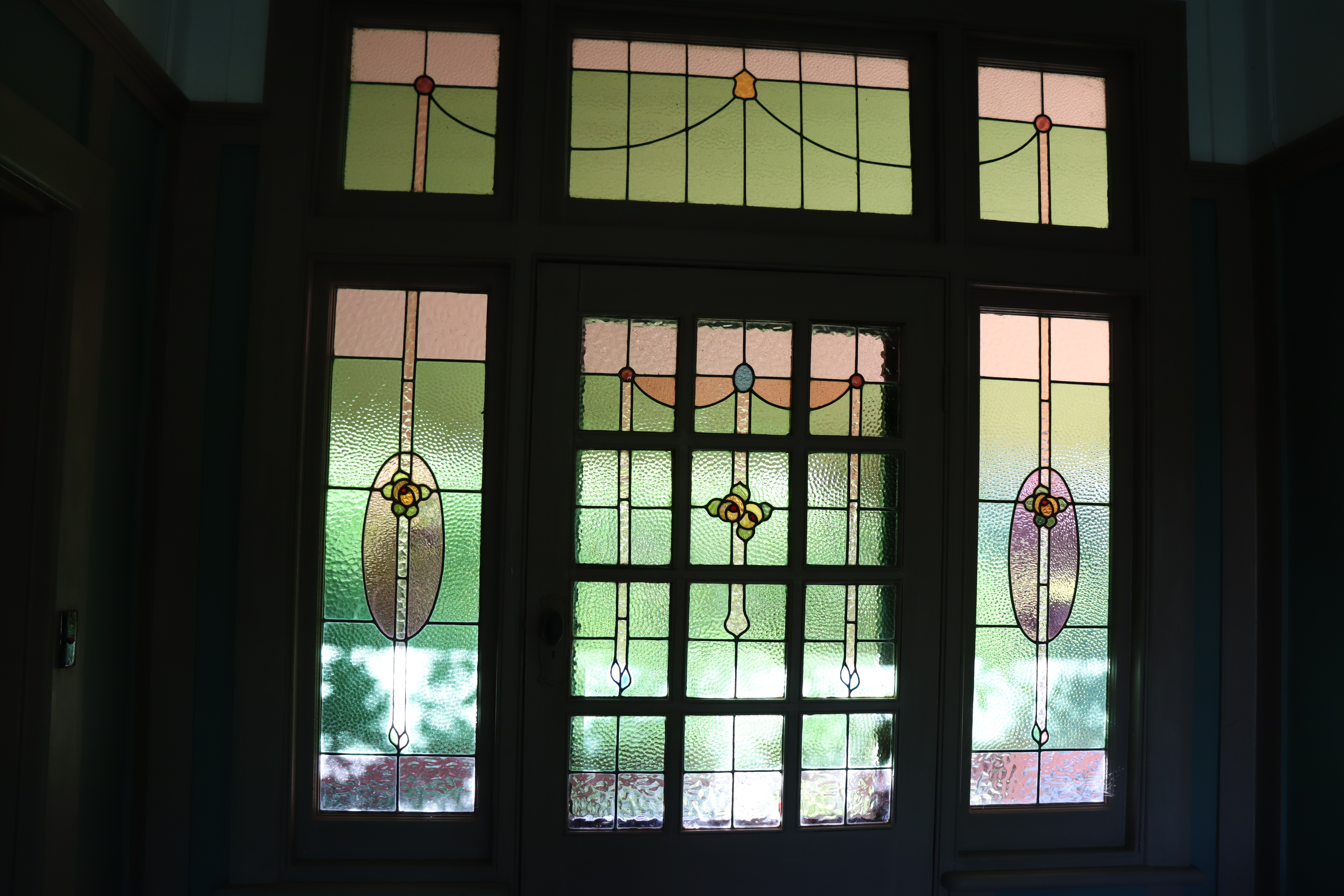
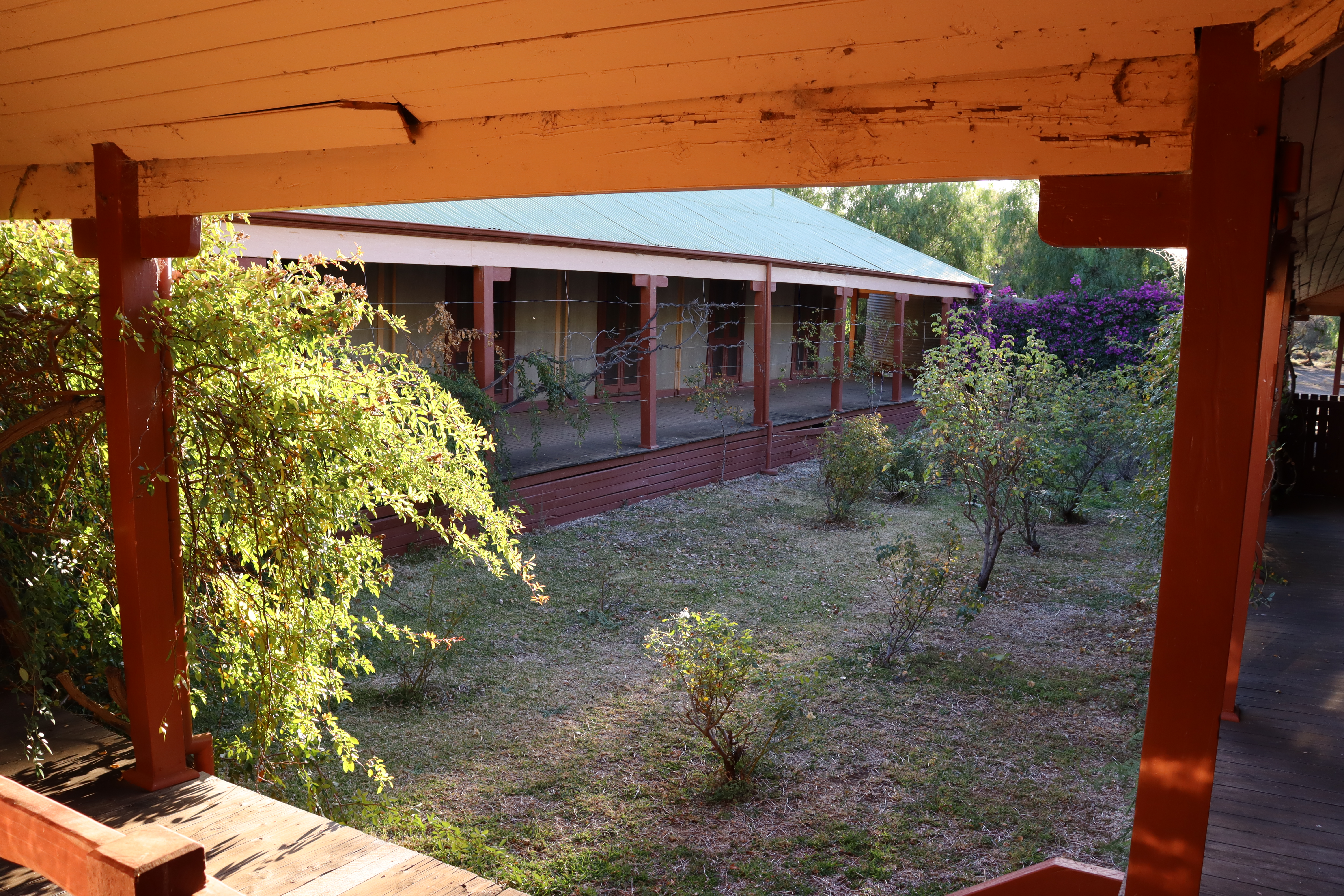
Our next stop, Willandra National Park is a wonderful window into the history of the “Big Willandra” of shearing folklore. First purchased in 1863, Willandra Station was developed as a sheep station, established as a merino stud in 1886, and after enduring recurring bouts of drought and flood, it was finally proclaimed a National Park in the 1970s and cleared of livestock – although the Willandra Bloodlines still produce merino wool today. Restoration work was carried out on all the major buildings, namely the homestead and the shearing precinct and it was great to wander inside and around these buildings getting a glimpse into how the place was run and how their lives were lived back then. A walk around the property took us through the old dump area which we found to be a treasure trove of odd bits and pieces including hundreds of rusted fuel drums, a large boiler engine, a mechanised butter churn, an old truck, and several derelict wagons. We were especially pleased to note that of all these restored buildings, not one was marred by any signs of vandalism or graffiti- hopefully this is a trend that continues!

After having several nights in a row on rustic sites (= non powered), we were alerted by an alarm that our solar power supply was letting us down and our battery storage seemed to be running low, so a quick change of itinerary had us foregoing our plans of going up to Ivanhoe (AGAIN- several times we have planned to go to Ivanhoe but still haven’t managed to get there!) and instead we travelled back to Griffith to get a replacement battery.. Once that was sorted, we continued up the Kidman Way, through Cobar, stopping for a look at the big hole at Fort Bourke Mine Lookout, and then up to Gundabooka National Park, about 50 km south of Bourke, to spend the night at Dry Tank Campground.

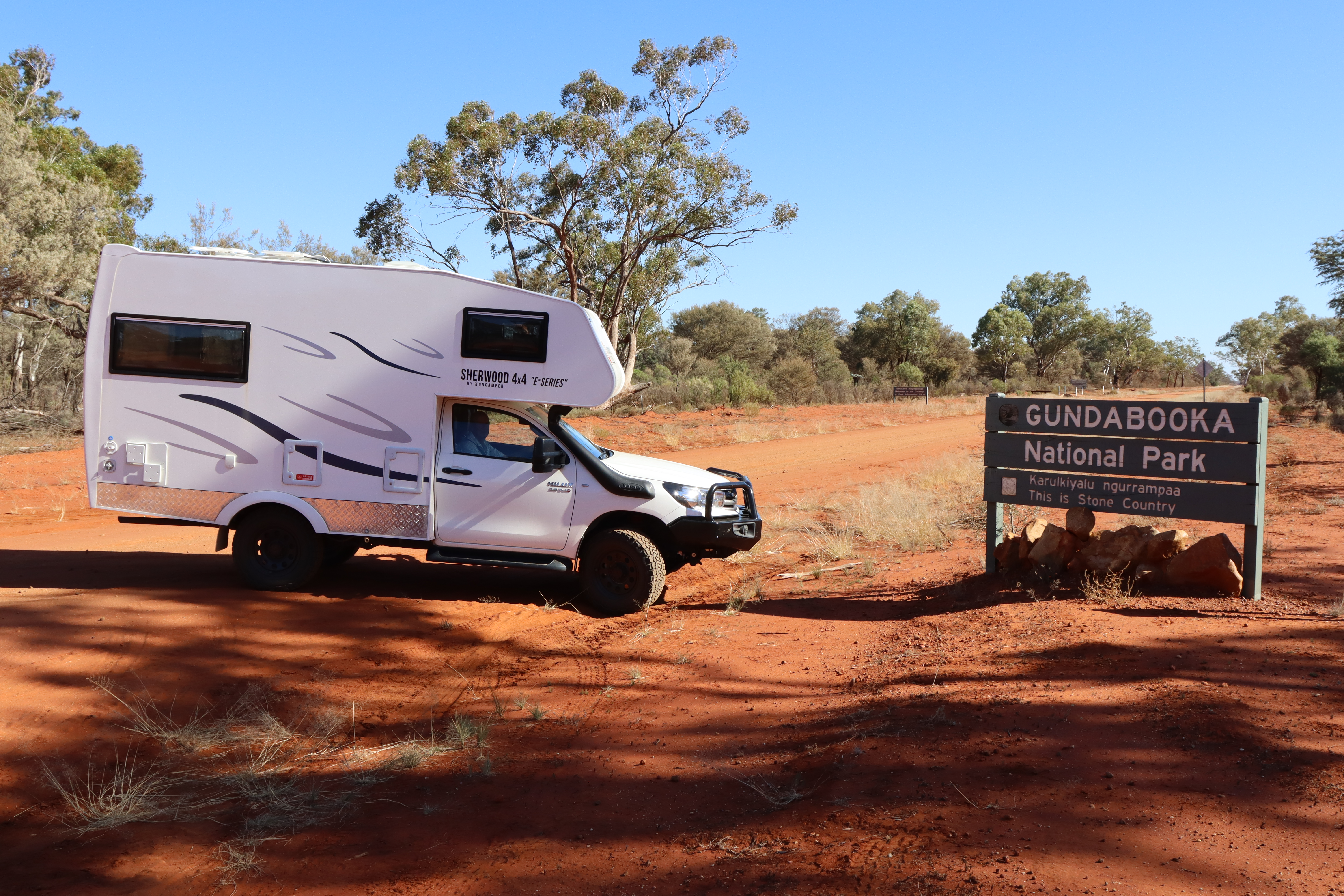


Starting the day with a walk on the Little Mountain walk up to Mt Gunderbooka Lookout, we enjoyed the variety of trees along the way -wilga, mulga, eucalyptus, and one lovely Karrajung tree- and once up to the lookout, the view of the mountain range and the surrounding floodplains was breathtaking. A quick stop in Bourke had us at the Percy Hobson Park with Silo Art honouring (oddly enough!) Percy Hobson, the first Indigenous Australian to win gold at a Commonwealth Games -for high jump at Perth in 1962. From there we turned Southwest, following the Darling River down to Louth. After a look around the sprawling metropolis of Louth – took about 5 minutes – and lunch in the pub, we crossed the Darling, which incidentally had more water in it than we’ve ever seen in it before, and continued down the west side to Dunlop Station, a very welcoming Station-stay on the banks of the river.
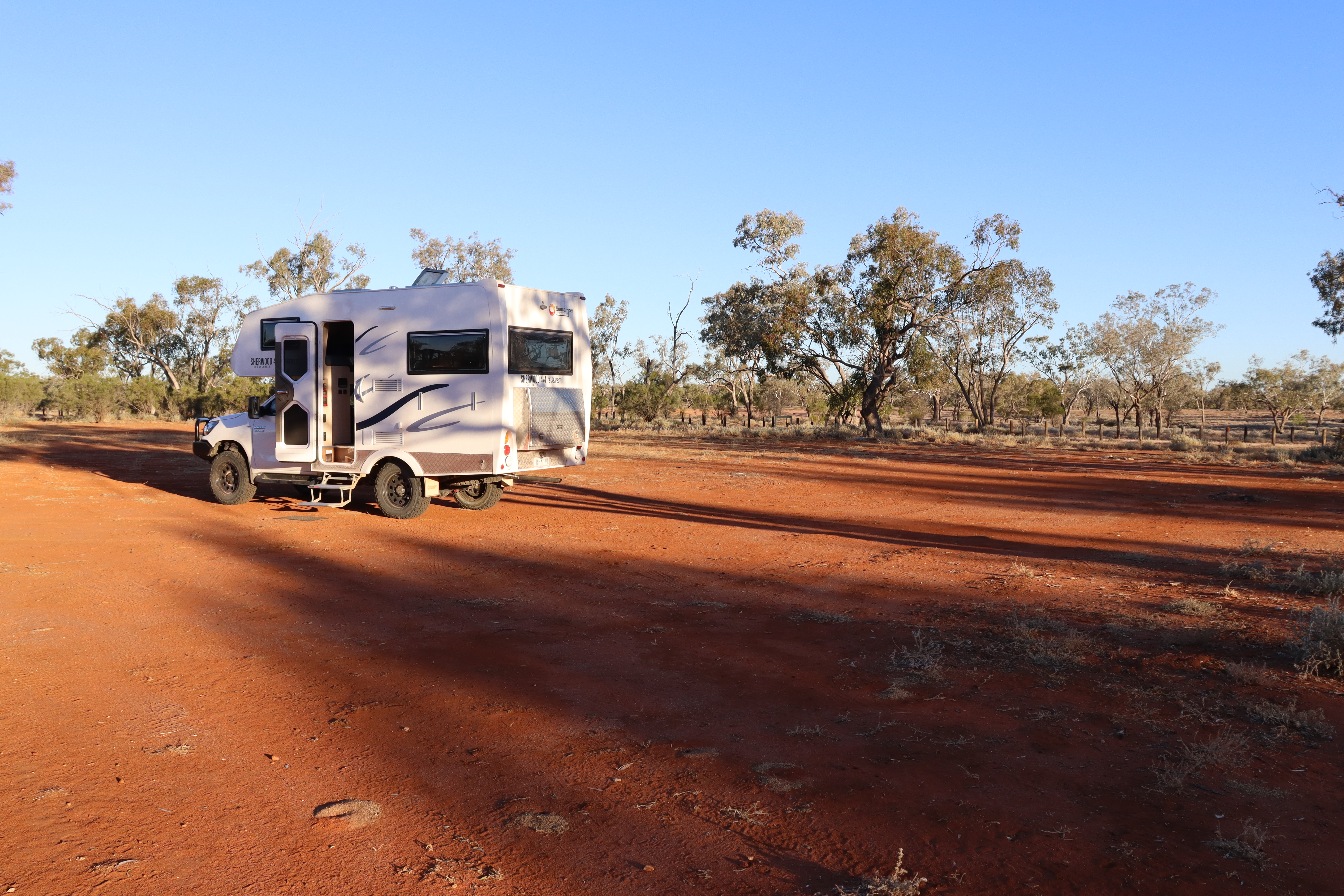


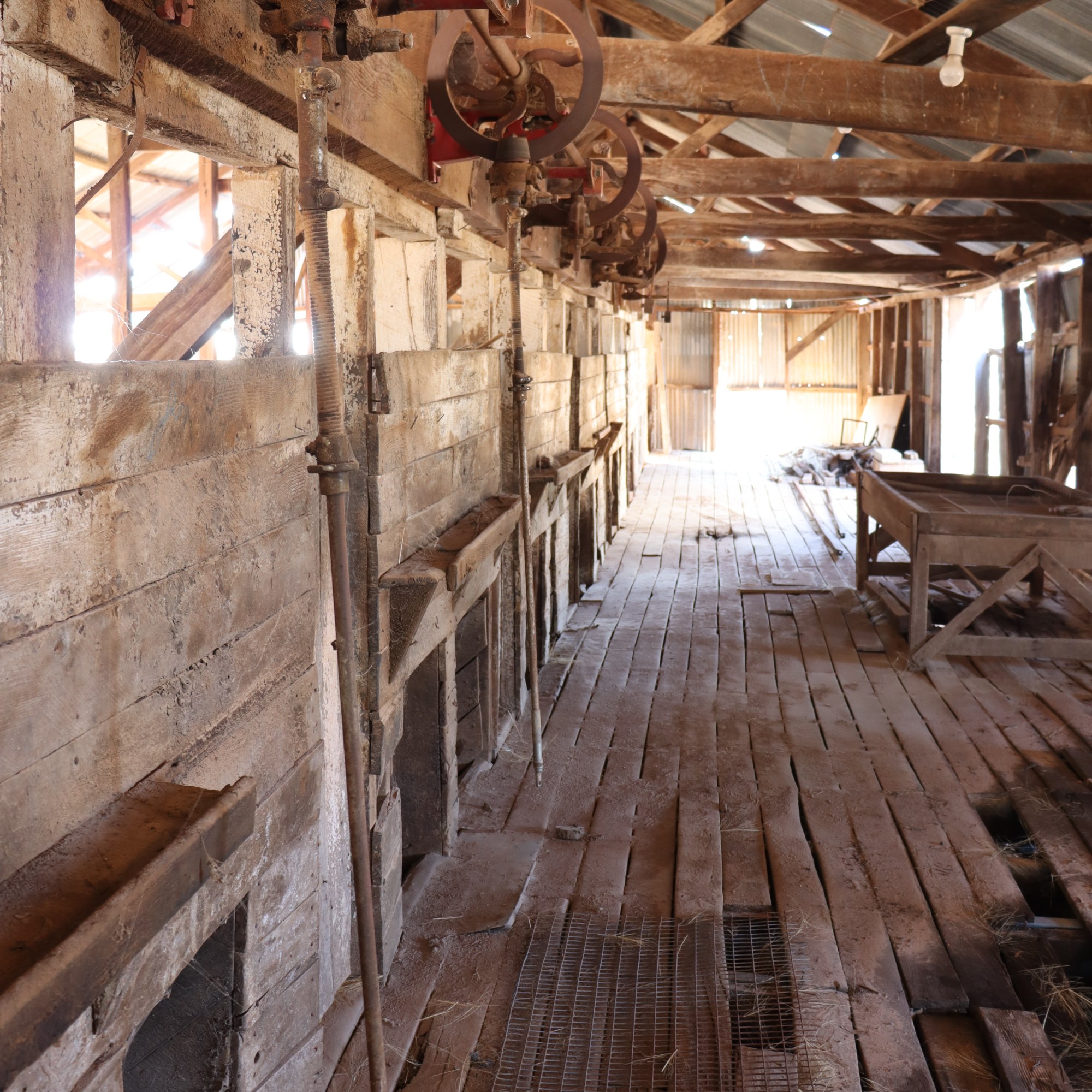
Dunlop Station, in the hands of a private owner rather than National Parks, is a work in progress and similarly to Willandra, features the main homestead and a large shearing shed and shearers’ quarters. Unlike Willandra however, Dunlop has been a labour of love in its restoration by one determined and passionate lady over the last ten years, and to assist in funding her work, she invites campers to enjoy a station-stay, and gives guided tours of the property, which are most informative with a delicious morning tea as a bonus. Having spent the night camping within the shearing precinct, we had already had a good wander through and look at the shearing shed which had not yet received the hand of restoration but is apparently next on the list. Thus, it was in pretty rundown condition with several sections of floorboards either full of gaps or totally missing, and in other parts the floor supports had sunk creating a wavy effect. The original shearing stands remain as a proud reminder of days gone by and the whole woolshed, though decrepit, has a real character and charm.


Back at Roxy, we were treated to our first sights of flocks of Red-tailed black cockatoos, landing in the trees just near us, and later that evening we shared stories and a great fire with four motor bikers who were staying in the shearers’ quarters, and who also recommended we go up to the homestead for the morning tea tomorrow. Keeping in mind that these guys had already done the tour and had the morning tea, and that there seemed to be hardly anyone else camped here at the station, we were flabbergasted on arriving at the homestead next morning, to find at least thirty people lining up to join in. Bearing in mind that Dunlop Station is pretty much out in the middle of nowhere and well over a hundred kilometres from a town of any note, we couldn’t help but wonder where all these people came from?? So we all enjoyed a fabulous morning tea with homemade sponges and cakes (good for our brekkie!) before Kim, the owner, regaled us with stories of the history of the station, and how she came to be the current owner. Very interesting stories.


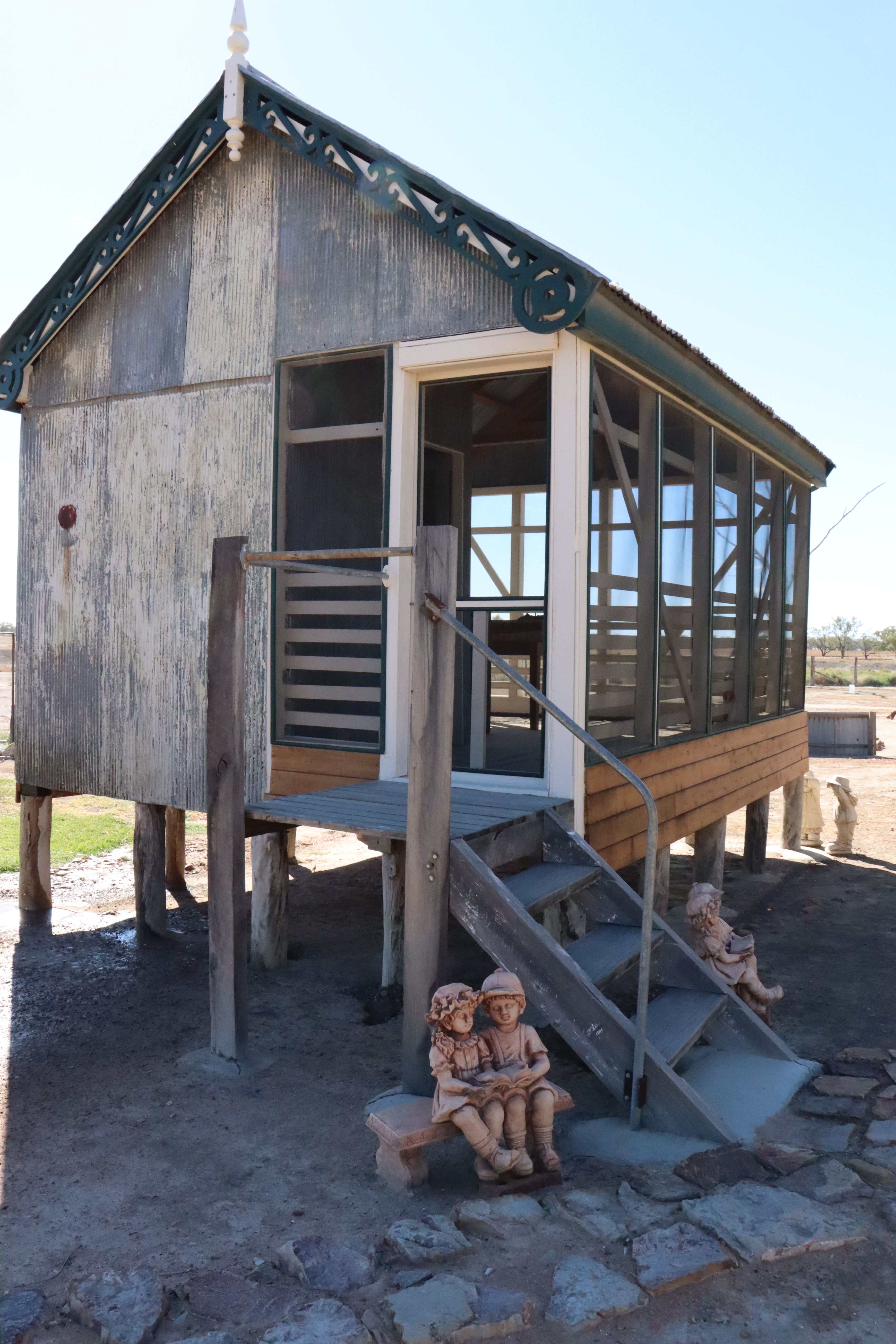
The original homestead was built in 1880s by a single man, so heaven only knows why he needed nine bedrooms (including servants’ rooms), but he kept adding neighbouring properties until he had over a million acres. After he had sold it in 1912 and died in 1916, by 1935 the property had been reduced to around 80 000 acres. Its 40-stand shearing shed was the first to use machinery shears to shear up to 400 000 sheep a year. By the time Kim bought it, the homestead had been largely destroyed by fire and rebuilt in 1932 to its original glory, but her predecessors had gone broke and allowed the entire property to run down till the bank sold off 78 000 acres to recoup the debt. So Kim bought the remaining 2000 acres and started working and over the last ten years has restored the homestead, and the station store building. As I said a real labour of love, and we wished her well for the future of the place.
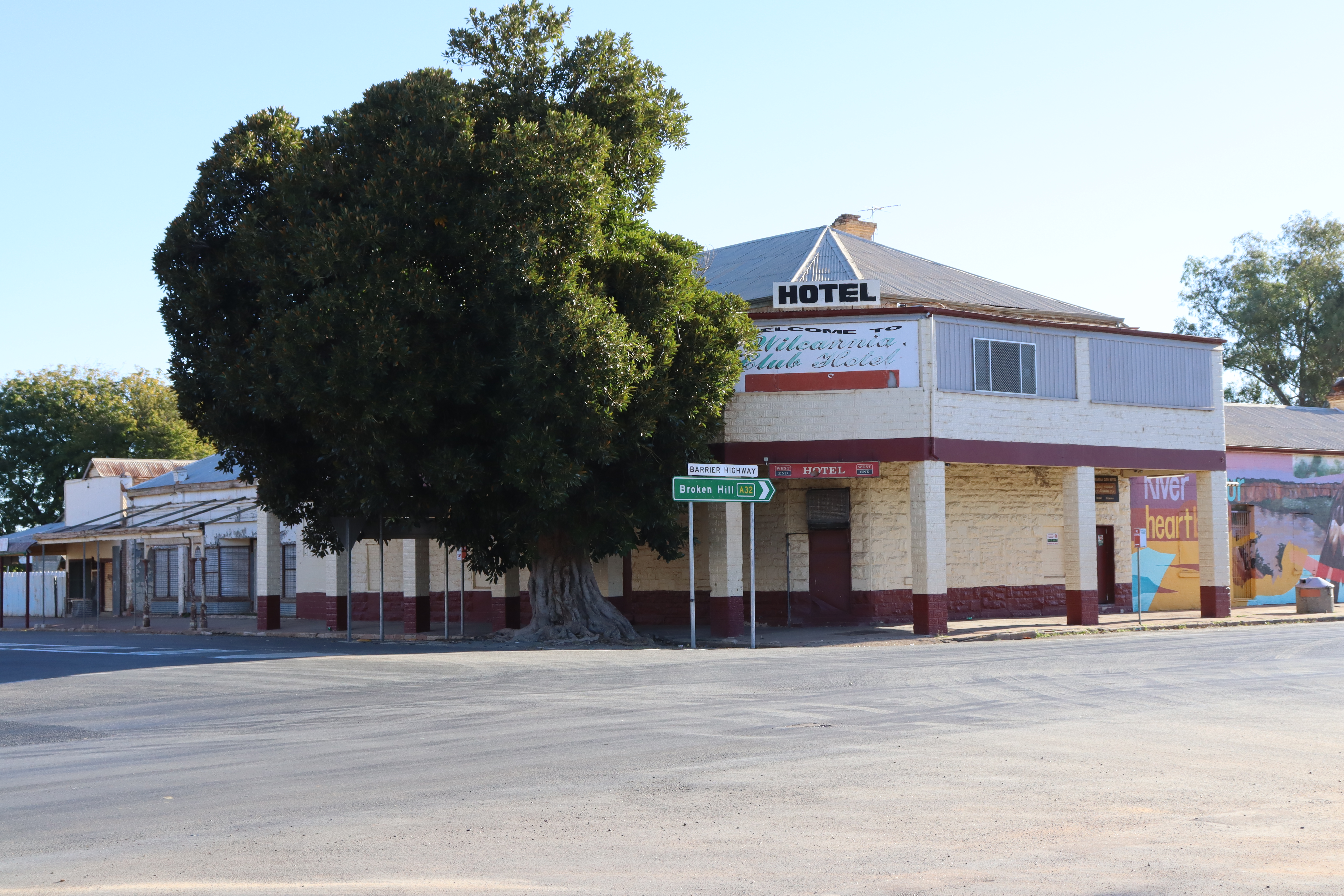
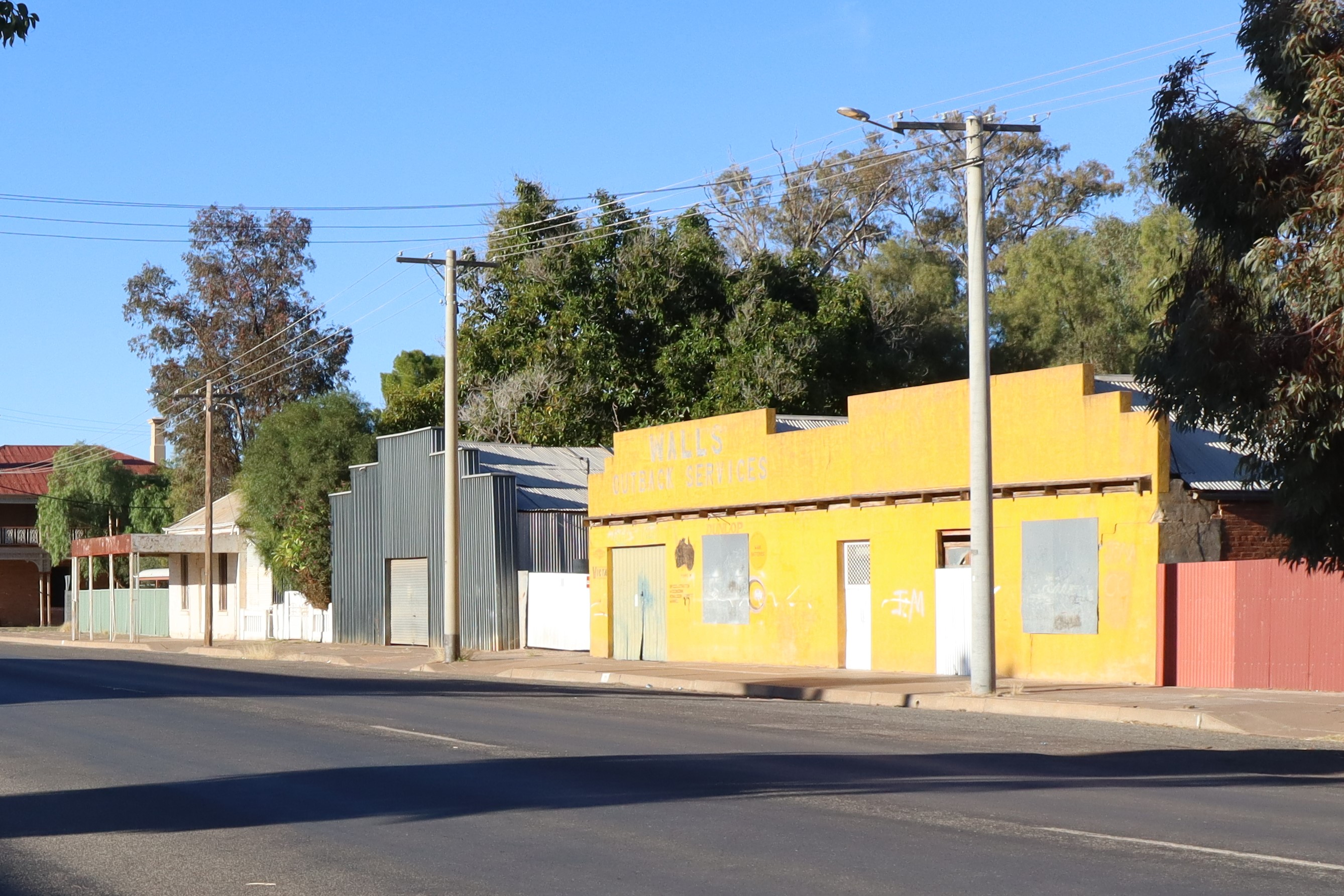
Following the Darling further south-west took us to Tilpa, home of the only Boer War memorial to commemorate Harry Breaker Morant, and Australia’s shortest Heritage Trail consisting of just two signs, one either side of the main road. Further on in Wilcannia, we had a couple of nights to restock and do some washing. Well, why wouldn’t we? The caravan park washing machines were right in our price range: FREE! Wilcannia is a town that has had a bit of a bad name in the past, but locals have worked really hard to clean it up and improve its image and we found it to be quite a nice little town with lots of lovely historical buildings. Worth a look!
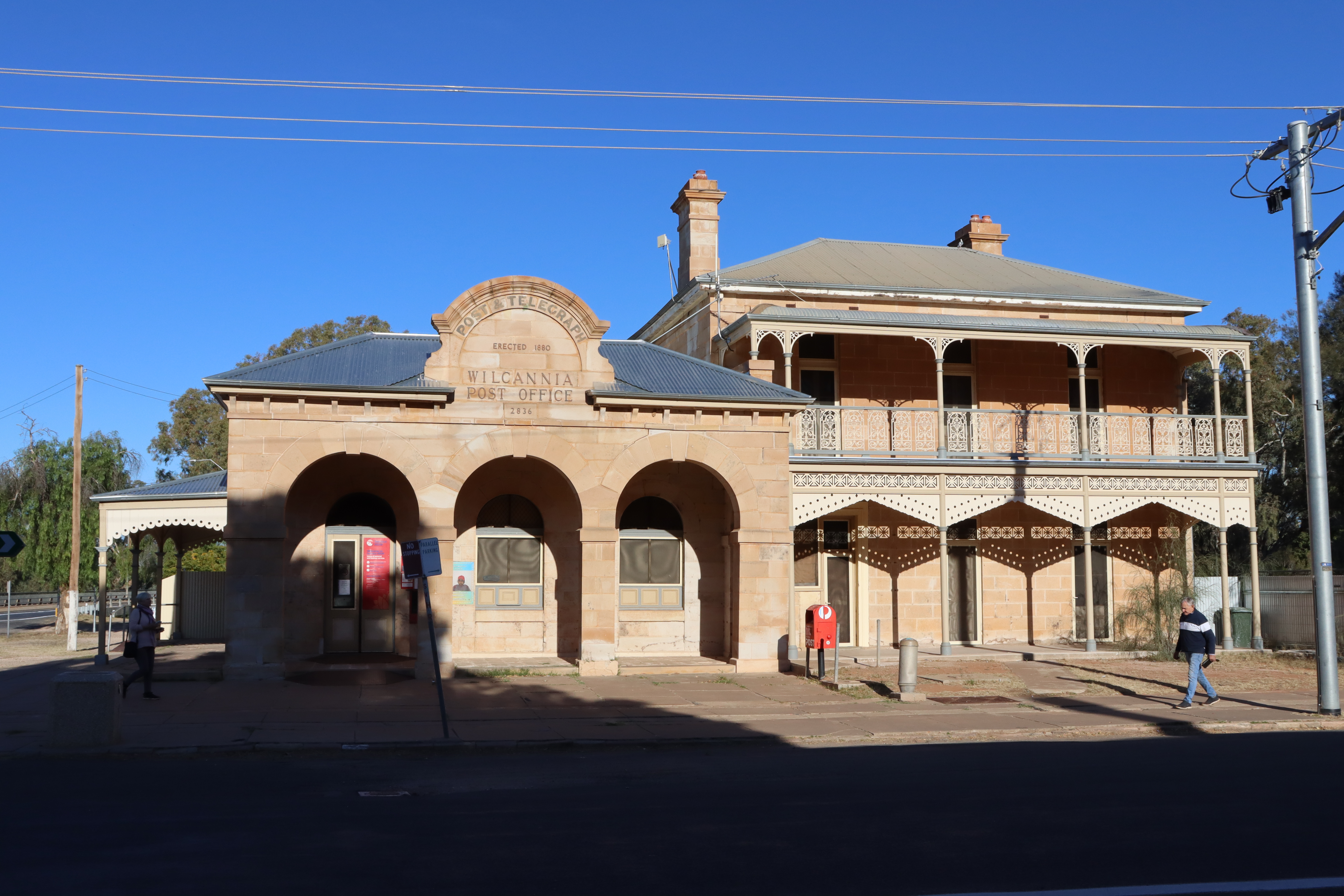



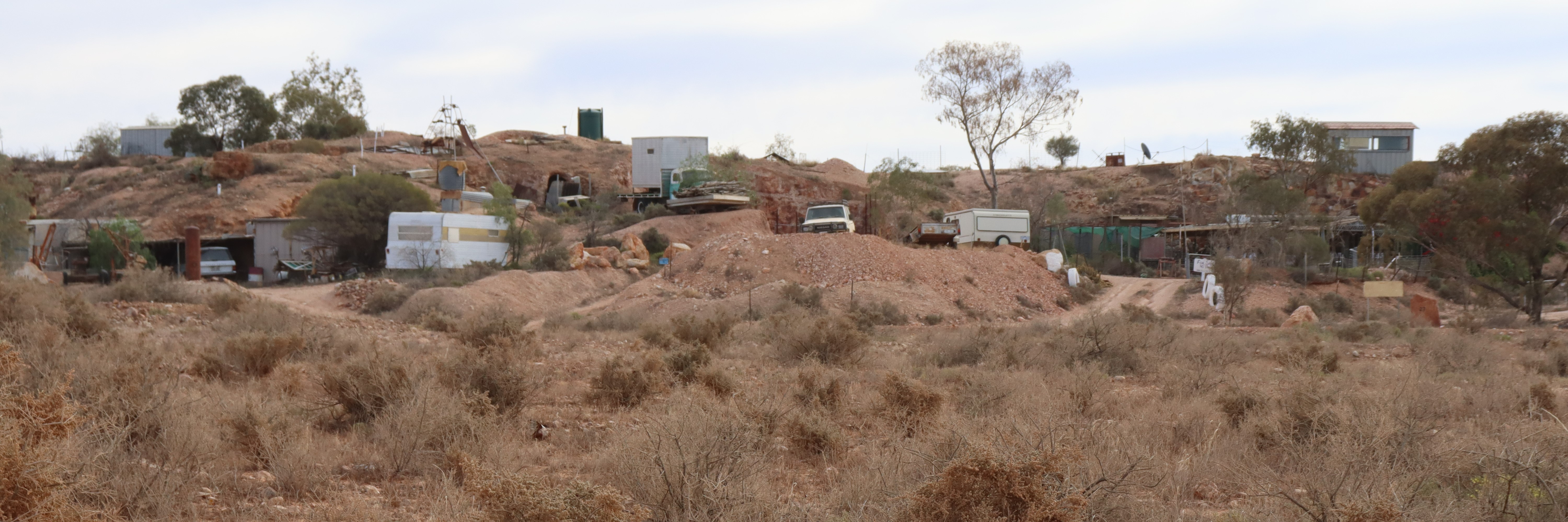
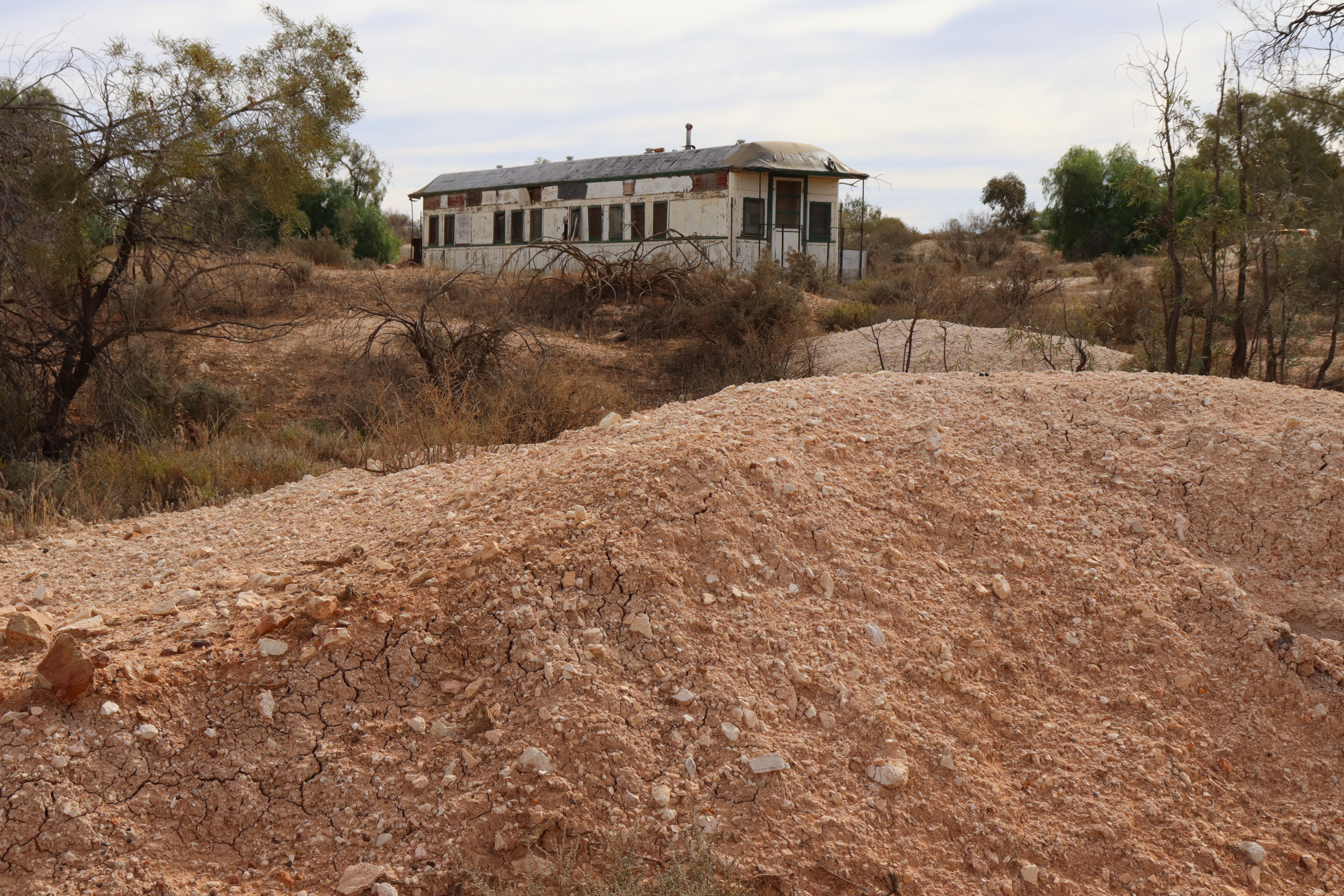
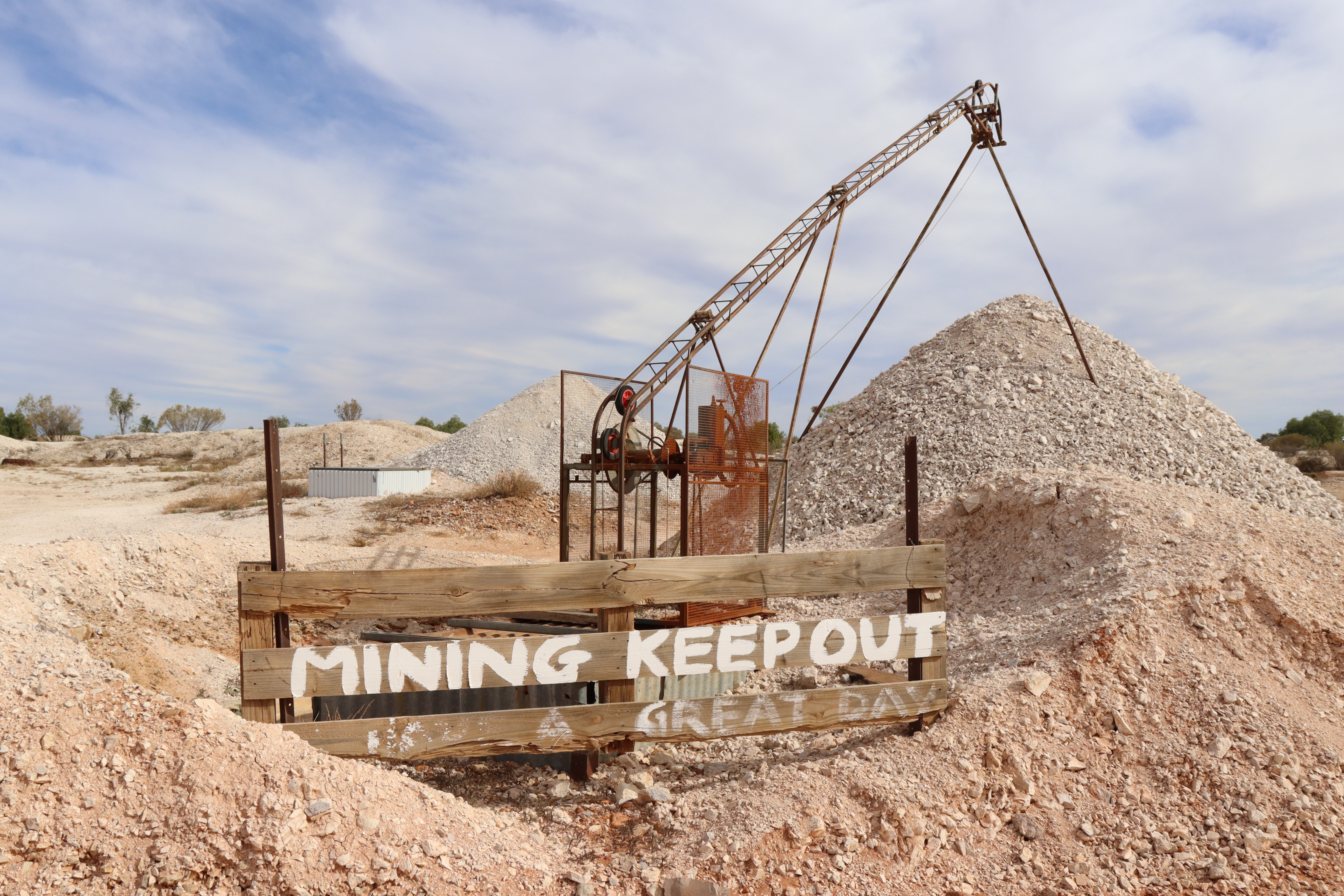
Roughly a hundred kilometres north of Wilcannia, White Cliffs is an opal mining town where, like the more well-known Coober Pedy, many buildings are partially or fully underground, and many of the locals spend much of their time underground hoping to find that elusive opal that will make them rich and set them up for life – which of course generally won’t happen! After checking into the caravan park, we set off to walk the town Heritage Trail – this one has more than two signs and is about seven kilometres, taking us all around the opal fields which surround the town. The fields are a real eye-opener with their thousands of holes and mounds where innumerable claims have been dug, but not fenced so you really must watch your step lest you fall in an open hole! Amongst all these dugouts is the most assorted collection of old and rusted machinery, trucks and cars, most of which, by all appearances, are probably in non-working condition. With 28 years having passed since we last visited White Cliffs, I think I can honestly say that NOTHING has changed in that time – well, not much anyway, except perhaps that now there are MORE mounds and MORE holes to fall in!




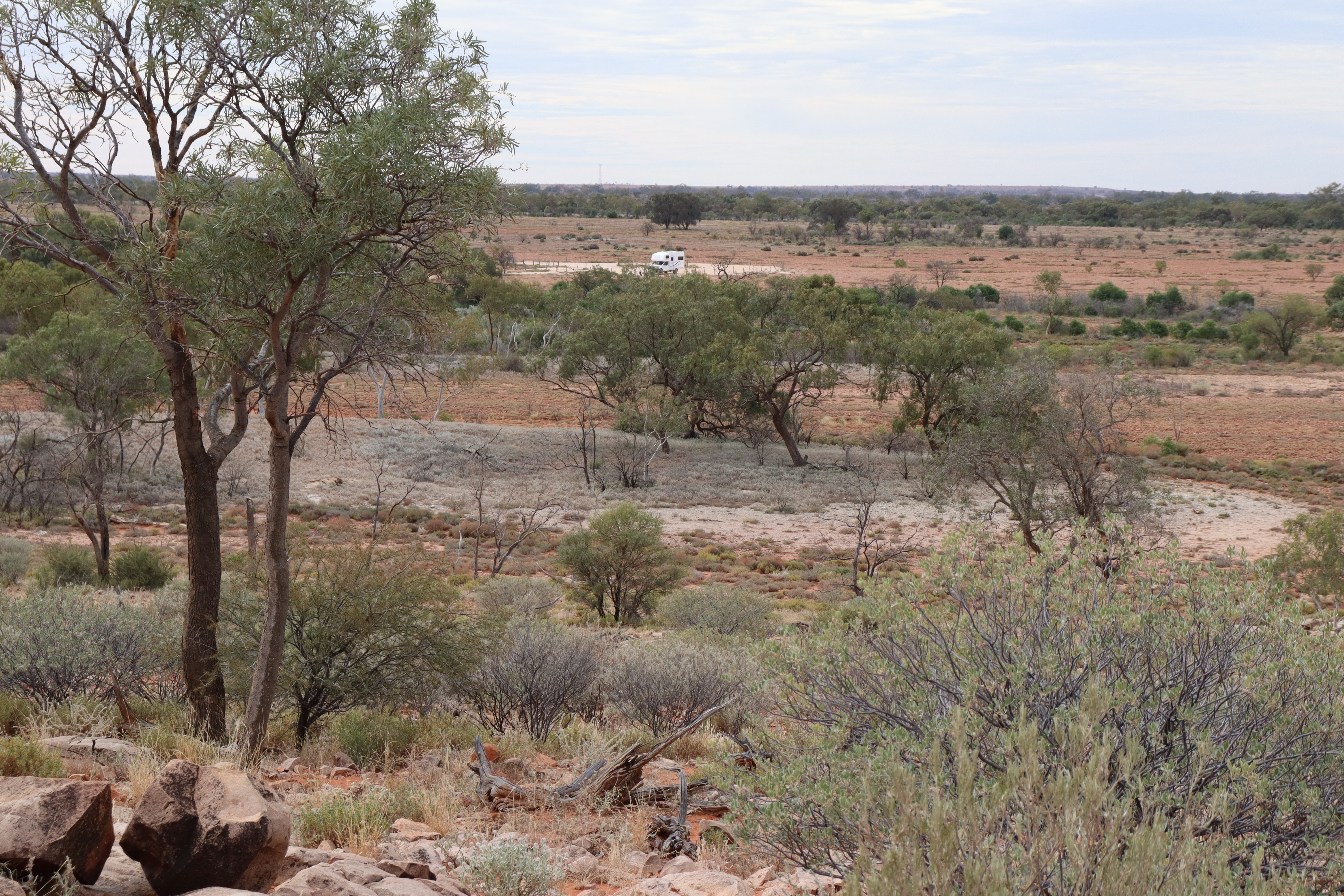
Travelling on a ‘dry-weather only’ dirt road from White Cliffs towards Wanaaring, keeping an eye on the ominous grey clouds that were gathering, we called in at Peery Lake (day use area) in Paroo Darling National Park. The lake is not a permanent feature of the landscape here, but once it fills, it can remain for three years, becoming a haven for over 50 000 birds. On this day it wasn’t full and only a few emus wandered along the lakeshore in the far distance. It was a large expanse of water nevertheless and from our distant viewpoint, it seemed more of a mirage than a lake.


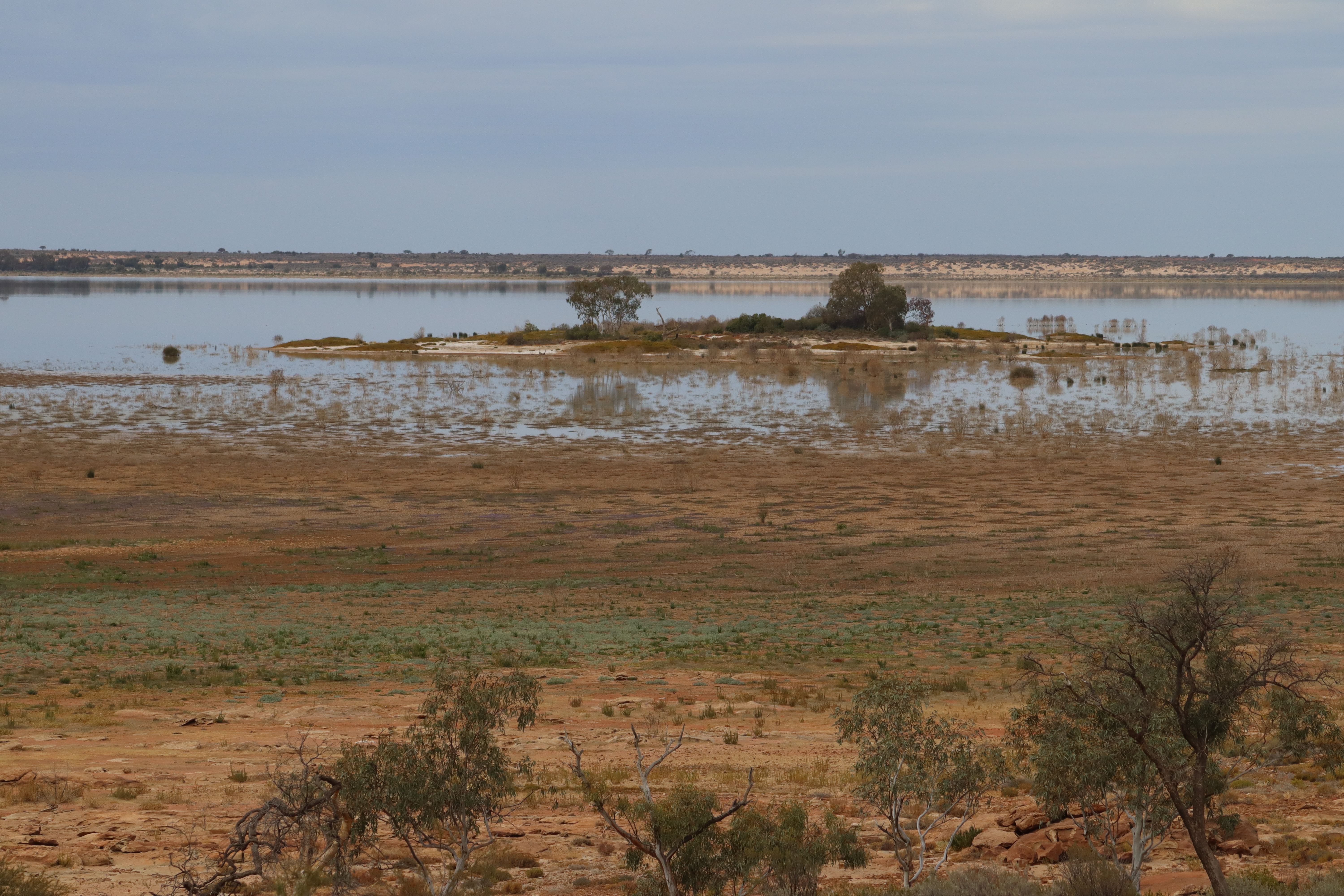
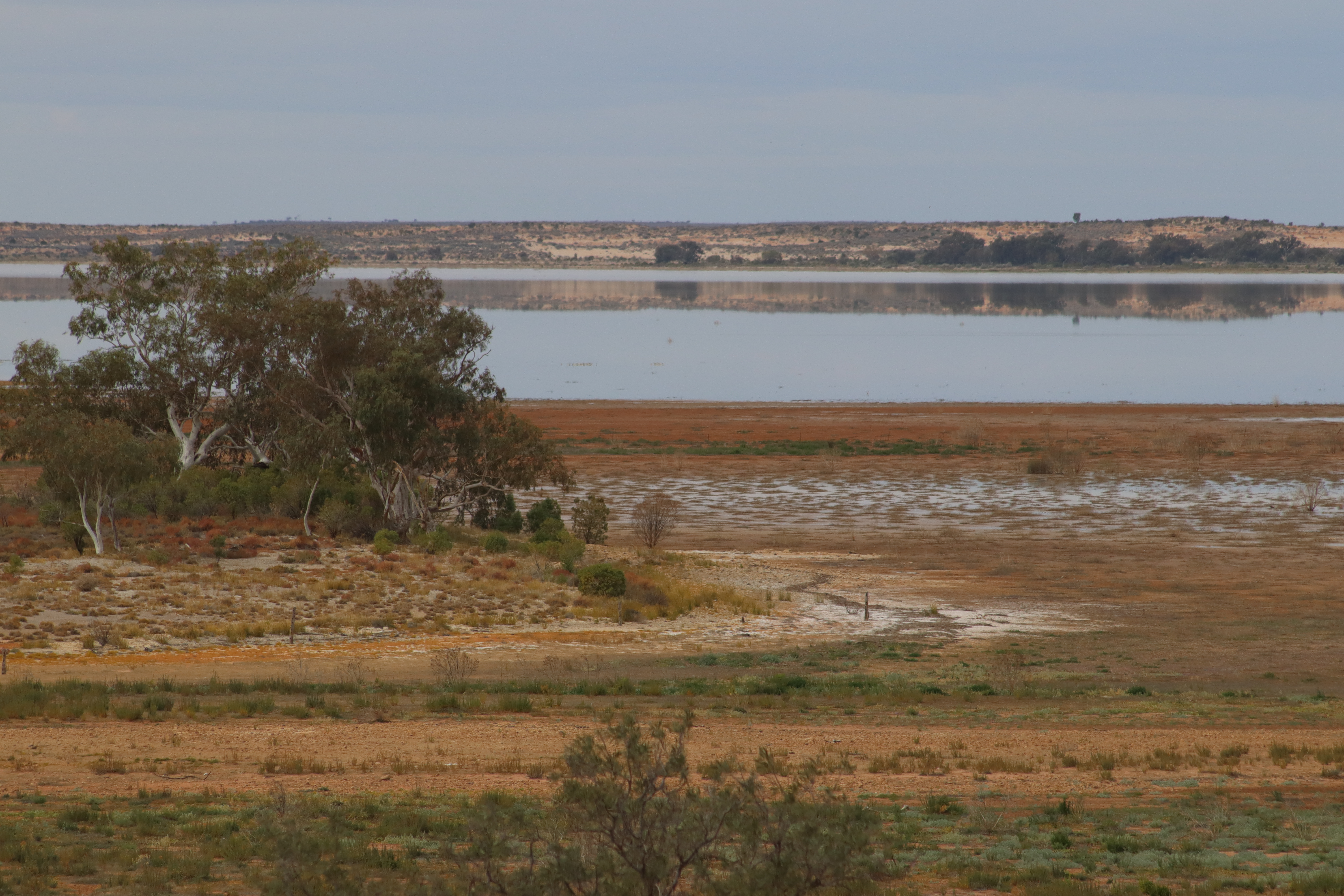

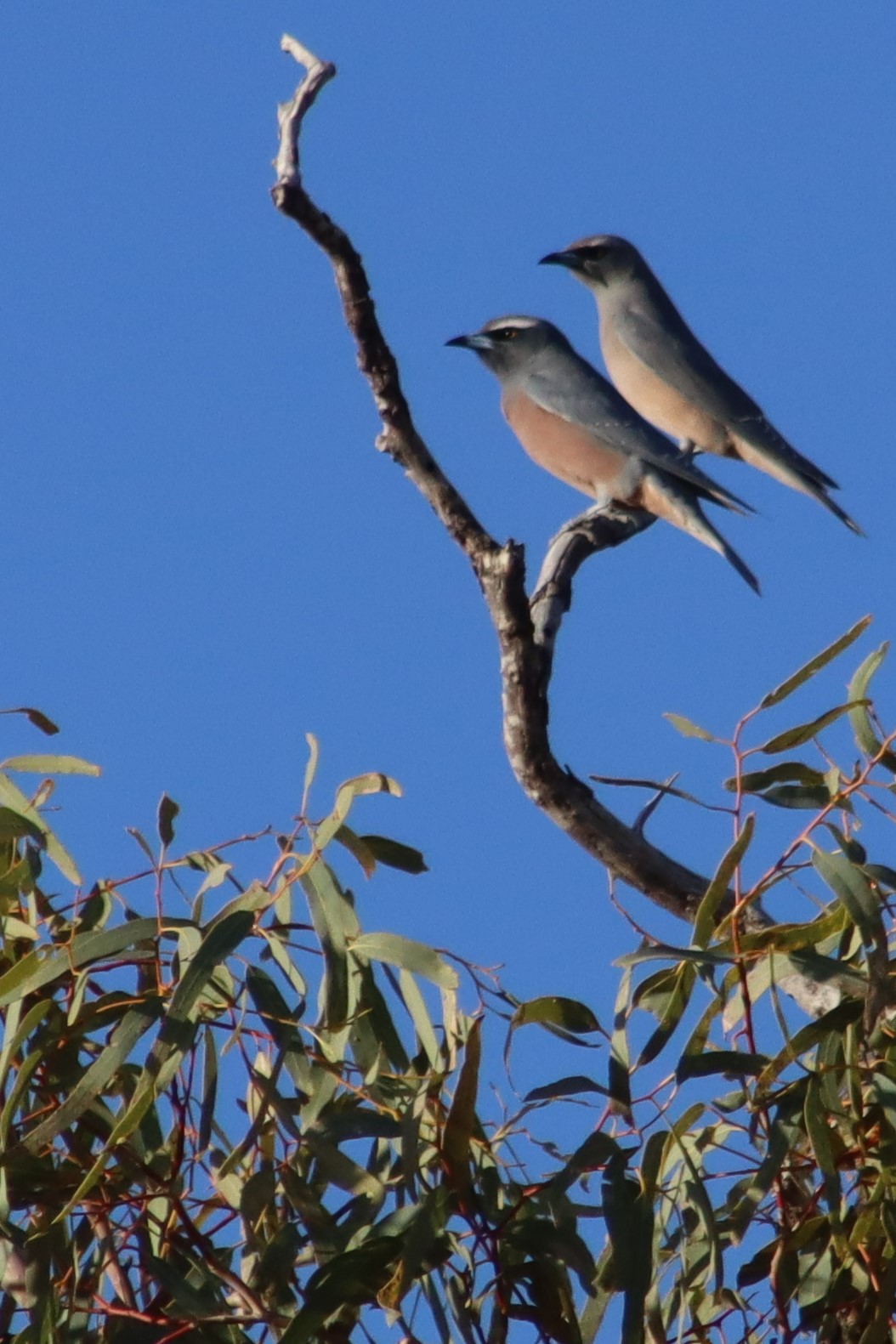
Closer to Wanaaring, we drove off the road again, into Nocoleche Nature Reserve to check out the King Charlie Waterhole. What a beautiful spot! Here the Paroo River opens out to a wide, calm waterhole which perfectly reflected the surrounding redgums and eucalypts on its tranquil surface. It seemed to attract lots of birds too, going by the noise, and we were able to catch sight of a few zebra finches, some sacred kingfishers, lots of white browed woodswallows and a single budgerigar.



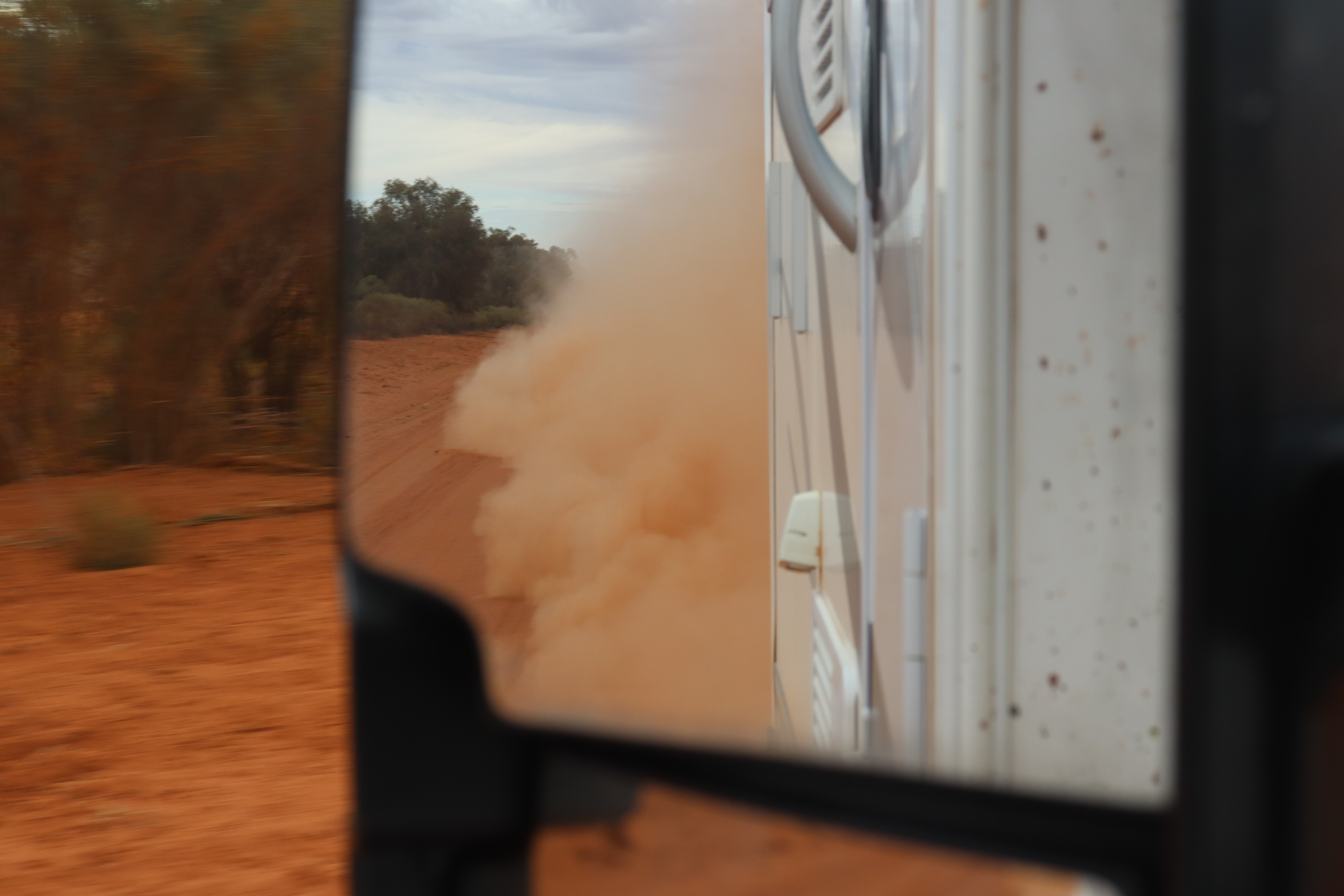
We were now getting closer to the Queensland border, aiming to cross at Hungerford, so from Wanaaring, not trusting Google maps route directions to be accurate (which they often are NOT when travelling these outback roads), we took the Glen Hope Road which, according to signs from Wanaaring and by our trusty travel bible – our Hema map book – was the main road to take. After passing through several cattle/sheep stations AND at least 12 gates, ALL of which I had to get out to open and close, we crossed the Paroo River and about 5 kilometres further on came to a large crossroad. From this point I had estimated it was about 30 kilometres to Hungerford, so after about 45, we decided we were going the wrong way, so did a Uey and headed back to that crossroad. Only when we got to it did we see the signpost, now facing us, that pointed north to Hungerford and South to Wanaaring. So it appeared that in this case we could have trusted the directions given by Google maps as a more direct route, and would have saved us a lot of time – and a lot of gate-opening!

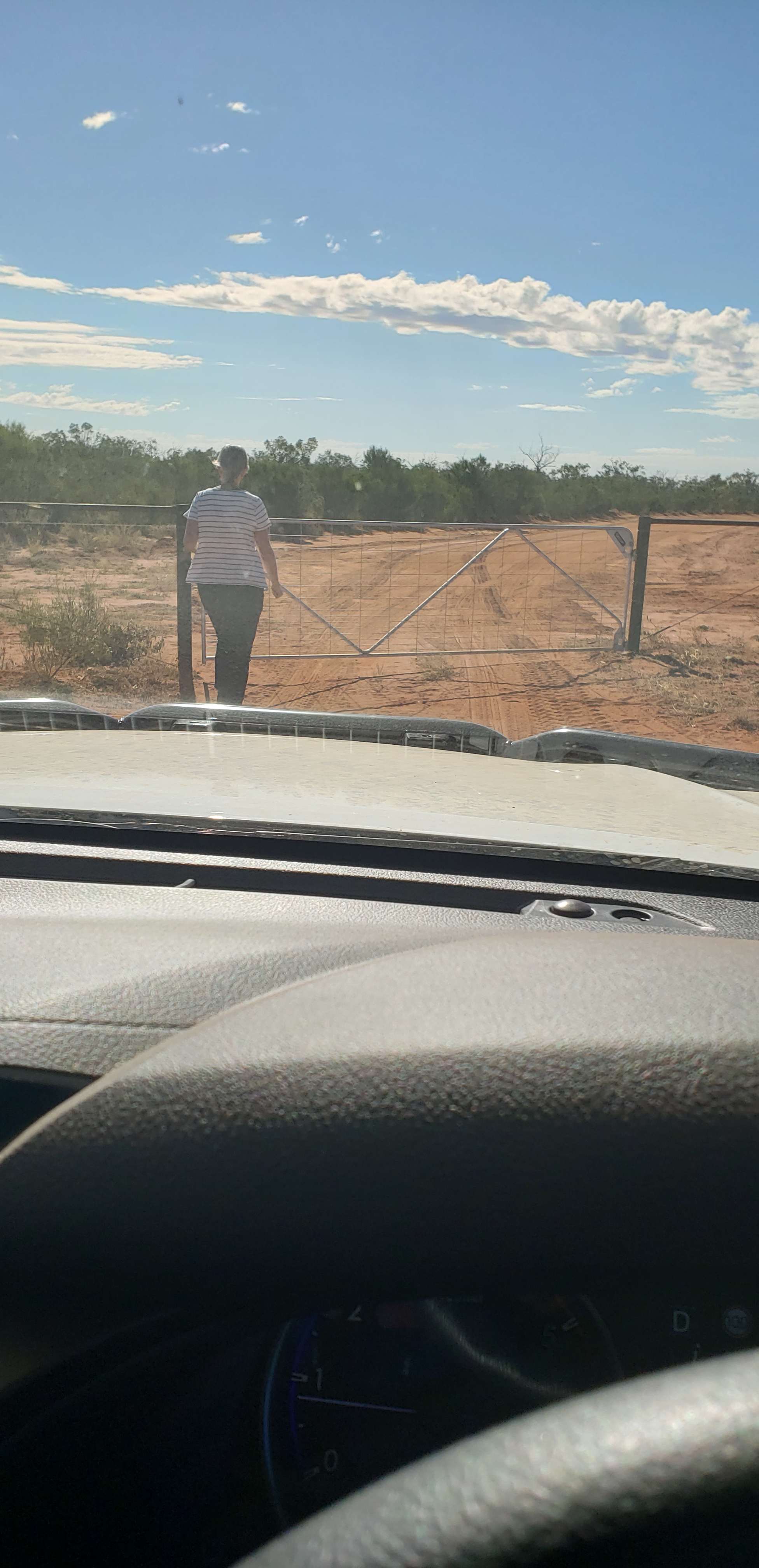

And so, we crossed the border (yep – another gate!) into the township of Hungerford and Queensland.
WTF?? OR Ha Ha!!
- Coming out of Willandra NP, along a wide dirt road we passed a car parked right on the road and its driver appeared to be asleep but didn’t stir as we drove past. Feeling a bit concerned, we turned back to make sure he was ok, and despite us pulling right alongside his open window, he still didn’t stir until Gary called out to him. He replied that he was ok, just having a snooze. So we drove off again only to have him overtake us within minutes. An hour or so later, after we had had a stop for lunch, as we were heading towards Griffith, there on the side of the road was the SAME car with the SAME man, fast asleep AGAIN!! No, we didn’t stop this time!
- Is it Gund-A-booka as in the National Park or Gund-ER-booka as in the mountain range here??
- In Louth, an old woman was sitting near her gate as if waiting for the mail. She was there when we first got to Louth, still there after we looked around the town, and STILL there after we’d had a counter lunch at the pub. Not so unusual – Except she was sitting in EXACTLY the same position the WHOLE time, leading us to wonder if she was even alive!
- Wilcannia Golf Club – nice quiet club for a nice quiet drink, but on the first night there was an hour wait for dinner and the next night, the kitchen was closed! We weren’t destined to get a meal there!
- Also Wilcannia Golf Club – the barmaid overheard us talking to a couple of others about their intentions to head up to Burketown and we happened to mention Gregory and how our daughter had worked there. So she asked when Blair had been there and turns out she is the mother of a friend of ours -and Blair’s- who had been the cook in the pub at Gregory at the same time and who has also cooked us many a burger there over the years! Small world indeed!
- Lake Peery in Paroo Darling NP – signs encourage you to stop for a picnic or BBQ. Unfortunately, the BBQ was out of gas!
- At Lake Peery, from the lookout we could see a car driving into the day use area but were astounded to see it just turn around and drive right back out again! The picnic area is 3 km off the road, and over 50 km from the nearest town, so WHY would you just drive in and out again??
 Tabers Travels