TABERSTRAVELS IN THE LAND OF THE LONG WHITE CLOUD

NORTH ISLAND

(Click on images to enlarge.)

Having talked about going overseas for several years, and with covid interrupting any thoughts of doing that in a hurry, New Zealand as our nearest neighbour, but still overseas, was an obvious choice. Then when friends from Canada were going there and (in their words), we “couldn’t be so close without a catch up,” we decided that we could kill two birds , so to speak.

So, on arriving at Auckland and  acquiring our prebooked hire car, we set off and, thanks to Google maps, found our way to our apartment which we were to share for the first four nights with our Canadian friends. Their flight was due later in the day and they arrived in time for the dinner that Gary had prepared for the four of us on our first night together.

So for the next three days we did a few touristy things around Auckland .

First up,  the Auckland Sky Tower, the telecommunications and observation tower standing within the CBD, and at 328m (1076 feet) tall was the tallest free-standing tower in the southern hemisphere up till 2022. From the observation deck you get great 360° views over the city and out over the islands beyond the harbour. For daredevils, the tower also features the 192m (630foot) cable-guided Sky Jump or the walk around the exterior of the observation deck. Nope! Nope! Nope! Nope  Nope!

Waiheke island is a very popular destination for visitors to Auckland, so taking the passenger ferry across and then a hop-on-hop-off bus tour seemed a good option. The bus takes you all around the island with stops at most of the wineries it’s famous for. Somehow, we didn’t get to even ONE winery, but we DID get to The Heke brewery and whisky distillery, where we tasted a few of their local brews,  and the Allpress Olive Grove for tastings of their locally grown/produced olives and oils. From there we jumped on the next bus coming through and got back to the town centre, and as the bus is driving away, Gary realizes he’s left his phone in the seat pocket. Oh shit!!!! And it turns out it wasn’t one of the hop on-off buses either! In the end, after a couple of worrying hours, we headed back to the ferry terminal hoping someone may have handed it in, but no luck there. However, by  a huge stroke of luck, the first driver we’d had for the day (“If you give me a good rating on TripAdvisor, my name is Tony, if you rate me bad, my name is John!”) was there and about to head out again, and when I asked him if he’d heard anything or knew how we could check the bus, he offered to drive us back to the bus depot where he was sure the bus holding Gary’s phone prisoner would be by now. What a relief – the phone was still in the seat pocket where Gary had left it! So then the bus driver (what a great, helpful guy – definitely call him Tony!) radios  to the local bus service to come pick us up from there as he still has a tour run to do. So in the end, we not only got the phone back, but a free ride on the local bus taking us on a route the tour bus didn’t go! What a day!!

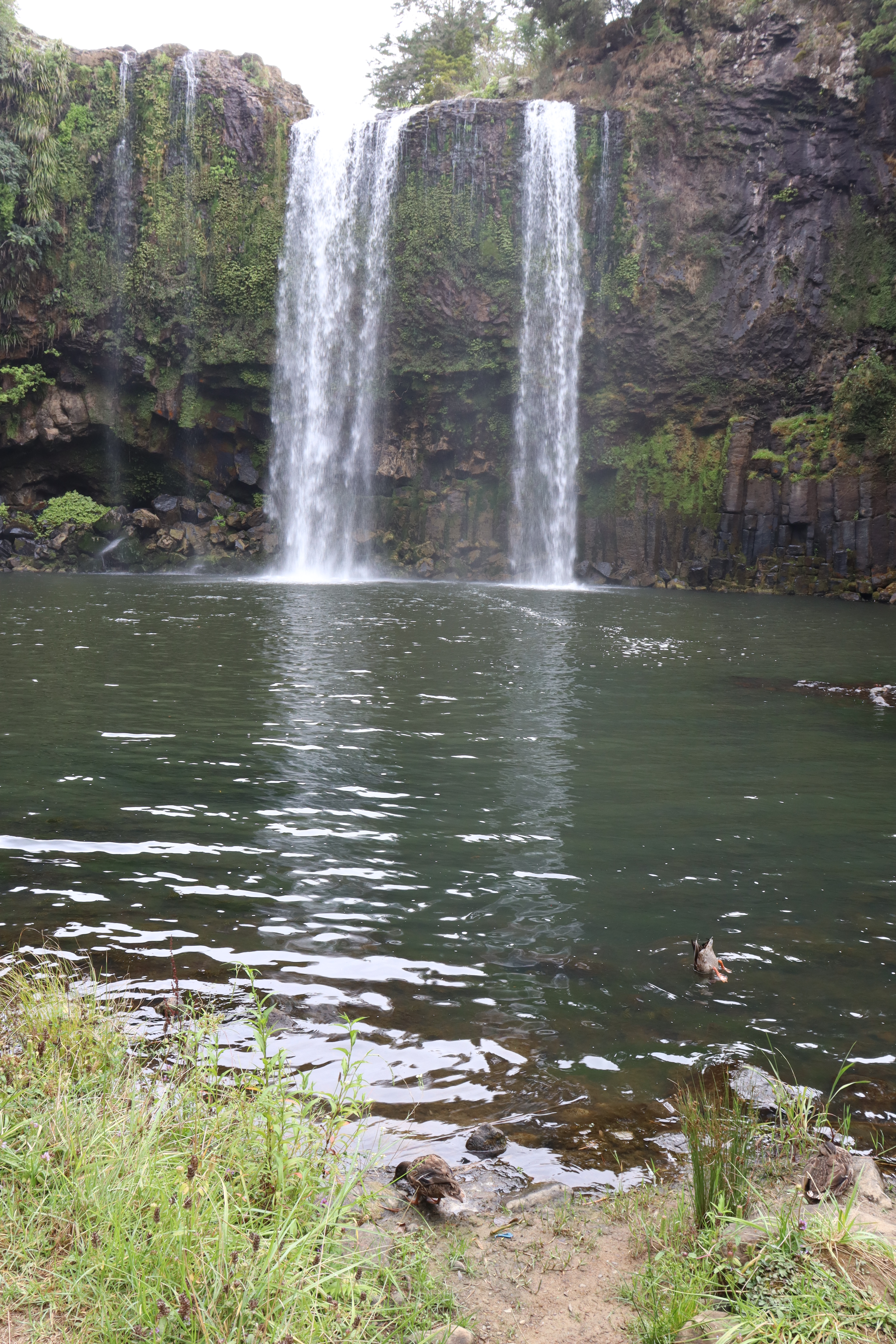
After parting with our Canadian friends, Gary and I started our NZ travels in earnest. Heading north out of Auckland, and after having to take a 10km detour, we got to Whangarei to visit the Whangarei Falls, a very picturesque 26m/85foot cascade with a pleasant walking trail looping from the top to the base. Well worth a look.

Russell, on the Bay of Islands, is a quaint little town and here we walked the trail up to Flagstaff Hill Lookout, where you get great views across the Bay of Islands. It was here that, following the signing of the Treaty of Waitangi across the bay, the flagpole was cut down four times by the local Māori chiefs, angry that, in flying the Union Jack , the British Colonialists were not honouring the terms of the Treaty.

Passing through Kerikeri, we paused for a quick look at the Historic Stone Store, the oldest original stone building in NZ,  and Rainbow Falls with its 40m twin falls drop – beautiful.
Cape Reinga, the northernmost point of the North Island, is dominated by the Cape Reinga Lighthouse which overlooks the famed “meeting of the waters” where the Tasman Sea and the Pacific Ocean meet in a clearly visible collision line. In the distance on a clear day you can see the Three Kings Islands which are actually wildlife sanctuaries and the species there are found nowhere else and are protected  by their isolation.

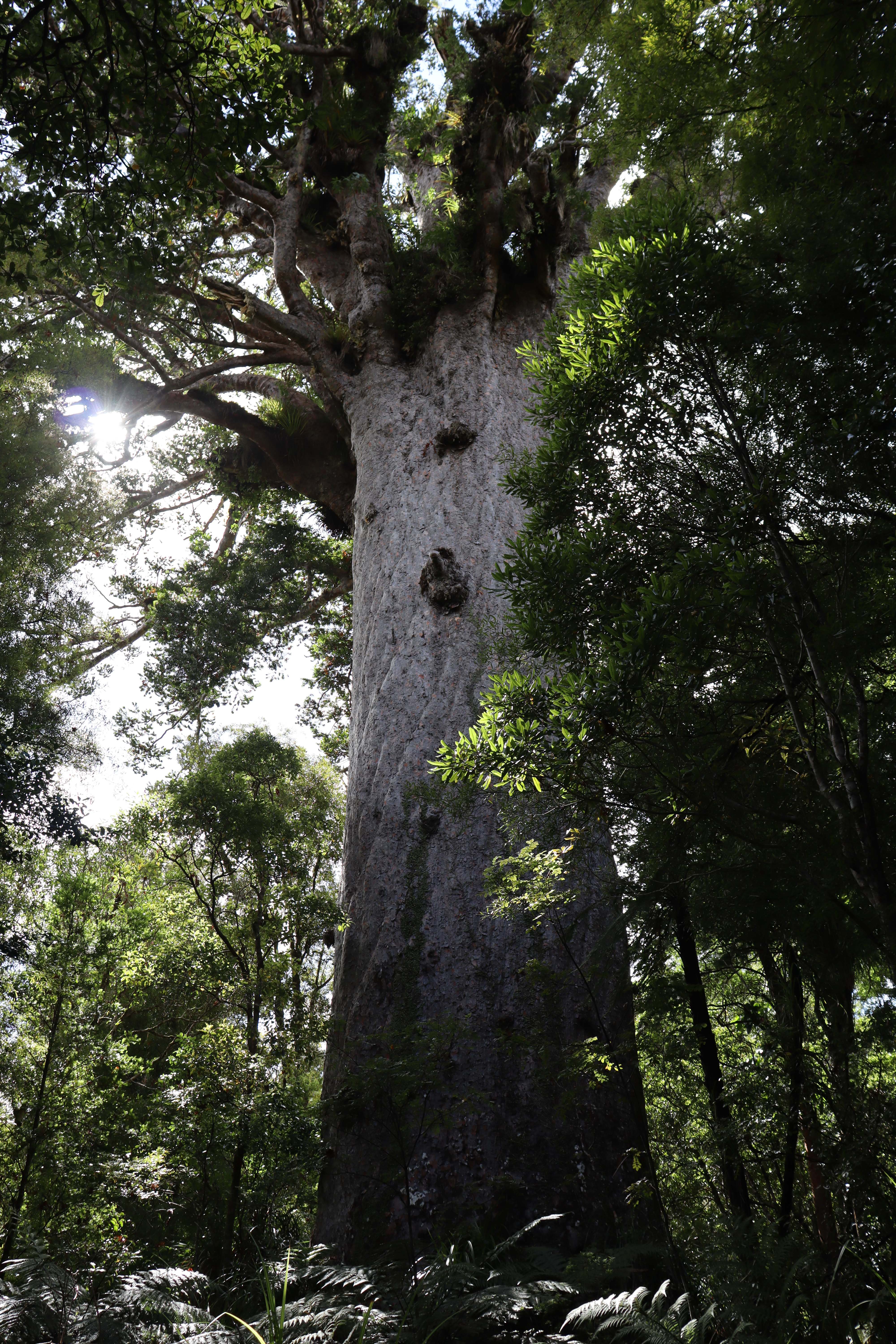
Taking the western branch of the Twin Coast Highway and heading south again, we passed through Waipua Kauri Forest, and paid a visit to “the Lord of the Kauri” – Tana Mahuta – a massive Kauri estimated to be around 2000 years old. At about 55m high with a girth of about 14m almost all the way up, it’s a monster!!

Waitomo Caves are famous for its glowworms, which are actually fly larvae that attach themselves to the roof of the cave and catch their food by suspending sticky lines that catch insects attracted to the light of the glowworm. This tour, taken in boats in the waters at the bottom of the cave, is so peaceful and calm as you are not allowed to make noise for fear of disturbing the worms which would put their lights out, and the spectacle of thousands of these tiny blue lights above you is just amazing. For obvious reasons no photography is allowed, but probably better to experience the real thing.

Just 30 or so kilometres beyond the Glow worm caves are the spectacular Marakopa Falls. Only a short walk from the carpark through native forest, these falls with their 35m drop were THUNDERING after the rain we’d had all day, and so were a most  impressive sight and worth the walk in the rain and the narrow winding road to get there. Having planned on also visiting the nearby Piri Piri Caves and the Mangapohue Natural Bridge out that way, we were somewhat disappointed to find them both closed, so we’ll have to put them on the list for next time we’re here!
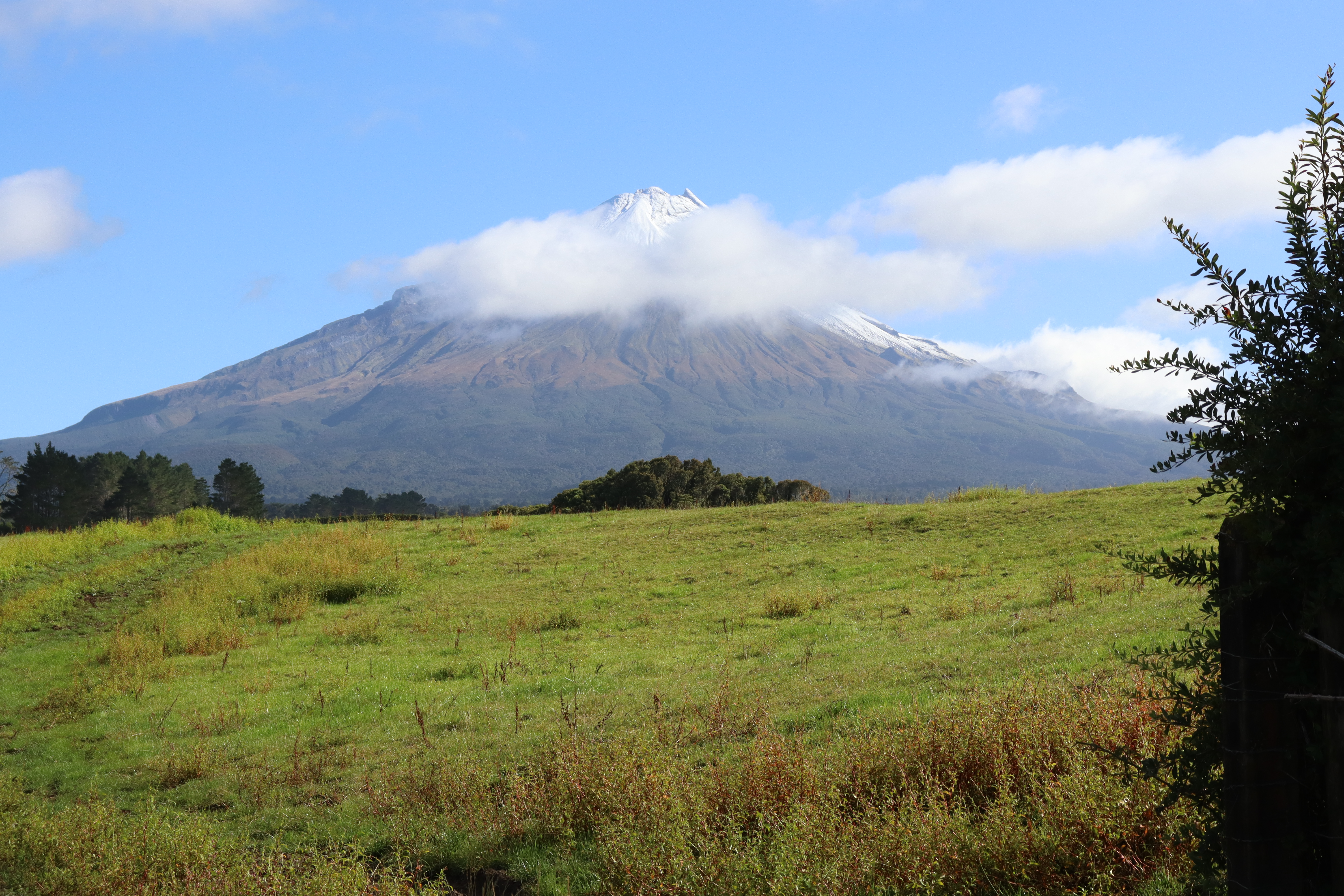
Passing through New Plymouth, we headed out to Okato for a couple of nights hoping to see Mt Egmont/Taranaki, by all accounts a perfect cone shaped volcano, but with all the rain and clouds around, we couldn’t see any sign of a mountain, so I jokingly questioned whether it even exists, only to be told , “Oh yes, you can see it from MILES away on a clear day!”  On our first morning – no sign of the mountain – we took a drive AROUND the mountain to the eastern side, to check out Dawson Falls and Wilkies Pools. Now we knew there must be a mountain, as the road to the falls definitely had a fairly steep incline, and once we got to the carpark, we actually got our first – albeit shrouded in clouds – glimpse of the mighty Taranaki.

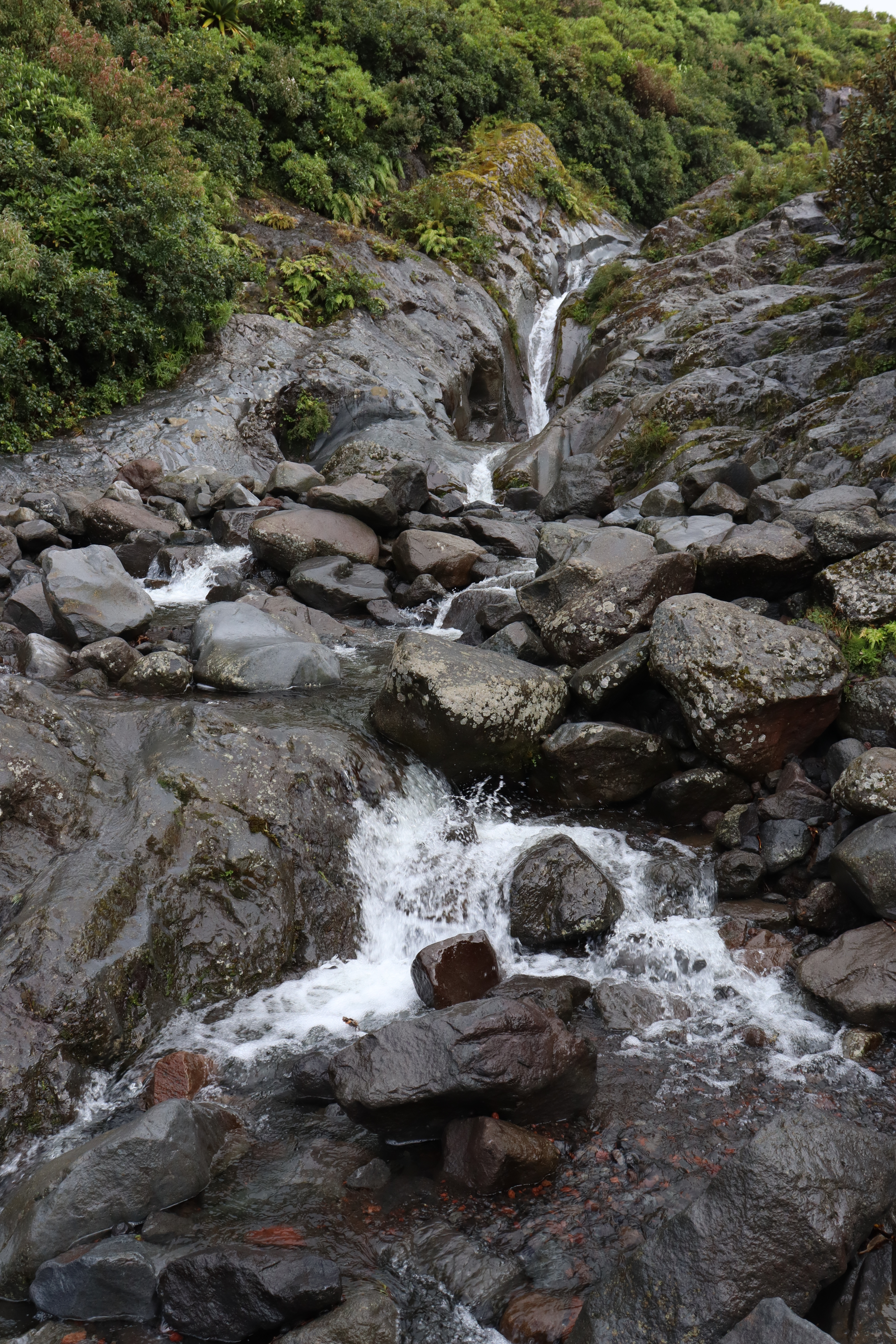
Dawson Falls can be viewed from one  viewpoint near the top or another at the base of this lovely 18 metre cascade. We chose to check out both and despite the misty spray that emanated from the falls, I felt the view from the bottom viewpoint was better as the top view was partially obscured by the surrounding rainforest. Either view was pretty special though!  Taking another wet and muddy trail though the forest – very much a rainforest  on this rainy day! – we found Wilkies Pools, a series of pools and cascades gouged out by the force of the water, rocks and gravel scouring out the 20000-year-old lava. Gorgeous!
Heading back to Okato we called in at both Cape Egmont Lighthouses – yes, there are two of them about 10 kilometres apart, both built around 1864. One appeared to be on private land and had no signposting other than that we could see it down “Cape Road” and the other was signposted as the “Historic Cape Egmont Light” with a museum which was closed. Of course!

Leaving Okato on a pleasant sunny day gave us our long-awaited views of Taranaki/Mt Egmont in all her snow-capped glory – and proved to us that she actually does exist. Getting a good clear shot, however, wasn’t so easy as the clouds moved across her summit fairly quickly.

Taking the narrow and remote Forgotten World Highway took us through the Republic of Whangamomona, (try and say that three times with a mouthful of marbles!!) a small town that declared its “independence” from New Zealand in objection to the redistribution of local councils, and over the years its elected Presidents have included humans, a goat, a poodle and a turtle! Headquarters of the Republic warrant a visit as they are housed in the historic hotel which dates back to 1902 (current building1911) and is regarded as the most remote pub in the country. Needless to say, we paid the Headquarters a visit!

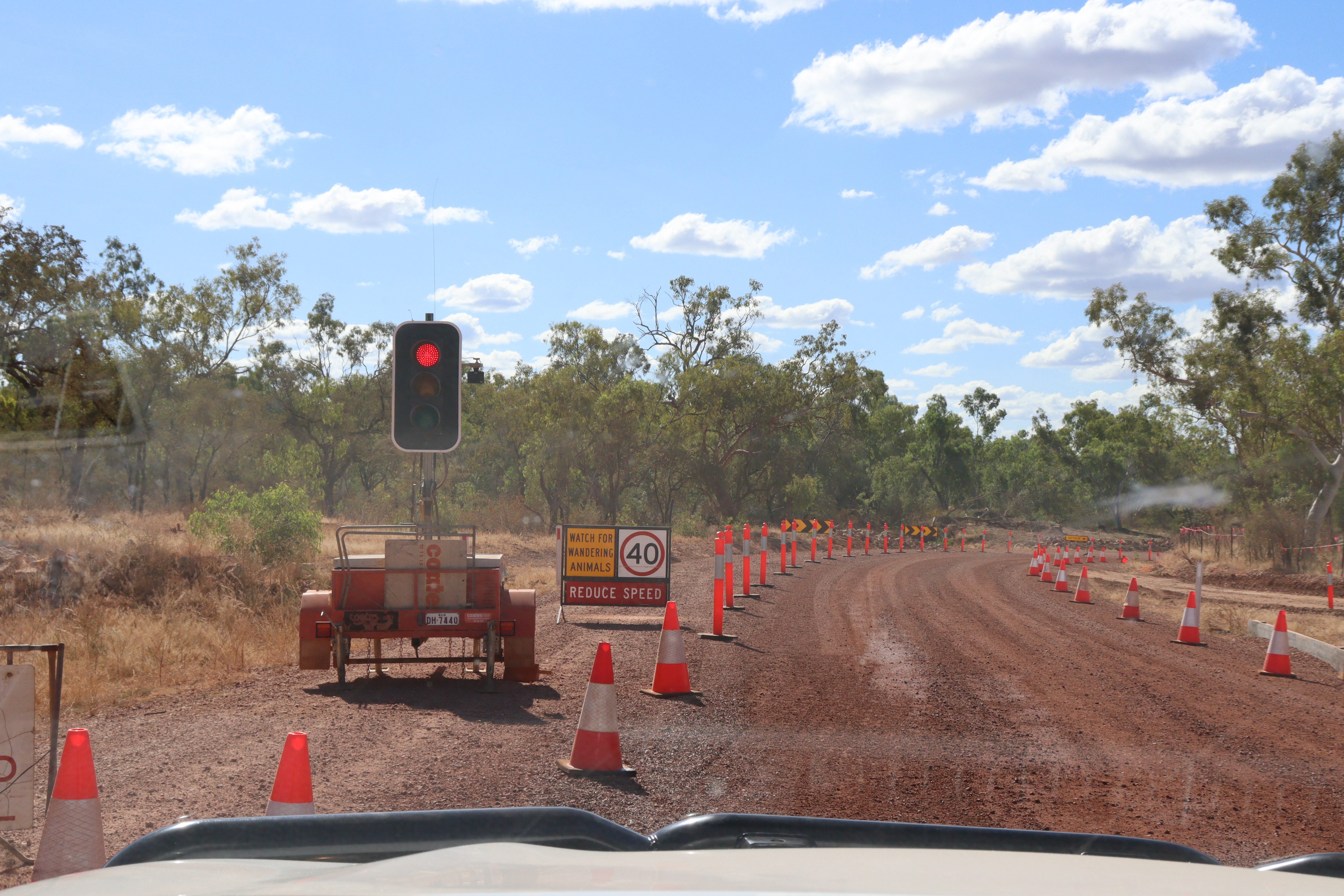
Further up the Forgotten World Highway, we were held up at roadworks that closed the road for several hours each day, but knowing it was  only an hour or so before the road was due to open, the Stop-and-Go lady advised us to go check out the falls that were about 16 km off on a side road. This was perfect as I’d already read about these falls and wanted to go see them, so off we went. At the end of the road, there’s a 1-kilometre walking track to the falls that crosses private farmland, weaving through a forest of tree-ferns and  alongside the creek that feeds the falls. But this pleasant meander in no way prepares you for the spectacle of the 74-metre drop of the Mt Damper Falls -it’s just WOW!

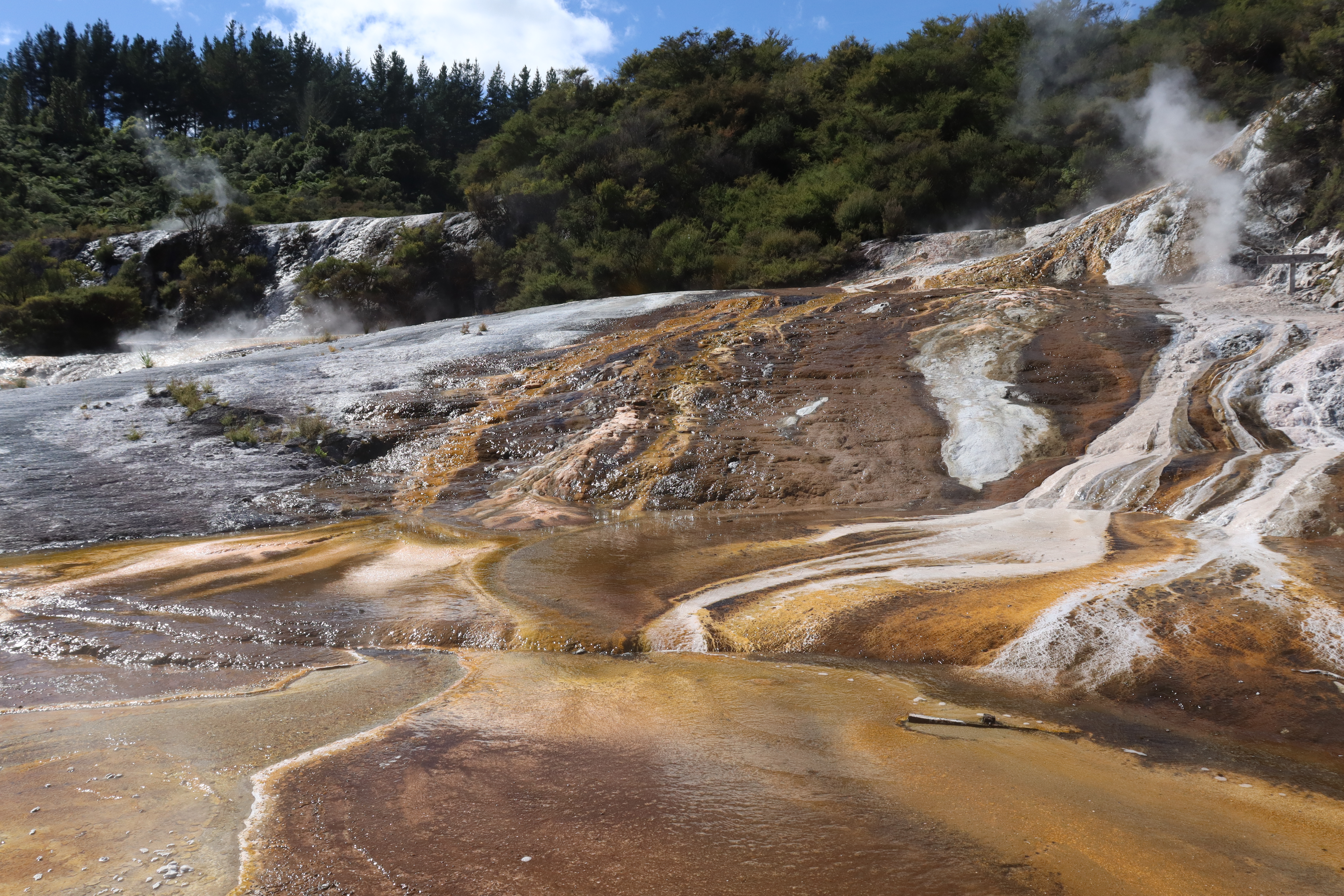
Cutting up northwards through Taupo, with a quick stop at the thunderous Huka Falls, we headed into geothermal country and spent several hours at Orakei Korako-The Hidden Valley, a wonderland of thermal features including geysers, fumaroles, thermal boiling pools and rock faces colored by heat tolerant organisms, silica terraces and boiling mud pools.  With the unmistakeable smell of sulphur in the air and clouds of steam hovering above the ground, this park is  smaller than, but equally as impressive as the more crowded parks of Rotorua.  Whist in Rotorua, we also checked out: Lake Rotorua with its very smelly but aptly named Sulphur Point;  the 5.5km walking trail around Blue Lake (which  actually turned out to be 6.9km!) with its viewpoints over Blue Lake and Green Lake -such imaginative names, but the lakes are very pretty;  and spent an afternoon exploring the Whakarewarewa Forest Park’s amazing plantation of California Redwoods and Douglas firs all dating back to 1901.

Heading out to the northern coastline along the Bay of Plenty, we passed through Whakatane to  come to our next stop: Tauranga or Mount Maunganui – depending which side of the  entrance to the bay you are on – where the town is dominated by the imposing Mount Maunganui, an extinct volcano at the end of the peninsula. Several walking tracks will take you around the base of the mountain or up to the summit for magnificent 360° views over the township, the bay and the islands nearby. All the summit walks are pretty steep, but somehow  I think we managed to find the steepest one!

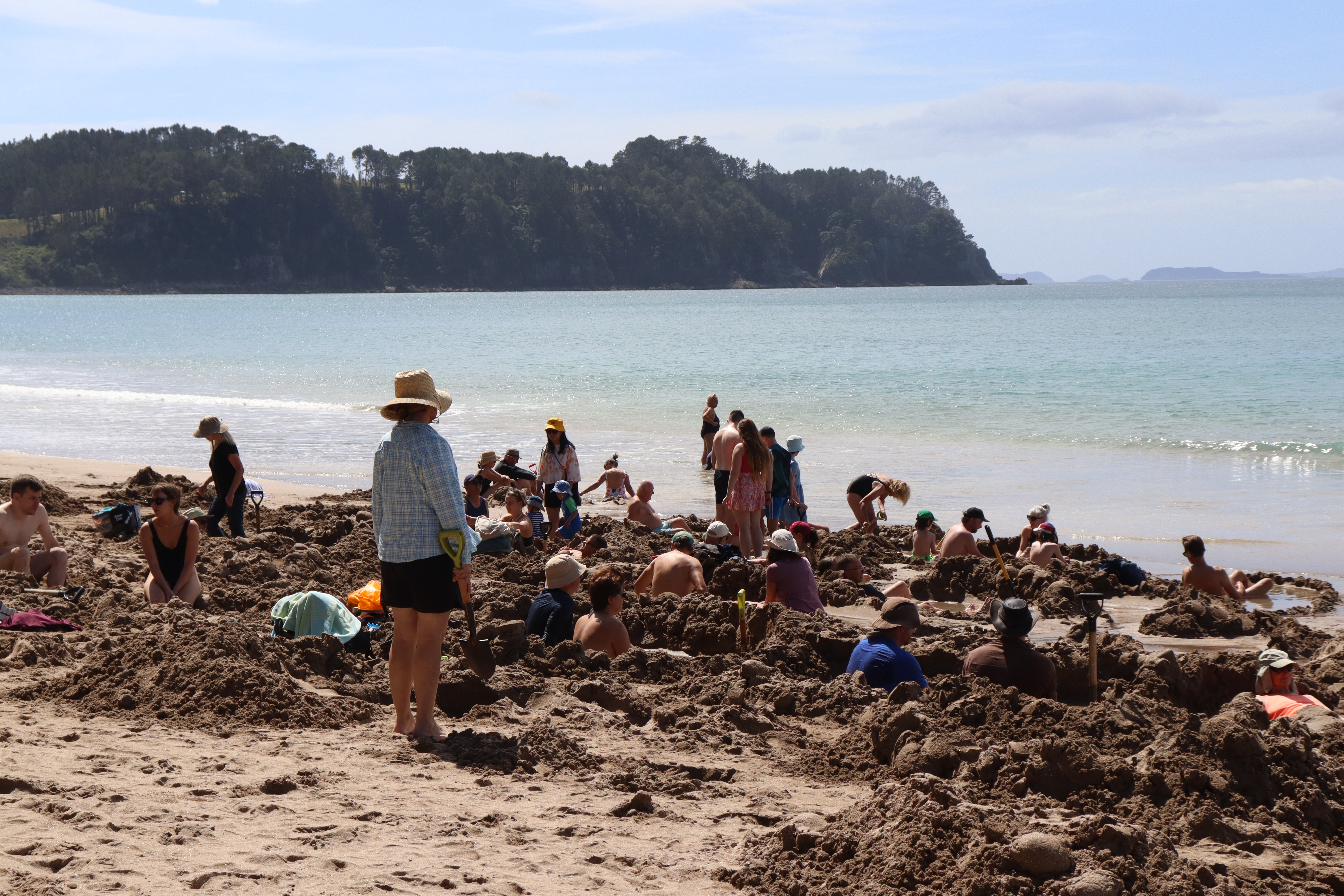
The Coromandel Peninsula is home to the Hot Water Beach at Whenuakite, which is certainly worth a visit, if not to experience the hot waters, at least to witness the crowds that arrive, armed with shovels and spades and proceed to dig holes on the beach to sit or  lie in the warm to hot water that rises from beneath the sand, depending on how deep they’ve dug. Hilarious!

The township of Coromandel on the western side of the Peninsula is a small town that caters well to  the tourist hordes that visit, with hiking trails, beaches, restaurants and tours. A highlight here is the Driving Creek Railway; a narrow-gauge railway built over a thirty-year period by its original owner and operator. Being the country’s first NZ-born potter, he initially built the railway to transport clay and pinewood from the hills above and down to  his studio and kiln. Over time he extended the tracks to enable replanting of native trees on the hillsides, and due to the steep inclines, he engineered several innovations including zig-zagging tracks,  tunnels, bridges, spiral sections and his famous double decker viaduct. The 90-minute tour takes you to the top of the hills to his “Eyefull Tower” Lookout, where you get amazing views over the Peninsula and the islands of the bays.
From Coromandel, it was a pleasant day’s drive around the coast and back to Auckland’s airport for our flight to Christchurch.

And so ended our three-week circuit of North Island.

Stay tuned for South Island adventures!

WTF or HA HA!!

  • Have you ever tried to cook  spaghetti and Bolognese sauce for four adults in one 14cm pot and two small frypans?? Somehow Gary managed it on our first night in Auckland!
  • Wakachangi beer – worth buying a box of it just to read the hilarious “history” of its origin.
  • Driving up Cape Reinga through lots of open farmland with sheep and cattle – then suddenly there’s an EMU -just one!
  • Taking the Hokianga Ferry across to Rawene, got chatting to a guy from Melbourne who was doing the Tour Aotearoa. That’s a bike ride from Cape Reinga to Bluff ie northern tip to southern tip and its over 3000km. If doing it by the rulebook you must  do it in no less than 10 days but no more than 30! WHAT? Madness!!
  • Another EMU….and a couple of ostriches….AND a hedgehog -never seen one of them before!
  • What is it with people??? At Orakei Korako Geothermal Park, when the sign says “Danger – Fragile Surface” and “Keep to the walkways,”  why does some stupid IDIOT woman think it’s ok to step out and jump onto the silica terraces. Secretly I was hoping the ground would crumble beneath her and she’d find out the hard way!!
  • Get to the motel in Mount Maunganui, ready for a nice cup of tea, but there’s no milk. When I asked the owner, “Is there any milk?’ his serious answer was, ‘No, the milkman never came!”  Never mind the fact that this motel is about half a block from a big supermarket!!
  • Heading to the Bakehouse for lunch, Google maps says its less busy than usual – yep, it sure was LESS busy – it was CLOSED!
  • We’ve decided that the biggest employer by far in New Zealand is the Roadworks Department-we’ve had to stop so many times EVERY day for 10, 15, or even up to 20minutes for roadworks! And that was just on the North Island!!
Destination Cape York – Final

Rinyirru-Lakefield NP – Cooktown – Home

(Click on images to enlarge)

Coming back down the Cape, we took a detour. Turning eastward from Musgrave Roadhouse onto Lilyvale Road, we headed towards Rinyirru-Lakefield National Park, another of the CYPAL (Cape York Peninsula Aboriginal Land) National Parks.

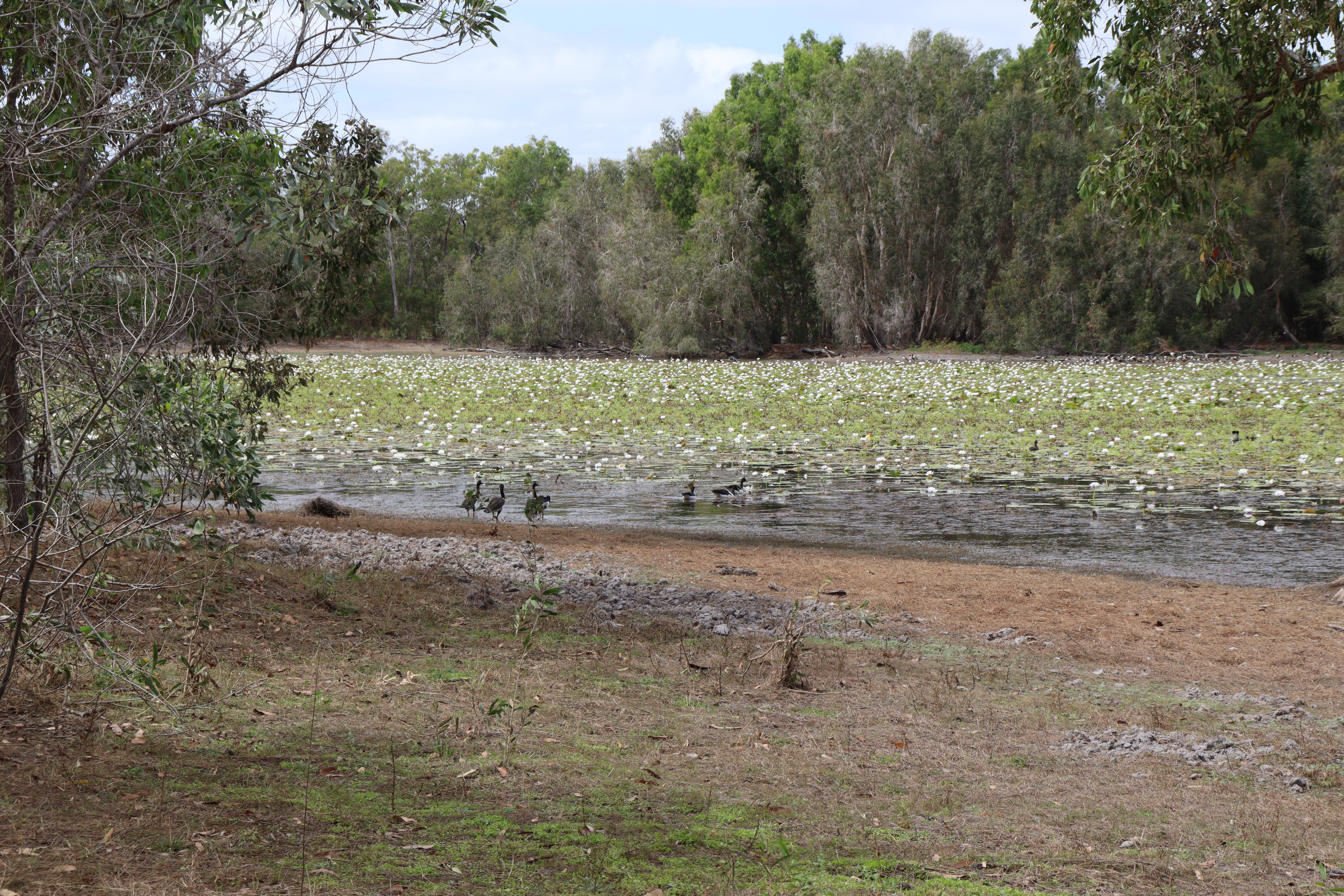
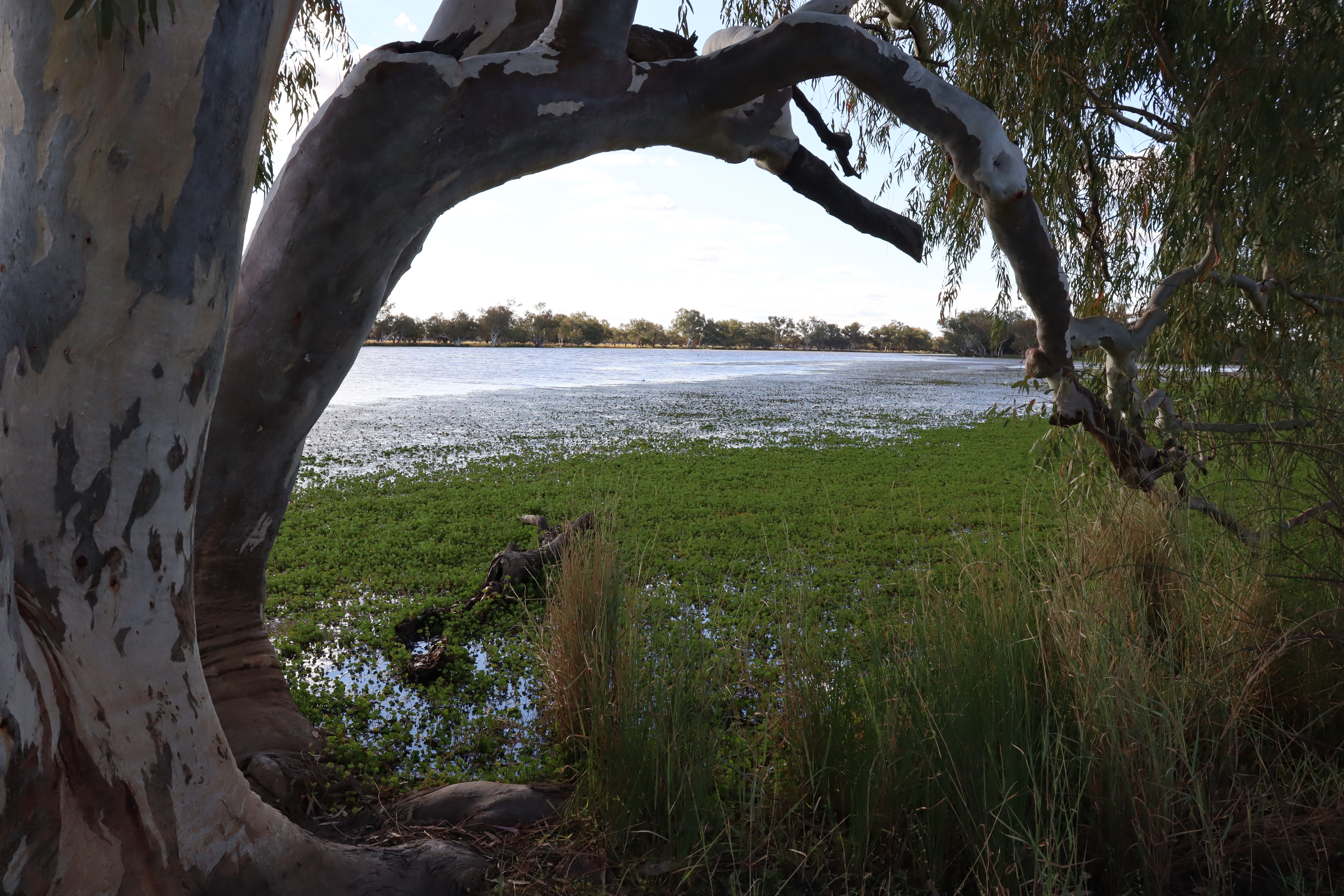
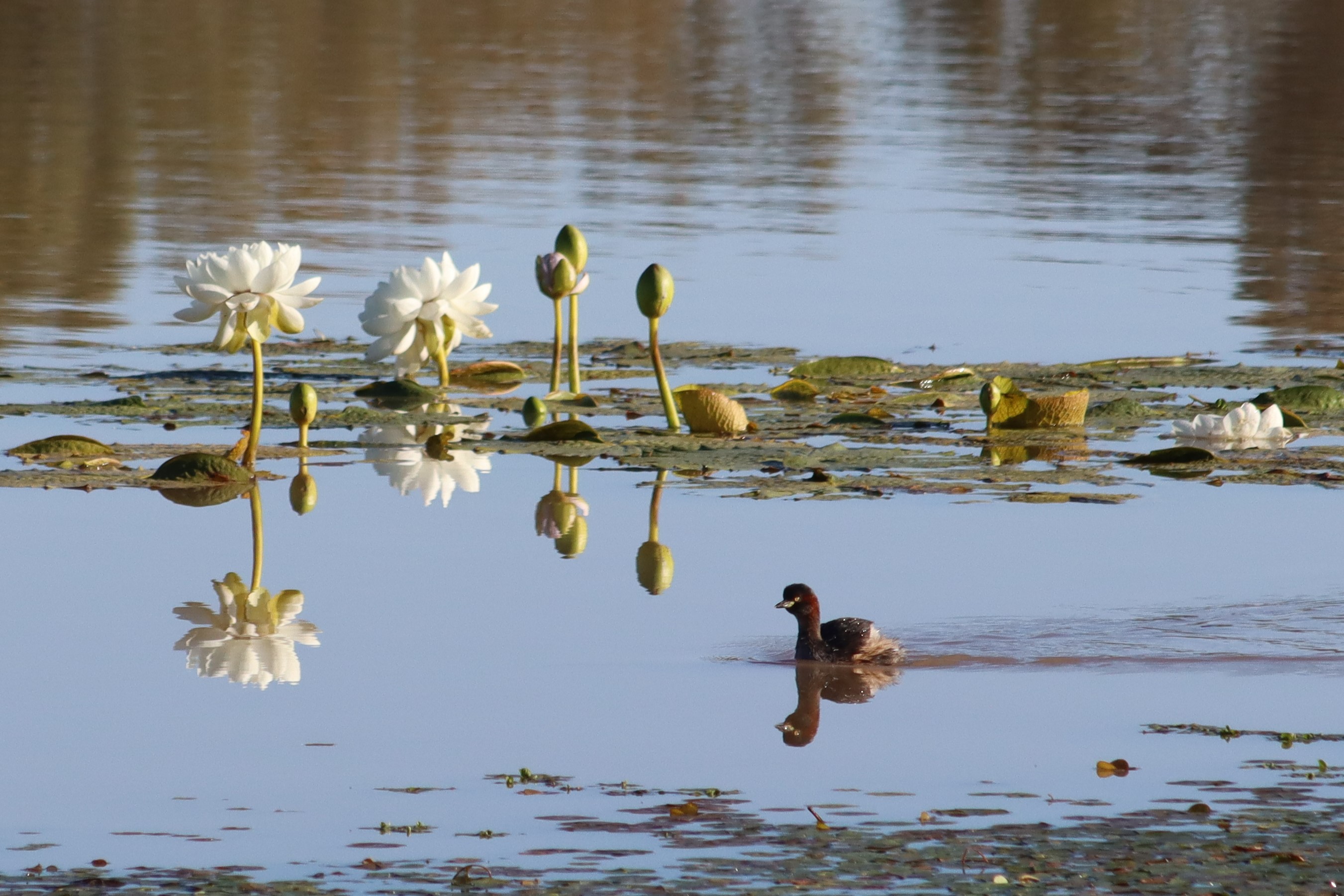
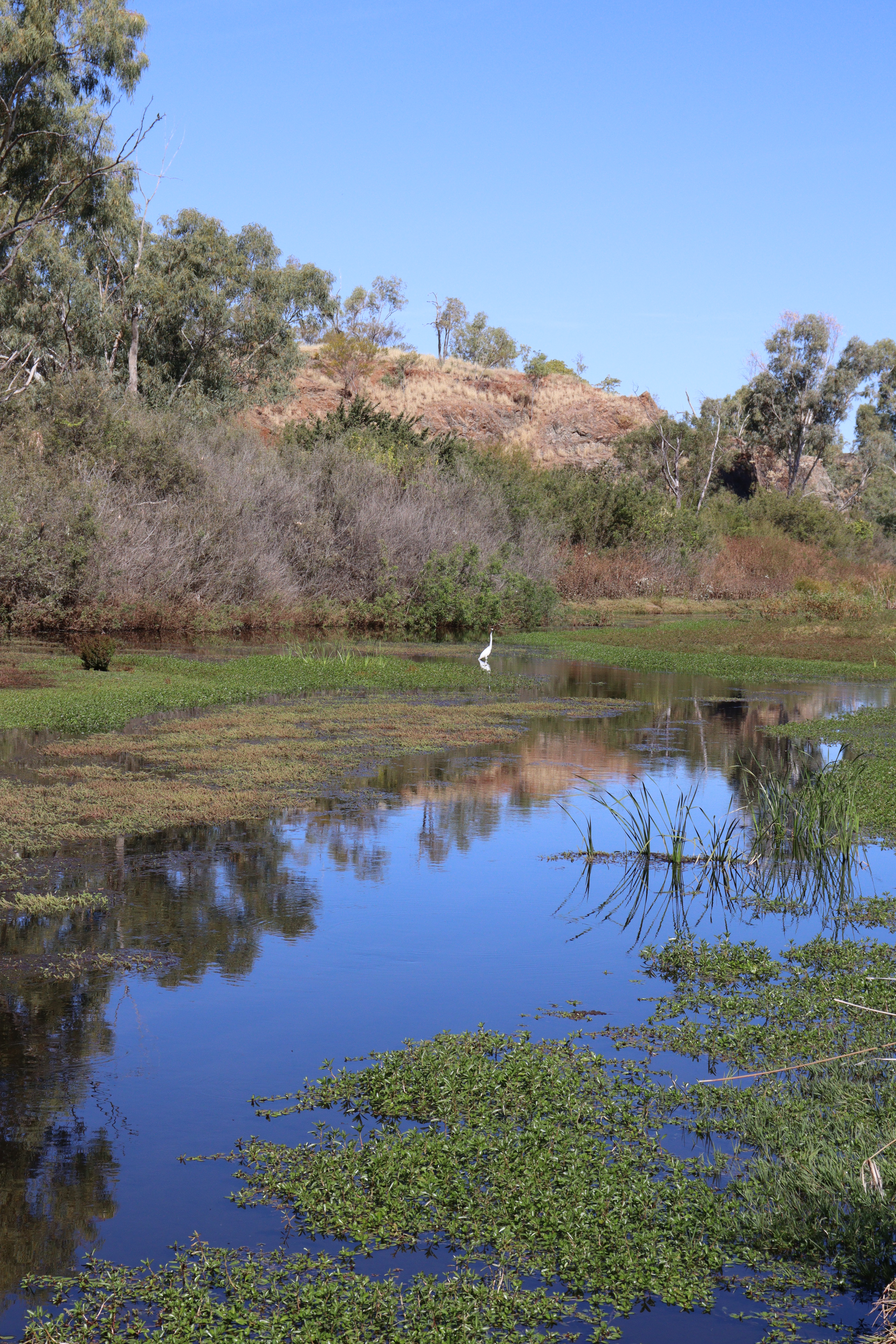
Not far from the turnoff, we pulled into a side track to check out the waterhole at Lotusbird Lodge – the place certainly lives up to its name as the waterhole was covered in lotus lilies and numerous birds including magpie geese and ducks. Further on, we entered Rinyirru Lakefield NP, and we drove through Nifold Plain, where we were suddenly struck by the sight of these weird tall triangular shaped trees in the distance. They turned out to be a variety of Corypha utan palm which originate in India through Malaysia, Philippines Indonesia and into Cape York  and can grow to 20 metres tall, flowering in a massive cluster of up to a million flowers, only once at the end of its life. (thanks Mr Google/Wikipedia.)

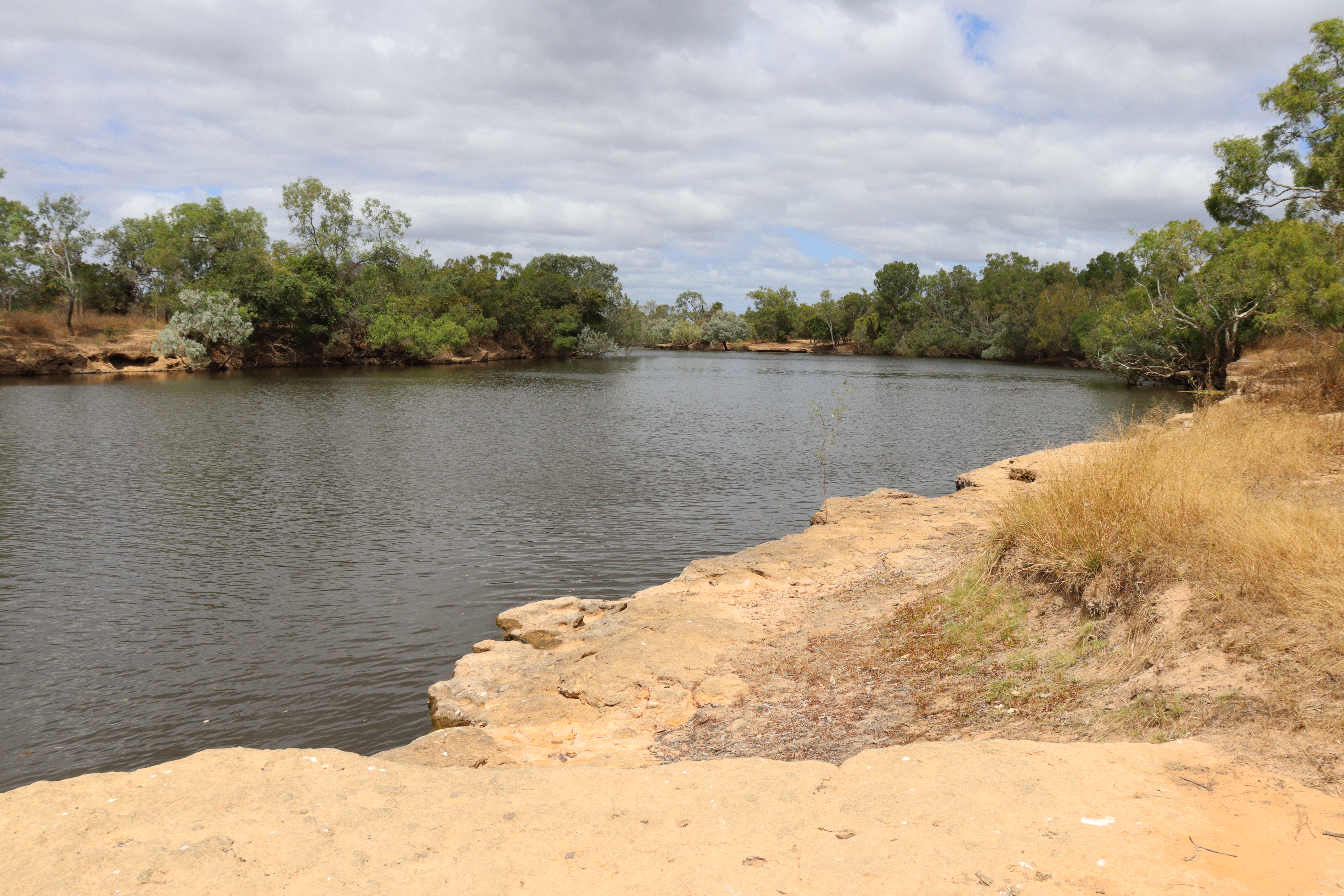
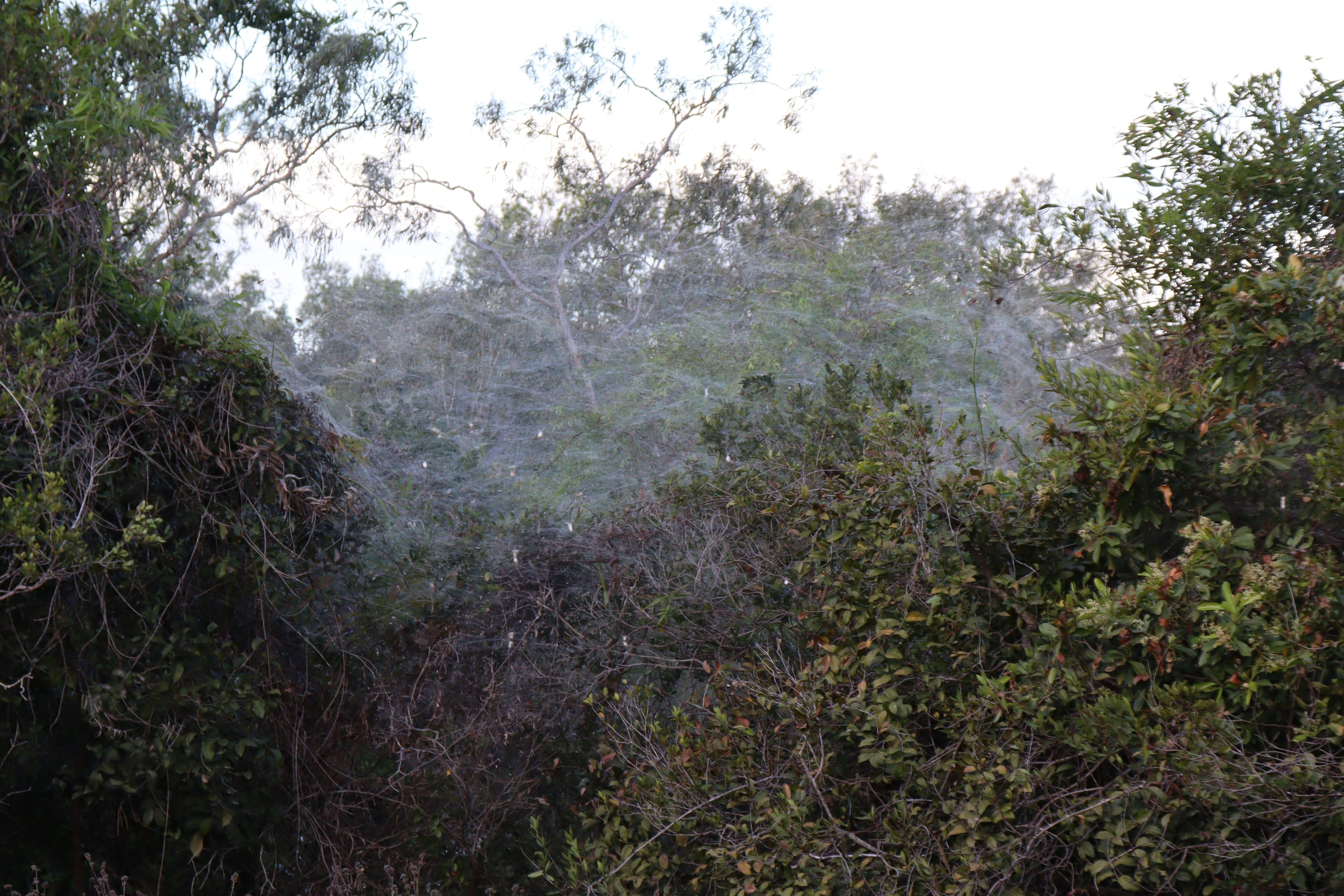
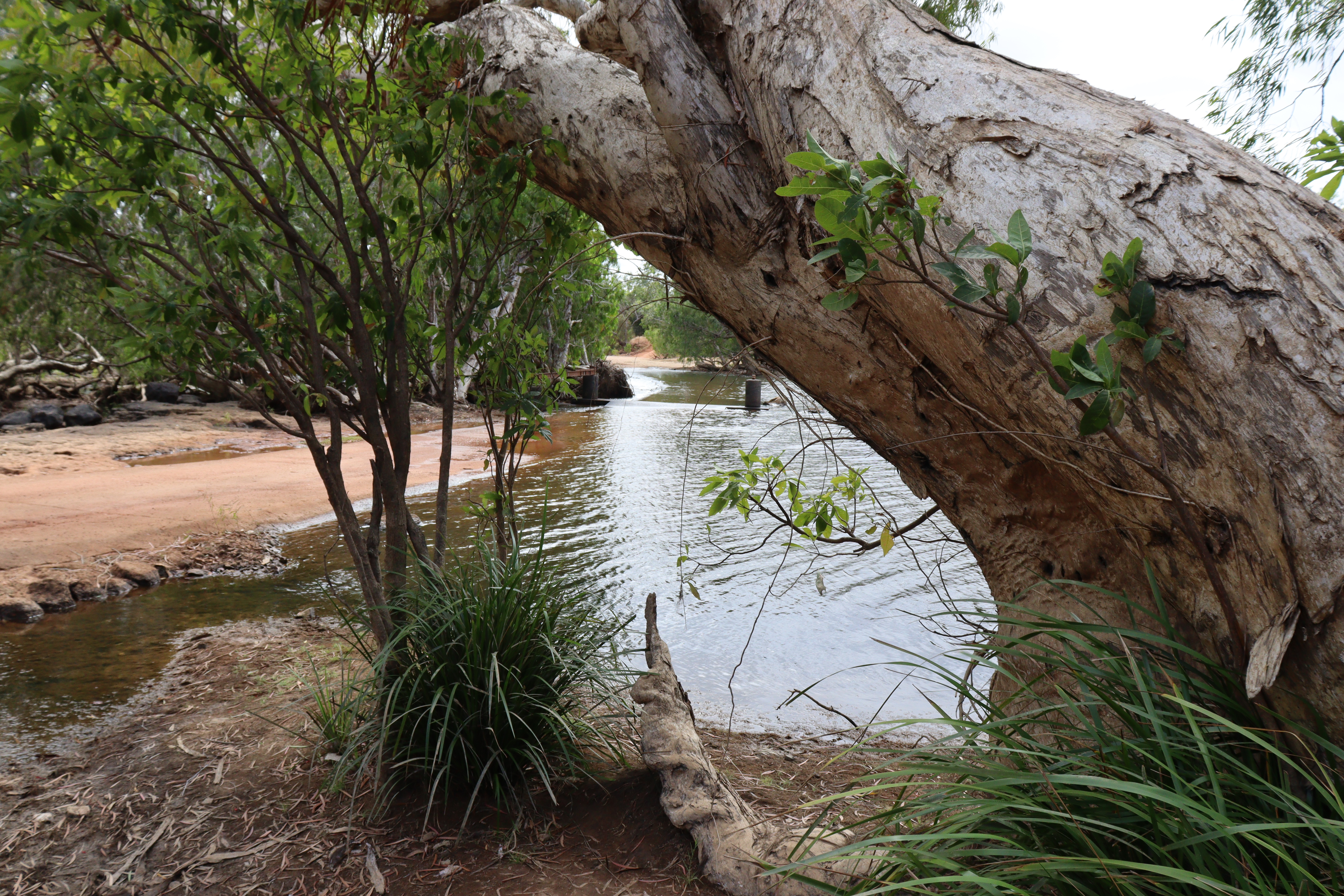
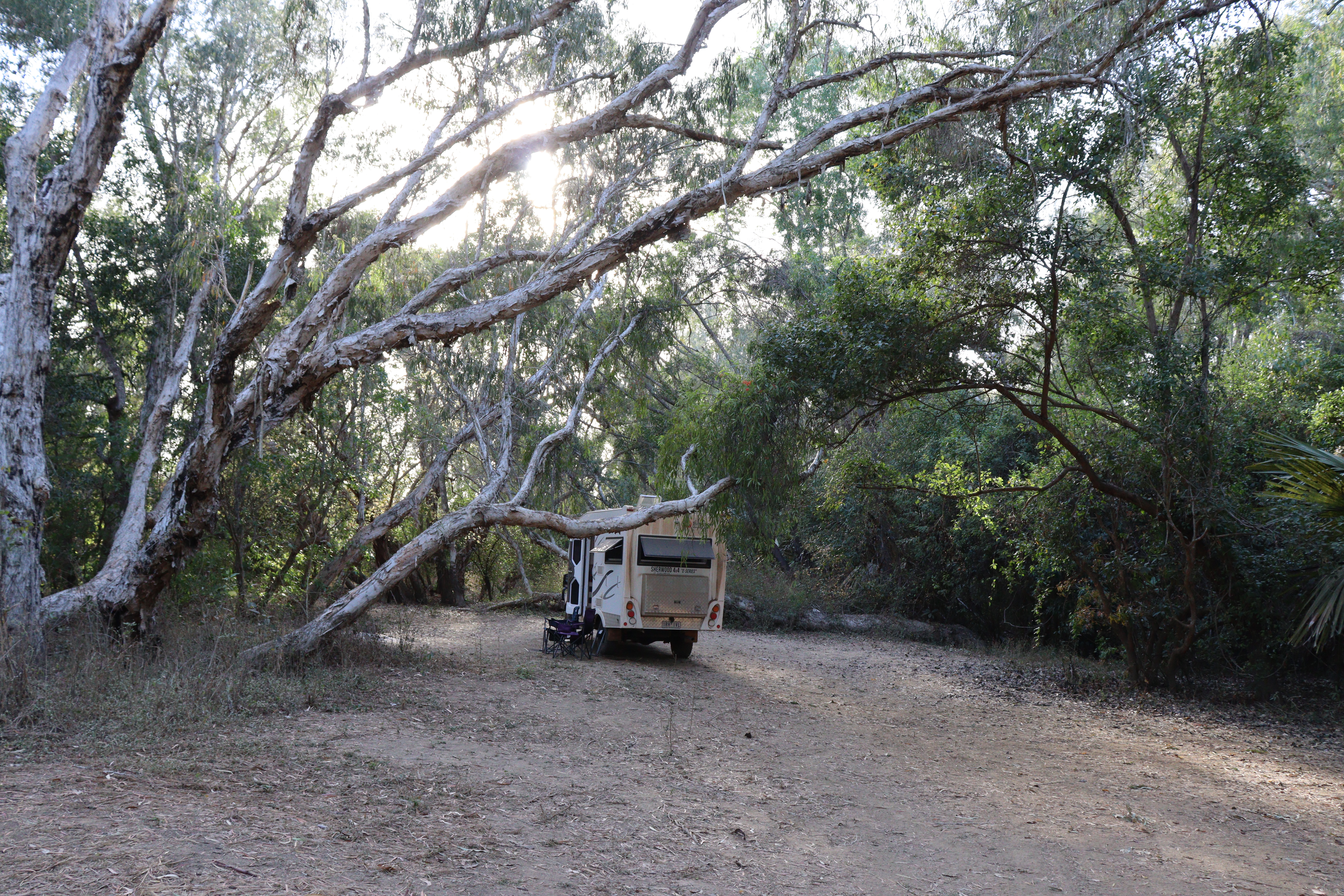
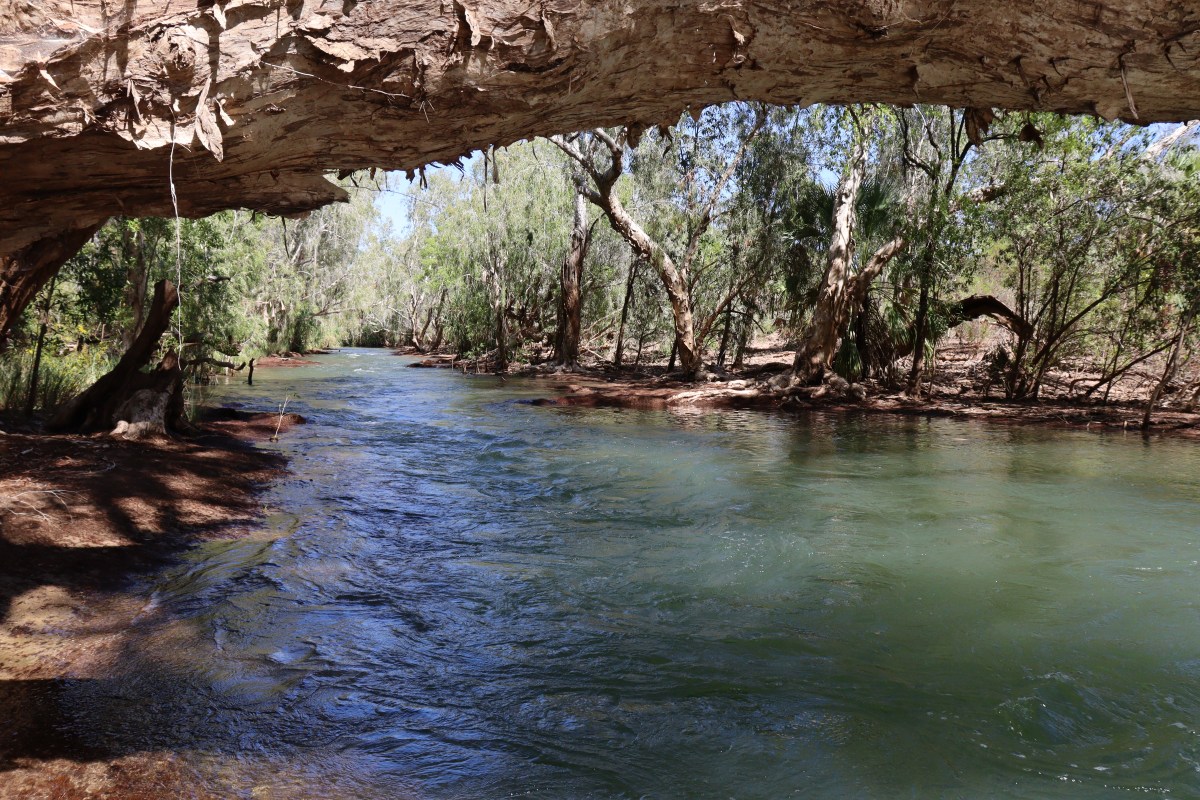
This Park has many campsites at different waterholes and along several different rivers, all of which are tidal and therefore have the “Achtung” croc warnings.  Staying the first night at Hann Crossing on the North Kennedy River, our campsite was a lovely, secluded spot, very quiet on a ledge well above the water.  Walking back to the crossing, it seemed that only a couple of the campsites were occupied. At one point, I saw what appeared to be a smoky haze amongst the bushes, but on closer inspection, it turned out to be a huge mass of spider webs slung thickly between the trees, with hundreds of spiders of different shapes and sizes hanging in them. I’ve never seen anything like it! At the actual Crossing, the river reduces to a narrow chute before cascading into a wide pool that expands to a large waterhole. That night, sitting outside in the dark, we heard a large splash and shining a torch on the water, we spied several pairs of red eyes – CROCS! Luckily our ledge, although close to the water’s edge, was high enough to not be a concern.

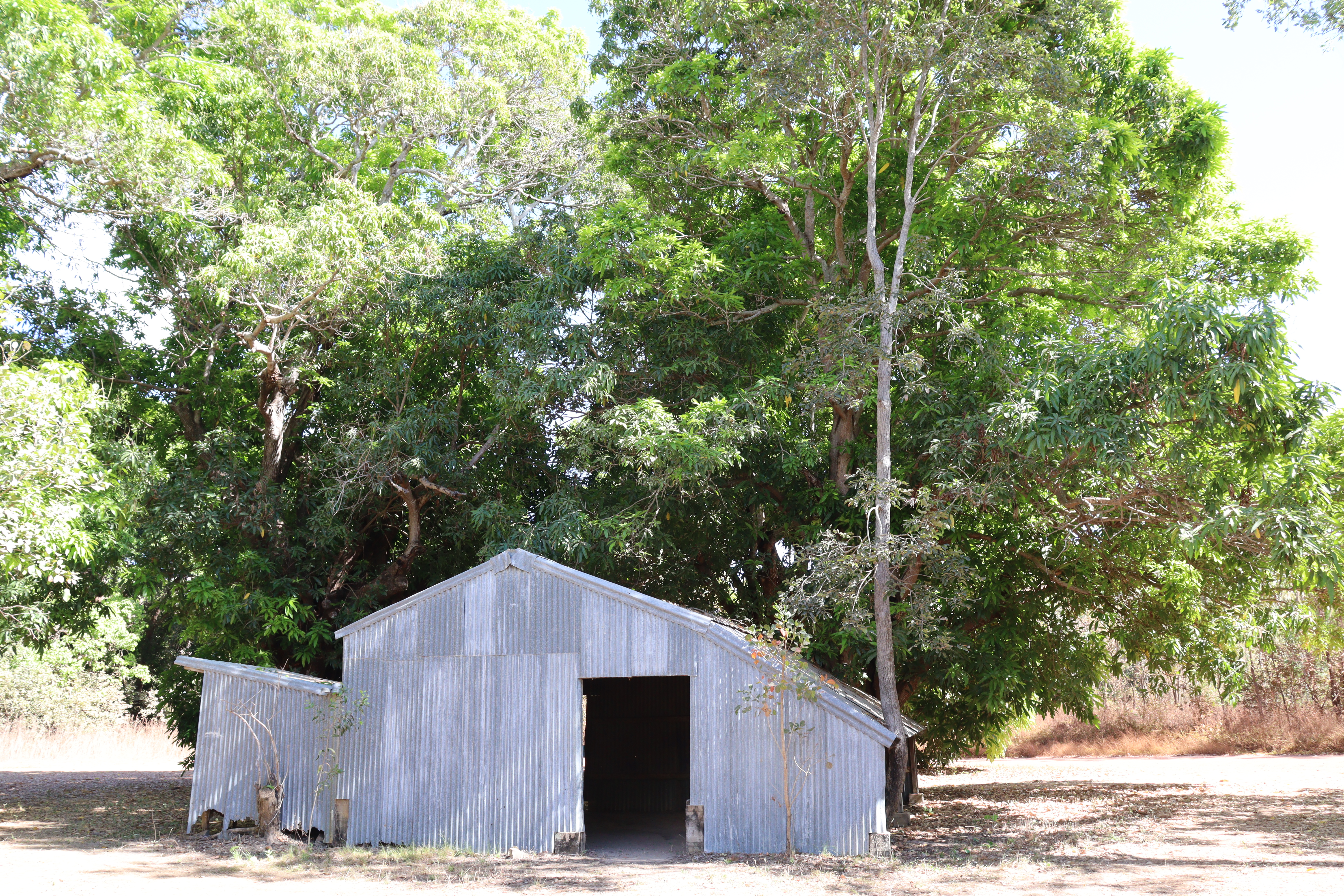
Continuing through the Rinyirru Lakefield NP, we stopped in at Breeza Homestead  historic site where the relics of the original corrugated iron homestead remain nestled under a pair of  huge mango trees a short distance from a large lagoon covered in waterlilies. Further along the road, Red Lily Lagoon boasts a year-round water retention which is ideal for the survival of the many plants, particularly the lotus lilies, that grow there.

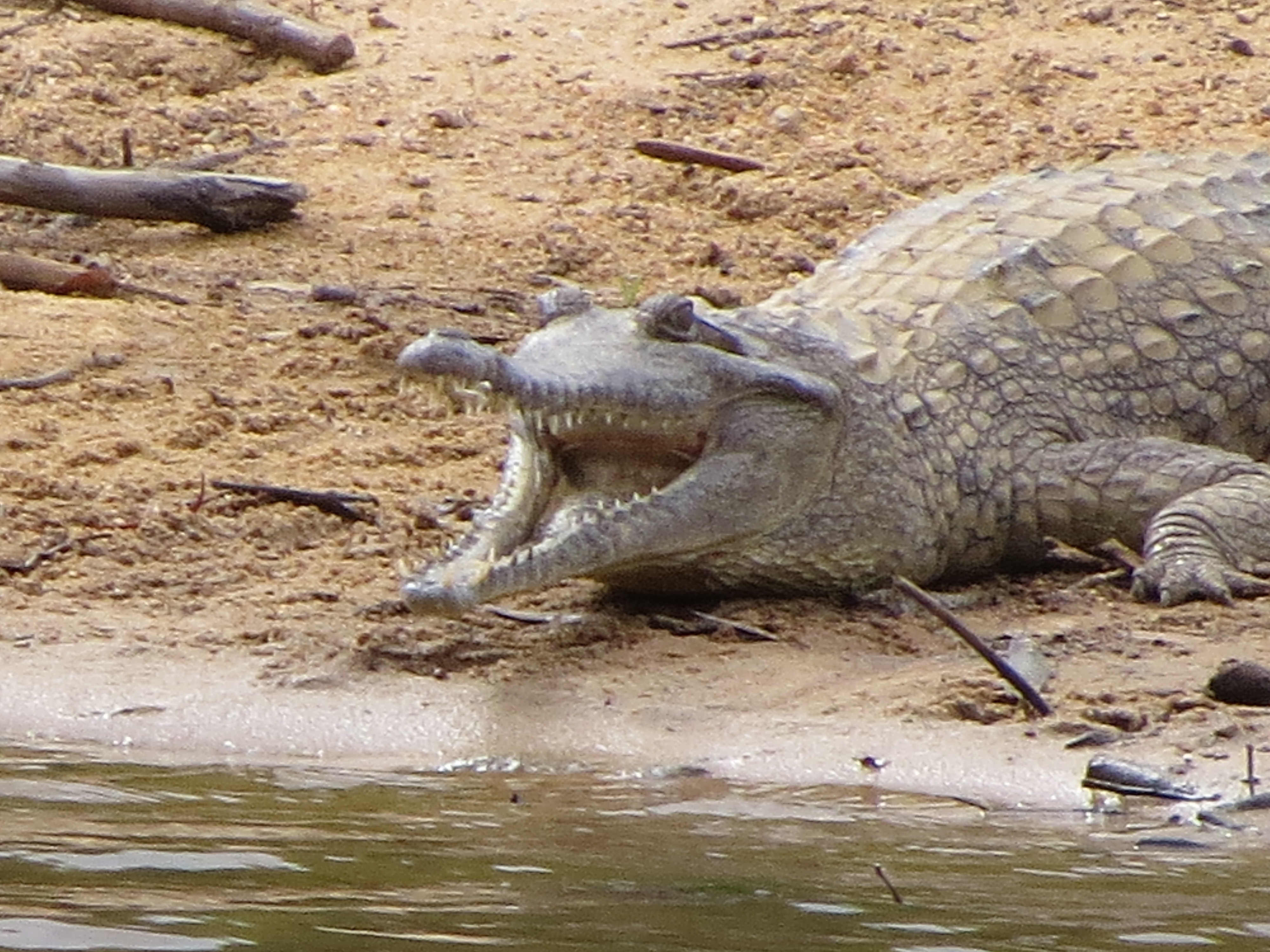
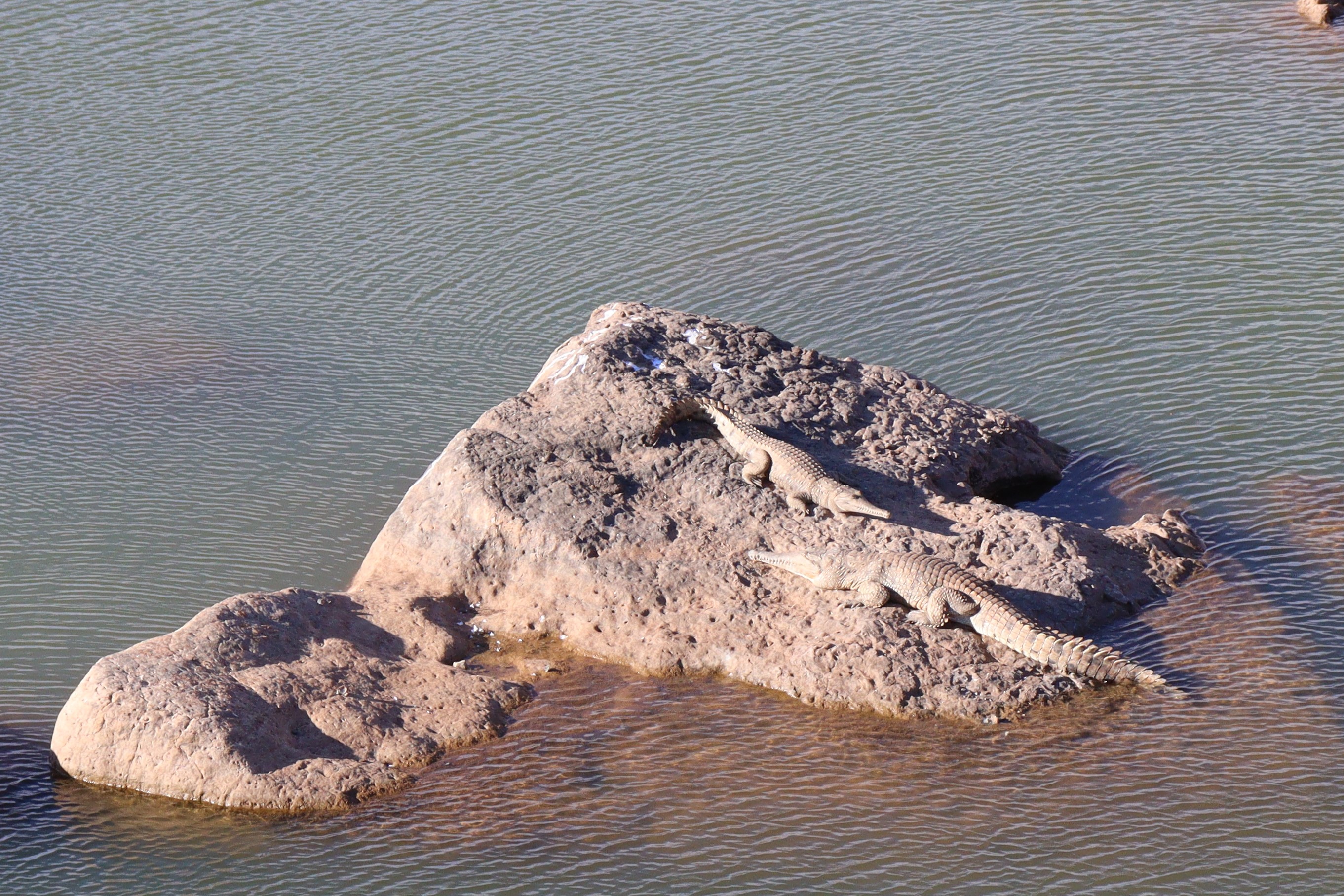
After a refreshing cold shower at the Kalpower Crossing camp area on the Normanby River, we continued to our next campsite at Twelve Mile Lagoon, which according to the signs, was 15 kilometres off the road on a 4WD track but turned out to be not too difficult. Our site at first appeared to be not as pleasant as the night before’s, but we found it to be much more secluded and infinitely quieter being so much further from the road.  Once we set up and dragged our chairs to a point where we were high above the Normanby River, we found that it was a great spot for croc-spotting. And spot plenty of crocs we did! On the opposite bank, we spotted 5 or 6 what we thought were freshies or Johnstone River crocs, but they could have been salties, and we sat watching them for quite some time till later in the afternoon, they were joined by another very large estuarine croc that had to be around 4 metres. He just lay in the water and was obviously not too hungry as several magpie geese walked right by his snout and he made no move to get them. Despite them all being on the opposite bank of this nice wide river, I felt somewhat reassured that the bank on our side was quite high and pretty steep.

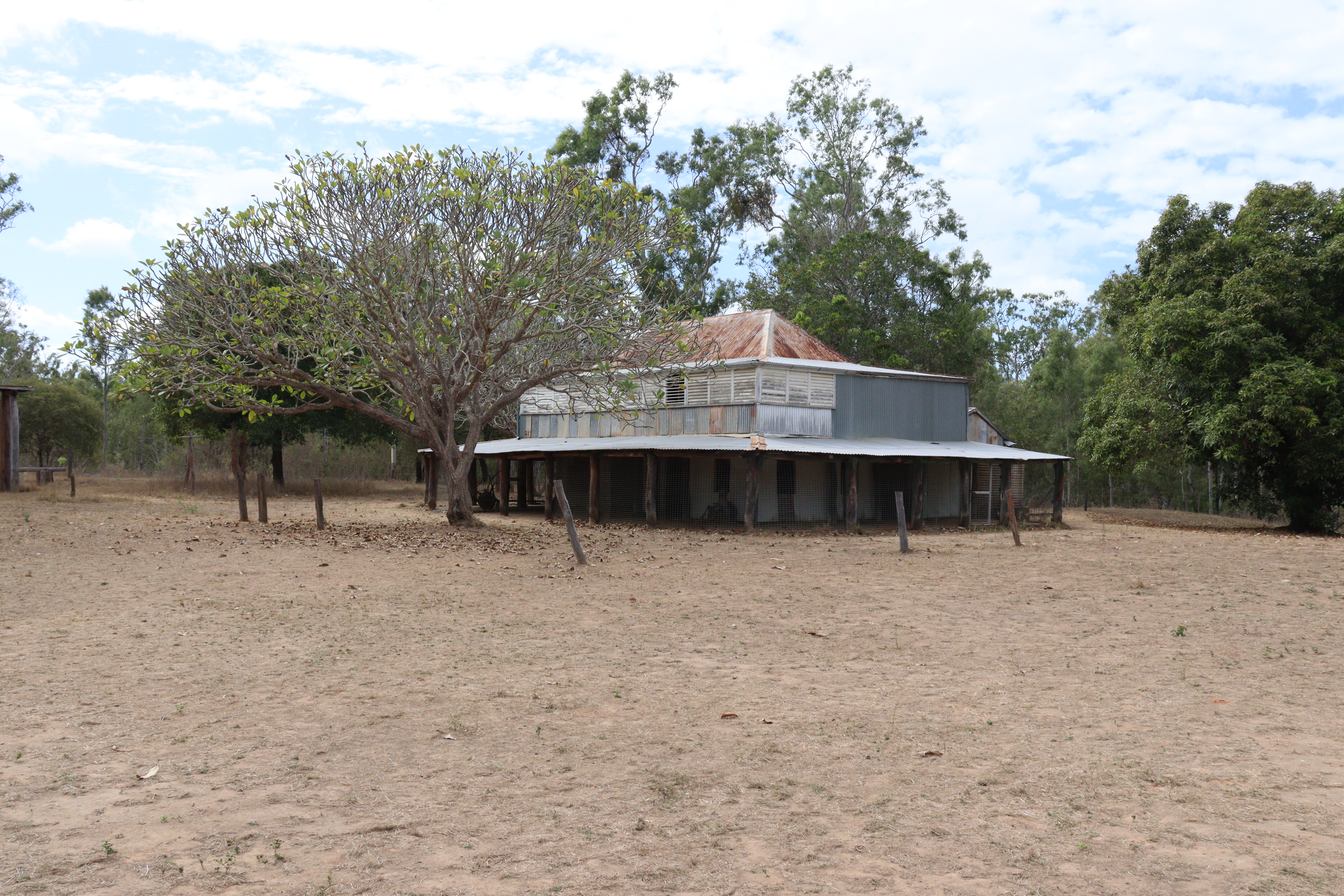
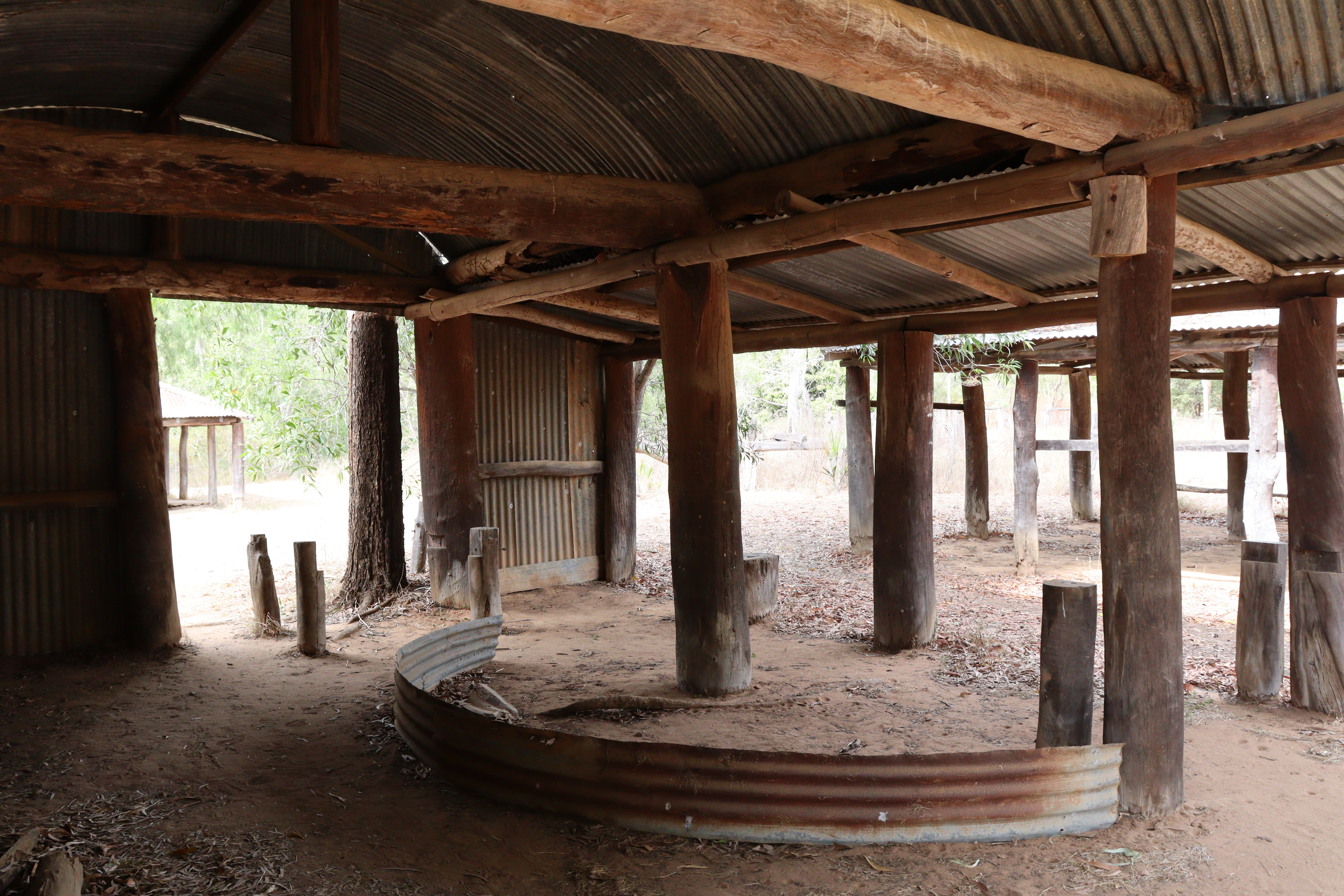
On the way our of Rinyirru, we called in at Old Laura Homestead, a well preserved two storey house complete with shutters and wide verandahs, meathouse, stockmen’s quarters, saddlery and blacksmiths buildings. The Laura cattle station was in continuous operation from the gold rush of 1880 right up till 1966 and despite its isolation and often being cut off by seasonal weather, its community was virtually self-sufficient.

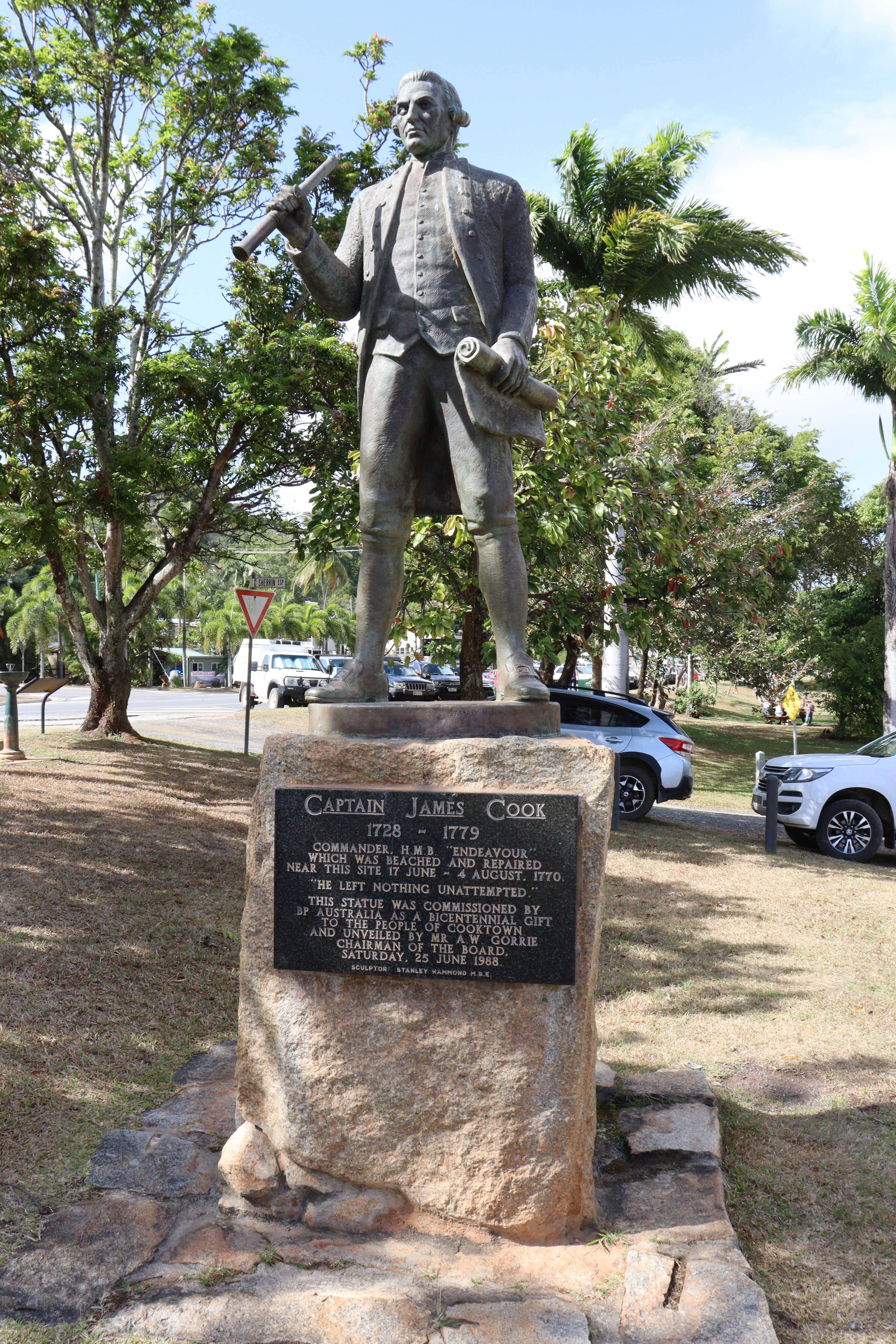
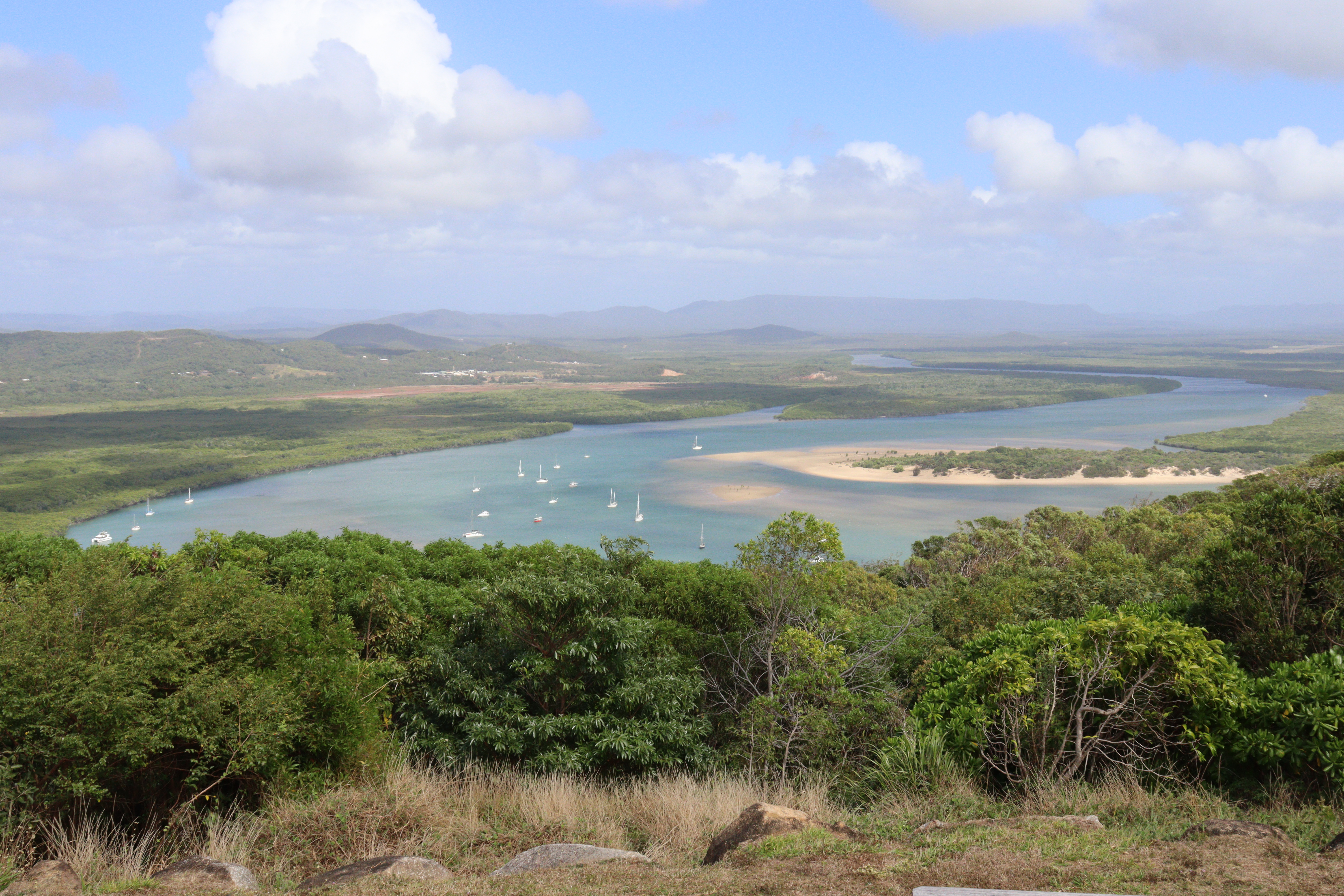
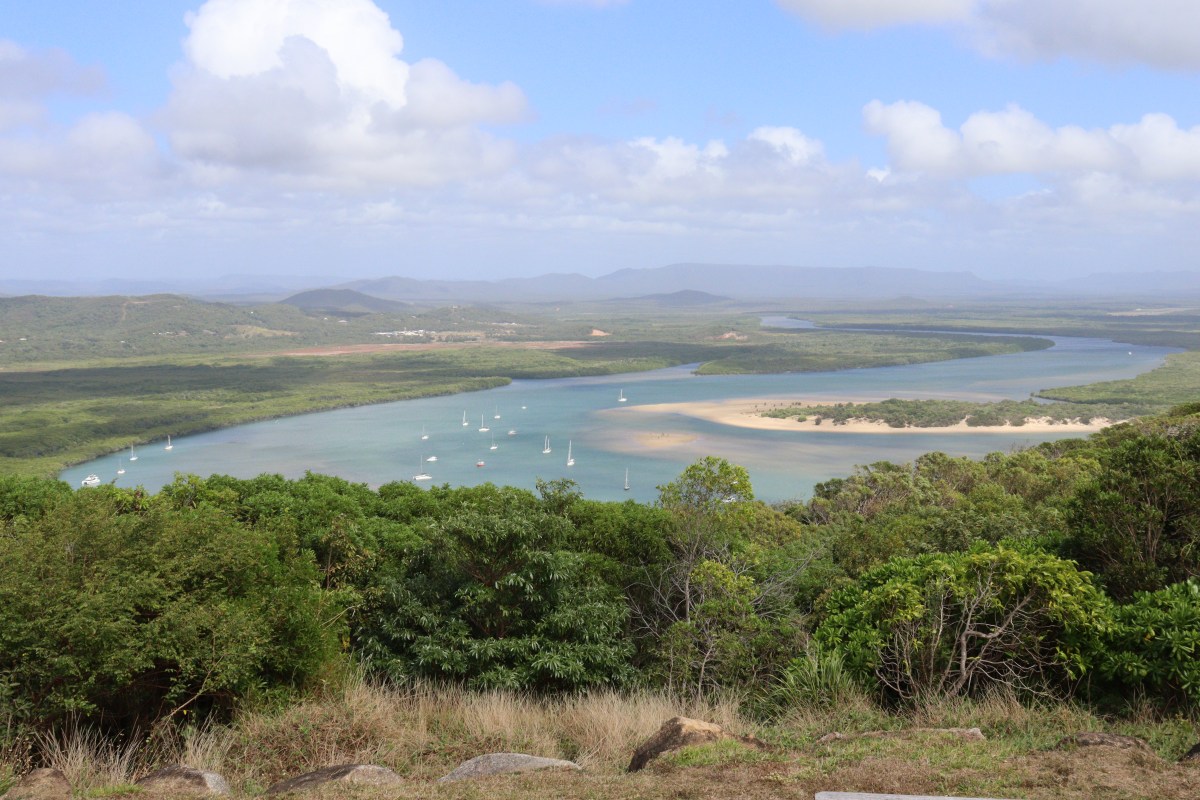
Fording several rivers with wet crossings and causeways, crossing the Great Dividing Range took us down to the coast and to Cooktown, where Captain Cook beached his ship the Endeavour for repairs in 1770. For the next couple of days we explored the sights of Cooktown, including Grassy Hill Lookout and Lighthouse, a very steep slow walk up to the lookout but worth the effort when rewarded with 360° views over the town, the Endeavour River, the Great Divide, and the Coral Sea. From that point we continued a walking trail down through the rainforest, passing two pretty, secluded beaches and into the lovely Botanic Gardens, filled with tropical plants and palm varieties.

A short distance out of Cooktown, heading south, we came across a small pullout and carpark beside the road, where signposts announced we were at Black Mountain NP – Kalkajaka. This mountain actually appears to be no more than a huge pile of rocks, but as the signs explain, it’s a huge, fragmented granite rock that has been eroded away over the last 260 million years, thus forming the pile of rounded boulders we see today.

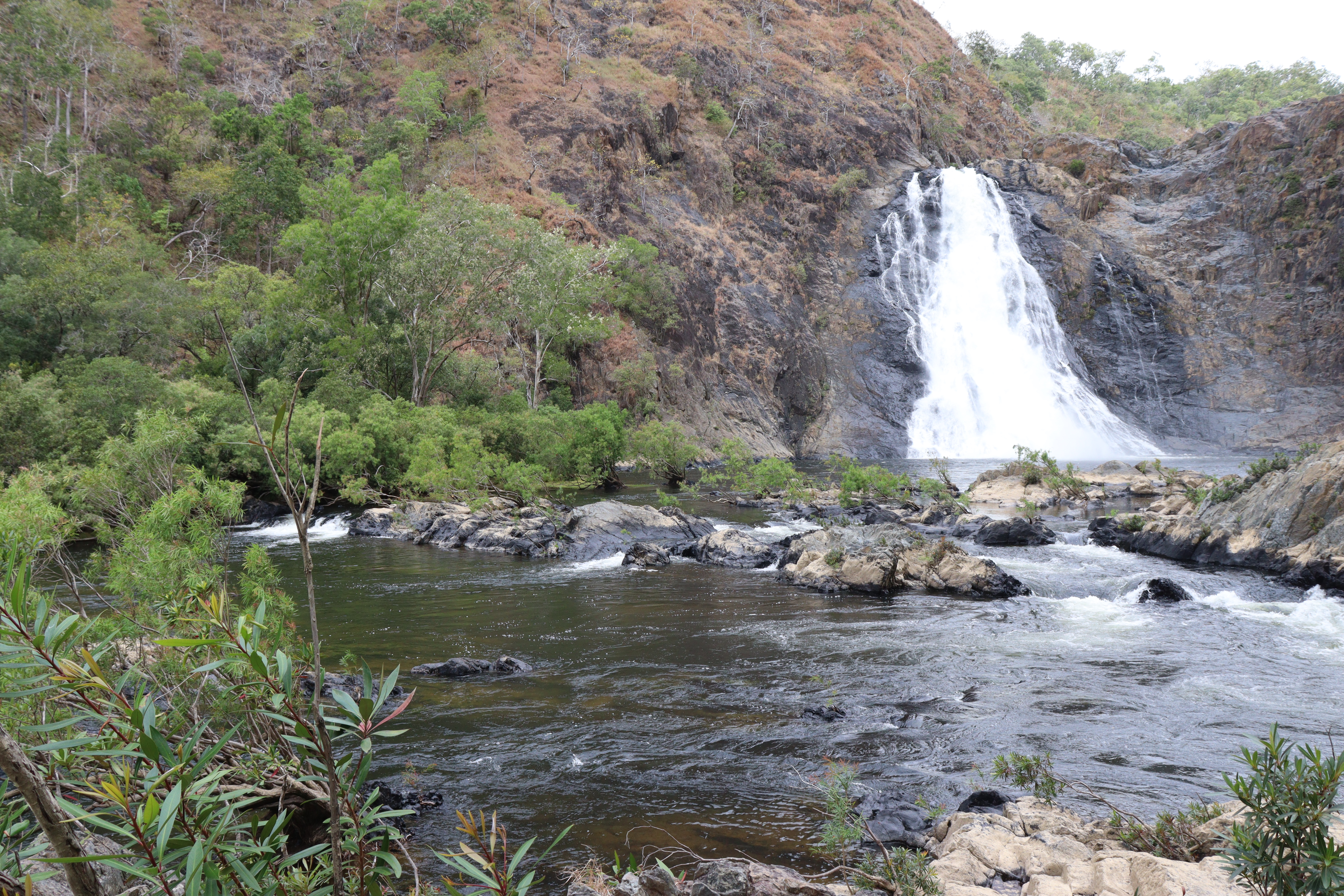
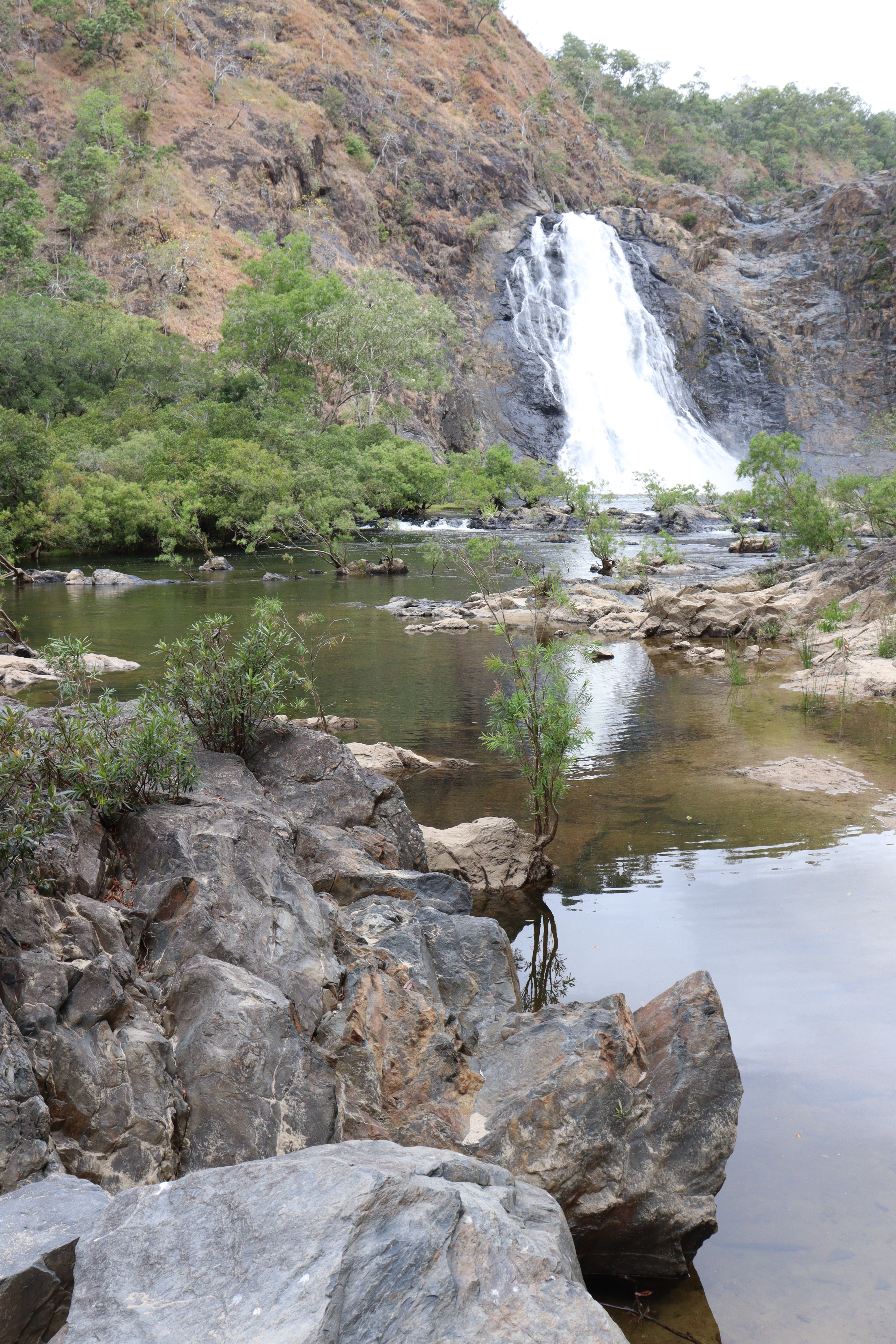
 About 70 kilometres south of Cooktown, within the Daintree NP, are the Bloomfield Falls – Wujal Wujal – where we walked the 1 kilometre track then scrambled over the rock till we came upon these most breathtaking cascades, tumbling about 40 metres over the sheer rock wall with impressive force, probably more so on this day due to the rain we’d had the last few days.

From this point on, we started taking longer days driving. We had covered all the places we wanted to see for this trip, so it was time to start heading home. So after a night at the Three Rivers Hotel (from Townsville to Greenvale they’re building a line…. ), visiting friends at a station on the Burdekin River, and catching up with more friends in Charters Towers, we turned left (south) at Torrens Creek.

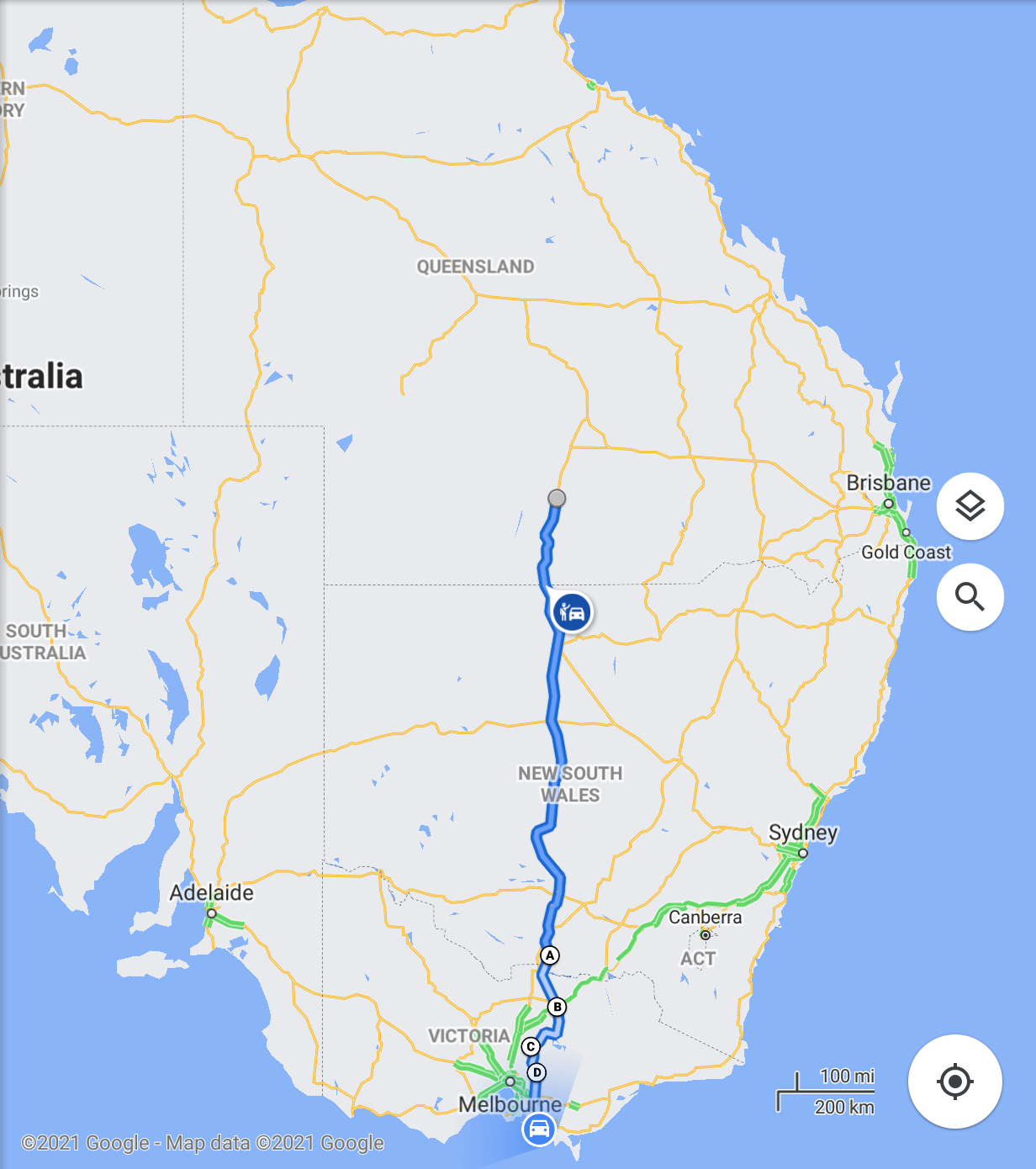
With Covid causing on-again off-again border closures between the states, we had applied for and been granted a 24-hour pass to travel from Queensland through New South Wales and into Victoria. Travelling on this pass, we had to traverse NSW within 24 hours, not have any unnecessary contact with anyone and document any stops for fuel etc.  Many people had been taking detours into Northern Territory and South Australia, but by the time we were about to hit the Qld NSW border, that detour avenue had also closed. So we spent our last night in Queensland about 200km north of the border, started early the next day and drove about 730 kilometres till we got to a roadside stop to spend the night, which left us only about 375 kilometres to get us across the border and back into Victoria the next day.

Best laid plans…..

That all went according to plan. We crossed the border into Victoria in a little over the 24 hours, even with our overnight stop, and had our permit checked by police as we crossed. So all was good. We were now on home territory and could take our time to get the rest of the way home, so we found a bakery and had a late breakfast. When we got back into the car, Gary turned on the radio, which he hardly ever does, just in time to hear the news that within 20 minutes, Victoria was going into lockdown again. WHAT??? This lockdown was a snap announcement with only 2 hours before coming into effect, so after having driven from Queensland and having to get through NSW on our 24-hour permit, we decided to just drive the rest of the way home in the same day. So we ended up driving 1480 km from 8am in Queensland on the Friday till we were home in Victoria by about 4.30pm on the Saturday with a night sleeping at a roadside stop in between! Big days of driving for us…our “big” days are normally a maximum of about 150 – 200 km. Luckily with Roxy we can both drive, because we would never have gotten so far so quickly if had all been up to Gary alone!

And so our Trip to the Tip had come to an end. We had been away for 96 nights (almost 14 weeks) and covered 12100 kilometres in Roxy, visited lots of friends, enjoyed lots of new experiences, had lots of hot weather and seen lots of new sights in this great country of ours.

And now we are home and planning our next adventures.

WTF?? Or Ha Ha!!

  • Weipa Caravan Park Rules – NO working on cars, boat motors etc – BUT just in our little section of the park, there were at least 4 vehicles getting more done than just a tyre change!!
  • We’d been looking forward to a quiet night at a station stay which was on a station owned by friends of friends of ours, but when we got to the gate, there was a huge log blocking the way with signs announcing it was closed. Turned out, as we discovered later, that due to Covid restrictions, it had shut down THAT VERY DAY!!
  • From Torrens Creek, Gary drives about 140 kilometres on good wide double strip bitumen, passing only one car and one motorbike. I take over and within 40 kilometres, it turns to single strip bitumen, and THAT’S when we pass a stock crate, a road train, several cars with caravans AND some more trucks!! WHY is it always when I’m driving???
  • Just outside Barcaldine, we stopped to get fuel at the unmanned fuel depot, where there are three outlets. How does it happen that not one, but ALL THREE of the outlets were out of operation!!
  • Driving on (luckily) a relatively straight stretch of road behind two vehicles towing caravans, when suddenly the front one is swerving onto the wrong side of the road, for no apparent reason: there was nothing on the road he needed to swerve for!! And they wonder how these caravan rollovers and accidents occur!!

Don’t forget, if you want to read about our travels prior to Roxy, head on over to our earlier Blogs at <taberstravels.wordpress.com>

Destination Cape York – Part 2

Hungerford to Karumba.

(click on photos to enlarge)

Having spent about three weeks in outback NSW, following the Darling River for much of that time, we had now crossed over the border (through a gate) and into Queensland at Hungerford. Our plan was to have a short lunch stop there and then continue into the Currawinya NP nearby. Our plans soon changed on talking to the local publican, who said, “I’d be heading straight out of here and getting to the bitumen as fast as possible if I were you….the rain’s on its way and should be here by about 4 o’clock!” Knowing that the road would become impassable for a few days at least after the rain, we took his advice and headed straight up to Eulo, travelling on a beautiful smooth dirt road all the way to the bitumen. No sooner had we checked into the Eulo caravan park, than the rain started – virtually right on time at about 4.15!

Anyone who has spent time in these outback parts knows that rain is not just a shower – it pelts down in buckets, and so it did for the entire night. Next morning dawned bright and sunny, but the rain had taken its toll. The road from Hungerford was closed and probably would be for a week, so lucky we had taken the publican’s advice. Several campers in the free camp area just out of town in Eulo had not heeded the locals’ warnings and were now destined to remain on site there for a few more days than they had planned, as the soil down there “turns to glass” after rain. So we had definitely made the right choice to stay in town.

North of Eulo, we called in at Toompine to check out the old Toompine Hotel, out there on its own, miles from anywhere and a stopping point we have visited several times passing through this area. We had heard it had changed hands and were quite surprised to see that it was only a skeleton of its former self. Apparently in the process of renovation and extension, they had discovered a serious white ant infestation, so were pretty much rebuilding from the ground up. Next door, the café is run by one of the pub’s owners who was happy to take us through the “new’ building which, when finished, will look and feel much like the original.

Lake Houdraman, about 5 kilometres east of Quilpie, is an absolute paradise, and an oasis in the outback. Situated on a private working sheep, goat and cattle property, The Lake campground is operated by the owners and is a beautiful, tranquil place to spend a night or two. We chose to set up right on the water’s edge where we enjoyed viewing many varieties of birds that visit the lake and the beautiful shady trees surrounding it, and took in the splendid sight of an outback sunset over the lake, a scene enhanced by the thousands of beautiful waterlilies growing on the lake. The bush campsite is not free, but has great amenities including flushing toilets and showers, and welcoming evenings around a great campfire at the onsite “Lakeview Pub”. Highly recommended!!
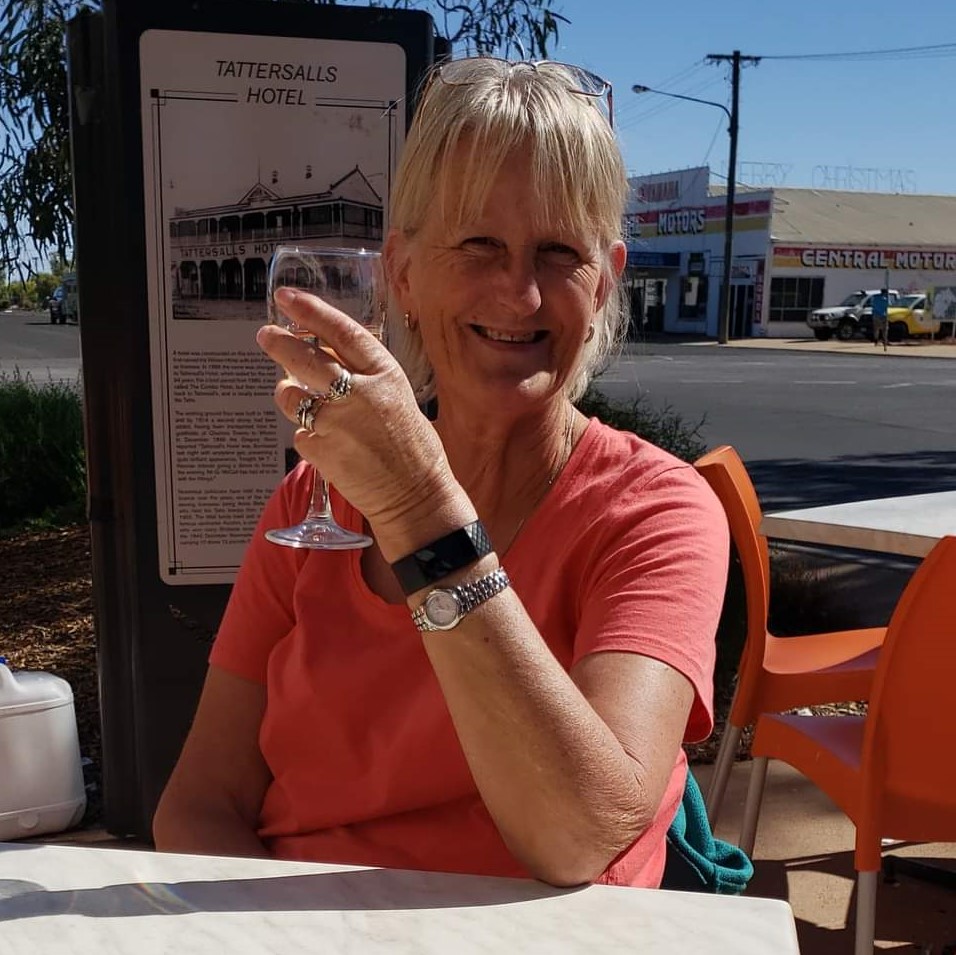
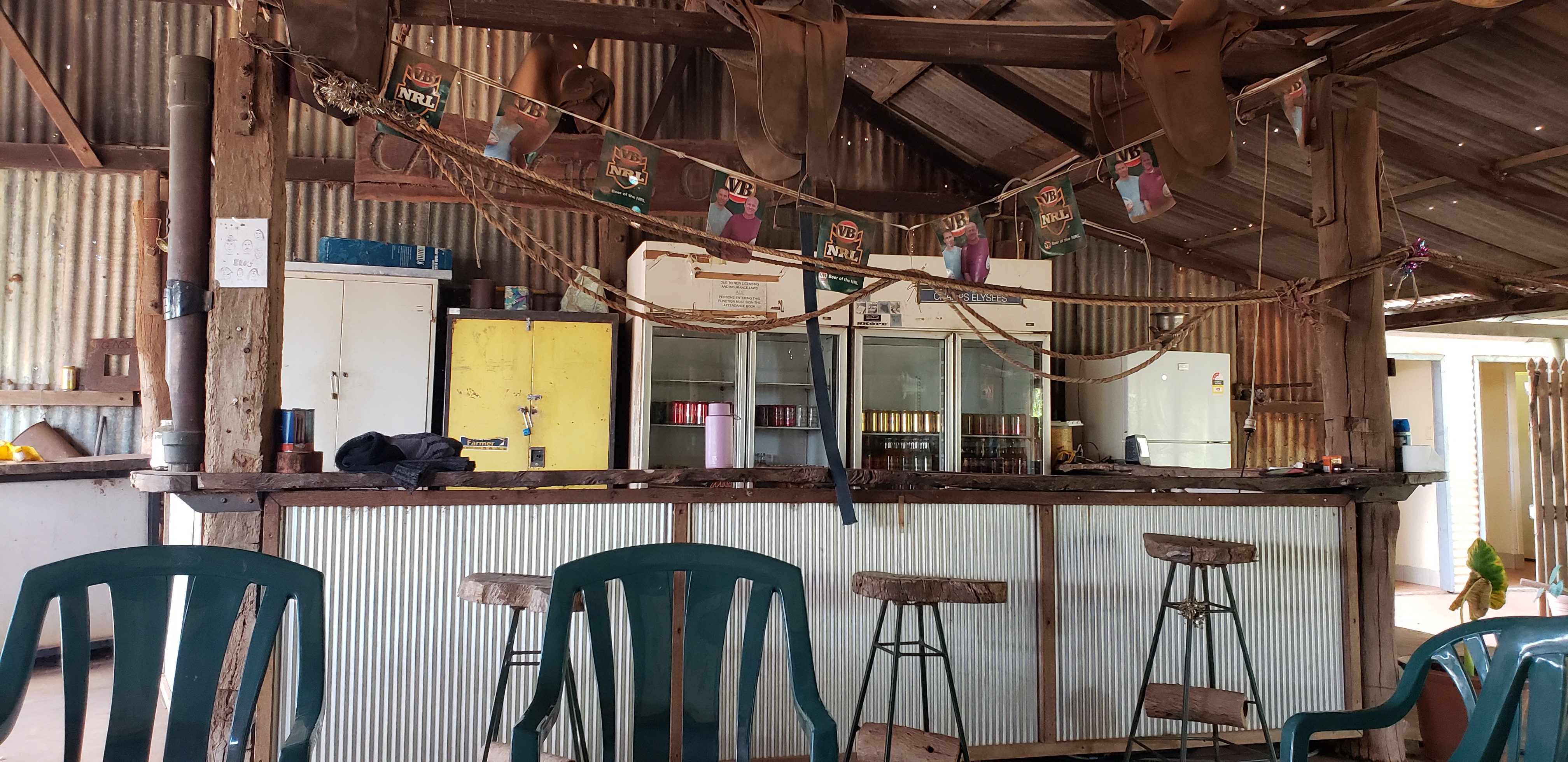
After a few overnight stops along the way (and the obligatory lunch at Tattersalls Hotel in Winton) we arrived at Corfield in time to join in the festivities at the Corfield Club Hotel for the first State of Origin Rugby match. We had been invited via Facebook by Amy at the cattle station we looked after for a month back in 2018, but judging by the double take and look of complete surprise on Hilton the barman’s face when we turned up, it seems they weren’t really expecting us to come. So after a pleasant night catching up with some of the locals – and unfortunately watching Queensland lose the first game of the series! –  we then spent a night out on “our” cattle station catching up with our friends, Hilton, Amy, and Jack -and George the dog.

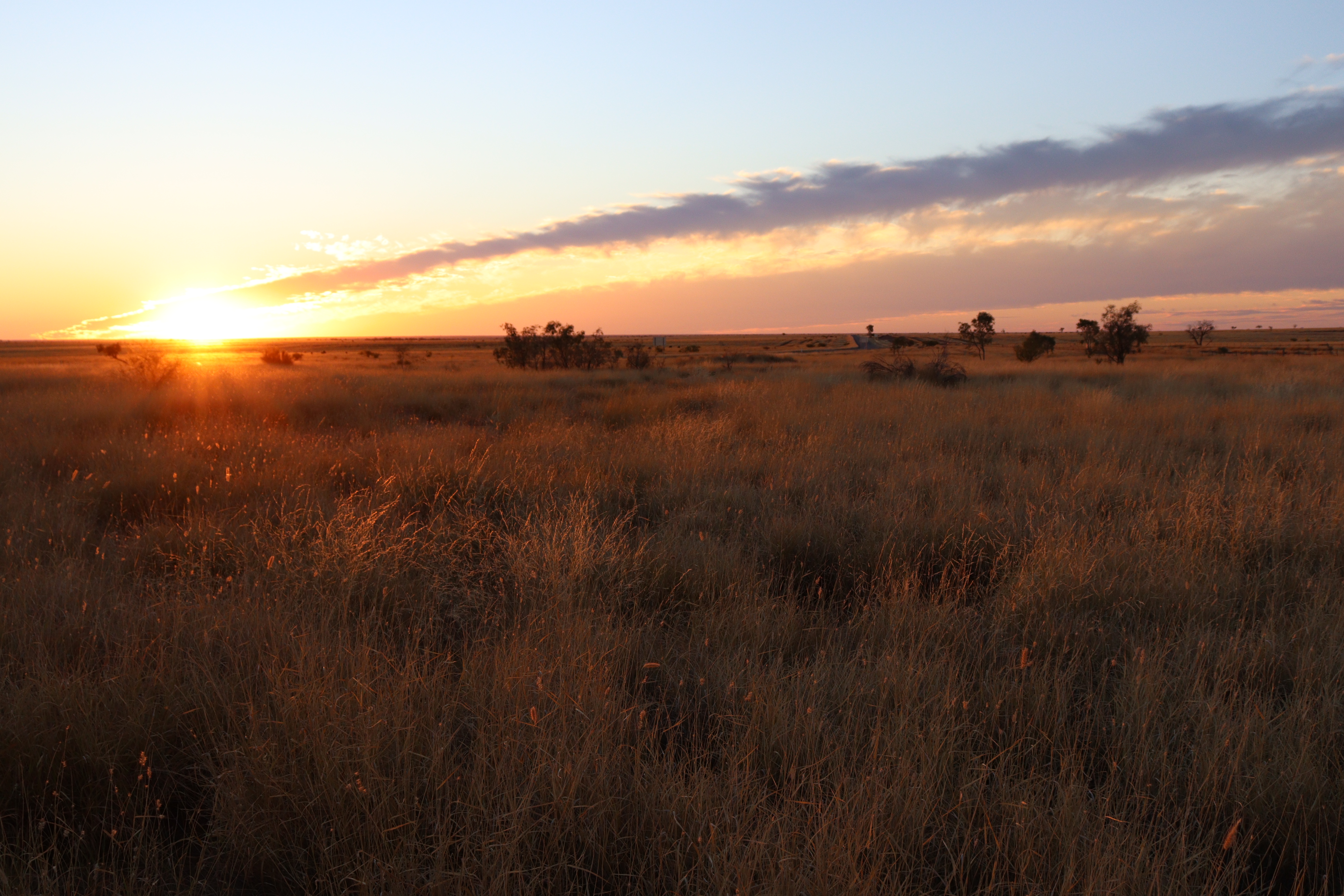
Outback sunset, Morella

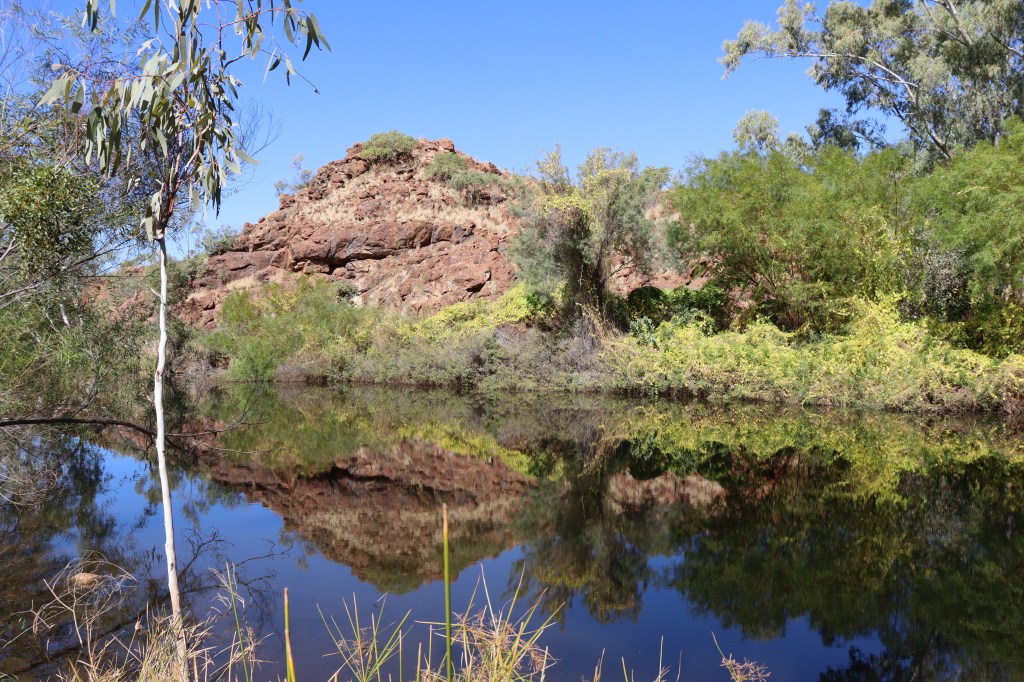
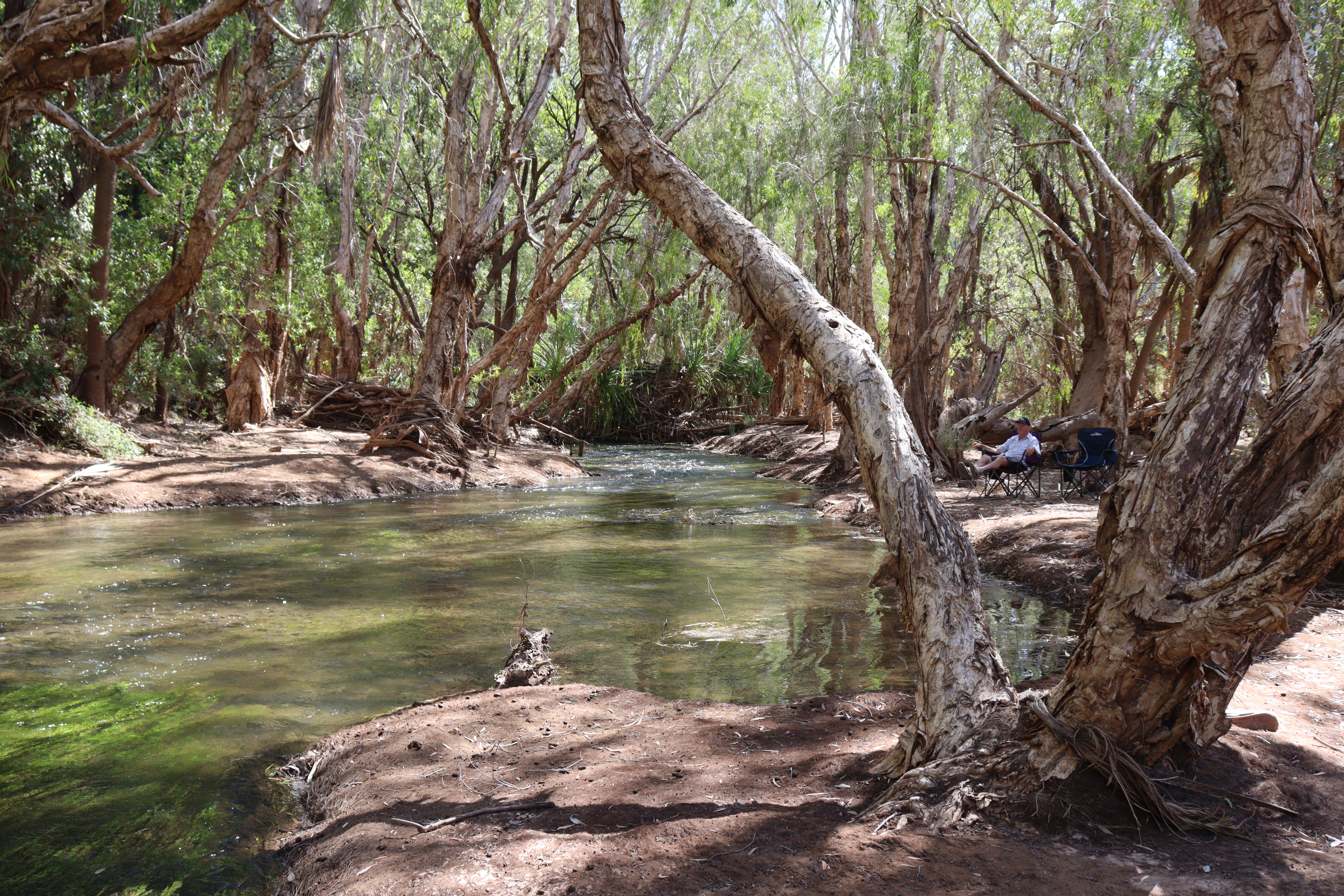
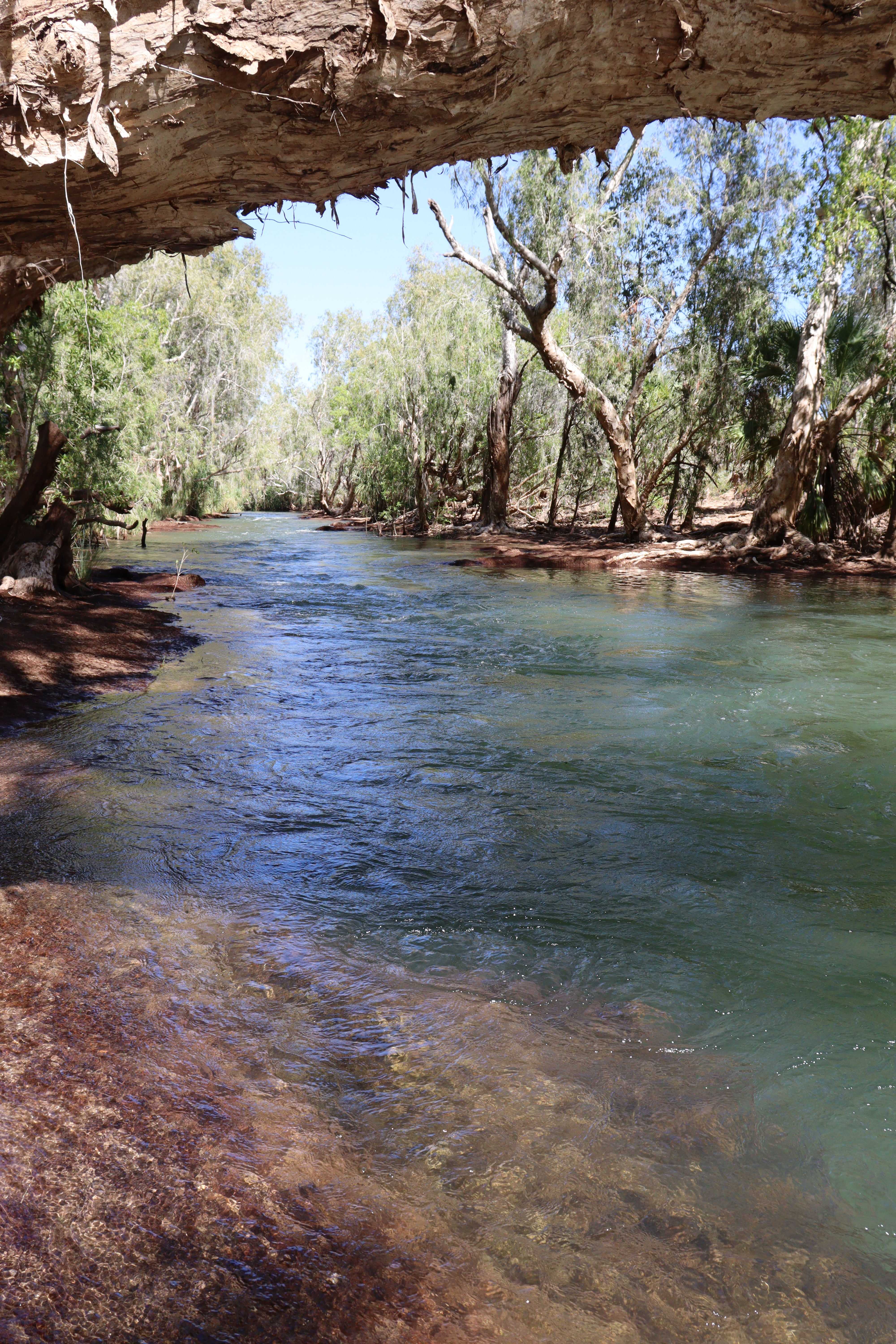
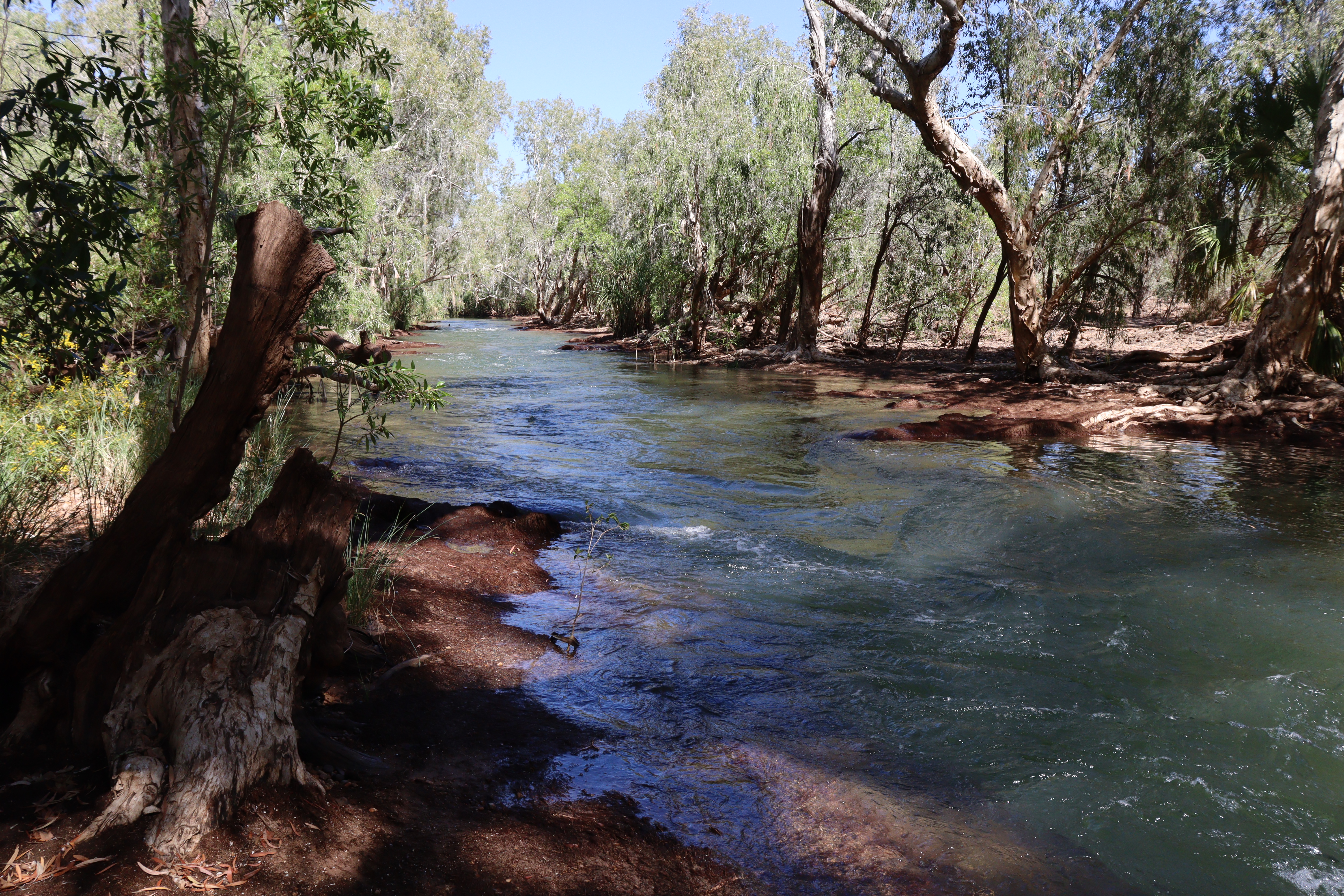
Clem Walton Park, on the Corella Dam between Cloncurry and Mt Isa, is another unexpected oasis and a popular camping area. Having previously been there for a picnic, we knew it would be a pleasant camp spot for a couple of quiet nights and were not disappointed. Despite the number of other campers, we managed to get a good roomy spot beside the river with plenty of shade, where we again watched and listened to the birds and went for a wander along the river and up to the dam wall.

Corella River, Clem Walton Park

For the next month our time was spent at Gregory Downs, the cattle station where our daughter worked as a ringer for seven years and where we have developed strong friendships with Dave and Tess (the manager and his wife (who is also the station cook) as well as quite a few of the local station crew and townsfolk. Knowing that they were planning to retire at the end of the year we wanted to take one last opportunity to visit them at the station – and our favourite riverside campsite – before they handed over to the new managers, who at that time were an unknown quantity. We earned our keep while there by helping out in various tasks – cleaning the social club, restacking social club fridges and helping out in the kitchen.

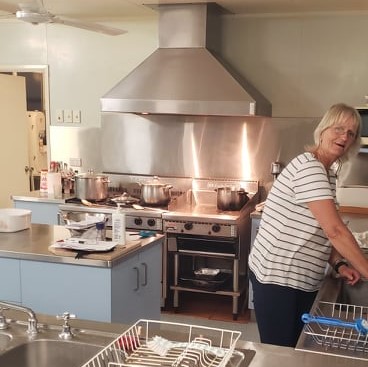
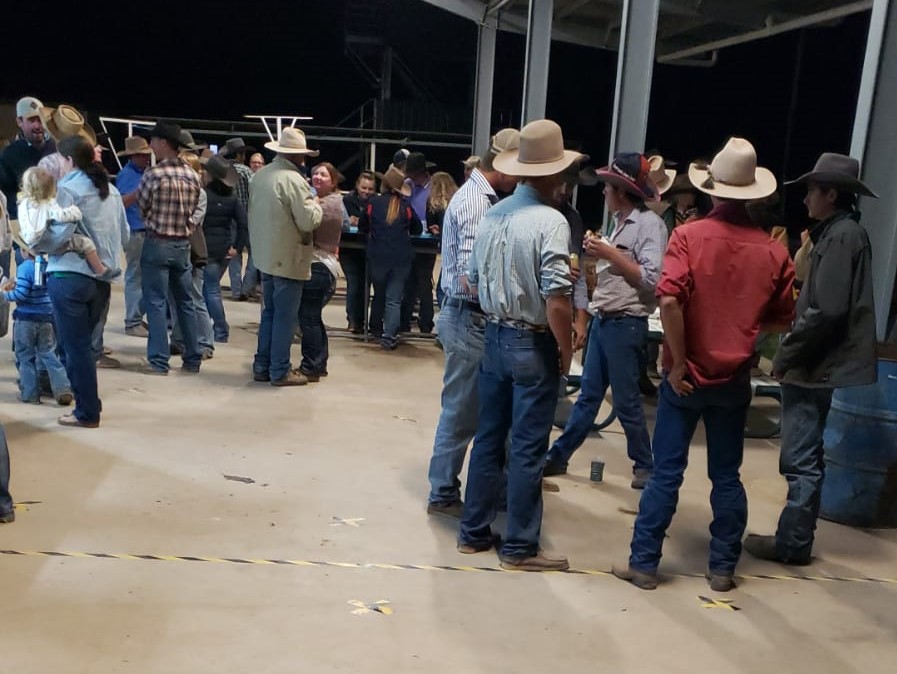
We had planned our arrival time so we’d be available to help over the weekend at the Gregory Campdraft, which ran from the Friday night through to late Sunday afternoon. I’m not sure we knew what we were letting ourselves in for!! Friday, we spent all day at the station kitchen assisting in the preparation of huge dishes of salad, pasta, potato bakes, curries and casseroles, all of which (along with many donations of similar kinds from other stations in the area) were destined for the Saturday night campdraft dinner. Then down to the campdraft kitchen at the racetrack where we helped cooking, making, and serving hundreds of steak sandwiches and sausages in rolls for almost 5 hours. We had taken Roxy down there so we could camp there for the weekend, making it easier to come and go from our kitchen duties. So Saturday morning we awoke before 6am (!!) to the sounds of the announcers calling the first competitors up with, “We’ll start events as soon as we can see”. So back to the kitchen for the day, firstly cooking/serving bacon and egg rolls for the campdrafters’ breakfasts, progressing through the day to lunch -hot foods, sandwiches, snacks, drinks etc all the while continuously doing dishes, preparing, chopping, slicing, replenishing supplies, till later in the afternoon when the casseroles etc had to be heated ready for the evening plated dinners which started at 7pm.  I don’t think I’ve ever seen so much food laid out on a buffet spread in a non-commercial setting, but then I’ve never seen such a continuous line of eager diners that just kept on coming in to savour the delights of country hospitality. After such a long busy day, we felt we deserved a drink or two out at the bar area where the campdrafters were in full party mode, but it didn’t take us long to head over to Roxy and bed.

Campdrafters party time

Sunday morning, we started early and did it all over again working from 8am till 6pm! More bacon egg rolls, more sandwiches, more roast beef and gravy rolls, more chips, more pies, more steak sandwiches, more hot dogs, more, more more…..and then at the end of it was the big clean up!  Gary estimated that over the weekend, he cooked about 35 kg of chips and over 400 steaks and innumerable sausages, aside from all the other food we served. To say we were buggered is an understatement! But in all of this we have found a renewed admiration and respect for the local CWA ladies and station ladies who turn up and do this several times a year, year after year to serve their community. Well done ladies!!!
Once the campdraft weekend was over, we tended to alternate between camping down at our spot on the river or camping up at the homestead compound outside the station social club. In the past, we used to drive our car the 3km from our camp up to social club, leaving our caravan set up by the river, so I’d been wondering whether having Roxy the motorhome would make it a bit more of a hassle to go up to social club – because we go up there EVERY night! –  but it actually turned out pretty well because we could go up, have a few drinks, and then just sleep in Roxy in the compound if we needed to. Very handy – no drink driving!

The second game of the State of Origin series was to be a big night for the station stock crew at the Social Club with pizzas for dinner, so Gary and I gave Tess the night off and took care of making the pizzas – 18 of them, ranging from meat lovers to cheese and garlic to “the lot” to “arseburner” – one made with hot salami, chillies and tabasco – Ouch!! – which all won the seal of approval from all who partook.

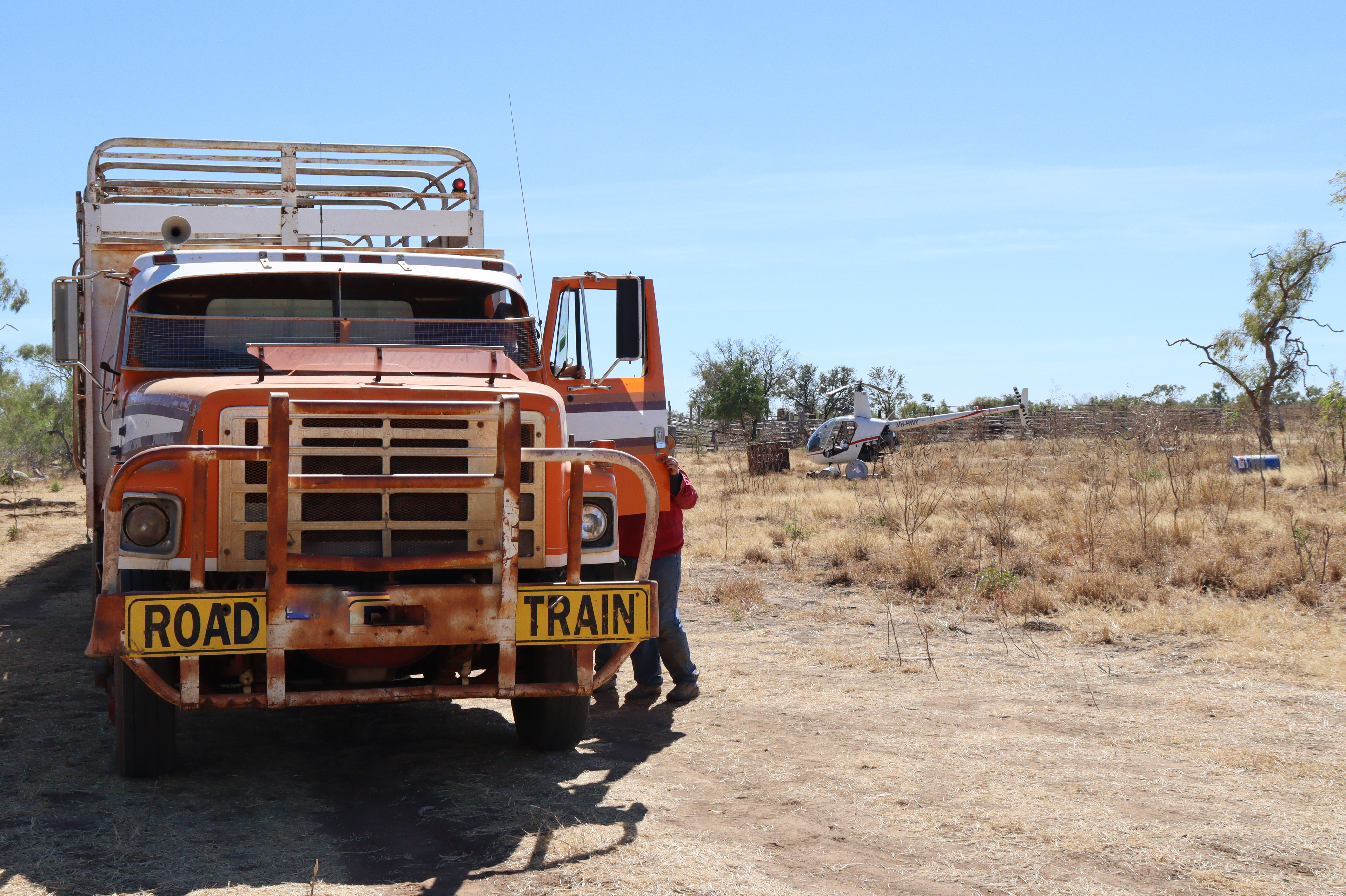
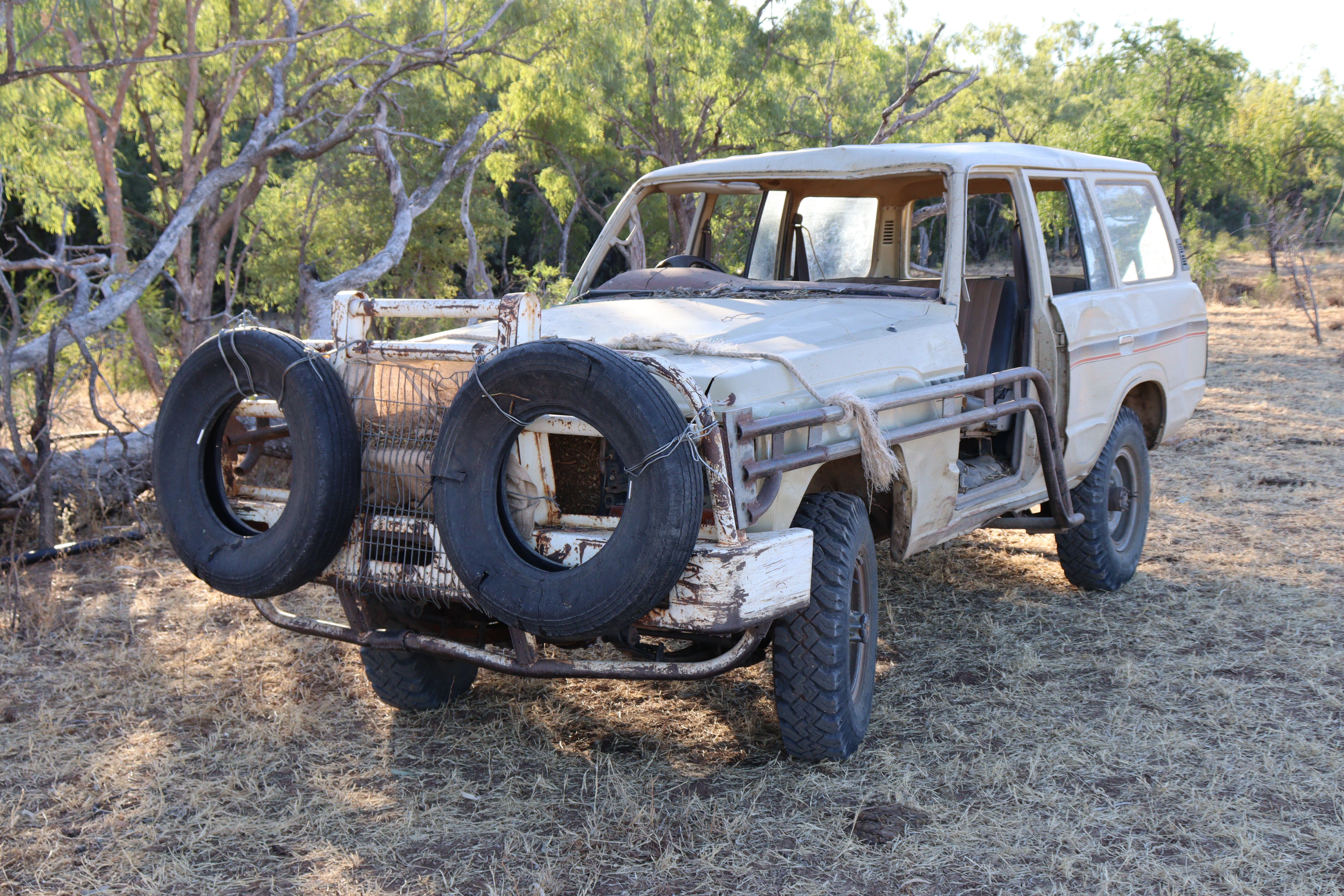
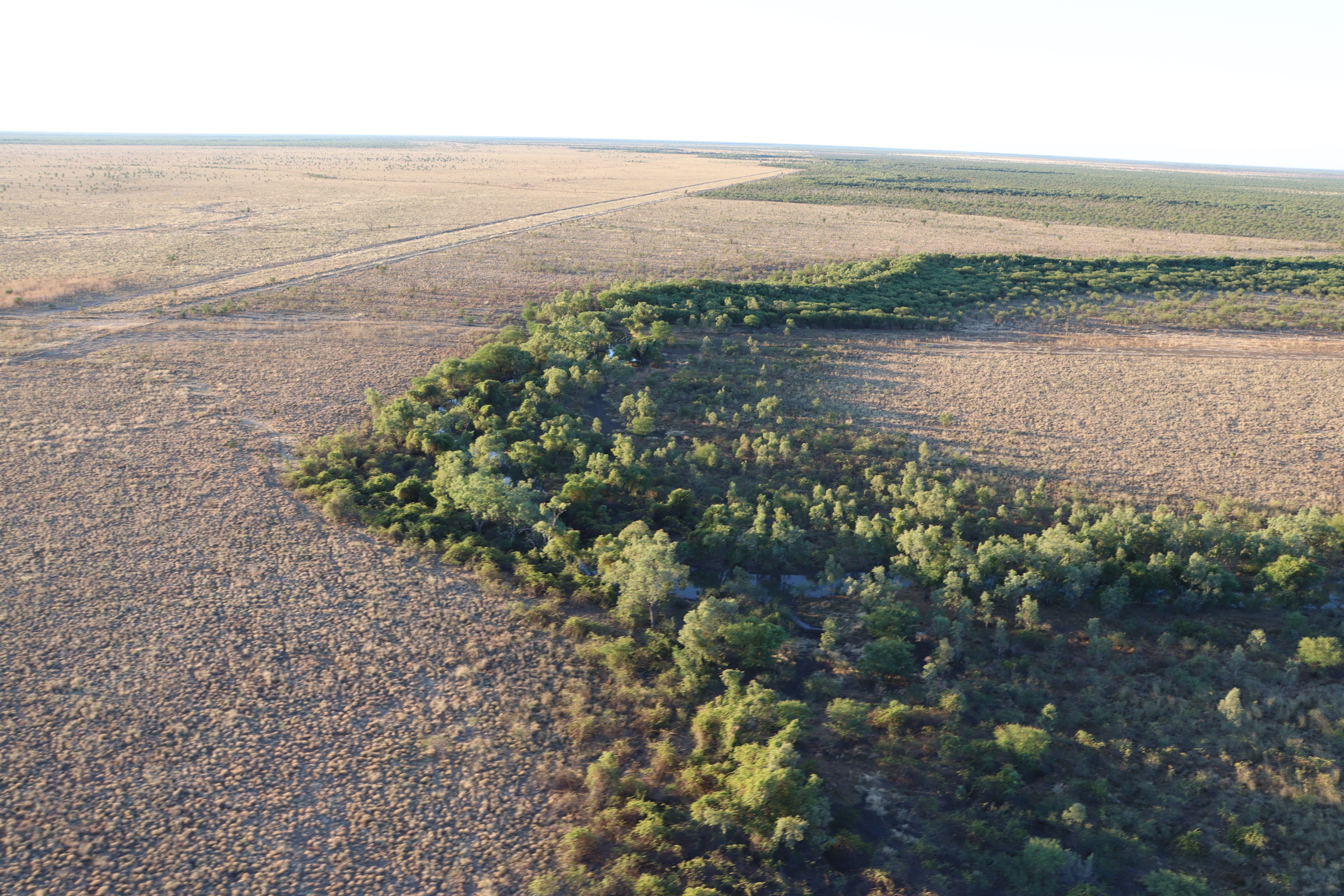
Sue and John who own the next-door station, 20 or so kilometres up the road, invited us to come out to their outstation about an hour or so further on, where the rest of the family was camped out while mustering, so we went.  After having some lunch which Sue had brought for them, the crew set out again- two on horseback, one on a motorbike, one in the chopper, and Gary in the “bullcatcher” with John, where for the next three hours he was hammered and battered by tree branches and pea bush hitting him in the face! You see, the “bullcatcher” is a classy vehicle – no doors, no windscreen and no windows, but it does have a heavy duty bullbar equipped with tyres for extra punch when catching the bulls. I was the lucky one who fared much better and got a lift partway back to the home station in the chopper!

On our last night cooking for the station crew, we were allowed to use the BRAND new, never-before-used barbecue to cook up the most delicious looking pork chops which had come from station-reared piggies. Everyone was looking forward to a feed of pork which would make a nice change from beef which constitutes a good part of the menu here, being a beef cattle station. Alas! Within five minutes of putting them on the barbie, Gary was yelling out to me to bring out the fire blanket! Although the chops were well trimmed of fat, there was still enough to run down onto the burners and catch fire pretty well straight away. The fire blanket did nothing to quell the flames, so out came the fire extinguisher – and that put an abrupt end to our pork chops for dinner! Luckily we had some leftovers we could quickly heat and serve and in the end, after a good scrub, the barbie wasn’t ruined forever, so not as much of a disaster as we thought! The next night, Dave was very quick to refuse Gary’s offer to cook the weekly Saturday barbecue down at social club – wonder why??

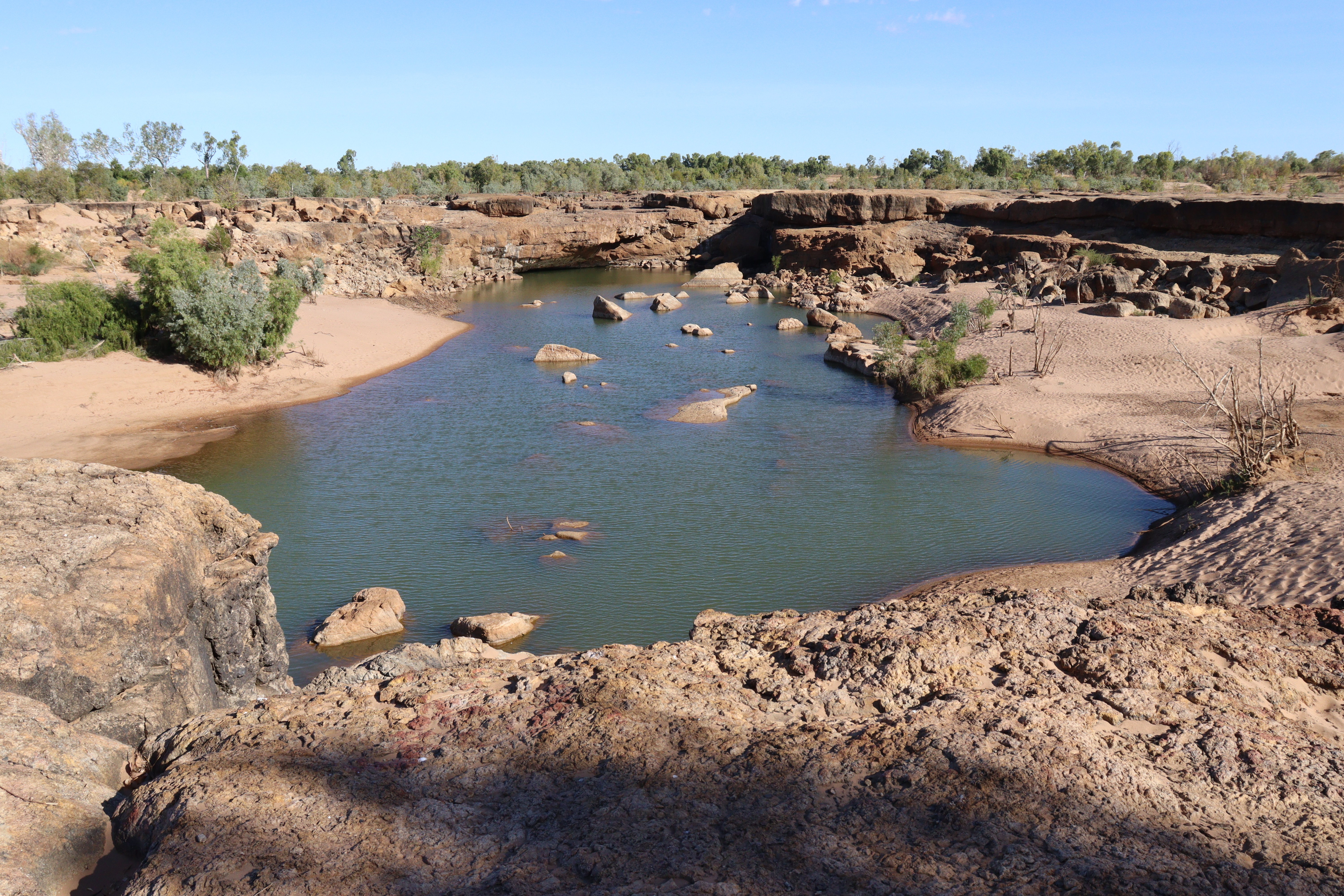
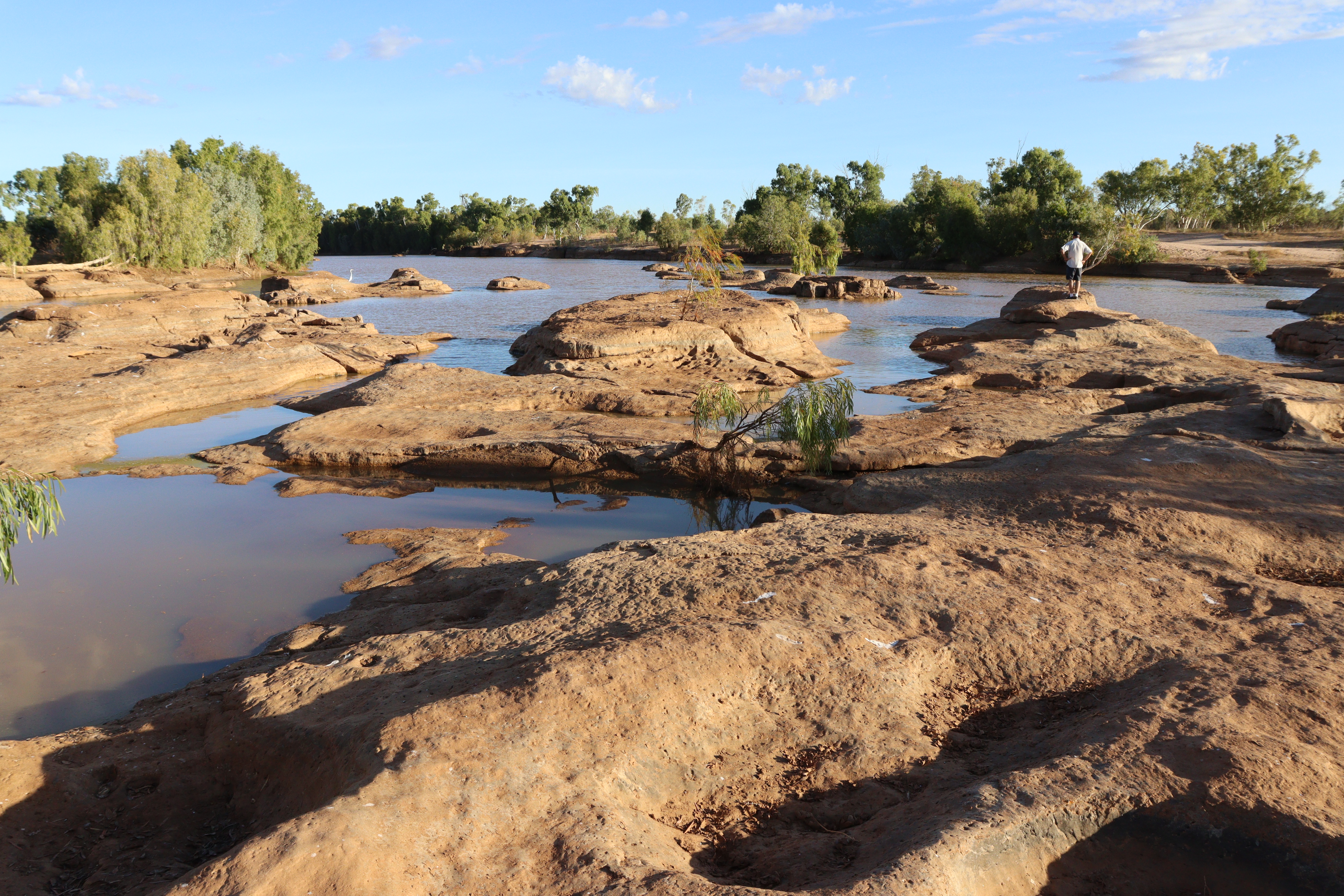
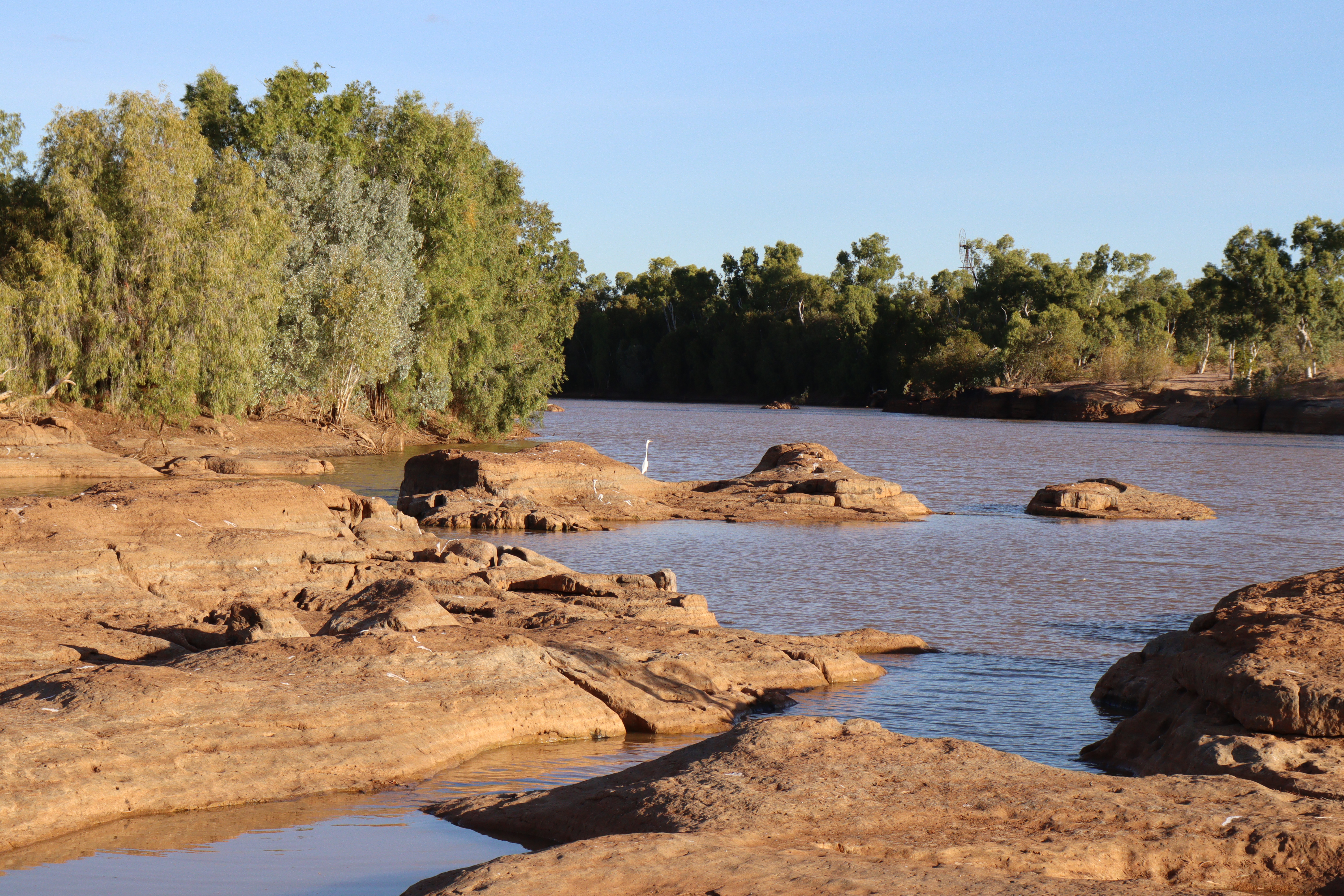
Having spent a month at Gregory Downs, we decided it was time to make a move and continue our quest to reach the Tip, so we headed up through Burketown and out to stop at Leichhardt Falls for the night. We have visited these falls many times over the last twenty years and only once have we seen them in full flow. This time, like so many previous visits, there was not even so much as a trickle falling over the rock ledges, but we were treated to the sights of a couple of freshwater crocodiles lazing on rocks at the base of the “falls,” as well as flocks of cockatiels and thousands of corellas settling in the trees and proceeding to strip them of any foliage.

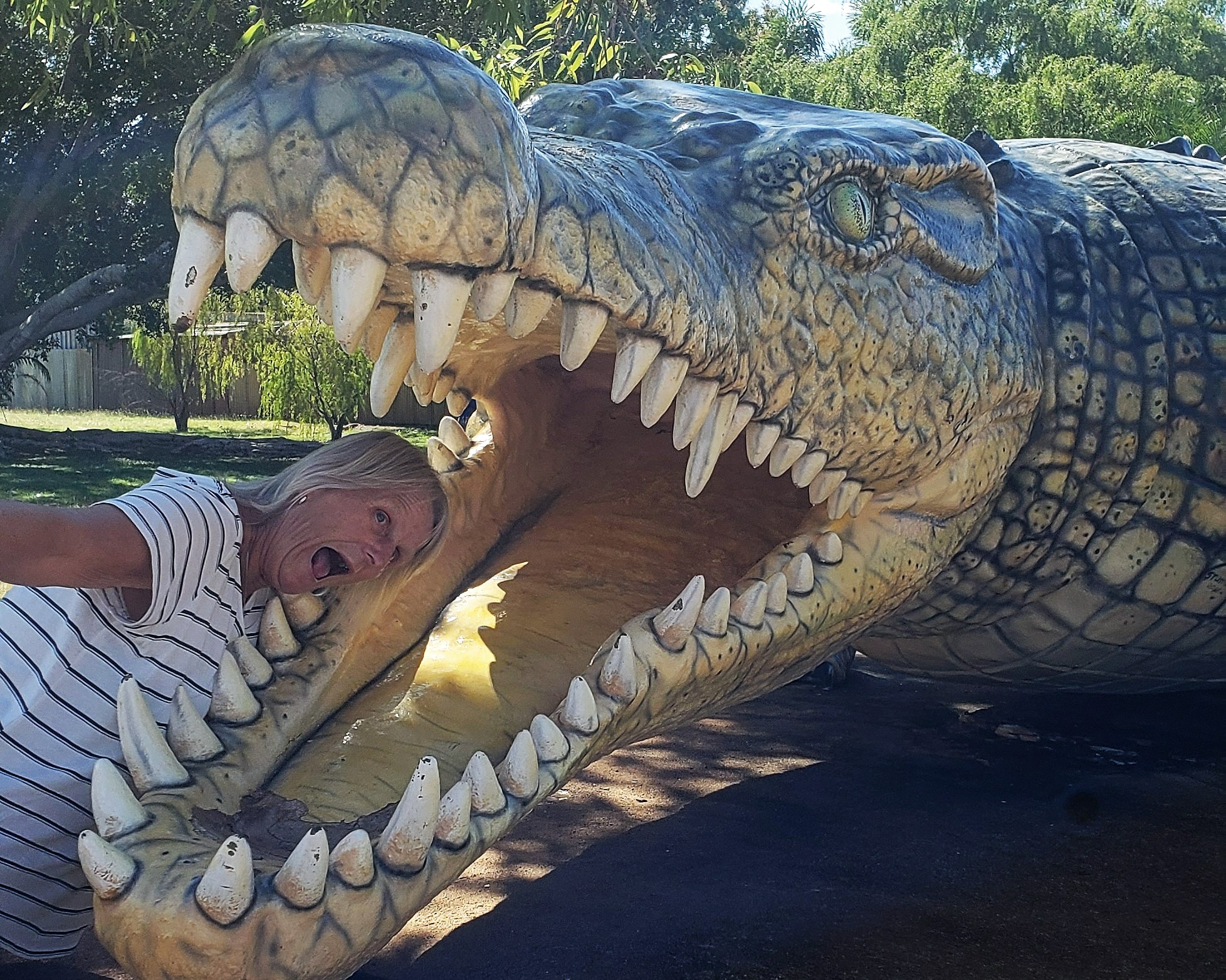
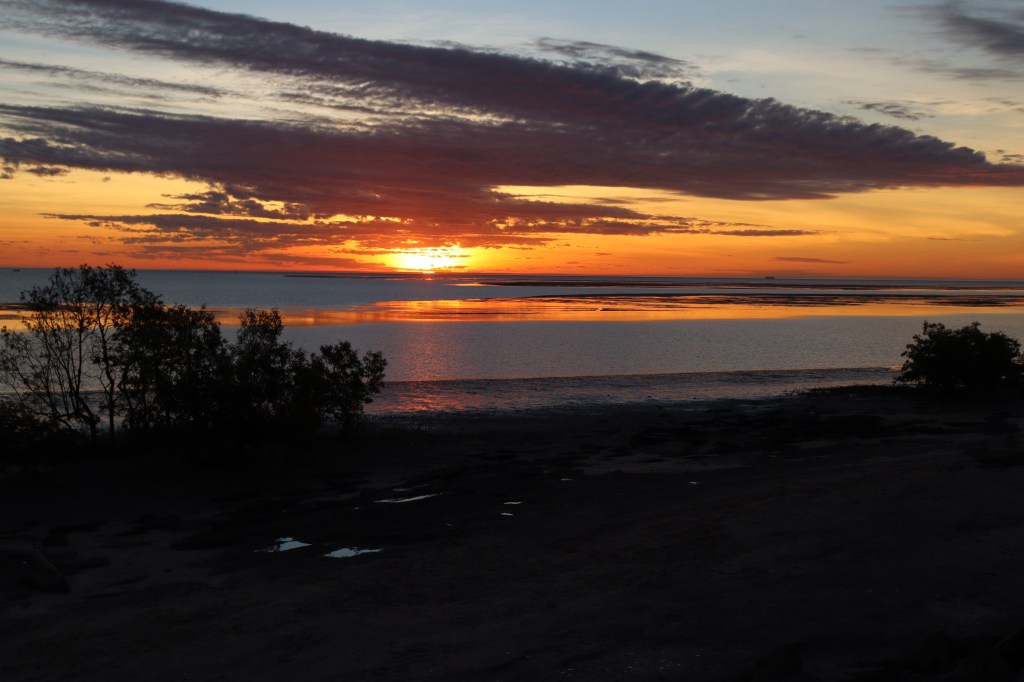
From there we had a quick lunch stop in Normanton, long enough for me to get eaten by Kris the enormous crocodile, before heading up to Karumba on the Gulf of Carpentaria to visit Frank, the former Gregory Downs gardener, who was happy to show us his daily routine of feeding by hand the wild whistling kites and black kites, and where we stayed long enough to enjoy another wonderful Karumba sunset over the Gulf waters.

Sunset on the Gulf, Karumba

Karumba was our final familiar place before we started heading up Cape York Peninsula into territory we had previously not visited.

WTF? Or Ha Ha

  • After the rain in Eulo, we walked down to the free camp area to join many others watching the idiot who had stayed through the night’s rain, but then decided he urgently needed to leave, and in trying to get his car and caravan out, became so hopelessly bogged to the axles that it took him about 5 hours of winching to different points back and forth before he finally got out. Having made a right spectacle of himself, making his wife quite embarrassed and having made a real boggy mess of the campsite, it turns out he was only heading 90 kilometres up the road!!
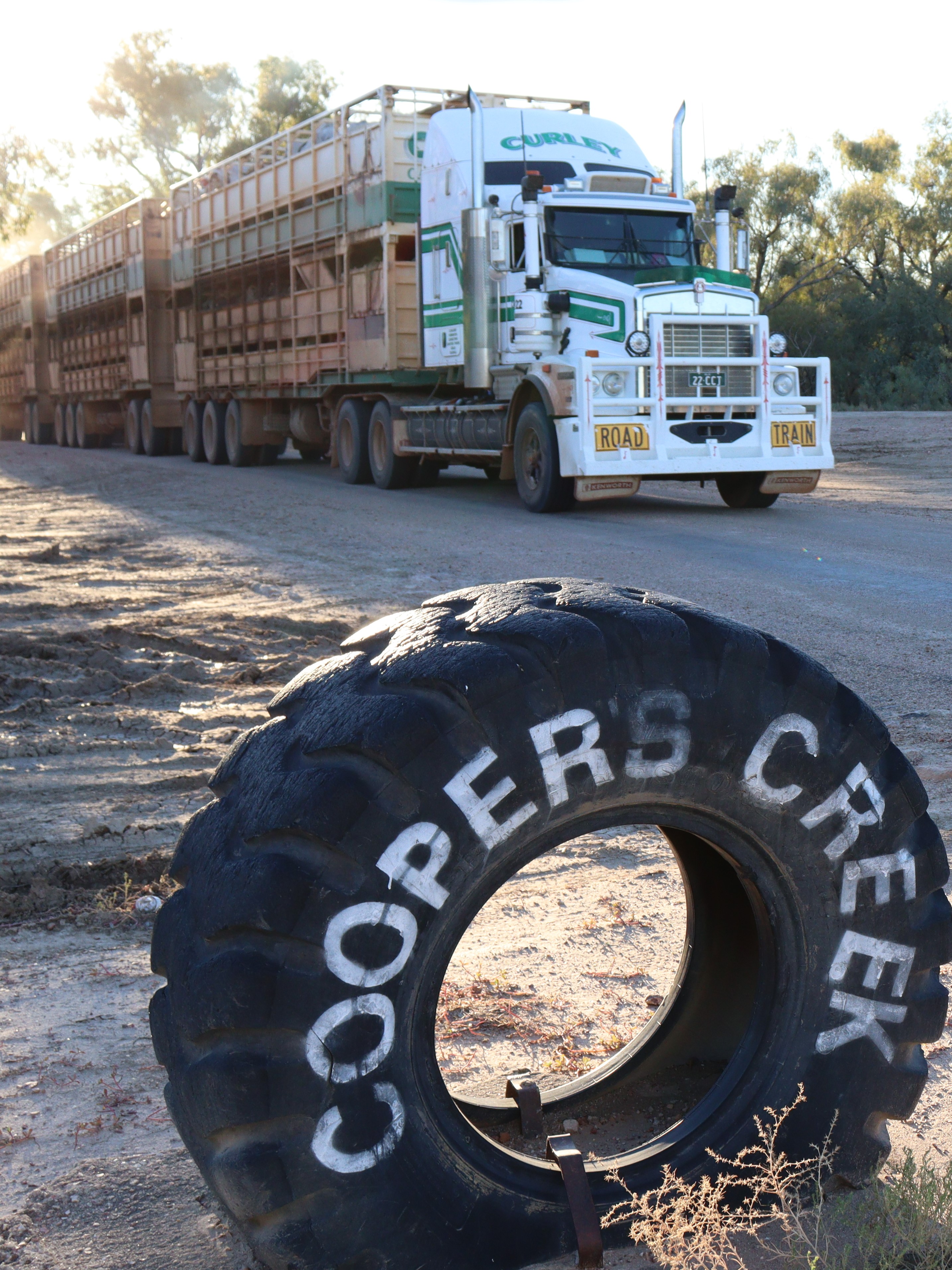
  • Rental motorhome at Cooper’s Creek Bridge near Windorah, drives from sign to sign taking photos – but not getting out of the vehicle, then when crossing the bridge stops dead in the middle -totally oblivious to the road train right behind him!!
  • Camping at a roadside stop with several other vehicles beside a fenced station property, one idiot climbs through the fence and proceeds to cut down trees for firewood using a chainsaw! It’s PRIVATE PROPERTY!!!!
  • After all the dirt roads travelled so far, how does it happen that we get a stone chip in the windscreen when travelling on a sealed highway??
  • Standing talking outside the main house at the station, Tess suddenly days “oh my goodness” and promptly stands on a little python that was crawling around the kids’ feet.
  • After spending 5 nights camped in the station compound due to our commitment to cooking/helping out in the kitchen and due to the rain that had also descended on us in that time, we went back to our riverside camp to find the river was now about a metre deeper than when we left.  Normal for these parts… and it receded just as quickly.
  • How to disappoint a person looking forward to a good feed of barramundi and chips – tell her you are cooking it using mum’s old recipe of boiling it in vinegar. INSTANT “20 past 8 smile”. (Of course, we were joking!)
  • At Leichhardt Falls, a lone camper came to ask if he could “borrow“ some hot water to heat his noodles, as he had come away three months ago a “bit under-prepared”. A BIT??? No stove or cooking or eating utensils and he’s a BIT under-prepared??!!